
Word of Life December 2016
https://www.focolare.org/gb/files/2016/11/2016-12.mp3
Word of Life for ages 4-8 | for ages 9-14 | for ages 15-17
The verb is in the present tense: “He comes …” We can be sure of his coming in this very moment. We do not have to wait till tomorrow, or the end of time, or the next life. God acts immediately, because love shuns both hesitation and delay. The prophet Isaiah is speaking to a people anxiously waiting for their exile to end so they can return to their homeland. For us too who are waiting for Christmas, we cannot but recall a similar promise given to Mary: “The Lord is with you” (Lk 1:28), as the angel announces to her the birth of the Lord. The Lord does not come for a casual visit. His is a decisive intervention, a matter of greatest importance. He comes to save us! From what? Are we in grave danger? Yes. At times we are aware of it, at other times not. He intervenes because he sees our selfishness, our indifference to those who suffer or who are in need, our hatred, our divisions. The heart of humanity is ailing. Moved by pity, he comes towards each one he has made, who he does not want to be lost. The Lord offers his outstretched hand as if to the drowning victim of a shipwreck. Sadly these days this image is always in front us, brought to mind day by day when we see those refugees who are trying to cross seas, those immigrants crossing borders. We witness how quickly they grasp an outstretched hand or a life jacket. We too, in every moment, can grasp God’s outstretched hand and follow him with trust. He does not only heal our hearts from self-absorption, which closes us off from others, but he makes us, in our turn, able to help those who are in need, who are sorrowful, who are going through trials. “Certainly it is not the historical Jesus or Jesus as head of the Mystical Body who sorts out our problems,” wrote Chiara Lubich. “It is done by Jesus-us, Jesus-me, Jesus-you… It is Jesus in human beings, in that specific human being (when grace is present in him or her) who builds a bridge, lays down a road … “It is as another Christ, as a member of his Mystical Body, that each human being brings his or her characteristic contribution in all fields: in the sciences, in the arts, in politics, in communications, and so on.” The person thus works together with Christ. “It is the incarnation that continues, a complete incarnation that involves all those who are Jesus in Christ’s Mystical Body.” (“Jesus Forsaken and the Collective and Cultural Night,” an address given by Chiara Lubich to a group of young women on January 7, 2007). This is exactly what happened to Roberto, an ex-convict who found someone who “saved” him and who then, in turn, became someone who “saved” others. He told his experience at a Focolare gathering in Villa Borghese in Rome last April. “When my long-term prison sentence came to an end, I thought I would start life again, but as usually happens, even if you have paid your debt to society, you still seem very suspect to people. “I found the doors shut in my search for work. I had to beg on the streets, and for seven months I lived as a tramp. But then I met Alfonso who, through an organization started by him, helps prisoners’ families. “He said to me, ‘If you want to start again, come with me.’ For a year now I have been helping him prepare food packages for these families in whom I see a reflection of myself. I see the dignity of these women who are alone with little children, living in desperate situations, waiting for someone to give them a bit of comfort, a bit of love. “Giving of myself, I have rediscovered my own dignity as a human being, and my life has meaning. I have more strength because I have God in my heart, and I feel I am loved …” Fr. Fabio Ciardi, OMI Each month the Focolare offers a Scripture passage as a guide and inspiration for daily living. Ever since the Focolare’s earliest years, founder Chiara Lubich (1920–2008) wrote her own commentaries each month. Now Fr. Fabio Ciardi, OMI, theologian and close collaborator of Lubich, heads a group of scripture experts who have been entrusted with the task of writing the Word of Life commentaries, reflecting her thoughts and her spirituality of unity. This Word of Life is translated into 96 different languages and reaches several million people worldwide through the media. This monthly leaflet is also a supplement to Living City, the Focolare magazine (livingcitymagazine.com). For information and to subscribe to this leaflet or to the magazine, write to: Living City, 202 Comforter Blvd, Hyde Park, NY 12538; tel: 845-229-0496; e-mail: livingcity@livingcitymagazine.com. Visit focolare.org (international) or focolare.us (U.S.). © 2016 by Living City of the Focolare Movement, Inc. Read more: Lubich, Chiara. “How I met you,” Essential Writings, New City Press: Hyde Park, New York: 2007, p. 56. Lubich, Chiara. “The attraction of modern times,” Essential Writings, New City Press: Hyde Park, New York: 2007, pp.169–178.
The Economy of Communion (EoC) in South Korea
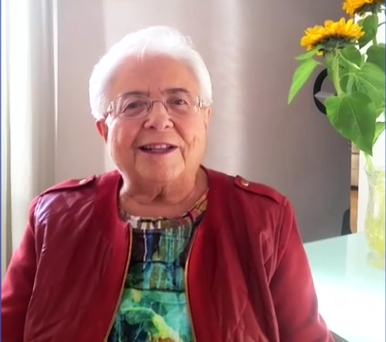
Maria Voce to the young people of the Focolare Movement
“I have seen how seriously you have been preparing for this moment and this makes me very happy indeed, and gives me great peace for the Movement’s future, because I have seen that you have taken Chiara (Lubich’s) legacy seriously which is handed on to the second generation in the Movement … with the same zeal” as at the start of the Movement. In response to various questions that the young people asked her, on Jesus forsaken, the point of the spirituality of unity which has been chosen to go into depth with this year, Maria Voce explained: “God sent his Son to re-build these bonds, [of unity between God and humankind and among all people] so to do something great.” In order to do this “Jesus did not choose to come with an armada … but he chose a means that maybe is not understood first off; he chose the means of the cross. The means of the cross which for Jesus meant loving right to the end, the greatest love of all, taking on himself all of humanity’s pain, all sufferings, all humiliations, purely out of love! And in the moment he did it, Jesus made a new creation, he created a new unity, he redeemed humanity, so he re-established the unity that humankind had lost with God and people had lost among themselves; it was the greatest of works.” “So in that moment Jesus forsaken is truly the victorious King! He is not only someone who is suffering. Yes, suffering was the means that He chose, but it was because through that suffering he showed the greatest love; because he bore witness before people as to how much the Father loved them and how much he was ready to suffer out of love for the Father and love for them. Now Jesus forsaken comes to us and says the same thing: “Do you want to bear witness to God’s love in front of the whole world, and all people? Then use the same means as I did. Make yourself one with them right to the end, take on the sufferings, pain, doubts and anguish that people feel,” creating “bonds which will make the human family a real family of God’s children, bonded with one another and with the Father.” Concerning questions about their future, Maria Voce answered: Be generous with God! If you truly feel that God is calling you somehow, that he is speaking in the depths of your heart, don’t pay attention to anything else, pay attention only to this voice and say yes … then He will be the one to take you where he wants you to be”, to fulfil God’s “plan of love for each one that will give you the greatest happiness. I wish you this with all my heart!” Gustavo Clariá https://vimeo.com/192601570
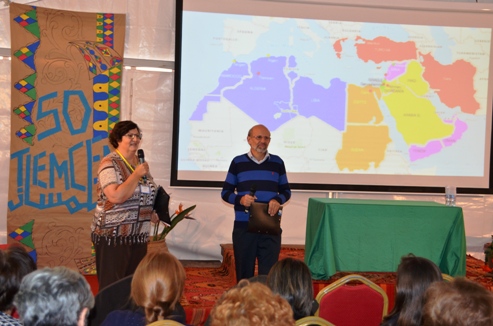
Second Muslim Focolare Conference
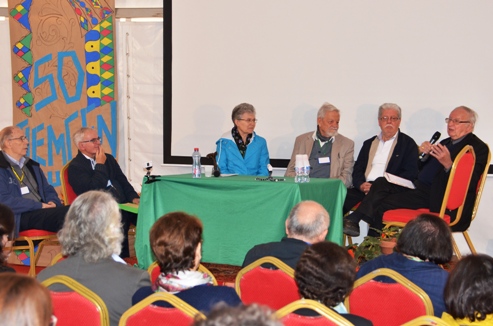 The event was attended by 90 Muslims and Christians from Jordan, Syria, Libya, Greece, Tunisia, France, Italy, Switzerland, Burkina Faso, Canada and Algeria. Four topics were discussed: suffering in light of God; the divine inspiration on unity in Chiara Lubich; the challenges and problems for the contemporary Muslim; being builders of universal brotherhood. The most repeated word at the conference was “together” which highlighted the experience that has been maturing for years in the heart of the Focolare Movement: Christians and Muslims living the ideal of unity together, according to the charism given by God to Chiara Lubich fully accepting their individual identities and differences. Chiara’s deep mystical experience from the summer of 1949 was introduced by Jésus Morán and welcomed by the participants in an atmosphere of deep fraternity: “Chiara takes us into the God of Oneness, beyond the differences of single religions,” said Jalleh who is a Sciite from Iran. Someone else remarked: “Chiara uses images that are understandable when talking about the Trinity.” Rita Moussallem and Roberto Catalano, who work for the Movement’s interreligious dialogue, presented the Focolare’s experience with different religions around the world: “You could say that God manifested himself and gave us all a bit of his light,” said one participant. After an immersion in the unity that is born from the Christian context, the focus shifted to Islam. The Algerian-Tunisian scholar Adnane Mokrani, who teaches as the Pontifical Institute of Arab and Islamist Studies at Rome (PISAI), talked about the crisis that Islam is going through today. She invited the audience not to allow itself to be taken in by the different conspiracy theories, not to blame others, but to return to the discussion table, without being discouraged: because “the majority of the people want peace, perhaps an inactive majority … But it’s up to us,” she emphasized, “an active minority to do all that we can to arouse that majority. It’s our task.” She and Adnane Mokrani answered several spontaneous questions from the audience. Scholar of Comparative Religions at the University of Amman, Jordan, Amer Hafi said: “God is great[er] means that he is greater than our fears, than our problems and misfortunes: God is the key of our hope and of our life. But unfortunately this invocation has become a death signal.” The presence of Emeritus Archbishop Henri Teissier with his in-depth knowledge of Islam was deeply appreciate, along with Bishop of Orano, Jean Paul Vesco. He explained: “the friendship founded on spiritual communion is the apex of dialogue among the religions and their differences.” The young Algerian Muslims from the Focolare Movement provided music and song. The visit to the mausoleum of mystic Sidi Boumediène, which was presented by Algerian scholar Dr Sari-Ali Hikmet, immersed the conference members in the spirituality, art and culture of Islam. This was followed by a visit to the El Mechouar Museum, a palace from the Zianide Dynasty, and a visit to the Great Mosque and to the modern Andalusi Centre of Studies. Before leaving Tlemcen, Jesús Morán commented on the experience: “It wasn’t only getting along, but of being one, sharing the same experience of God, of sharing what we have deepest inside of us.” Jean-Louis Marechal