
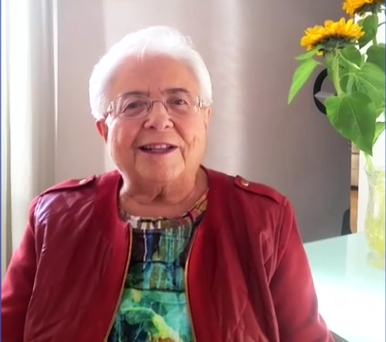
Maria Voce to the young people of the Focolare Movement
“I have seen how seriously you have been preparing for this moment and this makes me very happy indeed, and gives me great peace for the Movement’s future, because I have seen that you have taken Chiara (Lubich’s) legacy seriously which is handed on to the second generation in the Movement … with the same zeal” as at the start of the Movement. In response to various questions that the young people asked her, on Jesus forsaken, the point of the spirituality of unity which has been chosen to go into depth with this year, Maria Voce explained: “God sent his Son to re-build these bonds, [of unity between God and humankind and among all people] so to do something great.” In order to do this “Jesus did not choose to come with an armada … but he chose a means that maybe is not understood first off; he chose the means of the cross. The means of the cross which for Jesus meant loving right to the end, the greatest love of all, taking on himself all of humanity’s pain, all sufferings, all humiliations, purely out of love! And in the moment he did it, Jesus made a new creation, he created a new unity, he redeemed humanity, so he re-established the unity that humankind had lost with God and people had lost among themselves; it was the greatest of works.” “So in that moment Jesus forsaken is truly the victorious King! He is not only someone who is suffering. Yes, suffering was the means that He chose, but it was because through that suffering he showed the greatest love; because he bore witness before people as to how much the Father loved them and how much he was ready to suffer out of love for the Father and love for them. Now Jesus forsaken comes to us and says the same thing: “Do you want to bear witness to God’s love in front of the whole world, and all people? Then use the same means as I did. Make yourself one with them right to the end, take on the sufferings, pain, doubts and anguish that people feel,” creating “bonds which will make the human family a real family of God’s children, bonded with one another and with the Father.” Concerning questions about their future, Maria Voce answered: Be generous with God! If you truly feel that God is calling you somehow, that he is speaking in the depths of your heart, don’t pay attention to anything else, pay attention only to this voice and say yes … then He will be the one to take you where he wants you to be”, to fulfil God’s “plan of love for each one that will give you the greatest happiness. I wish you this with all my heart!” Gustavo Clariá https://vimeo.com/192601570
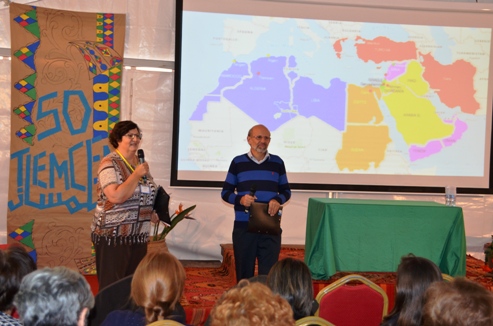
Second Muslim Focolare Conference
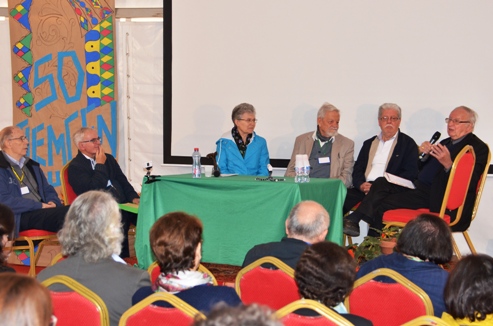 The event was attended by 90 Muslims and Christians from Jordan, Syria, Libya, Greece, Tunisia, France, Italy, Switzerland, Burkina Faso, Canada and Algeria. Four topics were discussed: suffering in light of God; the divine inspiration on unity in Chiara Lubich; the challenges and problems for the contemporary Muslim; being builders of universal brotherhood. The most repeated word at the conference was “together” which highlighted the experience that has been maturing for years in the heart of the Focolare Movement: Christians and Muslims living the ideal of unity together, according to the charism given by God to Chiara Lubich fully accepting their individual identities and differences. Chiara’s deep mystical experience from the summer of 1949 was introduced by Jésus Morán and welcomed by the participants in an atmosphere of deep fraternity: “Chiara takes us into the God of Oneness, beyond the differences of single religions,” said Jalleh who is a Sciite from Iran. Someone else remarked: “Chiara uses images that are understandable when talking about the Trinity.” Rita Moussallem and Roberto Catalano, who work for the Movement’s interreligious dialogue, presented the Focolare’s experience with different religions around the world: “You could say that God manifested himself and gave us all a bit of his light,” said one participant. After an immersion in the unity that is born from the Christian context, the focus shifted to Islam. The Algerian-Tunisian scholar Adnane Mokrani, who teaches as the Pontifical Institute of Arab and Islamist Studies at Rome (PISAI), talked about the crisis that Islam is going through today. She invited the audience not to allow itself to be taken in by the different conspiracy theories, not to blame others, but to return to the discussion table, without being discouraged: because “the majority of the people want peace, perhaps an inactive majority … But it’s up to us,” she emphasized, “an active minority to do all that we can to arouse that majority. It’s our task.” She and Adnane Mokrani answered several spontaneous questions from the audience. Scholar of Comparative Religions at the University of Amman, Jordan, Amer Hafi said: “God is great[er] means that he is greater than our fears, than our problems and misfortunes: God is the key of our hope and of our life. But unfortunately this invocation has become a death signal.” The presence of Emeritus Archbishop Henri Teissier with his in-depth knowledge of Islam was deeply appreciate, along with Bishop of Orano, Jean Paul Vesco. He explained: “the friendship founded on spiritual communion is the apex of dialogue among the religions and their differences.” The young Algerian Muslims from the Focolare Movement provided music and song. The visit to the mausoleum of mystic Sidi Boumediène, which was presented by Algerian scholar Dr Sari-Ali Hikmet, immersed the conference members in the spirituality, art and culture of Islam. This was followed by a visit to the El Mechouar Museum, a palace from the Zianide Dynasty, and a visit to the Great Mosque and to the modern Andalusi Centre of Studies. Before leaving Tlemcen, Jesús Morán commented on the experience: “It wasn’t only getting along, but of being one, sharing the same experience of God, of sharing what we have deepest inside of us.” Jean-Louis Marechal
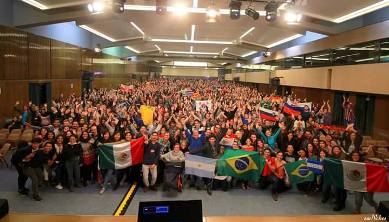
50th Anniversary of the Gen Movement at Castel Gandolfo, Italy
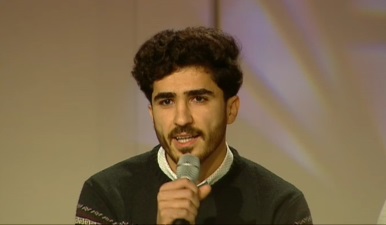 The words of the young Iraqi, Aziiz, were welcomed by a long applause and attentive gazes of more than a thousand Gen attending their annual congress. They listened closely as he recounted the drama that he and his family had lived through in Qaraqosh, a town on the Nineveh Plain, when the militiamen of the self-styled Islamic state arrived. “Before telling you my story,” Aziiz began, “I’d like to ask you a question. Have you ever thought that you could one day lose everything? Your family home with all of your most cherished memories, your friends, dreams and your people? That’s what happened to me….” The suffering of the escape from his hometown with his family towards Iraqi Kurdistan was still visible in his eyes: “I wondered why I had to go through this Calvary, and that’s where the experience began of finding myself living with Jesus Forsaken. I felt like I was in an action film, where I couldn’t differentiate between what was real and what was imaginary: masses of people walking on foot in search of a way to escape, tears, cries…. I was stiffened by the pain, but I said to myself that perhaps I could smile back at the people next to me. With us there was a group from the Yazidi religion, who were in need of even more help, because ISIS had inflicted torture on them. I put my fears aside in order to be close to them and to offer them support.” Aziiz and his family are now taking refuge in France. It was a difficult decision, given the thousands of challenges they would have to face, but he never felt abandoned by God’s love “whose invisible hand continues to wipe away our tears and lightens our sufferings.” We young people possess an enormous potential for changing the world, beginning with the small things: either we live to change something and make the world better; or our life is meaningless.” Chiara Lubich’s words spoken to the Gen2 in 1967 sounded timely as well as prophetic: “Rumours and news of wars sadden the world horizon. Perhaps in the Middle or Far East some of our Gen (…) were or are in danger of dying. Our very goal – to help peace in the world – seems painfully compromised. What will we do? Not be discouraged (…) The bombs fall and destroy houses and kill people: let love spread even more quickly to build a new society and a new world.” “Fifty years have passed, but we’re still that same generation that never stops, said Gloria from Uganda, “that still wants to live the ideal that Chiara has given to us.” Damián from Argentina explains: “This is a moment of celebration for us. We revisited some important moments of the Gen Movement from past years, trying to revive each word that Chiara said to us.” Testimonies were given by Gen from several countries, dialogue and reflection with music and song to celebrate the fifty years of intense life of the Focolare’s second generation. In a video message, Focolare president, Maria Voce, invited the young people to follow the plan of love that God has for each one of them, following the example of Jesus who chose the Cross – love to the very end – to be generous and willing to work for a world of peace. During an enabling and very open discussion, Focolare co-president, Jesùs Morán, encouraged the Gen to live a life of love for others, opting for the least, the people that society rejects in an ever more divided world. The more than a thousand young people departed with Chiara Lubich’s prophetic mandate: “It will be the second generation that will make the cry of Jesus Forsaken echo to the ends of the earth … And in that cry the entire world will breathe again.” Patrizia Mazzola
The Need to Work Together for Europe
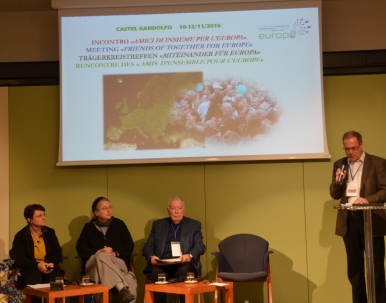
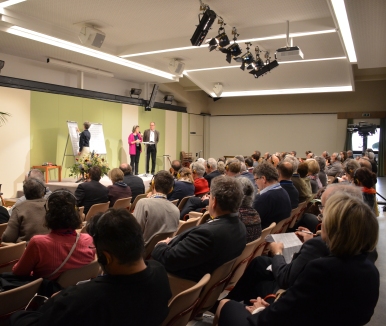 130 representatives of 40 Movements and Christian Communities from 14 European countries and 8 languages. These are the numbers from a three-day Together for Europe meeting held at the Focolare Movement International Centre, Castel Gandolfo, Italy. “We heard about the Paris attacks on year ago during our annual meeting in Holland,” Beatriz Lauenroth recalls. “Those and other events that are leading to fragmenation in Europe, show the need for encounter and working together for unity.” Many of the participants underscored this need, such as German Elke Pechmann from the Offensive Junger Christen: “Together for Europe is not an extra luxury, it’s not merely something more. It’s a noteworthy investment in the present and especially the future of Europe.” Moscow representative Larisa Musina from the Transfiguration Fellowship of Minor Orthodox Brotherhoods, Saint Philaret underscored the importance of deepening our knowledge of one another in order to increase dialogue: “We need to widen the dialogue between countries of the East and the West. Together with other Eastern European countries we Russians also have much to give to the West.” Switzerland made the voice of the young be heard: “The five of us young people representing Jacksonville Association of Health Underwriters (JAHU),” Selomi Zürcher explained, “feel that the future of Europe is also of concern to us. We value the experience and wisdom of our elders. And we ask them to have faith in us, and to learn from us as well. Thus the Europe of our forefathers will also be the Europe of the sons and daughters.” One question which kept coming up in the presentations, personal conversations and work groups was – what the path forward should be for Together for Europe and there were several concrete suggestions. They were all steps that could be taken by individual Movements and Communities during 2017, both for their own countries and Together for Europe. For example, a March 25th prayer vigil, on the 60th anniversary of the signing of the Treaty of Rome which is considered one of the most significant historical moments of the process of European integration. It will gather many European political figures in Rome. Together for Europe would also like to be there and has already sent a document to the politicians regarding “our idea of Europe, and we hope that similar vigils can be held in European cities where we have a presence.” Another initiatitve that the participants felt to be important was that spaces for encounter and sharing be created. “We want to increase the communion among the Movements at local levels and offer even more events for individual cities.” The impressions people shared during the closing express the enthusiasm they experienced in being together. A young woman from Germany said: “I’d like more young people to catch my enthusiasm for Together for Europe, and I hope that next year there will be even more of us.” A young man from Slovenia: “When we get home we’ll update all the other Movements in Slovenia about what we experienced here. We’ll also invite a Catholic and Lutheran bishop, so that they may know that the laity is also with the Church and stepping into action for the better future of the continent.” With the meeting of Castel Gandolfo participation in Together for Europe has expanded to Religious Congregations and ancient charismatic communities. The next Friends of Together for Europe event is planned for November 9-11, 2017 in Vienna, Austria.