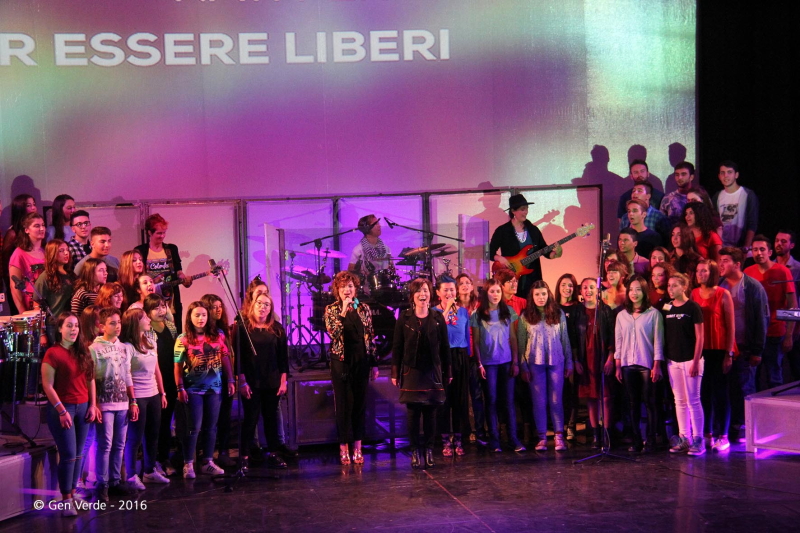
LoppianoLab 2016 opened its doors again this year with the theme: the poverty of riches and the wealth of poverty. Persons, institutions, ideas and experiences all played an active part in building a future based on a culture of unity across all fields. Mileni, Gen Verde’s guitarist, described LoppianoLab 2016 as “unique since during itwe launched ‘Young people in action’: performing arts workshops dedicated especially to young people looking for a way to build a better future.”So 160 young people mostly from Italy but also including a group of 50 from all over the world took part in this enriching experience of intercultural exchange. Mutual listening and trust reigned in an atmosphere free from prejudice. Mileni explains – “The young people told us that they learned to recognize the needs of those around them and not just their own.”They said:“We can choose: either to ignore those who have difficulties or to help them.” They discovered the miracle of ‘being together’ and the richness that comes from sharing in the small things of everyday life.When asked, “Did you learn anything new here?”, they replied:“we understood the value of solidarity, and helping one another. We learned to value team work. We learned the importance of a having a sense of responsibility and the part each can play in the life of a group. We learned that on our own we can achieve small things but together we can do something great.” They also spoke about the important experience of working with others from a different culture: “we learned to go beyond barriers which could have been there because we speak different languages or come from different places. Instead we found a way of communicating which was very deep and sincere. Together we were able to go beyond moments when we experienced discouragement or failure and discover the joy of singing, dancing or creating music together.” When asked, what will you take from this to your everyday life? The young people replied:“To listen to others. To trust them. Not to stop at my own limits.”And:“We have learned to trust in ourselves more and that people are not always what they seem – first impressions can be wrong! In the very positive atmosphere we experienced here, we learned to eliminate prejudice and get along happily with others.”The event concluded with a bang in an exciting final performance at the Loppiano Auditorium packed with 900 people. They listened intensely and in the end everyone was on their feet as great joy filled the air. Those in the audience said: “I loved the concert – it felt like something really new, modern and extremely relevant in that it touched on issues all of us face.” And, “It was so beautiful, I experienced the strength that comes from diversity. At the end of the concert I would have wanted to say so much, but in the end I remained in silence. In silence to meditate on the values you transmitted to us.” Video
16, 17 &18 November: Youth workshops 19 November: Concert “On the Other Side” at the municipal hall in La Spezia (Italy) at 8.30 21 November: Follow up meeting with the young people
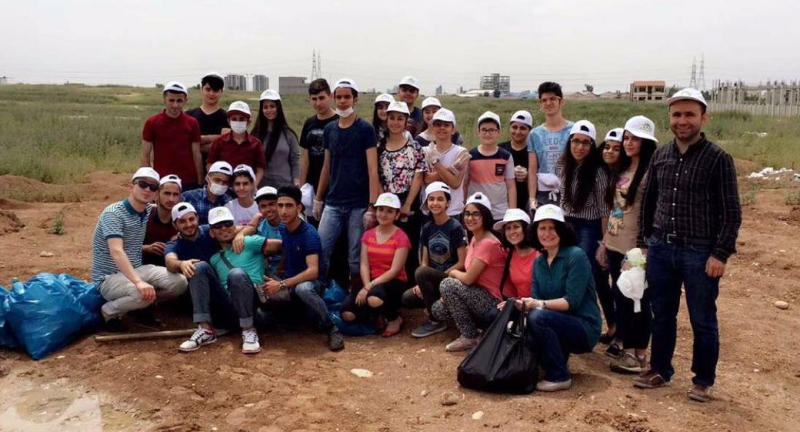
Political instability, economic uncertainty, corruption, religious extremism, and reduction of educational offers are just some of the causes that push the Iraqi population to an unprecedented migration. The choice to remain in Iraq today is a really difficult decision, especially if you are a Christian. And yet Iraq disposes of remarkable natural resources and its people are endowed with humanity and great inclusion capacities. Just think of the plurality of the cultures, languages, and religions, and the various ethnic groups which for centuries had managed to coexist in peace. The habitat of Christian legacy right at its origins, for 2,000 years Iraq has been the natural home to very lively Christian communities. With the outbreak of wars, however, today it has become the object of discrimination and persecution. The most atrocious even was two years ago, when the ISIS extremists took over Mossul and the surrounding plains: in a few hours thousands of Christians had to abandon their homes. With only the clothes they were wearing, they had to disperse amid numberless dangers and discomforts, towards Jordan or Lebanon where they found refuge in makeshift refugee camps. Some statistics say that the Christians in Iraq counted 1.5 million (2003), and today number 300,000. Also the Focolare community has suffered the devastating effects of this barbarity. But both those who left the country and those who remained – concentrated in the cities of Erbil, Baghdad, Bassura, and Dohuk – try to transmit peace everywhere, building bridges of solidarity. However, while in the typical summer meetings of the Focolare in the past, the Mariapolis saw the participation of 400 people, and in those held from 9 to 11 September this year, only 40 attended. But the numerical drop has not influenced the qualitative profile which has definitely grown in intensity and depth, also because the central theme focused on interpersonal relationships undertaken in the spirit of mercy. Hosted in Sulaymaniya, close to the border with Iran, the participants lived three days of an authentic training in mutual love. Racconta Rula, focolarina from Jordan and now in the focolare house of Erbil:«We prayed, played, took walks in a family atmosphere, experiencing real communion. During the session dedicated to the family, the spirit of sharing created allowed us to talk about relationships as couples, the challenge of migration, conciliation of work and family, education of the children… while the youths, through choreographies, showed how one we can become bridges towards the others.» The Mariapolis was also visited by the Bishop ofBaghdad, Bishop Salomone, who inflamed all with his words: «Jesus wants us to become yeast for this world. I am pleased that you chose this city for your meeting, and even if you are only a few, you will surely leave in this place that typical imprint of those who are seriously committed to living the Gospel.» The focolare tries to support those who have remained, as also those who have decided to leave, precisely because they are aware of the difficulties of living without being able to plan one’s future, especially for the youth. «We see that albeit the fact of living abroad – continues Rula – they still want to remain in contact. A young boy wrote us from the refugee camp, saying that the spirituality of unity is the only light that is his support and that trying to love others gives a meaning to the unnerving wait they are undergoing.»Among the many experiences shared in the Mariapolis, is the emblematic one of a surgeon in a public hospital. Since the doctors do not receive their salaries regularly, they try to plan the operations for the afternoon, when these are private and paid operations. But he decided to help as many people as possible by scheduling the appointments in the morning. At first, his colleagues criticized him, but slowly they began to do the same.
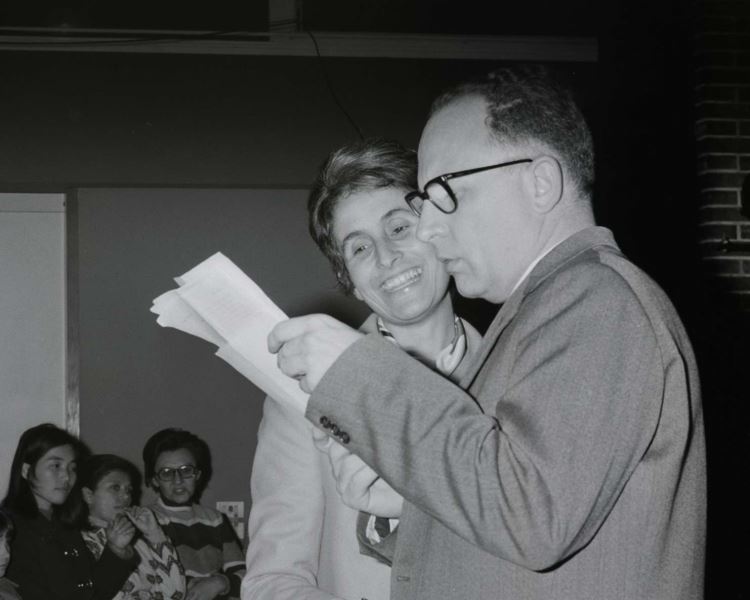
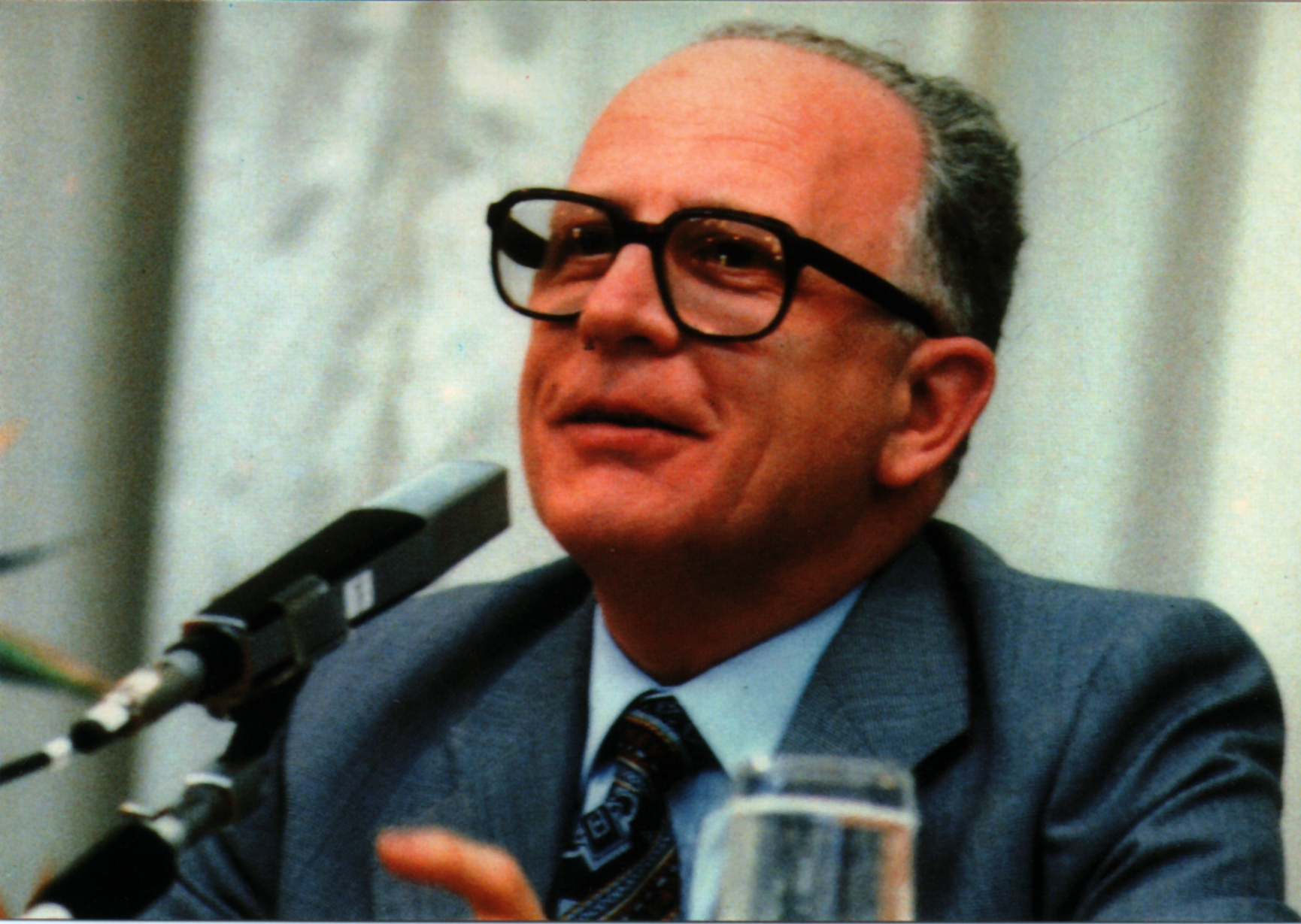
Lionello was born on October 10, 1925 in Parma, Italy. His family was wealthy and raised him to be honest and genuine. He attended high school during World War II and his attention was drawn toward civil society and social problems. In 1943 he enrolled in Law School and graduated with honors in 1947 after having done some prison time for providing help to the partisan movement. After the war he oversaw the educational and cultural activities of the Italian Catholic University Students, as well as the political activities of the Christian Democrats. He served the poor in the Saint Vincent de Paul Society, but feared becoming bourgeois. He joined in an initiative for young people who wanted to deepen their spiritual lives in the light of the Gospel. There he came to know Chiara Lubich‘s spirituality of unity and, in January 1950, Ginetta Calliari, one of the first focolarine. He recalls: “She spoke rather simply, but with quite a bit of conviction. […] The Christianity she was describing seemed so fascinating and fresh that it felt like I was hearing for the first time what Christianity was all about.” This spiritual growth was followed by professional growth becoming Italy’s youngest magistrate. In 1953 he attended the summer Mariapolis where he was immersed in the spirituality of unity. He met Chiara Lubich, Pasquale Foresi and Igino Giordani. Those days would mark his life forever. He remembers them in this way: “That community even though small had a certain completeness of its own: there were consecrated virgins and married couples, people that were not lacking in defects and naivetey. It was an organism into which the Lord had deposited a light, a law, a treasure that was destined to spread to the whole world.” At that Mariapolis he decided to consecrate his life to God in a focolare community. In 1961 he caused a bit of a stir when he left his profession (in the meantime he had been appointed Deputy Prosecutor of the Parma Judiciary) and dedicated himself completely to the Focolare. The weekly newspaper published an article on this Magistrate who had “given up the toga for a Bible.” In 1962 he was awarded the Premio della bontà (Goodness Award) by the Emilia Region of North Italy.
Loppiano: Lionello Bonfanti e Renata Borlone
He spent time at the first international school in Grattaferrata, Italy, then in Turin and in the Focolare town in Loppiano. He taught the new focolarini there for 15 years and devoted himself entirely to the nascent permanent Mariapolis “where the basic law is mutual love.” In 1973 he became a priest and for him that meant “being at the service of the charism, being a transparency of love, being ‘a little more Jesus’ for the others.” In 1981 he held different positions at the Centre of the Movement in Rocca di Papa, Italy. After he was licensed in Theology and Canon Law he became an expert on Lay Associations, offering invaluable assistance in drawing up the Statutes of the Work of Mary-Focolare Movement, while in contact with the Holy See’s best canon lawyers. In the final summer of 1986 he was diagnosed with a tumor. Some thoughts and words of Chiara Lubich often returned to his mind: “The Hail Mary is beautiful in each of its expressions, but today I’d like to suggest underscoring in our hearts, in a special way, the request that she: “Pray for us sinners now” and “at the hour of our death” so that Mary might assist us with her intercession before God in every present moment and that she might be especially close to us at that important moment of death.” He died suddenly on October 11th. Someone had called him “a man of the Beatitudes” because of the way they so exactly describe who he was: in his purity of heart, in his meekness, in his mercy, in his peace and in his hunger and thrist for justice. In fact the Gospel passage that guided him in life had been: “But strive first for the kingdom of God and his righteousness, and all these things will be given you as well” (Mt 6:33).

 Lionello was born on October 10, 1925 in Parma, Italy. His family was wealthy and raised him to be honest and genuine. He attended high school during World War II and his attention was drawn toward civil society and social problems. In 1943 he enrolled in Law School and graduated with honors in 1947 after having done some prison time for providing help to the partisan movement. After the war he oversaw the educational and cultural activities of the Italian Catholic University Students, as well as the political activities of the Christian Democrats. He served the poor in the Saint Vincent de Paul Society, but feared becoming bourgeois. He joined in an initiative for young people who wanted to deepen their spiritual lives in the light of the Gospel. There he came to know