25 May 2023 | Non categorizzato
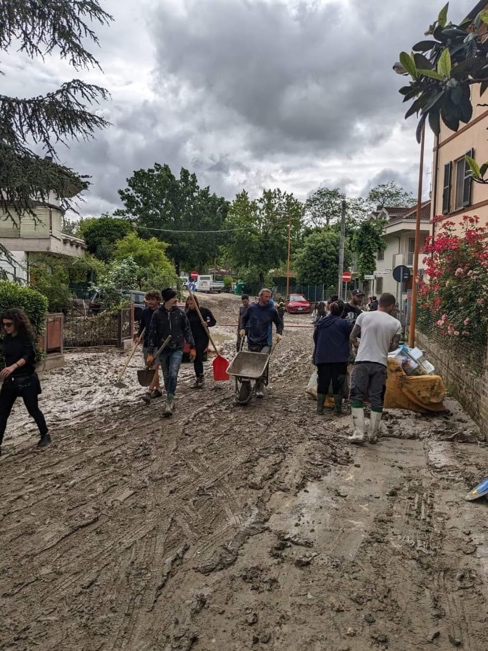
The wave of bad weather that has poured over Italy in recent weeks has specifically affected the regions of Emilia-Romagna and Marche. To date, many people continue to work in the terrible, muddy conditions to assist entire communities that have been displaced and have lost everything due to the flood. An appeal for funds has been launched by the Focolare Emergency Coordination Committee. It is a climate emergency that has hit Emilia-Romagna and Marche, two regions of central-northern Italy in recent weeks. A catastrophe that has claimed 15 victims so far and displaced about 23,000 people. Several cities have been completely brought to their knees, submerged by water due to the many flooded rivers. There is extensive damage to homes, furniture and cars, as well as to businesses, farms and crops. In Emilia-Romagna the most affected area so far has been that of Faenza which in one night ended up almost completely underwater due to the rupture of the banks of several rivers. The communities of the Focolare Movement in the area told us, “Many families have been evacuated, for example, a family with three children was rescued when the water had already reached the first floor of their home. Despite having lost everything, the next day this same family, helped by the local Civil Protection Organization, opened their family run restaurant and prepared hot lunches for hundreds of evacuated people.” A social worker from Faenza, a member of the Focolare, said: “A few nights ago, I was in the Town Hall, the headquarters of the Emergency Operations Center. It was a very emotional experience. If I think about it, I cry… I ask Jesus for the strength to do what is best for each person.” In another town, Cesena, the Savio River flooded and the adjoining houses were engulfed. Wherever possible, and thanks to a lull in the rain, the first volunteers started working. In the city of Cesenatico the situation is extremely difficult. The sea has invaded beaches, bathing establishments and streets. In the surroundings of Bologna, on the other hand, there are many small towns still flooded; the people have all been evacuated. A bridge has collapsed that has completely diverted the river bed inwards and the people are saying, “it will take time but help will certainly be necessary”. Reports from these areas say, “The water is not being absorbed by the ground. It continues to rain and is like a wave, which depending on the levels of the ground, behaves in an unpredictable way”. In the south of Romagna, between Ravenna and Rimini, the situation has also worsened in the towns of Russi and Lugo. Other members of the Focolare Movement told us: “In the town of Bagnara di Romagna, we have had water 20 cms deep; the ground floors, garages and basements are full of water, but we’re fine.” It’s a catastrophe that will have to be tackled but despite the enormous difficulties, many people fervently desire to take concrete action to rebuild. One said, “The beauty is that one of the things to manage is the infinite offers of help we are receiving. Many people are offering homes and hospitality and we are setting up a team that will deal with the numerous requests and offers. The local Islamic Community, in contact with the Focolare Movement, has also expressed willingness to welcome or carry out joint actions. The extraordinary fundraising appeal initiated by the Emergency Coordination of the Focolare Movement in support of the population of Emilia-Romagna and Marche, through the ONLUS Action for a United World (AMU) and Action for New Families (AFN) is ongoing. Contributions received will be jointly managed by AMU and AFN to initiate reconstruction actions. You can donate online on the following sites: AMU: www.amu-it.eu/dona-online-3/ AFN: www.afnonlus.org/dona/ or by transfer to the following current accounts: Action for a United World ONLUS (AMU) IBAN: IT 58 S 05018 03200 000011204344 at Banca Popolare Etica SWIFT/BIC code: ETICIT22XXX Action for New Families ONLUS (AFN) IBAN: IT 92 J 05018 03200 000016978561 at Banca Popolare Etica SWIFT/BIC code: ETICIT22XXX Reason: Emilia-Romagna and Marche Emergency Tax benefits are provided for such donations in many countries of the European Union and in other countries of the world, according to the different local regulations. Italian taxpayers will be able to obtain deductions and deductions from income, according to the legislation provided for the NGOs
30 Apr 2023 | Non categorizzato
The 28th United World Week will take place from 1st-7th May 2023. It is a worldwide extravaganza of actions and initiatives to promote fraternity, unity and peace between people and peoples, organized by the communities of the Focolare Movement across the globe. The week opens on 1st May with a live transmission on YouTube from Loppiano, the international little town of the Focolare in Italy. The conclusion will be on 7th May with the worldwide relay race “Run4Unity”, supported and promoted by the Laudato Sì Action Platform of the Holy See’s Dicastery for Promoting Integral Human Development. A community in Pont-à-Mousson (France) will convert the sport and the kilometres completed into trees to be planted in their sister parish in Burkina Faso. And in Bobo Dioulasso in Burkina Faso, the Youth for a United World of the Sahel will go through the streets of the city, to collect plastic, with which they will build a symbolic “mountain of peace”. In St. Mauro Pascoli (Italy), children and adults, will promote ecological sports to raise awareness of environmental care and raise funds to provide sports equipment to young cyclists in Ukraine. In Palawan (Philippines), hundreds of people will clean public beaches to care for nature and for the health of their fellow citizens. They say, “We believe that today, more than ever, unity and fraternity can only be achieved if we take care of ourselves, if we take responsibility to look after the planet together, with concrete actions, starting wherever we are”. From Paraguay to India, through Togo, Benin, and Lebanon to Australia, there are hundreds of initiatives like these, small and large. They take place every year to celebrate United World Week: Seven days of workshops and exhibitions, promoted by the communities of the Focolare Movement throughout the world, in synergy with other movements, associations and local institutions that share its values, to raise public awareness of peace, care for the environment, ecological conversion and integral care of the person which all starts from living out concrete fraternity. The main theme of the 28th United World Week is care of humanity and of the planet: “Dare to Care: People, Planet and Our Ecological Conversion”. These issues are even more urgent in the times in which we live which suffer from the catastrophic effects of the climate crisis and the proliferation of inhumane hotbeds of war and conflict everywhere on the planet. During this week, the initiatives that are ongoing throughout the year, will be showcased in many virtual and in person appointments, different depending on the places and communities that promote them: exhibitions, cultural events, workshops of dialogue and debate, solidarity and ecological actions, sporting events. Locally we aim to influence the public opinion of our countries while internationally, the objective is to fill our Common Home with hope, starting by recognizing the persevering and tireless action of people who are committed to building fraternity. The main partner of the United World Week 2023 is the Laudato Sì Movement. The United World Week is co-funded by the European Union through the AFR.E.SH project.
International events of the United World Week
On 30th April, at 21.00 (Italian time), the United World Week will begin with a concert entitled “The reason we care”, given by the international band Gen Rosso. It will be broadcast on their official YouTube channel (https://youtube.com/@GenRossoOfficial). The concert is the result of the last few years during which the band has used music to carry out activities of welcome and education with young refugees and migrants in Bosnia-Herzegovina and Lebanon. 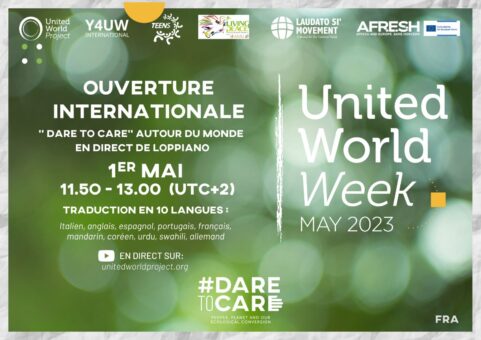 On 1st May at 12.00, a major show, entitled “Common Ground, me, you and us”, broadcast live from the Auditorium of Loppiano (Italy), will officially inaugurate the 28th United World Week. The challenge? To rediscover the value of care, of taking care of oneself and of others, of the relationships that connect us and of our relationship with Mother Earth. The programme will include the testimonies of young change makers from various countries of the world, who are engaged in networking, often bravely going against the current in their taking care of people and the environment, for the common good of their peoples. Like Mimmy from Burundi who, as part of the fight against plastic pollution, has been elected “zero plastic” ambassador, because, with her association, she transforms plastic into ecological tiles and plants trees in the Rusizi National Park. Or Ivan, who in Damaguete (Philippines), with his community, takes care of his people through their commitment to the marine environment and planting mangroves, because he says: “Since we are one of the poorest countries in Asia, fishing is a means of livelihood for many. Our people need the sea to survive, for everyday life.” The live stream will be available at www.unitedworldproject.org.
  On Saturday 6th May, it will be the turn of “Peace Got Talent”, an artistic event promoted by the “Living Peace International” network that, taking its cue from the well-known television format, gives space to talented young people who are committed to promoting peace through music, song and dance. Each act in the competition is an expression of informal projects of peace education. The participating schools and groups include some from Ukraine, Syria, Russia, Myanmar and Congo: Countries affected by war and armed conflicts, which are eager to contribute their songs and their voices of hope. The show will be broadcast on www.unitedworldproject.org. On Sunday, 7th May, over 200,000 teenagers, young adults and families in many countries and hundreds of cities will participate in “Run4Unity,” a global relay race that links nations, cultures and religions to build peace and plant trees. Supported and promoted by the Laudato Sì Action Platform of the Vatican’s Dicastery for the Promoting Integral Human Development, Run4Unity 2023 is led by the young people of the Focolare Movement. Participants of all ages will look after their health through physical exercise and will take care of the Earth by converting the kilometres completed or minutes of exercise to trees to be planted around the world (https://www.teens4unity.org/run4unity). Run4Unity will start from the Fiji Islands, which is in the first time zone to begin a new day and is an ecologically symbolic country because it is already strongly affected by climate change. From there, over the next 24 hours, young people will pass the virtual “baton” from one time zone to another through a series of video calls, concluding with communities in California. Participants will run, jog, walk or participate in local sporting events, some of which will be held in places symbolic for peace, for example at the borders between countries or communities in conflict or in ecologically significant places, to give a witness of unity and peace. Participants will include some of the 1,000 Laudato Sì schools around the world which are engaged in ecological education through the Laudato Sì Action Platform, as well as groups and schools that are part of the Living Peace International Project. Information about all the local events for United World Week 2023 can be found at: https://www.unitedworldproject.org/uww2023/.
Tamara Pastorelli (Photo: Pixabay)
27 Apr 2023 | Focolari nel Mondo, Non categorizzato
Margaret Karram and Jesús Morán, President and Co-President of the Focolare Movement, have just concluded the Korean step of their first official trip to Asia and Oceania. This will be followed by visits to Japan, the Fiji Islands, Australia and Indonesia, until 25 May. Here is a brief update on what happened in Korea.
“Teach us, Lord, to journey together, looking in the same direction, united by the same goal, in search of the same values towards the One who loves us and awaits us, who is the foundation of every new friendship’.
On 22nd April, this prayer was said at the start of the meeting of 160 focolarini and focolarine from East Asia (with several linked online). It expresses very well the meaning of Margaret Karram and Jesús Morán’s first official trip to Asia and Oceania. The first stop has been Korea, then they will visit Japan, the Fiji Islands, Australia and finally Indonesia. They are being accompanied by Rita Moussallem and Antonio Salimbeni, councillors of the zone and co-responsible for the interreligious dialogue of the Focolare Movement The Movement has been present In East Asia since the end of the 1960s (the zone includes Korea, Japan, and the Chinese-speaking area). In Korea, Father Francesco Shim brought the spirituality of unity in 1967 and in Hong Kong the first focolare was opened in 1970. There are about 10,000 members and adherents of the Movement living the spirituality of unity in this part of Asia.
Margaret Karram: Starting again from dialogue
“Why did you choose Asia for your first trip?”, the reporter of the ‘Catholic Chinmoon’, Korea’s leading Catholic weekly asked Margaret. “I am here to listen, to learn, but above all to love the ‘continent of hope’,” she replied. The spiritual wealth of these peoples will be a gift for all. I feel it is very important to revive the path of dialogue in the Movement; it is the most important instrument for building peace, which is the good that the world needs most today’.
Korea: between contradictions and hope for peace
The capital city, Seoul, has almost 10 million inhabitants and showcases a nation that has been running at speed for 50 years and has become one of the most advanced and technological states in the world. ‘Speed, efficiency and competitiveness are the hallmarks of modern Korean society,’ explains Matthew Choi, a Korean journalist and focolarino, ‘both economically and culturally, but this brings many contradictions with it. ‘There is a great emphasis on achievement here,’ adds Kil Jeong Woo, delegate of the Politics for Unity Movement in Korea, ‘with a highly competitive academic system and a strong work ethic. We have problems of social inequality, and efforts are underway to address this through social and political reforms, but progress is slow.”
The Korean Church, a bridge in a divided society
The Archbishop of Seoul, Archbishop Peter Chung Soon-taek, highlighted among the social challenges intergenerational conflicts and an ageing population. He explained that ‘In the Church, there is the danger of closing ourselves off in our communities. Instead, we need to open up and this is the contribution that the Focolare can bring”. Margaret Karram and Jesús Morán then met Bishop Thaddeo Cho, Archbishop of Daegu, Bishop Augustino Kim, Bishop of Daejeon and Bishop Simon Kim, Bishop of Cheng-ju. In the context of strong polarisation between progressives and conservatives, the Church is seeking to be a bridge and act as an antidote to the secularisation that is affecting young people in particular.
Dialogues and inundations: the journey has begun.
The Focolare Movement in Korea is making its contribution to ecumenical and interreligious dialogue, and also in various cultural spheres. One example was the event on 14 April in Seoul, entitled: “Dialogue is becoming the culture of the human family”. Representatives from various Christian churches, various religions, and representatives from the social fields took part, animated by a constructive spirit of cooperation for social reconciliation and peace. In her talk Margaret said: “It is very important that everyone can generate environments that open the way to the ‘dialogue of life,’ by putting into practice the teachings of their own religious faith”. Jesús Morán encouraged them to continue on this common path: “It does not matter how big or small the things you do are. The important thing is that they bring the seeds of something new. The testimonies you have presented show this clearly”. Sa Young-in, Director of the UN Office for Won Buddhism, said that as a young girl she dreamed of a “religious village” where believers of various religions could share love, grace, and mercy. “What I imagined,” she said, “I feel I can see fulfilled here today”.
Gen 2: “Courage and go ahead!”
On 15 April 80 Gen gathered at the Mariapolis Centre: 70 from Korea, 9 from Hong Kong and others were linked up from Japan and Chinese-speaking areas. They brought Margaret Karram and Jesús Morán the fruit of the work done in four workshops on how to incarnate the spirituality of unity in everyday life; relationships within and outside the Movement; the difficulties they face in finding their human and spiritual identity and their dreams for the Movement. Margaret said to them: “Our identity is one. We are not Gen first, and then become something else when, for example, we go to university. The gift of the spirituality that we have received makes us free people; it gives us the courage and strength to proclaim what we are and what we believe in, and I would also like to say to you what the Pope said to me when I was elected president: ‘courage and forward'”. One of the Gen said: ‘After Chiara’s departure,’, ‘there were moments when I felt nostalgia and darkness. Today, Margaret and Jesús’ closeness to us, their trust and listening have encouraged me a lot. They make me realise once again that Chiara’s legacy is a gift from God suitable for every age’.
The little town –armony
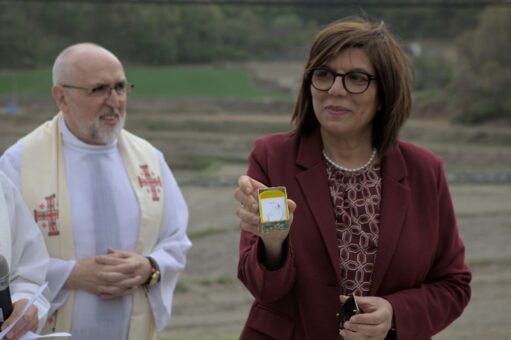
On 16 April, Margaret Karram and Jesús Morán went to the land that the Movement had received as a gift, about 70 kilometres south of Seoul, to fulfil a dream Chiara spoke of during her visit to Korea in 1982: the birth of a little town of formation and witness to Gospel life and the spirituality of unity for this part of Asia. In the presence of about 200 people – Focolare members, benefactors and friends who contributed in various ways – the land was blessed, and a medal of Mary was buried there as a seal. “Let us entrust this Work to her,” Margaret concluded, “and ask her to help us adhere to God’s plans that maybe we do not yet know, but He is greater than us and if we give Him our willingness and generosity, He will be able to work.”
Visiting Sungsimdang
It all started in 1956, with two sacks of flour used to make steamed bread to sell in front of Daejeon Station. Today, Sungsimdang has become the city’s most famous restaurant business and, with its 848 employees, has been living the spirit of the Economy of Communion (EoC) to the full since 1999. Margaret and Jesús visited it and had a joyful meeting with Fedes Im and his wife Amata Kim who are the owners and are Volunteers of the Movement. ‘I didn’t study administration or management,’ says Fedes, ‘but I followed Chiara. “Seek to do good before all people,” is the motto she gave to the business that serves 10,000 customers a day and has always lived sharing, bringing bread daily to more than 80 social assistance centres. But what is striking is the atmosphere and relationships in the workplace: “For us,” says their daughter Sole, who is head of the catering department, “all people have the same value: men and women, rich and poor, managers and employees, suppliers and customers. We try to put the person at the centre of all our decisions’. Jesús emphasised the importance of the business’s impact in the local area, an important part of companies operating in the EoC style, and Margaret compared their testimony to that of a little town of the Movement about which one can say, “come and see”. “And that,” she said, “is the greatest medicine the world is waiting for.”
Listening, knowing, sharing
Margaret Karram and Jesús Morán’ days in Korea were intense and varied, but there was also time for a tourist visit to the ancient site of Bulguksa, to learn about the roots of the national Buddhist culture. Located in beautiful parkland, with its thousand-year-old temples, they spent a truly regenerating day! There have also been many meetings with members of the Movement in this vast zone, such as the joyful afternoon with the focolarini and with some members of the Chinese-speaking area. The time with the 80 priests, and men and women religious was a ‘cenacle’ experience, with testimonies of faithfulness and authentic gospel life, in a profound conversation with Margaret and Jesús. Then, on 23 April, it was the turn of the long-awaited meeting with all the members of the Movement; 1,200 were present, with about 200 connected online from various countries. It was an amazing celebration, bringing together peoples and cultures that we would hardly ever see dancing and singing on the same stage, and rejoicing in each other’s beauty and richness. Perhaps that is why some called the event ‘a miracle’ and the seed of a society renewed by unity. 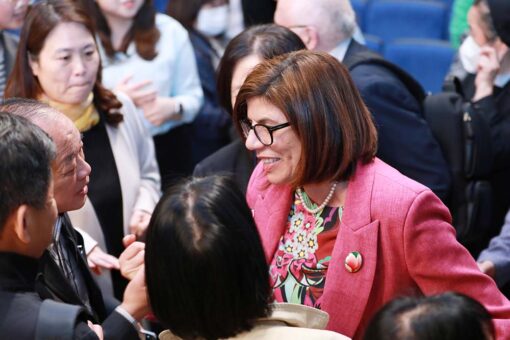 In the dialogue, Margaret Karram and Jesús Morán answered questions on a variety of topics, together with the councillors Rita Moussallem and Antonio Salimbeni. These included the ‘design’ of the Asian continent, the relevance today of dialogue between religions. To the question on how to have a deeper relationship with Jesus in the Eucharist, Jesús explained that it is not a matter of ‘feeling’ the relationship with Him, but of living it, because the Eucharist nourishes our whole person and makes us live as a body, in love for others”. Speaking of the decline in vocations in the Movement, Margaret said that for young people, personal relationships and the authentic witness of adults are important. “If our life is fruit of union with God and is coherent with the Gospel, they will be attracted, because they take inspiration from those who ‘dare’ to live for God and so they will understand where He is calling them”. To the last question on how our relationships must be in order to be able to dialogue with everyone, Margaret Karram answered with her own experience: “This year we have deepened our prayer life and our love for God, a ‘vertical’ love we might say, like those pine trees whose branches go upwards. The other day, while I was outside for a walk, I saw a tree that I liked very much: its branches were open, extending outwards; they intertwined with other trees. This is how our relationships should be: our arms should always be open, reaching out to others; we should have our hearts wide open to the joys, sorrows, and lives of all the people who pass us by.” It is ‘the hour of Asia’, Chiara Lubich wrote in 1986, during her first trip to these countries; today those words are manifesting all their relevance and prophetic value.
Stefania Tanesini
17 Apr 2023 | Non categorizzato
For almost ten years, a project of dialogue between Socialists/Marxists and Christians has been underway in Europe under the name of DIALOP. We met some of those involved during their recent visit to the International Centre of Focolare in Rocca di Papa (Italy) Walter Baier is one of the members of DIALOP, a project of dialogue between Socialists/Marxists and Christians, which involves intellectuals, academics, politicians, activists and students from 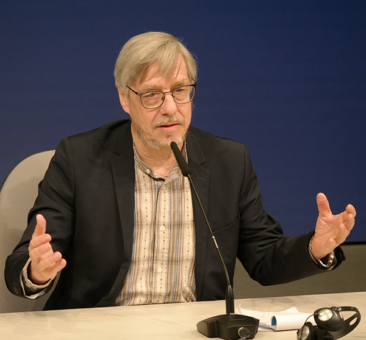 different European countries. They say: “We believe that dialogue is the best way to bring about real change and we work to transform the world into a better place to live”. Walter further explained, “I think that with the election of Pope Francis the situation has changed completely, substantially. Not only for the Catholic Church, but also for all the philosophical and cultural currents which oppose neoliberalism. I say this because what the Pope teaches is a way of uniting, which is contrary to individual consumerism. This brings the Pope and the parts of the Church that follow him into a position close to the position of the left, which seeks to emphasize common collective values.” DIALOP’s experience began on 18th September, 2014, during the private audience that Pope Francis granted to two leftist politicians: Alexis Tsipras of Greece and Walter Baier of Austria, along with Franz Kronreif of the Focolare Movement. On that occasion the conversation focused on the environmental crisis and the global social crisis. At the end of the audience Pope Francis invited them to initiate a transversal dialogue, which would involve a wide gamut of society and especially young people. Baier said, “I have been representing the European Left Party for three months. I am one of the founders. The European Left Party is now composed of 35 parties from 27 European countries. These countries belong to the European Union and I think that our understanding of Europe must really be much broader than just looking at the privileged part of Europe. We need to take pan-Europeanism seriously and we need to understand it better. Europe is not only different, but is also torn apart by deep social and economic divisions. And one of the fundamental demands of the left should be to achieving a decent standard of living in all parts of Europe for our familes. Something we have also learned through being together in dialogue with our Christian friends is how to have differentiated consent and qualified dissent, which is really a very, very useful method. ”
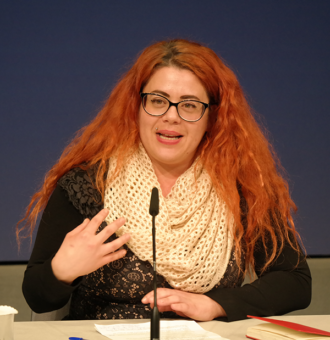
 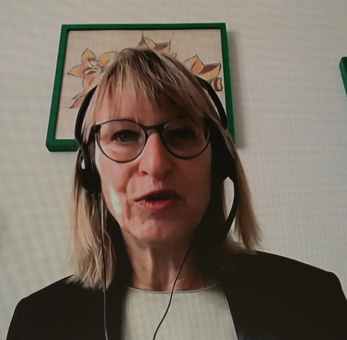 Cornelia Hildebrandt belongs to Trasform! Europe . In the face of the ongoing wars she has no doubt: “We of the Left share Pope Francis’ statement that every war is a failure of politics. In these times ridden with conflicts, we believe that dialogue is not only an urgent necessity, but a categorical imperative. It takes all our strength to impose a sustainable peace against the destruction of the environment; better living conditions of people against barbarism.” Dialogue means welcoming the other into your home. It is to become a guest of the guest. It is not only a tool, but a constant encounter, a path of shared intellectual and spiritual experience, in which the distinctiveness of the respective partners does not disappear, but unfolds and develops more clearly. With these encounters, opposites become complementary. Hilodebrandt explains the concept of differentiated consensus and qualified dissent: “We adopt and adapt a method that is used in ecumenism among the Christian Churches. The incoherently formulated basic statements of human society and the world must form a solid basis. In order for partners to speak and act together, common core statements must explicitly make reference to original texts so as to be compatible with the respective traditions of the Catholic Church and of Transform!Europe and beyond. And then it’s about asking questions accurately. And then the search for clear common declarations can begin, which reflect each tradition and enrich each other”. Angelina Giannopoulou is a young Greek woman from Tranform! Europe. She recounted her experience in Dialop and underlined the importance of the presence of young people for the present and future of this reality. She also told us about the “DialogUE Project” which, in collaboration with the European Community involves 14 civil society organizations. It will give an important input to the World Youth Day in Lisbon (Portugal) with a day dedicated to communication that will involve politicians, experts and young people. In the future there will be other symposia on ecology and social policies. Walter Baier concluded, “We cannot accept the situation in which we find ourselves today in Europe and in the world, I think this is the strongest vocation of Dialop”.
Carlos Mana
For more information and access to the “DIALOP Position Paper” see the Dialop website (https://dialop.eu/).
