21 Feb 2023 | Non categorizzato
In Hebrew, Nes Ammim means the ‘miracle of the peoples’. This place was created to foster dialogue and understanding between Christians, Jews and Muslims. From 16 to 18 September, “Dare to Care for a Better Future” was held here, a meeting organised by the Focolare Movement in the Holy Land and open to people of every generation, nationality, religious faith or non-religious beliefs. It was an opportunity to share a few days together and discover each other as partners, through mutual understanding, in building a better future together. For testimonies of friendship between believers of different religions, see also Holy Land: stories of dialogue ( https://youtu.be/Cp9MOx5xKvA ). https://youtu.be/MiWZNwrasD8

15 Feb 2023 | Non categorizzato
Immerse yourself in the sense of dialogue and confront each other in order to be able to live it concretely every day. This is the main objective of the 8 webinars promoted by the project “DialogUE: Diverse Identities ALlied Open to Generate a United Europe”. A way to deepen and grasp the beauty of this art, open to all. Can Christians, Muslims and members of other religions understand one another? Can we work together with those who, despite having the same creed, live it with avant-garde expressions or on the contrary anchored to traditions? Can those who believe in an eternal God and those who do not believe in life after death communicate? How can we build a united Europe between the countries of East and West so different in history, culture, development and tradition? These are the questions that drive the DialogUE project – Diverse Identities Allied Open to Generate a United Europe, a project born in Europe in particular through the International New Humanity Association, an expression of the Focolare Movement that, since its inception, has made dialogue a lifestyle, a mission to which it is committed daily at various levels together with many organizations that share the same passion to build more fraternal societies. The CERV Programme of the European Commission approved and financed the project. Its focus is people and values centred and its objective is to explore and develop the often challenging dialogue between different groups over a period of two years, in order to shape a Europe that is ever more an expression of that “unity in multiplicity” which is the reason for its existence. 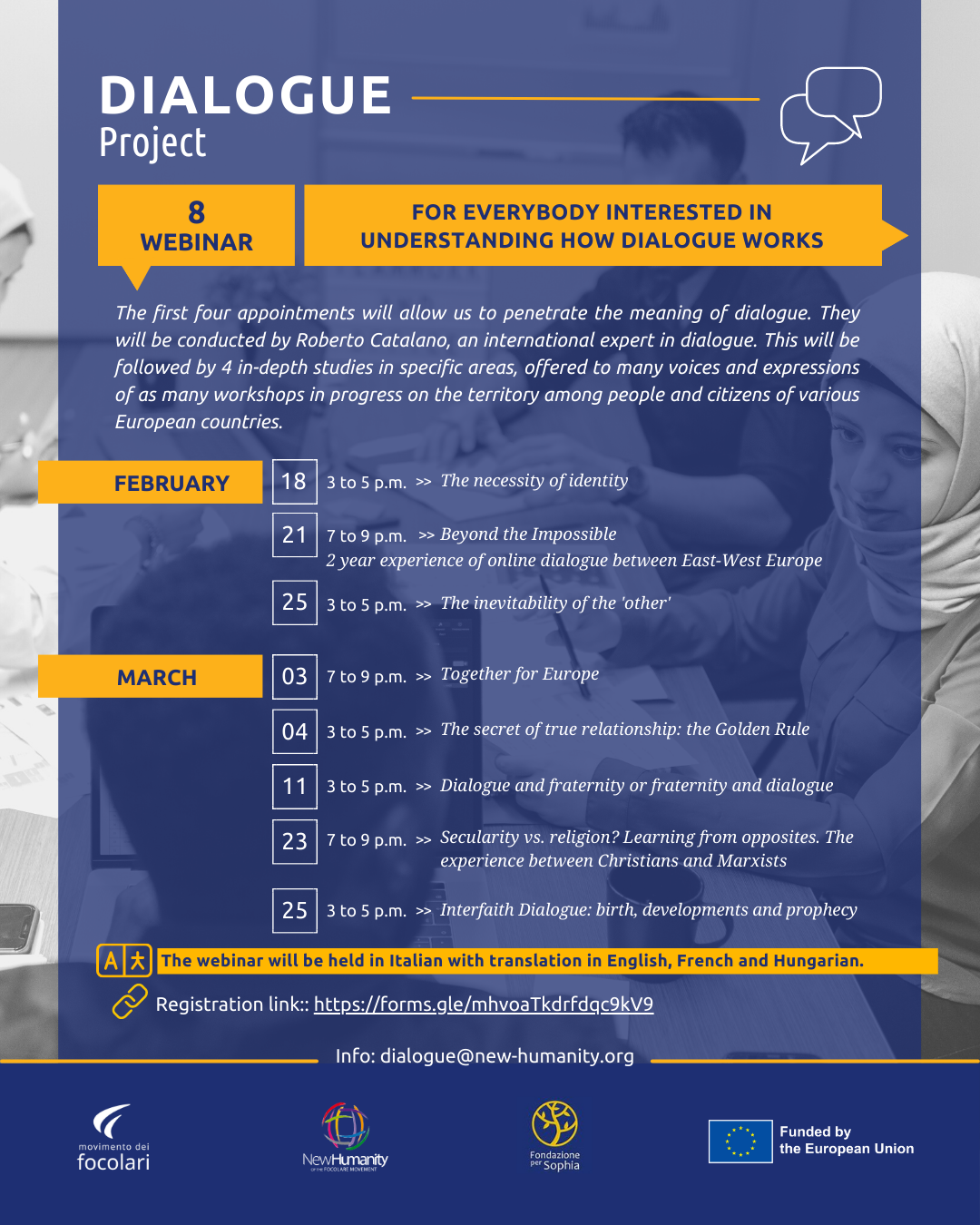 On this basis, and in collaboration with the “Foundation for Sophia”, starting on 18th February 2023, it will be possible to participate in an in-depth study on dialogue through an online course divided into 8 appointments. These webinars are open to all and can be followed in Italian with translation into English, French and Hungarian. The first four aim to provide a real sense what of dialogue is and will be led by Roberto Catalano, an international expert on dialogue. These will be followed by 4 in-depth studies in specific areas, offered by several voices, expressing just as many ongoing workshops among people and citizens of various European countries. The timetable indicating the various topics to be addressed, is as follows (Italian time):
18/02/2023, 15:00 – 17:00 – The necessity of identity
21/02/2023, 19:00 – 21:00 – Beyond the impossible 2 year experience of online dialogue between East-West Europe
25/02/2023, 15:00 – 17:00 – The inevitability of the ‘other’
03/03/2023, 19:00 – 21:00 – Together for Europe
04/03/2023, 15:00 – 17:00 – The secret of true relationship: the Golden Rule
11/03/2023, 15:00 – 17:00 – Dialogue and fraternity or fraternity and dialogue
23/03/2023, 17:00 – 19:00 – Secularity vs religion? Learn from opposites. The experience between Christians and Marxists
25/03/2023, 15:00 – 17:00 – Interfaith Dialogue: birth, developments and prophecy
It will be a discovery which responds to the need to communicate and discover the wealth of each person, specifically valuing what unites, viewing differences as a fertile ground to grow patiently respecting everybody. Participate by filling out the registration form at the following link: https://forms.gle/mhvoaTkdrfdqc9kV9 For further information, please contact: dialogue@new-humanity.org.
by Maria Grazia Berretta
14 Feb 2023 | Non categorizzato
Loving each other in marriage is a great challenge. It means getting lost in each other’s paths, sharing life, sowing patiently and reaping the fruits; it means choosing each other every day even when we do not recognize each other, if necessary, learning to slow down to keep up with each other. On the day of lovers, we share the story told at the November 2017 “Collegamento” by Giulio and Pina Ciarrocchi. 22 years earlier, in May 1995, following the arrival of a stroke that changed their lives, they found the courage to let God guide them, experiencing a new way to fall in love again every day, seeing Jesus in each other. https://www.youtube.com/watch?v=ZM6vJUrUqX8&list=PL9YsVtizqrYt2S6qrtBBS1Xu_B3p-juwd&index=1
11 Feb 2023 | Non categorizzato
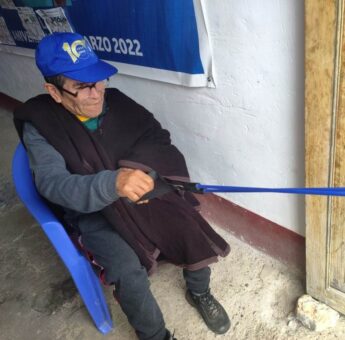
The mission of the “Chiara Lubich” Hogarcito, the Centre for the Elderly in the Peruvian Amazon forest, is to accompany the elderly and the ill. A place where service is motivated by love, where there are people who do good, able to put everything in God’s hands. Halfway through last year a woman came to the Hogarcito to ask for help. She urgently needed support for her elderly brother who lived alone, far from the capital where she lived. She asked us to welcome him into the “Hogarcito” and, after asking her to give us some time to explore the situation and our own possibilities, we put ourselves in the shoes of her brother and did not hesitate to welcome him. This is how Feliciano, 74, became a new guest of the Hogarcito. We welcomed him with great affection and with a welcome party. We discovered that he had lost the sight of one eye, that he had speech problems, you could barely understand what he was saying, as well as severe deafness.
Feliciano during rehabilitation
Volunteers of the “Hogarcito”
9 Feb 2023 | Non categorizzato
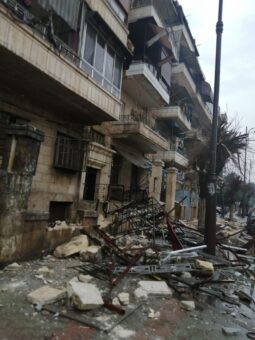
On 6th February, powerful earthquakes struck southern and central Turkey and Syria. A disaster that has caused the destruction of entire cities. Many people are missing and thousands have died. Here are two eye witness accounts. Umberta Fabris, from the focolare of Istanbul, emotionally described the situation in which Turkey finds itself with this unprecedented disaster which struck Turkey and Syria during the night between 5th-6th February: “On the evening of Sunday 5th February, the authorities announced that the schools would be closed the next day as a violent storm was forecast. Temperatures are near zero and it is the coldest time of the year in Turkey.” The magnitude of this earthquake is unimaginable. Ten provinces of Turkey are affected, 13 million people are involved and violent tremors continue. To date, there are over 14,000 victims, but the numbers continue to increase as the rescue proceeds. Umberta Fabris told us, “Istanbul is about 1,000 kms away from the affected areas but we are surrounded by people who have relatives and friends, who are awaiting news that arrives drop by drop. Mobile phones have run out, there is no electricity and there is enormous damage to all the infrastructures including the communications networks. We receive just a few text messages or manage to exchange a few words with a very disturbed line. We keep trying to get news about people, including our friends in Antioch, Mersin, Adana and Iskenderun”. 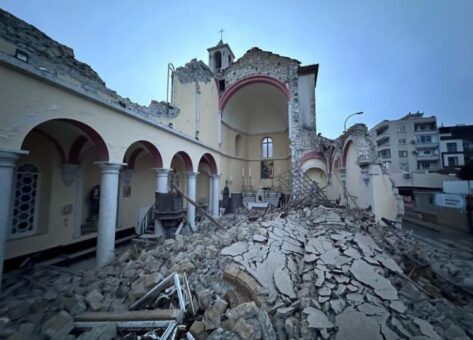 In the catastrophe of the ruins and the cold, suffering brings people together to respond. Umberta heard about the collapse of the Basilica of the Annunciation in Iskenderum and how many houses of the Archdiocese have been declared uninhabitable. Catholics, Orthodox, and Muslims came together to share what they have and to offer accommodation. She said, “It is incredible to see the thousands of young people who have crowded into the airport, ready to go to help with the rescue. There is an endless queue of people to donate blood and secondary school students are getting involved in many projects of assistance. We continue to trust in God and in his Providence and to remember our beloved Syria.” Bassel, a young member of the Focolare in Syria sent us this account, “These are devastating days also in my city, Aleppo. On 6th February we woke up terrified and ran towards the stairs, we couldn’t see anything, due to the power failure. We stopped at the front door, where there is an image of the Guardian Angel and said a prayer. Then we found a mobile phone and switched on the light. I didn’t recognize the room: everything on the floor was broken, the walls and tiles were cracked, the neighbours coming down the stairs screaming. We took only what we could carry in our pyjama pockets, put on our coats and went out in the rain and freezing cold.” Bassel spent that endless night on the street, watching churches and mosques collapse. The moonlight illuminated the destruction. As the aftershocks became lighter, there were reports of friends trapped under the rubble and whole buildings collapsing. “Our country is not equipped for this kind of disaster. The 7 floor building of the Archdiocese of the Greek-Catholic Melkite Church was one of those that collapsed. Mons. Jean-Clément Jeanbart, emeritus Archbishop of Aleppo, was saved while Father Imad, my personal friend and our teacher at school since I was a child, was trapped under the rubble”. People talk about their homes using the past tense. The cold makes everything more difficult. The Red Crescent and the Red Cross tried to assess how many were saved. Bassel said, “I worked with the volunteers and young scouts to prepare and distribute food and blankets for children and youth, I couldn’t sleep because of the terrifying scenes I had witnessed”. As the aftershocks continue to destroy buildings, Bassel reflected: “When we hear the news, we see the big countries sending experts, aid and relief teams to the affected countries. It is awful for us to see that they cannot send anything to Syria because of the embargo, as if we were not human beings. We have been able to go back home now, where the Internet is better but we are waiting for the next quake. Pray that we will survive, pray for those who have died, pray for those who are missing”. Anna Lisa Innocenti and Maria Grazia Berretta To help or make a donation click here
