22 Nov 2022 | Senza categoria
The merciful are those who are able to forgive others and often even themselves. However, mercy is not just an inner disposition, it is the way that unites us with God. His immense love for us is not a feeling but an action; the act through which each of us is ‘reborn’. Living in peace It was not the first time I had noticed trespassing on my land. I had never had any enemies and my father had taught me how to build good relationships, but on this occasion I wanted to see clearly what was going on. I asked Our Lady for help and one night I went into the orchard with another farmer. As I suspected, at a certain hour I saw my neighbour arrive with two sons armed with fruit boxes. The plan was to photograph them in the act: bewildered by the flashes, the three of them immediately ran off, leaving the harvested fruit on the ground. The next day, towards evening, our neighbour’s wife asked my wife if she would kindly destroy the photos and not press charges against her husband. As agreed, my wife replied: “I don’t know what photos you are talking about, my husband has been away for two days”. From that day on, things started to change with unusual kindness and a willingness to help with the picking… During one of the breaks, the neighbour admitted he had come to get some apples ‘to try them’ and had seen flashes. I replied: “Strange things have been happening in the village for some time. What’s important for us is to live in peace”. (V.S.E. – Italy) A real change When I retired and looked back on my life all I could see was a total failure! I never got married because my parents were against my choice of a guy who was good but not one of our ‘rank’. My relationship with my brothers and sister had almost completely broken down because of an inheritance that according to them had been unfairly divided. I could call myself rich but what a void has been created in and around me! While I was in hospital a niece came to visit me who said something that really troubled me: “The trouble with you Aunty is that you are possessed by evil. Every trace of goodness in you has disappeared”. When I was finally discharged, I looked for a priest in whom I could confide what was distressing me. When he had finished listening to me, it seemed to him that I somehow wanted to take revenge on life, on family, on everyone, so he urged me to start thinking more of other people by celebrating relatives’ birthdays with gifts, taking an interest in the neighbours’ news, writing to former students. They were small gestures but steps towards the light. In desperation I put his suggestion into practice. It is hard but I really feel something is changing. (G.I. – Spain) Friends in sickness While my mother was in hospital I got to know her roommate, Klari who was at the same stage of cancer and undergoing the same series of chemotherapies. They had become friends, but something was dividing them. As a young woman, Klari had been a communist activist and did not accept the Catholic faith my mother professed. They did not argue, but you could feel that neither of them wanted to let go of their own beliefs. Nevertheless, my mother was always available and to help Klari who had no relatives she had involved us in the family with her needs – just little things, like dealing with some paperwork for her, phoning friends, etc. When their health started to deteriorate for both of them, each reacted differently to the illness. A great peace shone out from my mother, who always remained attentive to her friend. Klari, on the other hand, became impatient and aggressive, but before she went into a coma, she thanked my mother for the way she had always been by her side. She had now become one of our family. (P.F.H. – Germany)
Edited by Maria Grazia Berretta (taken from Il Vangelo del Giorno, Città Nuova, year VIII, no.2, November-December 2022)
18 Nov 2022 | Non categorizzato
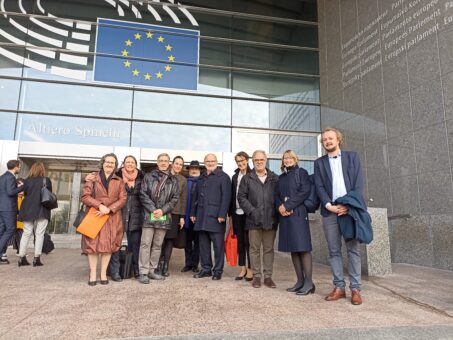
Presentation to the European Parliament in Brussels (Belgium) of a document aimed at expressing a common social ethic, which contains the shared positions of Christians and Marxists. It is the result of an eight-year journey or we could even say one which has been going on for two centuries. “A project of transversal dialogue” is how Dialop defines itself. Christians and Marxists in Europe have been working on it for some years. After a meeting in the Vatican of some representatives of the European Left with Pope Francis, it took a decisive step forward (see Dialop: Christians and Marxists working together). 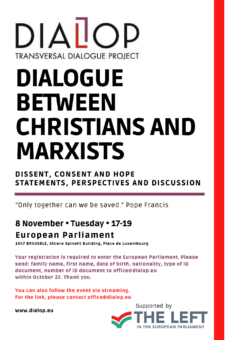 The event took place on 8th November in the Altiero Spinelli building with the presence of 40 people from 9 countries of the Union and others who followed the streaming. The presentation of the position paper, “In search of a common future in solidarity” was supported by the Left Group of the European Parliament, in collaboration with the Movement for Politics for Unity Movement and New Humanity, The document, on common positions in Socialist Christian dialogue, was written by Prof. Michael Brie, President of the Scientific Committee of the Rosa Luxemburg Foundation and by the Belgian sociologist, Prof. Bennie Callebaut of the Sophia University Institute. It analyses how, as antagonists in the past, Christianity and Marxism are faced with another wall to break down, that of wild capitalism and how they find surprising affinities in the present. In the message and in the person of Pope Francis they also find a figure who unites, a leader and a traveling companion. The paper states, “We are working on projects guided by shared visions in common struggles“. The document declines what these projects are, indicating some topics being explored: “an economy of life; a caring community; a policy of transformation in solidarity; a world in which there is room for many worlds; the dignity of every individual in a world rich in common goods; and together for peace”. The inevitable question of how, when it comes to discussion, these are expressed in practice, was formulated by Prof. Léonce Bekemans (Jean Monnet Chair, University of Padua). Walter Baier, from Transform!Europe, one of the initiators and coordinators of Dialop responded: “We work on three levels: dialogue as a cultural initiative in order to become a think tank; involving people in the work for solidarity, as happened with initiatives for migrants and refugees; arousing political involvement especially for building peace”. Marisa Matjas, Portuguese MEP of the Bloco de Esquerda, vice-president of the Party of the European Left in the European Parliament, was the hostess. She vividly remembered the words of Pope Francis to the members of the European Parliament in 2014, which were “said when we needed to hear them most”. “He spoke to us about keeping democracy alive in Europe, about employment and workers’ rights, about education, about migration, at a time when the EU was ignoring the massive movements of people coming from Syria; he also spoke about the dignity of human rights, we have many things in common that we need to work on together.” In his opening remarks on “Common paths towards a global, just and fraternal society”, the theologian Piero Coda said, “Today we need, like the food we live on, vision, spirit and covenant. It is time to hope and give hope ‘in the plural’. This is what Dialop invites us to do”. A plurality that requires wider alliances, not only the Catholic world, but the whole Christian world, with an ecumenical dimension; not only Christianity, but all religions; not only the left, but the various political ideologies that are committed to the common good and the defence of the environment. Citing the document, he said that there must be an initial effort to put aside any claim of “having the monopoly of the truth”. “Together with Marxists and Christians, a transformative and transversal social ethic must count on the contribution of other actors and traditions who are present in our continent and have different world views”, reiterated Fr Manuel Barrios Prieto, Secretary General of COMECE, recalling the concept of human fraternity, starting with the signing of the Abu Dhabi document of 2019 and the encyclical “All Brothers”. A renewed commitment to dialogue resumed in Brussels, with a momentum of inclusiveness, aware that dialogue is a ‘ work in permanent progress’.
Maria Chiara De Lorenzo
16 Nov 2022 | Non categorizzato
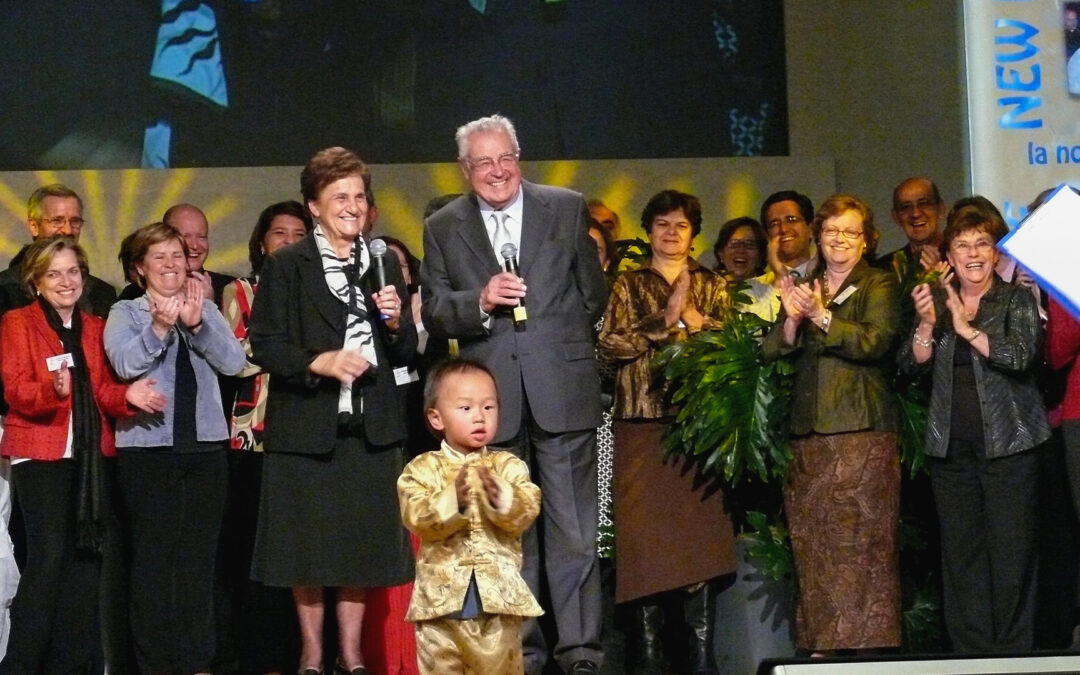
One of the first married focolarini and co-founder of the New Families Movement, Danilo Zanzucchi died serenely on 16 November 2022 at the age of 102 in his home in Grottaferrata (Rome), surrounded by his wife Anna Maria, their five children (Chiaretta, Michele, Mariannita Giovanni and Francesco) and some of their 12 grandchildren. Danilo was the eldest son of a respected family from Parma (Italy). On his trips to Milan to work on the first constructions he designed, he met the charism of unity through Ginetta Calliari, one of Chiara Lubich’s first companions. He was already a fervent Catholic, involved in politics and the diocesan president of the Italian Catholic University Federation and subsequently of the Men of Catholic Action. 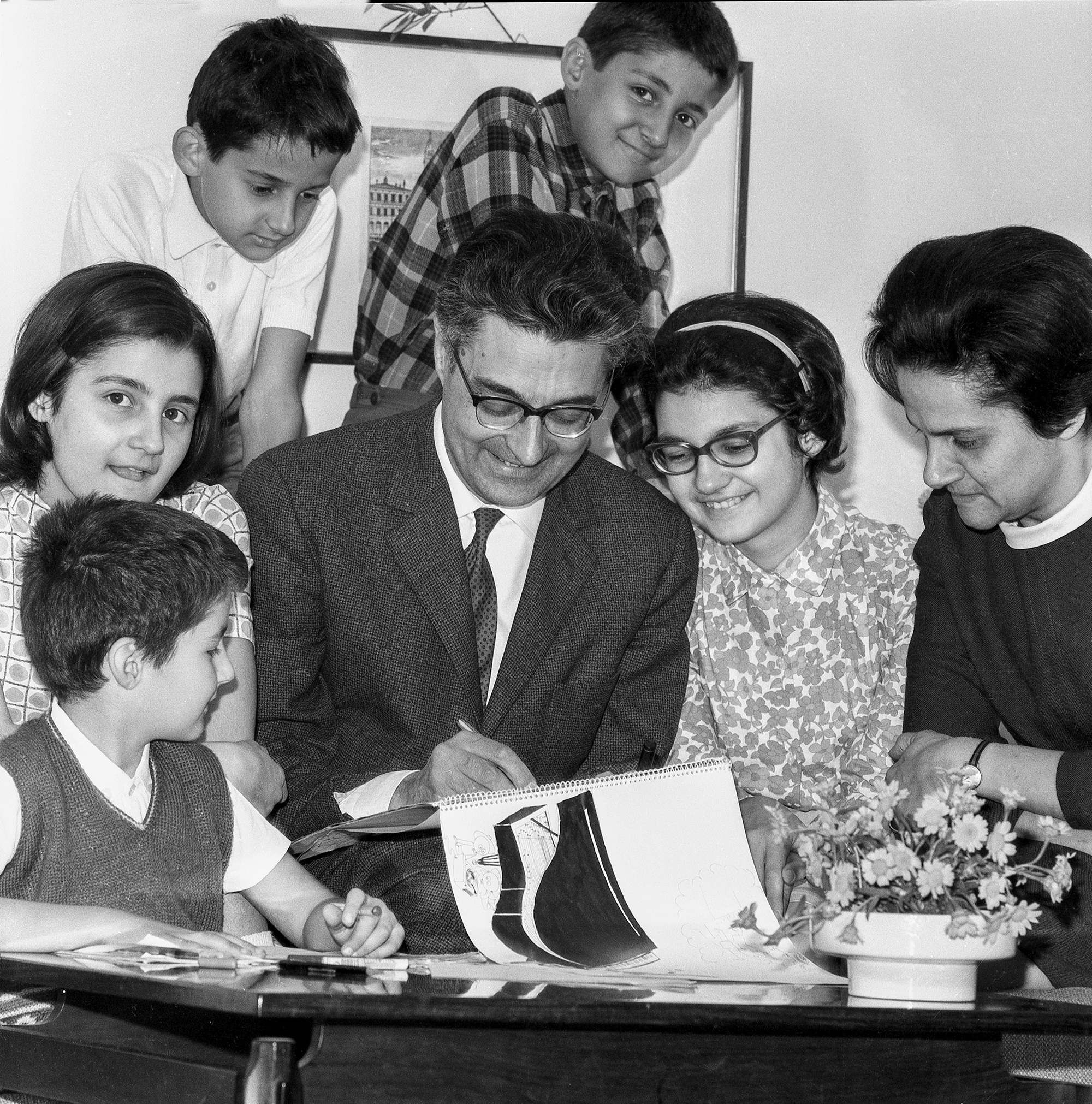 The impact with the charism led him to make an even greater commitment to God and to wish to base his life on living the Gospel. Anna Maria, his fiancée shared this choice. Around them the first community of Parma was born. They were greatly attracted by the innovative vocation of married focolarini pioneered by Igino Giordani. They decided to leave the promising career of an engineer and the privileges of a comfortable life to move with their then four children, as a family-focolare to Rome and devote themselves full time to the Focolare Movement. One of Danilo’s first assignments was the completion of the building in Rocca di Papa destined to become the Mariapolis Centre and, later, the international headquarters of the Movement. He then went to work for Città Nuova publishing house.
 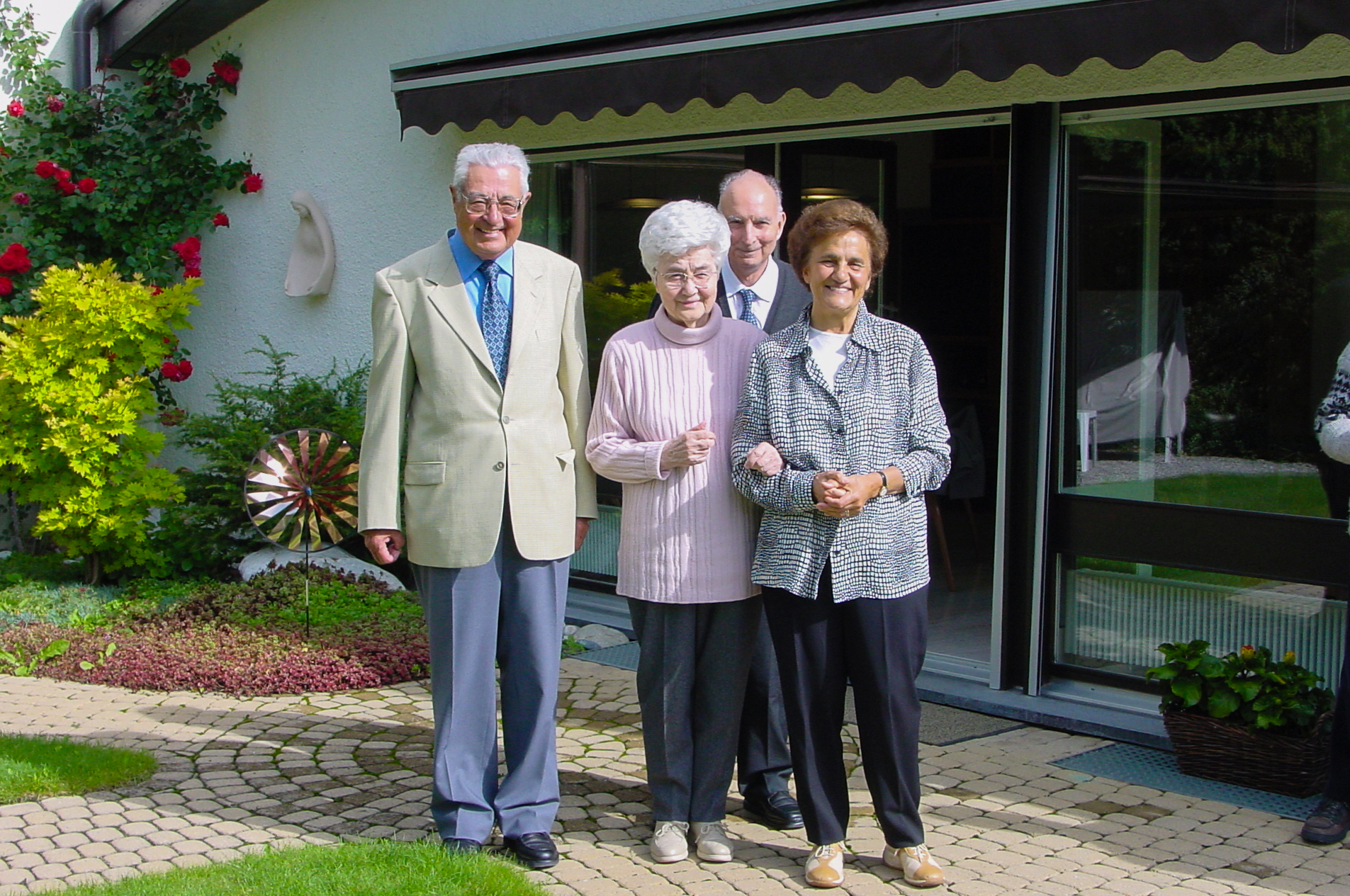 He worked closely with Chiara and played a major part in the formation of generations of married couples from different continents who, like him, wanted to follow in the footsteps of Giordani. In 1980, Anna Maria and he were invited as auditors to the Synod on the Family and in 1981 Chiara Lubich asked them to be part of the Central Council of the Movement, with the role of coordinators of New Families worldwide. In the 1980s, they also received a Papal appointment as consultors and, subsequently, as members of the Vatican Dicastery for the Family. Because of these responsibilities Danilo and Anna Maria met Pope Wojtyla several times. They also appeared on TV in Italy and in worldwide broadcasts to share their experience and their work at the service of the family. In the time of Benedict XVI, their collaboration with the Holy See increased to the point that he asked them to write the text for the Way of the Cross (2012) which took place at the Colosseum and over which he presided.
 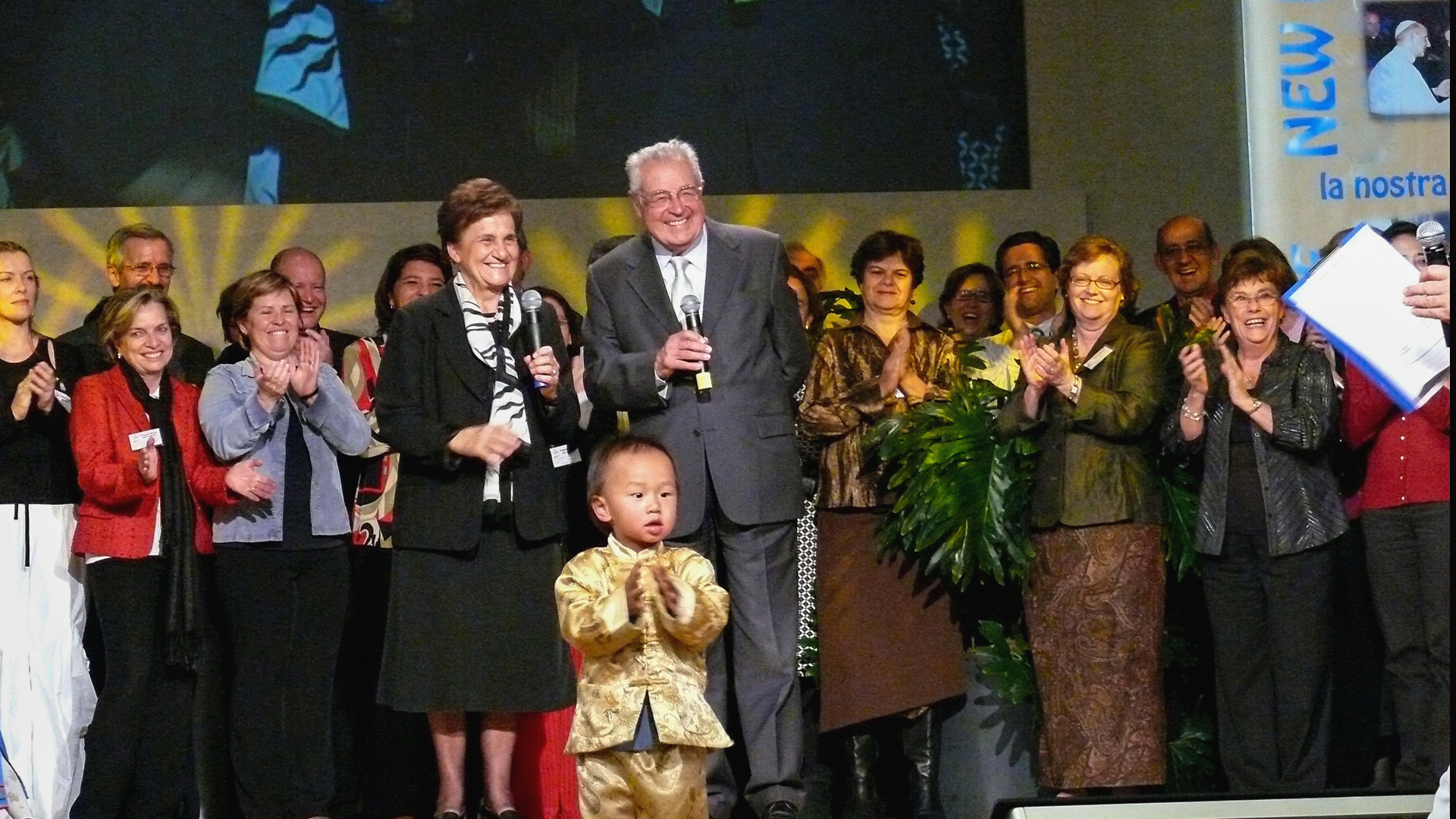 Danilo received many talents which he rendered abundantly fruitful. His long life is a hymn of glory to God stretched out in time. The entire Focolare Movement, in particular the host of married focolarini and the myriad of families from all over the world, for which he was an example, a confidant, a lovable and secure point of reference, are deeply grateful to him with a gratitude that pays homage to his humanity. He was a giant of righteousness, tenderness, simplicity and wisdom. Thank you Danilo for continuing to be that evangelical child which shone through your very being, your words, your exquisite humour, your paintings, the countless cartoons that you improvised (often on paper napkins) and which gave joy to all of us.
Anna and Alberto Friso
https://youtu.be/dKwiuQ7cAeI
16 Nov 2022 | Non categorizzato
A look at the world with the aim of spreading “good news”. This is what animates the Teens International editorial offices scattered in various parts of the world and supported by the Città Nuova publishing group. A space created by teenagers for teenagers, where they can exchange opinions and ideas; they can be trained in the production of contents for various media and can find together communication models that are guided by true values. https://www.youtube.com/watch?v=__Gj7BG4Nu4&list=PL9YsVtizqrYsxCVExqFc_vvuzCKyNbr43
14 Nov 2022 | Non categorizzato
The Gospel text chosen for the month of November 2022 encourages us to practice mercy towards our brothers and sisters. In this passage from 15 October 1981, given during a worldwide telephone conference call, Chiara Lubich invited all listeners to revive this merciful love characteristic of the early days of the Focolare Movement. It is an appeal that today too can help us to grow in our personal journey of union with God and with the community. What I want to focus on today is unity. Unity must triumph: unity with God, unity among all people. The way to achieve this is to love everyone with that merciful love which characterized the Focolare at its beginnings, when we decided that each morning and all through the day we would look upon every person we met at home, at school, at work, everywhere as a new person, brand new, deliberately not remembering any of his or her shortcomings or defects, but covering everything over with love. … to reach out to everyone we meet with complete “amnesty,” universal pardon, in our hearts; and then to “make ourselves one” with them in everything except sin and evil. Why should we do this? To obtain the same wonderful results the Apostle Paul was seeking when he said: “For though I am free with respect to all, I have made myself a slave to all, so that I might gain all the more. I have become all things to all people” (1 Cor. 9: 19,22). If we “make ourselves one” with our neighbour, as Paul recommends, which will be easier when we have this forgiving attitude, we will be able to pass our “Ideal” on to others. And once this has been accomplished, we can have Jesus present among us, the risen Jesus who promised to remain with us forever in his Church, and who allows us to almost see and hear him when he is in our midst. This must be our principal work: to live in such a way that Jesus may live among us – Jesus, who is victorious over the world. For if we are one, as time goes on many will be one, and the world will someday be able to witness unity. So, let’s create cells of unity everywhere, each a focolare – a hearth, burning with love: in our family, on our block, with our playmates, with the people at work or at school – with everyone we can. Let’s kindle fires of love everywhere
Chiara Lubich
(Chiara Lubich, in Conversazioni [Conversations], a cura di Michel Vandeleene, Opere di Chiara Lubich, Città Nuova, 2019, pp. 63-64)
