15 Nov 2018 | Focolare Worldwide
According to the latest estimates more than 440 thousand, of the more than 2 million and 300 thousand people, who fled Venezuela from 2014 until now, have crossed the Peru border. They arrive after a very exhausting journey, uncertain about their future and surrounded by many dangers, including the recent need to cross a river by boat. “If the water is too high, and they can’t manage it, they’re loaded onto the shoulders of a man who naturally wants to be paid.” Once again Silvano from the focolare community in Lima writes: “Right from the start of this forced exodus “we have been accompanying an ever increasing number of people. Up until now, there are sixty whom we follow closely, not only spiritually, but also professionally and on a purely human level.” The situation is extremely difficult for those who arrive: “They only have the clothes on their backs. They’re cold because spring has begun and the temperatures are falling. We see the emotion in their eyes when they see the clothing that has been collected for them through a communion of goods.” The Focolare has two welcome centers in Lima, along with the Centro Fiore at Magdalena del Mar in the province of the capital. “Three family units are being hosted here, including the family of Ofelia who many Venezuelans in Peru call “the mother.” In the first quarter of this year,” Silvan recounts, “we came into contact with a psychologist, Irene, who has already been here a few months. She was invited to our operating centre, which is the focolare house, along with her parents and a few friends. She got to know the spirit behind the Focolare and, aware of the needs of her many fellow-countrymen, offered her services as a professional psychologist. A small project was immediately begun in response to the Gospel promise: “Give, and it will be given to you.” After a workshop on the topic of feelings, which was given by Irene at the end of July and a second one a few weeks later, we opened a consultancy service at Centro Fiore of Magdalena del Mar. “The “Project of Emotional Growth for Vulnerable Populations” was begun, to respond to the massive migratory situation that we are facing. In the presentation of the project, which is geared towards the most fragile members of the group such as women, children, youth and elderly, it is written that ‘providing tools for facing the situation and integrating’ into the Peruvian community is imperative. Therefore, this Project enters into the objectives of the Focolare, to “collaborate in the building of a more united world under the guidance of Jesus’ prayer to the Father that all may be one (Jn17:21), respecting and appreciating diversity, using dialogue as the method, and the constant effort of building bridges and relationships of fraternity among individuals, peoples and cultural groups.” The most common cases that have already been treated include anxiety and depression over the precarious situations, the constant concern for survival, mistreatment and developmental problems. The project provides support, information, education, and training courses, workshops on feelings and emotions, self-esteem, love of others and of oneself.” Several of the people have found employment, others are still searching, and others are planning to return to their own or to another country. “Up until now 35 sessions of psychological care have been recorded. This service continues to be offered for free to Venezuelan immigrants.”
14 Nov 2018 | Non categorizzato
Replay streaming: http://collegamentoch.focolare.org/
14 Nov 2018 | Focolare Worldwide
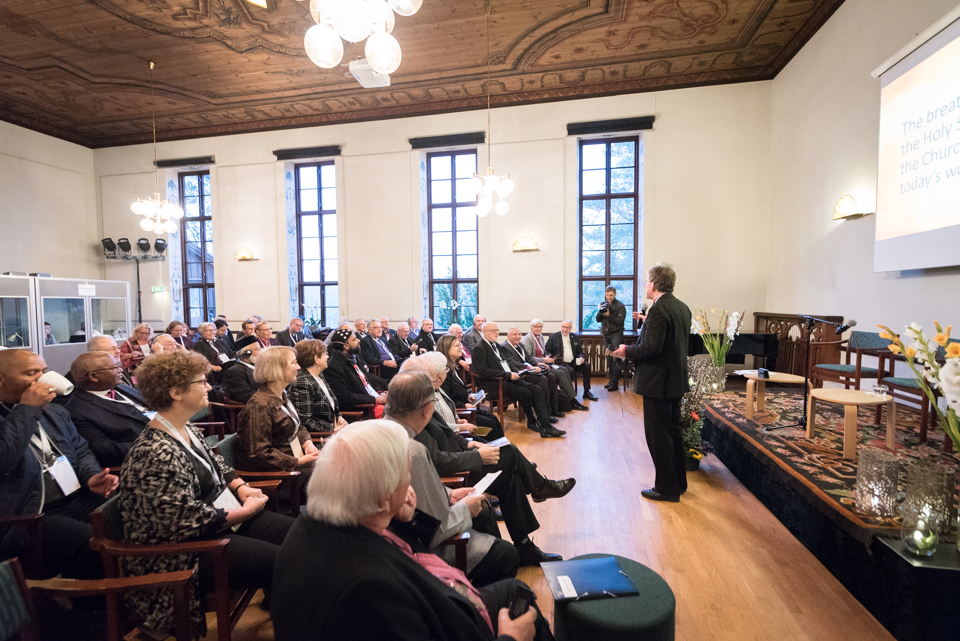
 How does the Holy Spirit work in today’s Church? Does it still make sense to talk about an ecumenical journey at a time marked by fragmentation, complexity, scandals and humanitarian challenges even for Christians? Two years after the Lund event, that gave a new impetus to the ecumenical dialogue, 40 Bishops of various Churches, from 18 different countries, met in Sigtuna, Sweden. This conference, promoted by the Focolare Movement, was held from 6 to 9 November and its theme was “The Breath of the Spirit, the Church in today’s world”. Maria Voce, president of the Focolare Movement, Jesús Morán co-president and representatives of the Focolare Community in Sweden also attended this conference. Maria Voce spoke about “The Breath of the Spirit, soul of the Church, in the experience and thought of Chiara Lubich”, while Jesús Morán presented present-day challenges from the perspective of the spirituality of unity. This conference, which has come to its 37th edition, owes its origin to an experience of synodality and communion, which John Paul II had proposed to Klaus Hemmerle, Bishop of Aachen.
 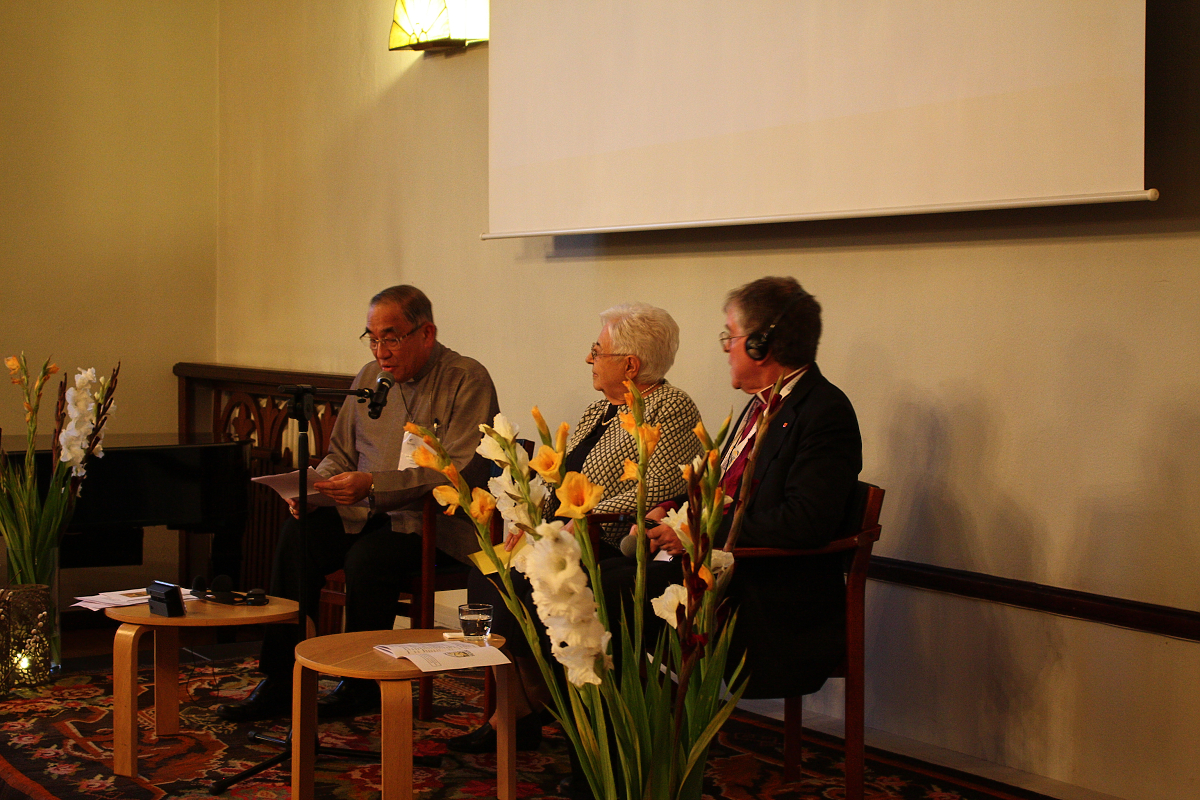 “In addition to our different recounts, we wanted to give ample space to dialogue and sharing about the ecumenical challenges we live in our countries and continents”, said Cardinal Francis Kriengsak Kovithavanij, Archbishop of Bangkok and moderator of the conference. Mons. Brendan Leahy, the Catholic Bishop of the diocese of Limerick, Ireland dealt with the important theme of reconciliation. While speaking about the power of forgiveness in the context of the scandals that hit the Irish Church, he said: “The Spirit urges us not to be robbed of hope (see Rom 8). Discouragement is a great temptations, but the Spirit keeps our hope alive and helps us restart to live a new committment in the Christian adventure of unity and reconciliation”. The Anglican Bishop Trevor Williams, an Irish man, spoke about his experience as a pastor. For several years he has been having under his care the ecumenical community of Corrymeela, in Northern Ireland, who has contributed much towards the path of reconciliation between the different factions in conflict. “Reconciliation is not an option; it is a necessity if we want peace to last. We live in a world of “they” and “we”. But in truth there is only “we”. Revealing this truth is work of reconciliation, work of the Holy Spirit”. The German Evangelical-Lutheran pastor Jens-Martin Kruse shared his pastoral experience in Rome, an ecumenical laboratory that functions also thanks to Pope Francis. The Archbishop Antje Jackelén, Primate of the Church of Sweden, Cardinal Anders Arborelius, the Catholic Bishop of Stockholm, and Bishop Munib Younan, former president of the Lutheran World Federation, who presided over the historical ecumenical liturgy in Lund together with Pope Francis in 2016, spoke about the journey of common reflection that continues after the 500 years commemoration of the Reformation. “I assure you the Holy Spirit guided us and continues to guide us towards an ecumenical springtime. It is up to us now to reap the fruits of unity. Today we say: let us journey together as living witnesses in our fragmented world so that the world will believe.” One of the highlights of this conference was the ecumenical prayer in the ancient Church of Sigtuna and the signing of the “Pact of Unity”. With the signing of this Pact, the Bishops committed themselves to journey along the path of effective and affective communion, “to love the Church of the other as one’s own”. This commitment was sealed with one’s own signature and a fraternal embrace. Stefania Tanesini
13 Nov 2018 | Focolare Worldwide
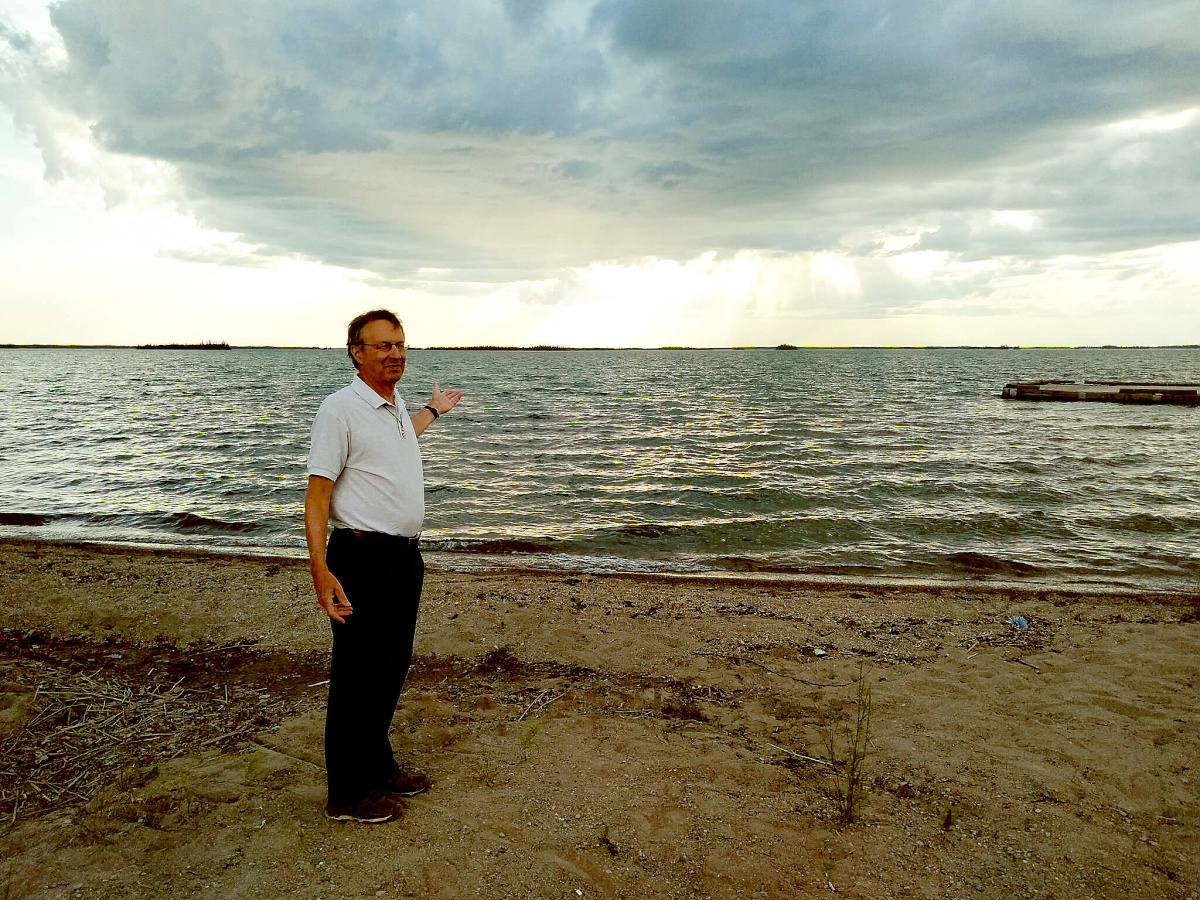 It was a lake so clear you could see the bottom and drink the water with your cupped hands from the canoe. It seemed the perfect world. Yet here and there a plastic bottle was stuck in the bank, held down by low roots. In that extraordinarily beautiful landscape, it was a punch in the eye. Alek’s story is rich with images such as this. He was among the four people who were part of a temporary Focolare at Whati, in Canada, from July 19 to August 20, 2018. “We’re talking about the Great North, almost at the Arctic Circle, a town with 800 inhabitants. It seemed even less, since the meeting of the Tlicho people (Tłı̨chǫ in their original language) had just ended, and many of the locals had left for vacation. “The Tlicho people are Native Americans (called “First Nations” in Canada), who can be found throughout North America. They are part of the Dene, an association of Native Americans in the Northwest Territories, and they live in an area called Tlicho Land, which has four towns with a total population of close to 2,000 people. Whati, which in its native language is Wha Ti, is one of these towns. It’s on beautiful Lac La Martre, which at its widest point is a good 70 km.”
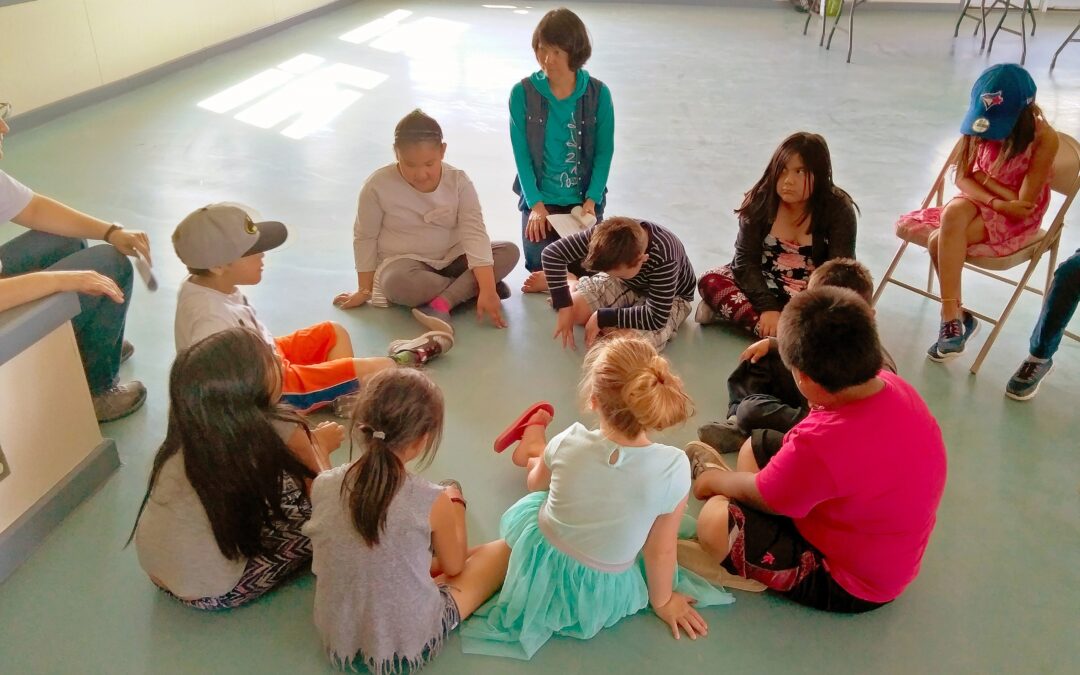
 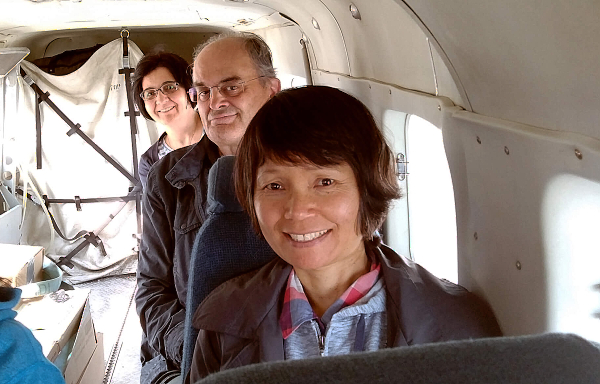 With the youth group, Alek and Fr. Alain organized the cleanup of a stretch of shoreline. “It was just a gesture,” he says, “yet afterwards we heard that one of the residents there brought this to the chief’s attention, and the cleanup has now become a regular activity throughout the year.” This too was a result of the temporary Focolare at Whati. Besides Alek (an Italian who lives in Birmingham, Alabama) and Fr. Alain (a priest from Montreal), the group was made up of Lioba from the Focolare of Vancouver and Ljubica from that of Toronto. The reason for their journey was a request from the bishop of Yellowknife, the capital of the Northwest Territories, to have a few people from the Focolare community come to the area (covering the costs) to give the residents, at least for one month of the year, the chance to come together spiritually and receive some training on Gospel living. At the same time, another group was having a similar experience at the village of Fort Resolution.
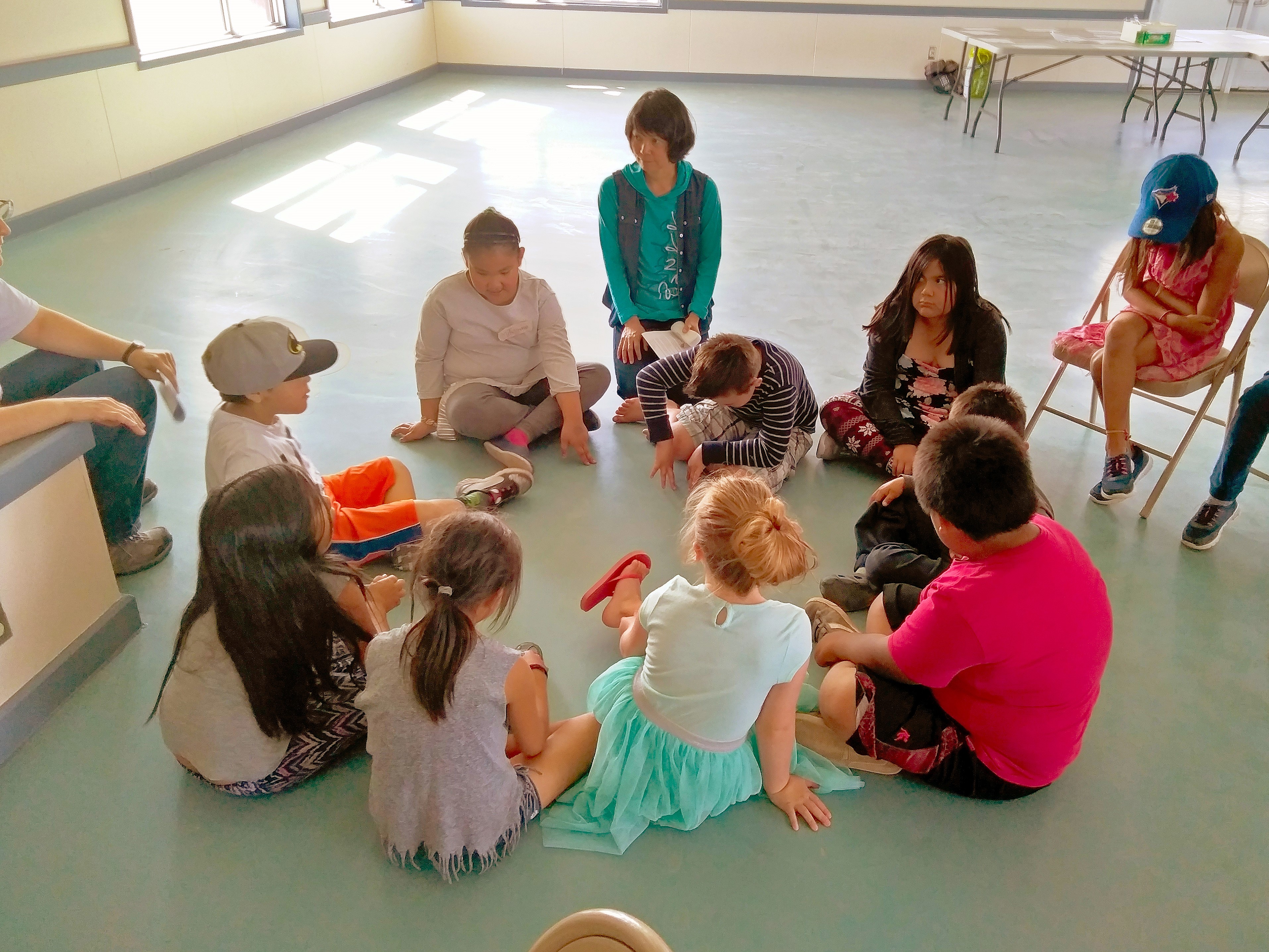
 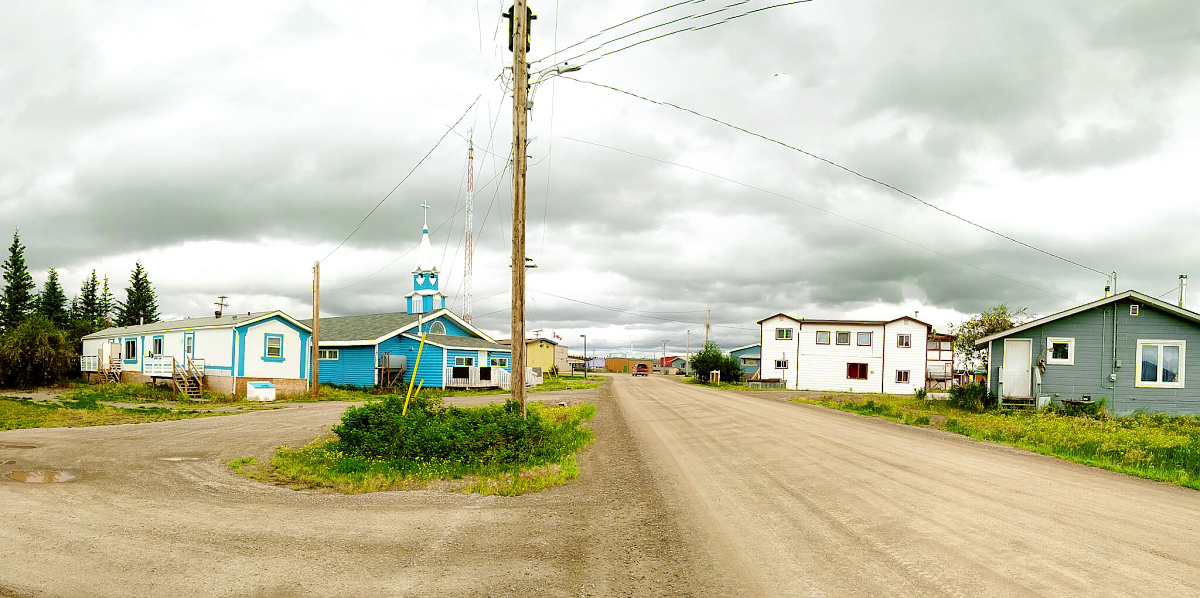 “We were at Yellowknife for a few days, having come from our cities, after trips that were pretty adventurous because of the weather. There we got the chance to know each other and receive the bishop’s blessing.” “Arriving together at Whati, we were there for a total of four weeks, to renew relationships that had begun the year before from another similar experience. We were there to get to know the local leaders and to contribute to a few projects started by the tribal leadership. The second week we organized a Bible camp for the kids, and the third week, at the request of the local leaders, we went to meet some of the elders of the village. It was moving to pray together with them. It seemed to us that there was communication that went beyond any difficulty to understand their language.”
  The people of that place are suffering from a difficult transition from tradition to modernity. “In the space of one generation,” Alek explains, “they found themselves entirely deprived of the roots that had been their deepest identity, perhaps for thousands of years. Those of my generation were born and lived in teepees, and speak Tlicho. Their grandchildren no longer speak the traditional language, use smartphones and are taken by consumerism and all its consequences, including alcohol and drugs. “Yet, the community is still driven by a simple, deep faith that is based on reading the Bible and the natural spirituality of its people, who are still sensitive to spiritual things. “For my part, it was a chance to meet face to face with some of these stories. With them I felt at home, perhaps as never before. I was also a way for them to be touched by God.”
12 Nov 2018 | Focolare Worldwide
With an estimated 31 victims thus far, the huge fire that developed in California has broken the record as the worst burning in the history of the Golden State. An additional 220 people are still missing. The main fire that developed north of the capital of Sacramento is still partially out of control. In this area of the Sierra Nevada there has been very severe devastation. The town of Paradise with 27 thousand inhabitants was completely swept away by the flames, with a high number of victims, at least 14. There are two other smaller fronts further south between Los Angeles County and Ventura County. In total, more than 300 thousand people have been displaced from north to the south of the State. In the most affected areas, the scene appears ghostly, with woods and villages reduced to ash heaps and a few areas completely deserted. The strong winds of up to over 110 kilometres an hour, caused a spectacular and devastating “fire tornado” that incinerated everything in its path. This is just one of the umpteenth environmental disasters that have been happening all over the world because of climate change, but also because of the lack of care for the environment.
