
Focolare Movement

Welcome to the new focolare.org!

A new look and new capabilities for the Focolare Movement’s website It is eight years since this website was last restyled. The graphics have changed but so has the structure of the site, with shorter articles containing infographics and video-clips. The new structure allows greater integration with social media and is mobile-friendly, in view of the increasing use of mobile phones for information and communication. New features include diversified and personalised content that users can access The articles in the main pages of the former website can still be accessed. They are now grouped in a few e-books. Instead, the news can be found in the archive section. Updates on many aspects of the life of the Focolare Movement can now be found in the community area called “Mariapolis”, the name given to the summer meetings of the Focolare worldwide which was also used for the Newsletter published in hard copy [in Italian] until December 2018. From 2019, a pdf “Mariapolis Newsletter” will be prepared bi-monthly, containing the most important news items. In this area a notification system lets users choose when, on what topics and on which device (computer, tablet or mobile) they wish to receive information. The new site is the result of an on-going process over a two year period at the international centre of the Focolare Movement at Rocca di Papa (Rome). This has led to the creation of a single Communications Office, operational since 1st February 2018. It brings together the work done previously by four separate entities. The aims of this Office include: collecting news of the life of the Movement worldwide and communicating it via various media; promoting the Focolare’s activities and making the Movement itself better known through a variety of communications channels; to contribute to an ever growing sharing of life and news among the Movement’s many communities throughout the world. Enjoy surfing!

Thank you Eli

Thank you Eli

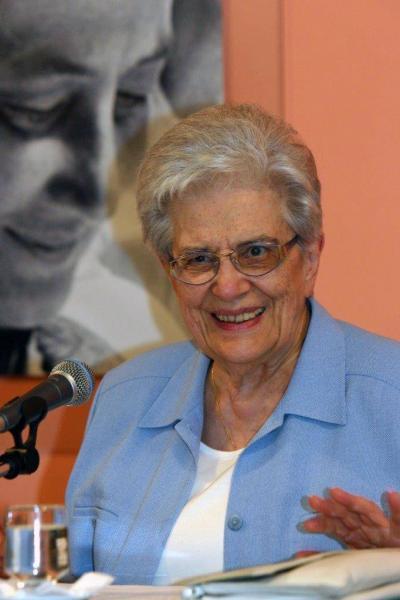
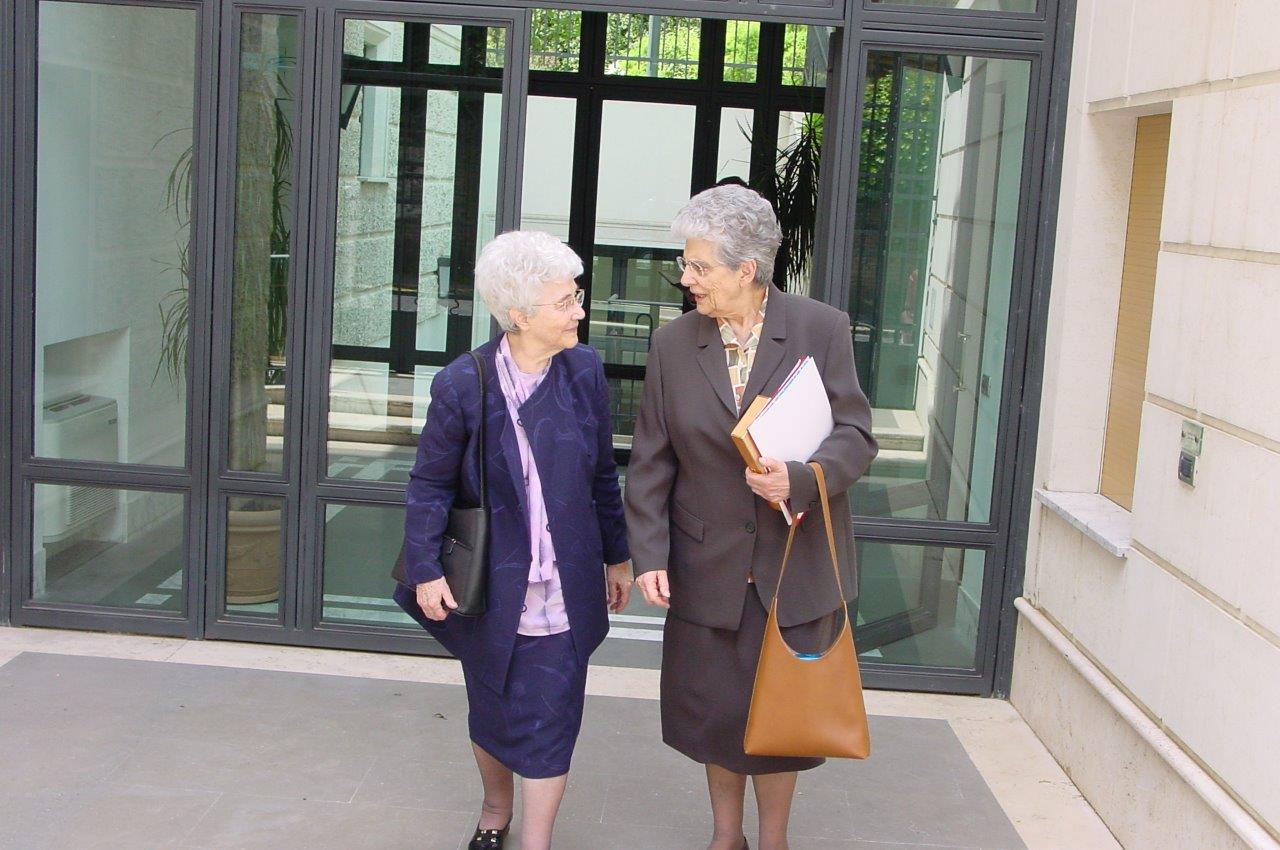
At the age of 92 years, Giulia (Eli) Folonari passed away peacefully on november 26th 2018. She was one of the privileged witnesses of the public life, but above all of the ordinary, everyday life, of the founder of the Focolare Movement.
 
She was born in Milan, in Northern Italy, on 8 February 1926. She was the eldest of Luigi and Speranza Folonari’s eight children, a rich industrial family in Brescia. After graduating in Business & Economics at the Sacred Heart Catholic University of Milan, at the age of 25, Eli, for the first time, heard about the newly-born Focolare Movement from Valeria (Vale) Ronchetti. That same year, while spending her holidays not far from Tonadico (Trent), where one of the first Mariapolis gatherings was taking place, she decided to attend together with her siblings Vincenzo and Camilla. It was on that occasion that she met Chiara Lubich.
She moved to Rome in 1951, and she accompanied Chiara on all her trips around Italy, as well as South America, Asia, Australia, North America, Europe. “It was a divine adventure,” she said, “Keeping up with Chiara was no mean feat! We went from one surprise to another.” She was Chiara’s confidant and counsellor in the difficult years when the Focolare Movement (Work of Mary) was being studied by the Church. She also followed, in a particular way, all the media developments within the Movement: the birth of the St Claire Audiovisual Centre named after St Claire of Assisi, as well as the beginning, in Switzerland in 1980, of the “conference call” which soon extended to all the nations where the Focolare was present. Whilst it started off simply as a way of sharing the spiritual life, joys and sufferings among everyone, the conference call subsequently evolved, through technological advances, into that which today is a live streaming event via satellite! Still now it is referred to as CH (from the Latin Confoederatio Helvetica) in order to be true to its Swiss origins. Eli always accompanied the founder of the Focolare Movement on important encounters with the great dignitaries of our time: from Pope Paul VI to John Paul II, from Mother Teresa of Calcutta to Vaclav Havel and the Ecumenical Patriarch of Constantinople, Athenagoras I. Her testimony as a direct witness to these events is contained in the book Lo spartito scritto in Cielo. Cinquant’anni con Chiara Lubich (“The Score Written in Heaven. Fifty years with Chiara Lubich” (Città Nuova, 2012). Giulia Eli Folonari was the Director of the Chiara Lubich Centre since its foundation in July 2008, right up until 2014. This institute aims to be a custodian of the thought of Chiara Lubich, to assure its authenticity and to help spread her charism, as well as to preserve the history of the Focolare Movement through meetings, conferences and a dedicated website. The Centre ensures that the rich patrimony of paper-based archives and multimedia documents that the founder of the Opera di Maria left behind is made available to scholars and the public in general.

Note from the Fontem focolarini

The wave of violence in Southwest Cameroon shows no sign of stopping. The focolarini have had to flee the little city, although they remain in the country. “How long can we hold out? What will happen next? Will we be able to still live in Fontem? We’ve kept on, even in the most adverse conditions.” With these words the focolarini of Cameroon’s little city shared their difficult decision on November 16 to not go back to Fontem – although they still remain in the country. There are just not the “fundamental conditions to be able to continue living there.” “Many things have happened,” their message continues, “especially some serious incidents that made us reflect on the choices to make… It was with a heavy heart that we decided not to go back to Fontem for the moment, in order to rebuild our strength and try to understand what God wants.” The wave of violence in Southwest Cameroon, which is where Fontem is located, unfortunately shows no sign of stopping. In the last few months, the bishops of Cameroon have several times tried to get their voices heard, raising “a cry of anguish” at the deteriorating security conditions in the English-speaking regions and calling for political mediation to avoid “useless civil wars.” The Focolare’s little city is located in a zone of continuous armed conflict. It has had to close down its education complex for some time now, although the hospital continues to work and give aid to those in need.

Sweden: “undermining” the divisions

From 6th-10th November 2018, 40 bishops who are friends of the Focolare Movement, from 12 different Churches and five continents, met in Sigtuna, Sweden. They brought with them the challenges and joys of their life and work. What meaning do these meetings have? What outcomes are there? Susan Gately, a journalist from Ireland, found out. https://vimeo.com/301372728

The ends of the earth

At a time when the Catholic Church is celebrating the Feast of Christ the King, the following text by Chiara Lubich explains the importance and meaning this feast day had in the story of the Focolare Movement right from its earliest days during the Second World War. You know the episode of those early days during the war, when we first focolarine found ourselves in a cellar where we had taken refuge from the bombs, and we opened the Gospel. Everything was dark and in the light of a candle we read the last will and testament of Jesus. We had opened the Gospel at random and read this passage from beginning to end. It was a difficult text for us because we were young and our education had reached only up to a certain point, but we had the impression that those words were illuminated for us, one by one. Now we can understand that it was the effect of the charism that had been given to us, a charism that gives a new light to the soul of the person who receives it, for the benefit, then, of all those who come in contact with it. What we understood, above all, was that Jesus had prayed for unity: “That they may all be one, Father, as you and I are one.” May they all be one. We understood very clearly that that page of the Gospel, Jesus’ testament, was the magna charta of the movement that was coming to life. Naturally, we immediately realized that it would not be easy to bring about unity; we didn’t know how to do it. One day we gathered around an altar – there were seven or eight of us first focolarine. I remember that it was the feast of Christ the King and we were struck by what was written in our missal for that feast day, which has now been changed a little in the liturgy. We told Jesus: “We feel called to fulfill what you prayed for – unity – but we don’t know how to bring it about. If you want, make us instruments of unity.” And then, knowing that it was the feast of Christ the King, we remembered that in the liturgy of the Mass on that day it said: “Ask of me, and I will make the nations your heritage and the ends of the earth your possession” (Ps 2:8). I remember that we, who were mere girls, but full of faith, believing that God could do anything, asked, if it were possible, that we could serve him to the very ends of the earth. Now after 58 years of life, we see that he answered our prayer, because as you know our movement is Catholic and ecumenical, and we are in contact with the faithful of 350 churches, with numerous Church leaders. … Now we see that the Lord answered the prayer of us young girls, leading us to develop this movement among the various churches, and also among other religions, and even among people without any religious affiliation, to the very ends of the earth; practically speaking to every nation of the world. Source: Centro Chiara Lubich