
1 Oct 2021 | Non categorizzato
An example of integral ecology: young people and communities united for the protection of mangroves  “A habitat which has been destroyed, burned, attacked by waste and pesticides. This is what the mangroves here are becoming. We want to help our land and our people.” These are the words of Sirangelo Rodrigues Galiano, a 49-year-old focolarino of Brazilian origin, but now by adoption, Ecuadorian. He lives in the province of Esmeraldas, an Afro-Ecuadorian region in the north of Ecuador, known as the green province. Tropical climate, heavenly beaches, abundant biodiversity. It is above all the existence of the mangroves that create such a unique natural habitat, which is now in danger because of man. Mangroves are plant formations consisting of huge roots, periodically covered by the tides. These features allow the creation of a very original habitat, teeming with animals and plants which cannot be found elsewhere and which are now at risk of extinction. Sirangelo moved to Ecuador from Brazil in 2016 when this area was badly affected by an earthquake. Thanks to AMU (Action for a United World), FEPP (the Populorum Progressio Ecuador Fund) and Fundación Amiga, the Sunrise project was established, of which Sirangelo is responsible. This project brought aid to 3 villages destroyed by the earthquake, Salima, Ten August and Macará, whose inhabitants are still grateful for everything they received. Sirangelo recounts, “A few years after the earthquake emergency, other disasters are now looming: for example the climate crisis and the situation of young people who are often forced to leave because they are out of work or become victims of the drug trade.” This gave rise to the Sunrise+ programme which involves cleaning, mangrove reforestation and ecological education. “About 400 young people have taken part. We meet regularly to clean and raise awareness in the whole community. The activity started with young people, but now we want to involve everyone. “One of the main partners in this new initiative was the Ministry of the Environment, Water and Ecological Transition in the Muisne region, which is working together with the government and four other NGOs. It is interesting that it was the young people who suggested how to organize Sunrise+. Through the 6X1 methodology , 6 steps for 1 goal: observe the context and the problems; think of possible solutions; involve; act; evaluate the work; celebrate. All this in the quest for peace. Sirangelo concludes, “Our goal is to be alongside the population. Today it is mostly young people who ask us for help and we try to be there with and for them. They love their land, but often have to leave it. We want to help them stay and find new opportunities, starting from the preservation of the natural resources. Thanks to them, a change of mentality is being triggered for the preservation of our Planet, our common home.”
Laura Salerno
For more information, see the full article here
29 Sep 2021 | Non categorizzato
Helping hope to bear fruit. This was the seed that Pope Francis planted during his apostolic journey to Budapest on 12 September, at the concluding mass of the 52nd International Eucharistic Congress, just before traveling to Slovakia. The highlight of this brief stop was the Statio Orbis, “a pause for commitment and prayer” in which the individual churches united in communion with the pope around the Eucharistic mystery to deepen their faith. Some Focolare members who were present at the event tell of their experience. The famous Chain Bridge holds Buda and Pest together by leaping the Danube, an evocative image recalled several times by Pope Francis during his recent apostolic visit to Hungary. Among the themes of this trip, which concluded in Slovakia on September 15, were suppression and martyrdom, the evangelizing mission and, of course, ecumenical and interreligious dialogue. The latter are only possible if, at the foundation, there is ‘a great desire for unity,’ as the pontiff stressed in his speech during the meeting with representatives of the Ecumenical Council of Churches and Jewish communities. “We are not fully aware of how special the presence of so many Christian denominations is in Hungary,” says Eszter, 47, who is married and mother of 5 children. She is director of Città Nuova Publishing House in Hungary (Új Város) and editor of the column on spirituality in the online magazine of the same name. “The Focolare Movement here already does important work in terms of both ecumenical and interreligious dialogue, but we can and must do more. The pope’s joy spurs us on to make more use of this specific calling of ours. “Living for our brothers and sisters means rediscovering that unity and Jesus Forsaken are two sides of the same coin, and this journey can only be taken on by nourishing ourselves on the Eucharist.” It’s a shared uphill path to be followed together. This is the unity that this people has so badly needed to hear, explains Ágoston, a radio presenter who has worked in recent years as director of communications for the Eucharistic Congress. “I have never in my life had such a strong desire for unity as I do now. Unity understood, of course, as dialogue with the representatives of the various religions, but also as a rapprochement between us, members of the Focolare, Hungarian men and women. “It seems to me a great challenge to strive to defend values, and at the same time seek a relationship with the people around us. Recently it seems that these factors are mutually exclusive, but this is not true. We must have more courage in approaching one another, accepting the risk.” It is for this reason that Pope Francis in the heart of Europe, ‘ploughing’ through places that have suffered the violence of totalitarianism, invites everyone to become ‘roots’ – roots of peace that, by stirring the soil of memory, are capable of nourishing it and making the future sprout. This hope also lives in the heart of Gergely, a young Hungarian father, who is editor of Città Nuova. “I was very struck by a phrase the pope said during his final homily in Heroes’ Square in Budapest, at the conclusion of the International Eucharistic Congress. The Eucharist urges us to ‘break ourselves for others’. I need the Eucharist as spiritual nourishment. “It is a very powerful way to get out of ourselves, and thanks to it, we are less and less willing to ignore each other. When I come out of church and have a discussion with my wife after Holy Communion, I immediately feel the difference. “Jesus loves me no matter who I am, so how can I not see someone else with his eyes? The discussion becomes a deep conversation that ends in reconciliation. We should see the other as someone to serve, love and accept, and I am sure the Eucharist can help us in this challenge. “I have always experienced the presence of so many churches in Hungary as enriching, and my dream is to be united with all of them. I would always like to focus on what really binds us, and this is what Chiara Lubich’s charism has taught me over the years: to build bridges and find Jesus in every person.”
Maria Grazia Berretta
28 Sep 2021 | Non categorizzato
Lebanon: a group of Focolare youth are finding ways to support the Lebnenele (= “my Lebanon”) initiative, which emerged from the October 2019 protests. Through this initiatve, young students have set themselves to help families most in need. The Youth for a United World of the Focolare Movement in Lebanon have made a commitment to support families most in need in their country, in collaboration with the student-led Lebnenele (“my Lebanon”) initiative which grew from the popular protests of October 2019. At that time, thousands of citizens, including a high proportion of youth, took to the streets to protest against the government imposition of new taxes on goods and services such as fuel, tobacco and online telephone calls. The protests led to the resignation of Prime Minister Saad Hariri on 29 October 2019. During one of these protests, a group of youth – later to give rise to Lebnenele – noticed an obviously poor person handing out handkerchiefs to whoever needed them. This inspired them into action. Joelle Hajjar is one of those young people who were part of the Lebnenele project from the start. “In that moment,” she recalls, “we started to open our eyes to see the needs of families around us. We decided to start helping them with donations we could receive from friends or through social media”. After the terrible explosion in Beirut on 4 August 2020, which caused such damage to the surrounding population, this group of young people decided to extend the Lebnenele initiative to express true affection and care towards their own nation in difficulty. They set themselves a goal of collecting enough donations to provide food parcels for 50 families at Christmas. Thanks to the solidarity built up around them, they were able to go beyond that target and help 76 families. This convinced them the initiative must not end but should keep on growing so it can help more and more families. And so it proved to be. Fund-raising activity to provide essential goods to families in need is continuing to this day. George and Salim, two members of the Youth for a United World group in Lebanon, explain, “We decided to help Lebnenele by setting up a market for second-hand goods: bags, clothes, scarves, costume jewellery, and so on, all in good condition. By selling these things, we’re raising good money to buy essential items that we give to Lebnenele. In this way we know the items reach many Lebanese families who really need them”. Joelle concluded, “The Focolare youth are supporting us in many ways, raising money in their market activity and helping to prepare the goods to give out. With them, we share a desire to communicate the Ideal of unity to these families, to create a solidarity and unity among us which can last”.
Laura Salerno
https://youtu.be/zXS2fl4ytYU
27 Sep 2021 | Non categorizzato
The Word of Life for September invites us to be servants of all. It is the condition for being the first. If we want to be great, we must make ourselves small in front of our brothers and sisters, attend to their needs, be there for them. If he who is Lord and Master washed the feet of others (it was a task performed by slaves), we who want to follow him, especially if we are hold positions of responsibility, are called to serve our neighbours with just as much concreteness and dedication. This is one of the paradoxes of Jesus’ life. We can understand it only if we reason that the characteristic attitude of Christians is love, a love that leads them to put themselves in the last place, to become smaller than the other, as a father does when he plays with his little girl or when he helps his older son with his homework. Vincent de Paul called the poor his “masters” and as such he loved them and served them because in them he saw Jesus. Camillus de Lellis tended the sick, washing their wounds and making their beds “with the same affection,” he wrote, “that a loving mother has for her only child who is ill.[1]” Closer to our times how can we not remember Blessed Teresa of Calcutta who bent down to help thousands of dying people, making herself “nothing” in front of each one of them, the poorest of the poor? “Making ourselves small” in front of others means trying to enter as deeply as possible into their minds and hearts to the point of sharing their sufferings or their interests, even when these things might seem to be of little importance, or even insignificant to us, while for them they are everything at that moment. … “To live the other” means, therefore, that we cannot lead lives focused on ourselves, being filled with our own worries, our own concerns, our own ideas, and all that has to do with us. We need to forget ourselves, to put ourselves aside in order to pay attention to the other person, to make ourselves one with all our neighbours to the point of reaching them in their actual situation and lifting them up. We need to help them come out of their fears and worries, sufferings, complexes and disabilities, or simply to help them come out of themselves and go towards God and towards their brothers and sisters. This helps us find together the fullness of life and true happiness. People in government too, and those in public administration, (“leaders”) at every level, can also fulfil their responsibilities as a service of love, so as to create and safeguard the conditions that allow love in all its forms to blossom. … From the moment we get up in the morning until we go to bed at night, at home, in the office, at school and in our neighbourhoods, we can always find opportunities to serve and to be grateful when we ourselves are served by others. Let’s do everything for Jesus in our brothers and sisters, without neglecting anyone, but always taking the initiative in loving. Let’s serve everyone! It’s only then that we are “great.”
Chiara Lubich
(Chiara Lubich, in Parole di Vita, [Words of Life] edited by Fabio Ciardi, Opere di Chiara Lubich, [Works of Chiara Lubich] Città Nuova, Roma, 2017, pp. 717-719) [1] Cf. Scritti di San Camillo, [Writings of St Camillus] Il Pio Samaritano, Milano-Roma 1965, p. 67.
24 Sep 2021 | Non categorizzato
The second day of a meeting of bishops from various churches, friends of the Focolare, under the banner of unity 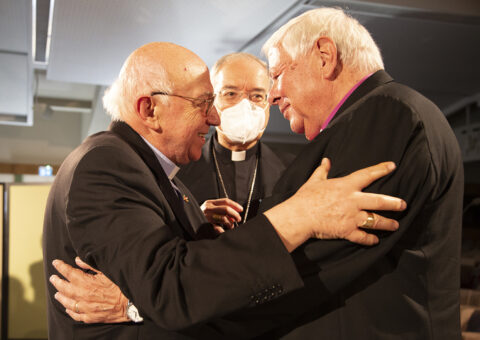 The darkness of the catacombs was brightened by the candlelight. People from various churches appeared in the corridors, walking as the words of a prayer of the first Christians resounded. They gathered around the altar of the small chapel, where the united community shared bread. Holding hands, with a spontaneous prayer they asked for the gift of unity. It was a foretaste of the ‘pact of mutual love’ that is renewed at every meeting of bishops who are friends of the Focolare. “The covenant strengthens our unity, our covenant, and urges us to maintain it in our relationships with brothers and sisters, in our countries or wherever we are,” said Bishop Nelson Leite of the Methodist Church of Brazil. “The covenant has changed my life. It has motivated me and led me to accept other people, to live with them, to learn to listen to them and to be able to establish a dialogue, even if we are different.” It was a sacred and moving moment, symbolically enclosed, as if in a chapel. The 170 bishops of various Christian churches participating in the “Dare to be one” conference are typically scattered throughout the world, yet here there were no more distances or electronic media, which allowed the connections. Those same catacomb candles gave light to their new commitment of unity. “We want the New Commandment of Jesus to be the foundation of our relationships – ‘that loving one another’, we want to be the foundation of our fraternal relationships,” said Brendan Leahy, Bishop of Limerick (Ireland), and one of the moderators of the meeting. With the awareness that, if it is put into practice, Jesus can fulfil his promise, “Where two or more are united in my name, there am I present in the midst of them” (Mt 18:20). “We long for Jesus to be able to give us this gift,” Leahy said, “so we would like to promise him that we want to continue to live in love with one another, to love each other’s diocese and community as I love my own, to love each other’s Church as I love my own.”
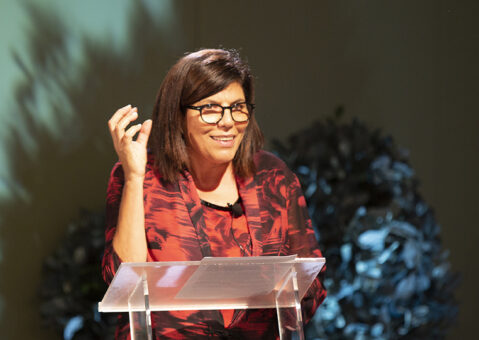
 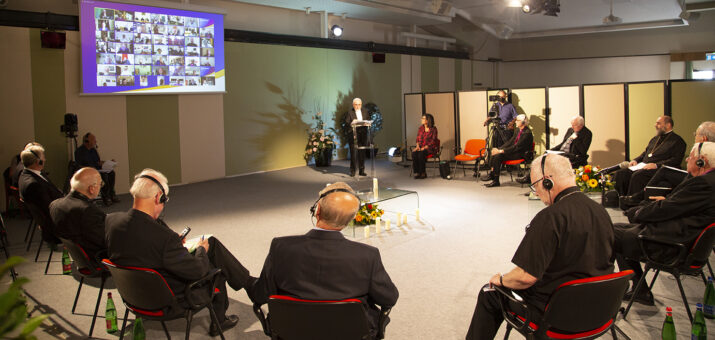 If there is mutual love among Christians, it is the strongest and most credible witness to the world around us. Jesús Morán, co-president of the Focolare Movement, said: “Yes, our unity, the unity of all Christians, could be a decisive contribution to the transformation of the world. This is an ethical imperative that cannot be postponed.” Margaret Karram, President of the Focolare Movement, concluded the two days by expressing the desire of many participants to keep moving forward – “to create a great network that will help us connect together, living cells united in the name of Jesus. “Who knows how many initiatives could emerge to renew the life of our churches in the one Church of Christ!” She invited everyone to join together to ask God the Father to enlighten the way forward by reciting the Lord’s Prayer. The words of the prayer taught by Jesus harmonised together in so many languages, like a symphony rising to heaven that floods the hearts and minds of everyone, sealing the pact of unity just made.
Carlos Mana
