
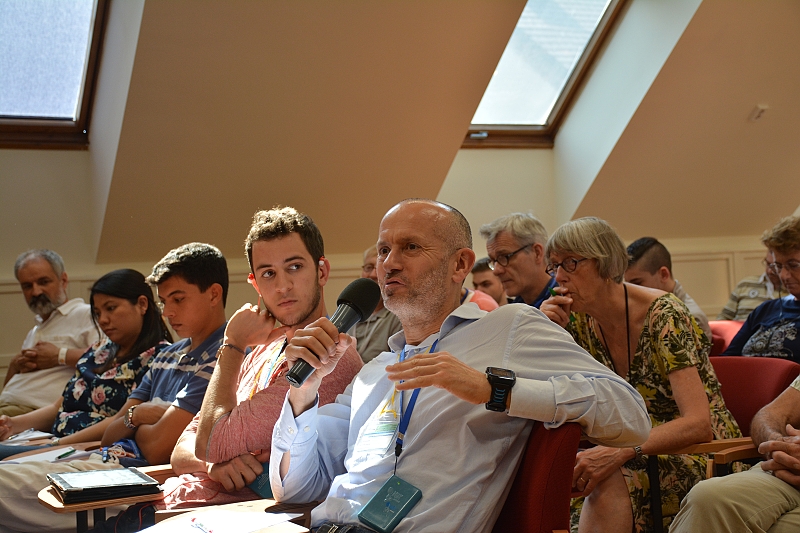
 The international coordinator of EcoOne called it “a successful experiment that has addressed a word of hope: A human being who is open to being a gift could in fact be the answer to the epochal environmental challenges that humankind finds itself facing. The meeting was held in Budapest, Hungary from May 27 until May 29 at the Pázmány Péter Catholic University and was attended by 80 representatives of environmental NGOs, university faculty, civil servants, professionals in the field of environment, and high school and university students from different countries. High-level scientific presentations were accompanied by practical experiences and transdisciplinary reflection on fields such as economics and political ethics. There were several presentations: from a 15 year-old boy to an elderly man who is dedicated to caring for the environment in the Focolare town in Holland. Three Italian students presented their experience that straddled energy-saving and the culture of giving. Erasmus, a student in Budapest, a student from Rome and a Brazilian also presented their experiences. The young man from Brazil paid for the trip by making and selling knick-knacks, and receiving a contribution from his university that made an exception in his case.
 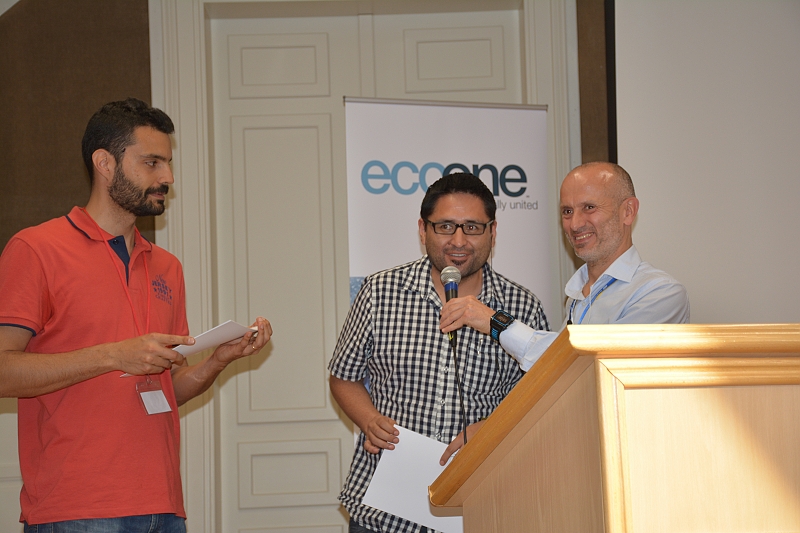 Five young researchers received the Piero Pasolini Prize for the quality of their presentations, thanks to the financial support of the Economy of Communion. “Several agencies of the Focolare Movement were involved in the preparation of the event: Action for a United World, Economy of Communion, New Humanity Movement, New Humanity, Young for Unity, Movement Politics & Policy for Unity., Sophia University Institute and an excellent logistical team from the Hungarian EcoOne Group,” Fiorani affirmed. Zsusa Román, the coordinator of EcoOne in Hungary opened the event with a question: “What kind of person does it take to care for the environment?” Fiorani went on to present the features and objectives of EcoOne as: “a cultural initiative at an international level, promoted by experts, researchers and professionals that work in the environmental science sector. We share a common desire to enrich our scientific knowledge with a humanistic approach to ecological and naturalistic problems. With our partners who join us in pursuing a global sharing of the world’s goods and a close interdependence among countries, EcoOne attempts to make such principles flow into society, politics and economy inasmuch as they are also related to the topic of the environment.” Auxiliary Bishop of Esztergom, Hungary, János Székely cited the importance of “sobriety and of the gift” in line with Pope Francis’s Laudato si. A lively debate followed the presentation by Professor Miguel Panão, which focused on a new anthropological notion of the human person as someone in the act of giving himself or herself to others and to nature. The roundtable was particularly appreciated in which the social challenges that are posed by the environment were discussed from a theological, climatological, economic and political point of view, underscoring how much the environmental problem requires the contribution of many disciplines, beginning with politics which guides decisions, and the economy that sets up the models of development. Fiorani concluded saying: “The meeting isn’t an arrival point, but a point of departure. Now we have to prepare for new challenges. The next meeting will be held in Asia!” Info: EcoOne
Persevere
Persevere


0 Comments