
28 Aug 2015 | Focolare Worldwide
Every day around the world thousands of people stand up for an integral economy. Aldo Calliera is the owner of El Alba, a company inserted within the Economy of Communion, involved in the raising of livestock in Santiago, North Argentina. Work begins early for this country folk, even before the break of dawn. Before the day begins mate is prepared, a typical South American beverage that is meant to be sipped through a silver straw by a group of friends. With each new round, stories are shared and bodies warmed. The owner did not wish to lose this age old tradition of his guachos, and he began to attend the early morning materas, but he was surprised that with his arrival the conversation languished and silence fell on the assembly. It was the same every day. Guachos are reared in a culture where everyone falls silent when the boss arrives, not because of disappointment but because from the times of the Conquest the worker has been considered inferior to the master. Thus, Calliera went away each day feeling that he had been given a punch in the stomach, and his heart shrank at the thought at not having been able to penetrate the wall. Gradually his insistence enabled hearts to open and names be shared, all but one: Ernesto’s. One day, Calliera was programming “the service,” which is the time and location coupling for the production of calves. After the planning session the engineer who was with him, was about to issue orders to the workers, but Calliera stepped in saying: “Leave it to me, to talk to my men.” Then he explained to the workers what had to be done and, instead of simply giving them orders, he asked them for their opinion. Ernesto, whose voice the owner barely knew, spoke up for the first time: “I think that we won’t have any calves next year.” Calliera was doubly surprised and asked why. The answer was simple: there was not enough water for all the animals at the place where he had planned to take them for mating. It might seem that anyone could have said it, but in this culture it is customary to respond “Yes, sir” to one’s boss, even when you disagree. Callieri relects: “Then I realised that it is only by having an optimistic vision of others that you can draw out the best in them. Only in this way is it possible to find treasures in others that otherwise remain hidden, and to discover the best way to draw them out. Each person’s talents are like virtues that you discover when there is mutual trust.” Needless to say, the Callieri heard Ernesto’s advice and changed the “service” and things went better. . . The matera had produced a small cultural change that helped everyone to build relationships based on reciprocity that neither workers, nor forefathers would ever have immagined. Source: EoC online
27 Aug 2015 | Focolare Worldwide, Senza categoria
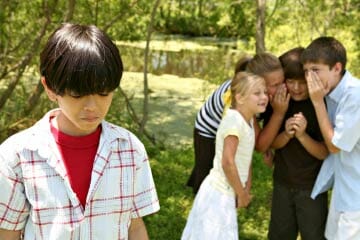
An illness  My husband has been ill for two years now because of a brain tumour. At times he complains because objects fall from his hands. I made an agreement with my daughters to never make him feel that something strange has happened. Many times, upon discreetly observing how they treat their father with care, and aware of the sacrifices and many renunciations they undertake to help the family, I see that they are more mature for their age. We are undergoing as a family, a period we have never experienced before. Despite the inexpressible suffering weighing on us, we feel a great serenity. (B.S. – Poland) The old man There was no more food in the house. I took a bag of cornmeal and 1,000 francs: half for transportation and the other half for the mill. I hailed the first taxi that came by. Beside the taxi driver, an old man was profoundly asleep. I noticed that the taxi driver was trying to slip the man’s wallet from his bag, so when I arrived at my destination I said: «This is my father, and he has to get off with me.» The driver continued to say that this was not where the man wanted to go, but due to my insistence, said he would let the man get off for 1,000 francs. I gave it to him immediately, and taking the bag, I helped the old man, still asleep, get off. Over here it occurs often that taxi drivers drug people in order to rob them. The old man awoke when I poured water over his head. He looked for his bag and checked if all his money was there. He said to me: “You saved my life”, and gave me 5,000 francs. I looked for a taxi driver I trusted who accompanied him safe and sound to his village. (M.A. – Cameroon) Trendy pants My classmates made fun of me because I didn’t have trendy clothes. I have a big family and we live in the countryside. One day I helped a classmate who was having a hard time with math and we became friends. Another day the others started to joke about my pants and he defended me. From that time on, all this stopped. We need to be at least two to be able to fight wrong ideas. In a short time we all became friends, and when they had to choose the class leader, they chose me. (E.C. – Italy) The beggar In my community we pray daily to God to bless our food, and help us to share it with those in need. At lunch time the usual beggar knocked on the door and we had nothing but cornmeal porridge for lunch and dinner. We did not have any money either, so I told the beggar that we did not have anything. When I sat down for lunch, I had no appetite. After a while, a phrase came to my mind, “Give and you will be given.” So I gathered what we had and gave it to the beggar who was still waiting. Not long after that, someone knocked on the door. A girl was there holding a big plate of cornmeal porridge saying: «This is from mama». It’s incredible how God is so punctual. (Sister Madeleine – Burkina Faso)
26 Aug 2015 | Focolare Worldwide
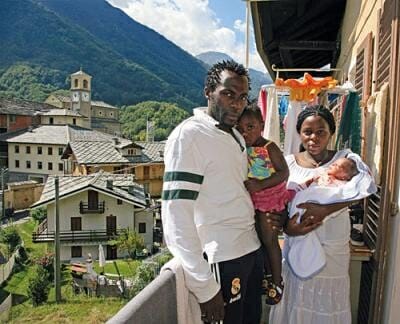
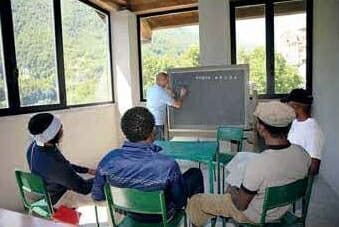 Five years ago, the town was classified as having one of the lowest socio-economic communities in the Piemonte region. But the entire community learned about hospitality towards others and today, 30 refugees, almost all Africans, besides a family from Kosovo with three children, have been living for eight months now, in a housing unit owned by the Cottolengo Institute. “We have adopted them,” confided two eighty year olds sitting in the town square. They had done so during the war, specified the President of the “Pro Loco” organisation, with the Jews and the members of the Italian resistance movement. History repeats itself. The mayor, Lisa Giacomo did not have to convince himself and the 180 residents of the village. Out of these, only 90 live in Lemie all year round. It had already happened in 2011, when the problem of hosting the migrants and refugees arriving on the Italian coasts with rusty boats still was not such a burning issue. Already then, for Lemie, that arrival of ‘friends’ had symbolized the rebirth of the community The 12 children taken care of by educators and the parish priest were baptised in the parish Church during a ceremony which went down in the history of the town. It was a feast. All the families with the children were welcomed by families and other children of those alpine valleys. “Of course, at the start we were a bit surprised,” Lisa explained, “the population here has a a very high age bracket average, and it’s not easy to open oneself to others. Or at least, this was not the case. I didn’t have to give a lot of explanations since no one asked any questions. Giving hospitality seemed but a natural thing .” And the situation today is still the same as in 2011. And as in the past, the men and woman that arrived from Libya and other sub-Saharian countries will have to work, and make themselves useful. “With the Province of Turin in 2011 we had also implemented some job offers. Now some are applying for ‘restitution volunteer work’ which is useful to them and also to us.” the mayor remarked. And not only do these ‘refugee friends’ wish to stay in Italy, but the community itself is asking them to stay. “The citizens immediately accepted them, but what’s more, welcomed them,” confirmed Lisa, “and a couple of residents found jobs as educators with an association related to a cooperative. Problems? “Only bureaucratic ones. They applied for protection as refugees, but the time frames are very long.” Then the transportation issues: “I will ask the agencies managing the coaches for Turin to help them, since I think it would useless to make them pay the bus tickets for Turin.” On asking the mayor if the village has been reborn due to the migrants, he smiles and opens his arms . “Look at this valley. It is full of second homes, that open only in summer. Many young people continue to leave, even if their bond with valley is still strong. The new people who have come have brought some liveliness. Just go to the playground on a sunny afternoon and finally you will see children playing, shouting, enjoying themselves. They have even saved the school.” Excuse me? “Certainly. Five children more in school allowed the school to keep more teachers and a better quality in education. What else can we ask of these friends we have welcomed among us? The family has been extended and Lemie is no longer small and marginal. We want to be a different village, new and open to all.” Original article in Italian: Città Nuova online
25 Aug 2015 | Focolare Worldwide
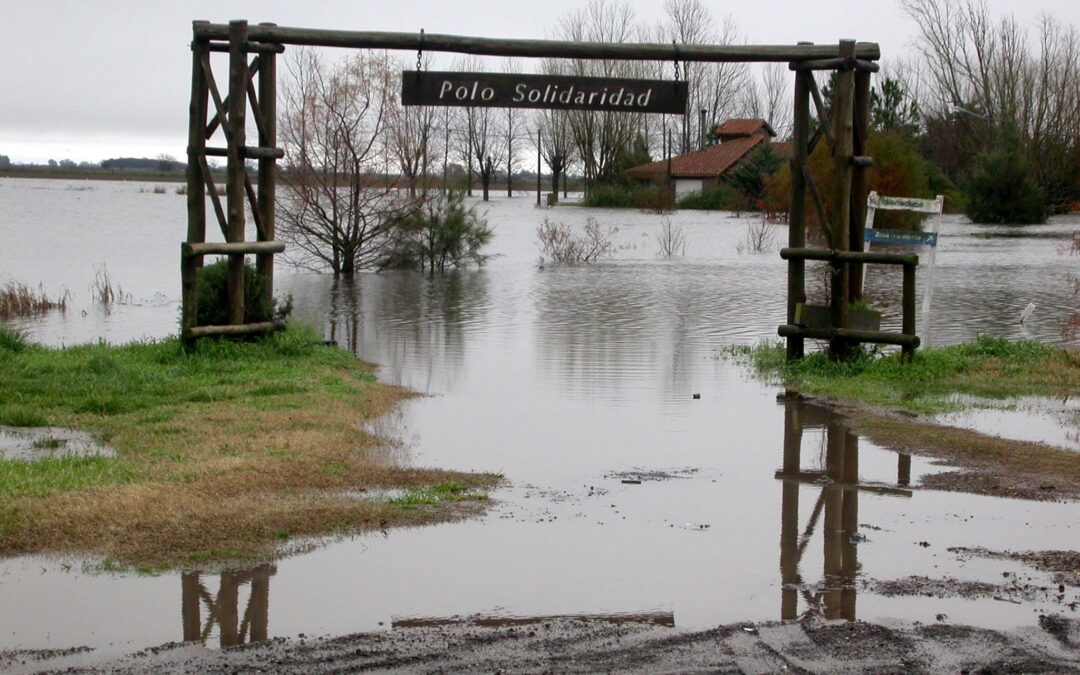
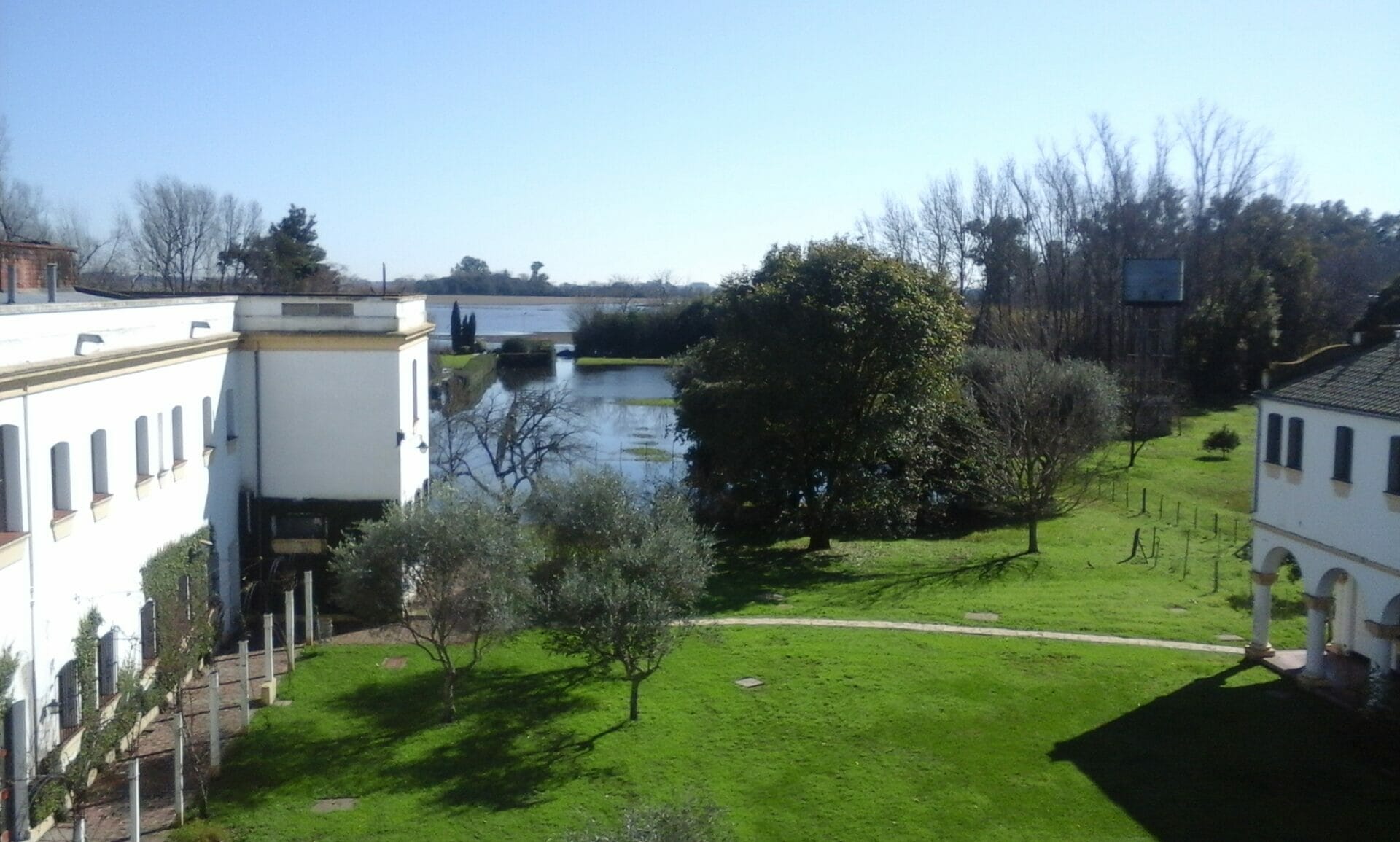 The Argentine provinces of Buenos Aires and Santa Fe were recently hit with severe rainfall. The local news media says that 20,000 people were affected and more than 4, 000 evacuees. Some roads are closed and others have limited access. The rains are unrelenting and a weather emergency is in force. However, in some regions the rain has begun to lessen. Mariapolis Lia, nestled in the Argentine pampas region, is literally submerged in water along with the Solidaridad Industrial Park where several Economy of Communion Businesses are located. “The water has flooded two buildings in the Park and also the garage of a third building,” Jorge Perrin writes from Solidad Industrial Park. Another two buildings are at risk: the water level has risen to a few centimetres. In the other buildings water has flooded the basements, but the living quarters are secure for the moment. The Primicias greenhouses along the road have also been flooded and the production completely lost, exept for a section of tomatoes. Pasticcino (coffee biscuits) is moving its production with the help of tractor from Primicias. For the moment the water has not flooded any of the dwellings in the Mariapolis itself.”
 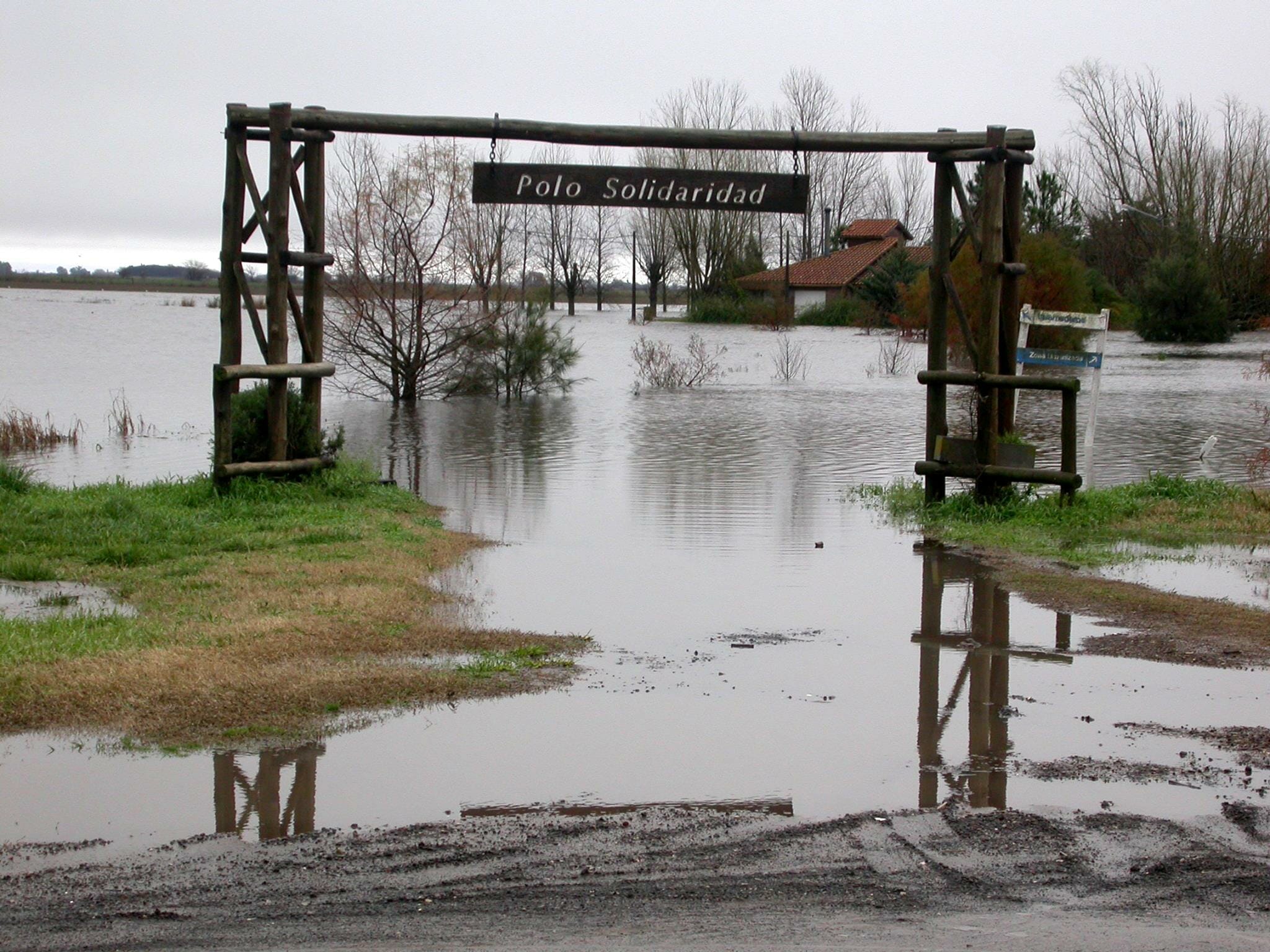 In many of the provinces of Buenos Aires the lagoons are connected with one another; the drainage channels are insufficient and the stretches of water become like oceans. “The channel of the Mariapolis and the Industrial Park had been cleaned recently and function well. But the problem of the road than links the Mariapolis to the nearby village is another story. It drains from another part. Access between the Mariapolis and the local village is completely flooded and it only possible to go from place to place in specialised vehicles.” “The solidarity amongst us is extraordinary,” he adds. The only automobiles capable of driving through the mud are the tractor and the Mariapolis van. So they’re always on the move transporting people to work, to school, to make purchases for others, or to take supplies to people, and so on. Throughout these days, in the countless telephone calls, in the communion amongst us, in the peaceful spirit with which we face every situation, I understand once again what a great family we are!” For enquiries on how to help.:polosolidaridad@gmail.com

22 Aug 2015 | Focolare Worldwide
“Since 1994 I have worked in the Pastoral Jail of the Archdiocese of Santiago in Cuba which also includes the city of Guantanamo. Together with other volunteers we see to their needs and those of their relatives, because these people are really the poorest among the poor. In 2007, when I encountered the spirituality of unity, it was if a ray of light penetrated me, and more than ever enlightened my service in jail and made me understand that in life we have to look for what unites and not what divides us. Sharing this way of life with others helped me a lot. Some said: «How can you deal with murderers and rapists, knowing that most of them do not even take notice of those who try to give them a hand…». This is true. At times it is so, but the spirituality of Chiara Lubich helps me to see in each of them the figure of Jesus crucified and abandoned. We only have to sow that small seed of the Gospel, without expecting anything in return. This conviction gives me strength and support and makes me feel less alone. It prevents me from falling into the temptation of leaving this service, and I can see that in the end, I will always receive more than what I have given. It has been some time now since we started to bring the leaflet of the Word of Life every month to the prisoners and also their families. After some time, to our great surprise, we found that in the special surveillance sector, a small community of prisoners was created, led by a young man. Together they discuss about the contents of the leaflet and during the month they try to put it into practice and make really significant experiences. “In my youth–Y recounted– I committed some crimes for which I am serving a life sentence. I am in the Guantanamo city jail (not far from the ill-famed American high-security jail). I found my faith in God through the members of the Focolare Movement, who for some years now have been visiting me regularly. I also wrote my story, where I talk about my meeting with God and of how it rekindled the hope in unending Life. Every day I try to put the Word of Life of the month into practice.» One day, another prisoner, Y, told us on the phone: «I’m down with fever and have a strong headache. I really needed to talk to you and took the opportunity of a permit to call you. Talking to you is like a balsam for me. » I ensured him that we were praying for him, and that Jesus came to save us, notwithstanding the life we live on earth. He said that he was also convinced of this and added «this is what I pray for daily, and it gives me the strength to go on loving everyone.” (Carmen, Santiago di Cuba)
21 Aug 2015 | Focolare Worldwide
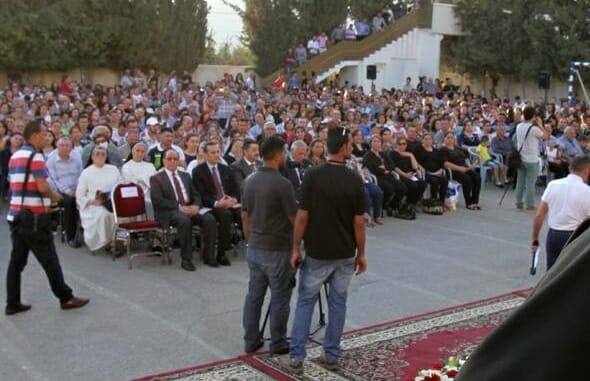
Aug. 8, 2015: Iraqi Christian refugees attend an outdoor prayer service to mark a year since their displacement, in Fuheis near Amman, Jordan. (AP Photo/Raad Adayleh)
