16 Sep 2015 | Focolare Worldwide
 He greeted me crying He was an idol for me. I was proud to have a father like him, but one day he left us. My mother never explained why. I had to grow up in order to find out: he had another family. I didn’t want to see him anymore, not even when he came to visit us. One day a classmate who was in a similar situation told me that as a Christian, he had forgiven his father and had drawn a great joy from this. In order to do this concrete act, which was very difficult for me, I went to visit my father. He greeted me crying. There was no need for explanations. We had again become friends. (R.S. – Venezuela) The “troublesome” student One day a rather rebellious boy in my class had a fit, throwing a desk in the air; fortunately, there were no serious consequences. A colleague, who had always wanted to get rid of this “troublesome” student, had thought to proceed with a legal strategy, sending a grim report to the headmaster. On one hand, I wanted to avoid a further rebellion from the boy with a worsening of his psychological condition, but I also wanted to consider the opinion of my colleague and respect his suffering. The report was written, but we did it together, searching for the right words in a way that would not worsen the situation. The causes of his behavior came to light, and a greater comprehension of the problem was born. Now this colleague and I have a new understanding: he has decided to collaborate with me on projects for rehabilitating students at risk. (R.R. – Italia) The grandmother In our neighborhood there lived an elderly woman. She was alone. Every once in a while she came to ask us to read her the letters she received or to ask us to accompany her to collect her pension. On special occasions we invited her to our house, where she always felt at ease. Our children loved her too, and each time they welcomed her with joy: for them she was the “grandmother,” and for everyone she was the “least” of which the Gospel speaks. One day she suffered a stroke, and her neighbours immediately called us, almost as if we were her biological family. She remained in the hospital for two months, and we constantly assisted her. When she recovered, she accepted the offer to move to a home for the elderly. But we continued to look after her, with the collaboration of the others. Thanks to the grandmother, a great solidarity was put into motion in the hospital and in our neighborhood. (M. S. C. – Spagna)
14 Sep 2015 | Focolare Worldwide
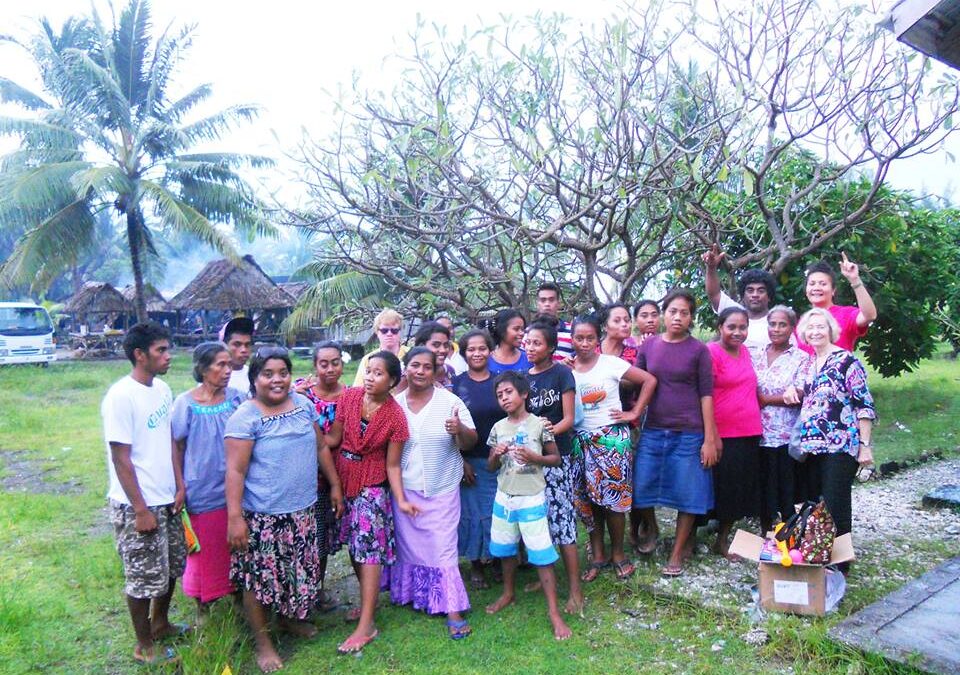
 “This is the plea of the entire of the Middle East: ‘Stop the conflicts!’,” states Arlette Samman, a Lebanese, in the face of the unprecedented exodus of entire populations from Syria, Iraq and other countries: “For those who leave, it is an immense suffering, since they are going towards the unknown and feel that death is near. They find themselves without resources and security for the future of their families… otherwise none of them would have wanted to leave their own country.” “It is comforting to see the humanitarian response by many European countries,” continues Philippe who has lived in Egypt over the past 14 years. “But we also wish to give a voice to the Middle East as it anxiously awaits peace and the right “to live and not to die”. Both underline the importance of finding ever new solutions for brotherhood and above all, intensifying public opinion. This is the same perspective targeted by the peace mobilization that the Focolare Movement has currently relaunched together with all those working for the same aim. In Europe, solicited by the words of Pope Francis, and also by the new awareness on the part of the political authorities – as recently expressed by the EU Commission’s President, Jean-Claude Juncker – initiatives have doubled to welcome the refugees with private homes opening their doors, coordination of material aids and fund collections.
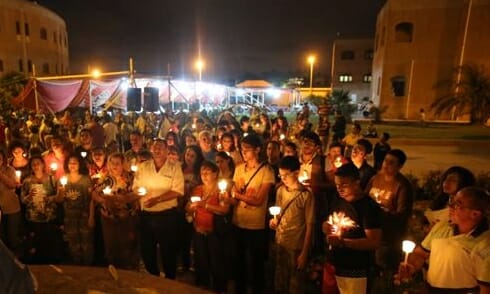
  Practically the entire world will be present in Rome over the next days, with the 80 delegates from 36 countries, representatives of the respective geographical macro-areas: “Coming here is an occasion to meet our brothers and sisters operating for peace, and who continue to support us in difficult times.” This is the general state of mind of those coming from distressed areas. From Latin America, Maria Augusta De La Torre, gave us a view of other situations: “In Cuba people are full of great expectations and hope. On one hand is the ‘new friendship’ between Cuba and the USA, and on the other, the Catholic Church which in Cuba is more dynamic than ever. The Pope’s mediation and his next visit to the Island is boosting this revival.” As to the frontier conflict between Colombia and Venezuela she said: «It is a very painful situation. We went to the border and saw the suffering of the people who had to leave their homes and there is great uncertainty with regard to the future, suffering and rebellion in face of the what has happened. Smuggling has always existed, but now nobody knows what lies behind these forceful decisions. In Venezuela the people feel depressed and without hope. The members of the Movement find the strength that comes from living the Gospel and want to continue to bear witness to fraternity between these two peoples. » From Nigeria, Ruth Wambui Mburu, a Kenyan citizen, confided that the stronger commitment they have to face as a Focolare is the radical enforcement of separation between north and south, between Muslims and Christians, and ethnic groups. Their efforts and commitments consist in being testimonials of fraternity lived among these different groups. Georges Sserunkma, also from Nigeria, upon arriving in Rome precisely in this historic moment, said “I feel that this is really the unique home we all live in – seeing how the Church and the Movement take all these situations to heart, makes me breath a wider dimension and fills my heart with hope.”
 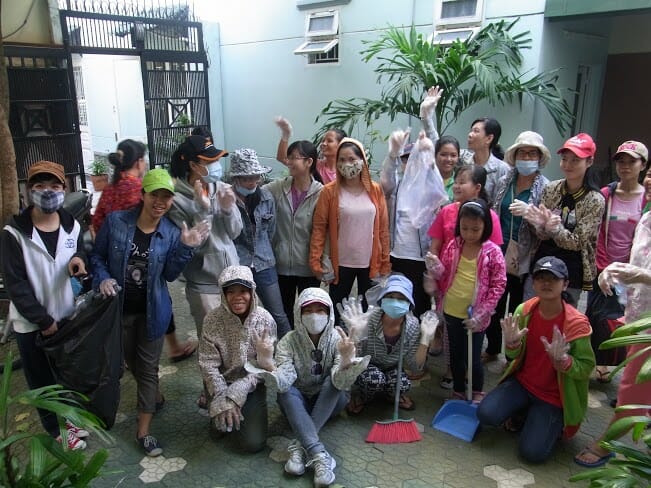 “Each of us has come with a heavy load on our shoulders,” affirms Marcella Sartarelli from Vietnam, “but also with hope in believing that “the world is reaching out to unity.” One of these signs for her is also “the openness we saw in Vietnam, for example in our contacts with the Church. There is a new awakening, which is giving more hope. All we know about Vietnam is the war of 30 years ago, but less about what Vietnam is today – a country undergoing rapid development. Some passages of the encyclical Laudato Si’ seem to trace a precise profile of this country: a fast advancing economy, with ultra-modern cities and at the same time, the countryside abandoned to pollution. With a group of young people in a village near Hanoi, where the situation is critical, we are documenting this hidden problem, but at the same time, rolling up our sleeves to clean up.”
 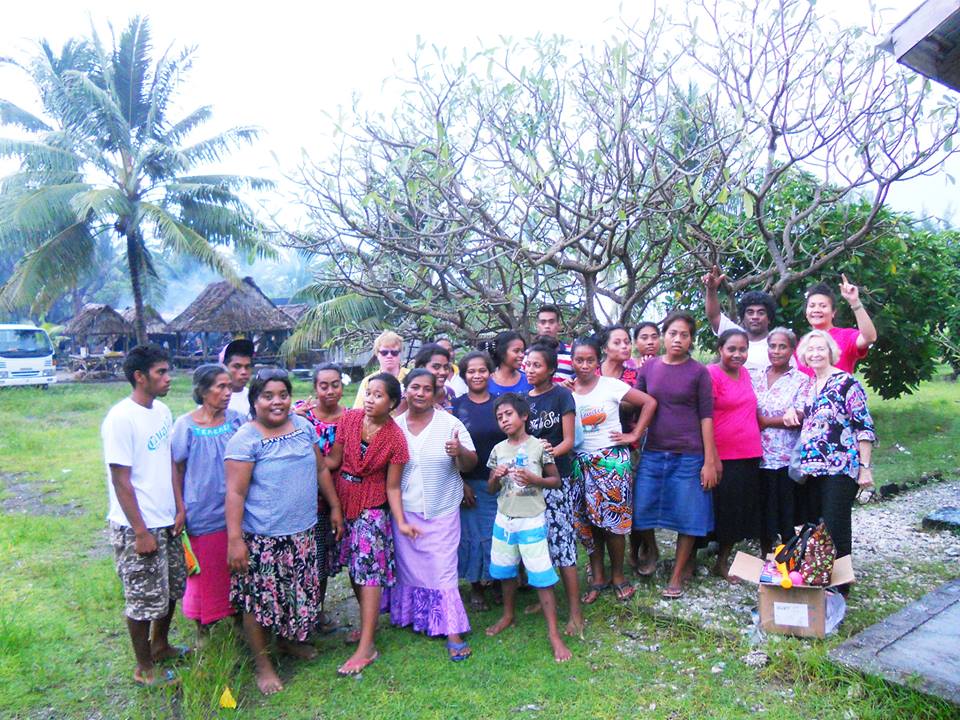 Also in Oceania, environmental problems are strongly felt: “In New Zealand, the young people promoted the action Give one hour of your power, inviting everyone, on the day dedicated to the care of the planet, to switch off the electricity for an hour,” Augustine Doronila recounts, “while for years now there has been an ongoing action to help the population of Kiribati, an archipelago at risk of extinction due to the rising sea levels.” Reflections and sharing of experiences will mark the two weeks meeting, from 14 to 27 September 2015, dedicated to the word “unity”: not only a point of the focolarino spirituality, but a key to the spiritual and social action of the Movement, the word that synthesizes its message.
12 Sep 2015 | Focolare Worldwide
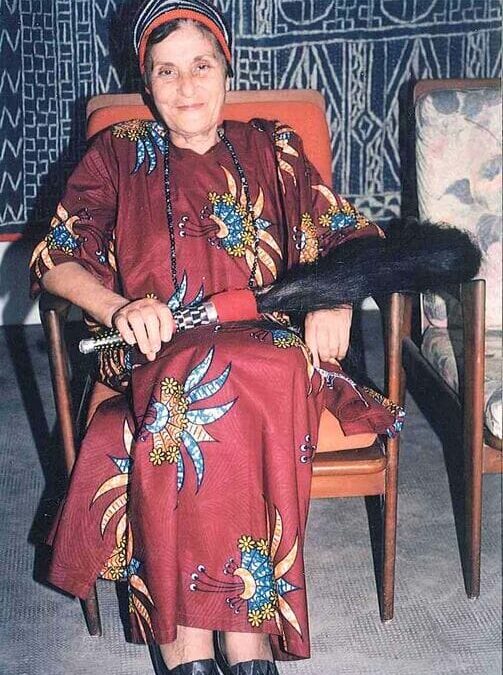
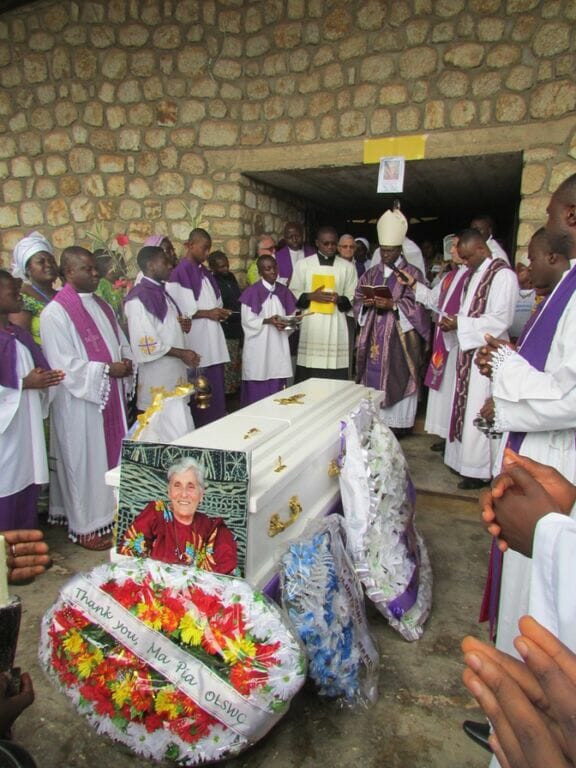 Monday, 31 August. At this time it is not easy to reach Fontem, the Bangwa village in the midst of the Cameroon forest. This is, in fact, the heart of the rainy season and the road is muddy and practicably impossible to pass at some points. Nonetheless, a continuous procession of people have come to pay homage to Pia Fatica. Today there are at least a thousand people from all over the region saying goodbye to this extraordinary Italian woman who decided to live here 48 years ago. The funeral rite is celebrated by Bishop Andrew Nkea who began by saying: «As a bishop and as a Bangwa citizen, I can say that Pia has lived all the beatitudes. This means that for her, today is the day of her birth in Heaven.» These authoritative words confirm what in 2000 the traditional locals had provided for, upon awarding Pia with the title of Mafua Nkong (Queen of Love). But who is this woman, who at 38 chose to pass the rest of her life in Africa, and also requested to be buried there? Pia was born in Campobasso (Italy) in 1929. An obstetrician, a prestigious and profitable profession even in those times, she read an article in the Osservatore Romano that a mission was about to start in Cameroon, that would also see to the construction of a hospital. She felt involved, at first hand, and without even knowing what Movement planned the project, decided to leave everything behind to go and give a hand. Upon reaching Fontem, she found out that due to a widespread infant mortality, obstetrics was an absolute priority. She made the decision with all her heart, and delved deeply into the tradition of these animistic people who, anguished by the death of their newborns, turned to the Catholic bishop for help.
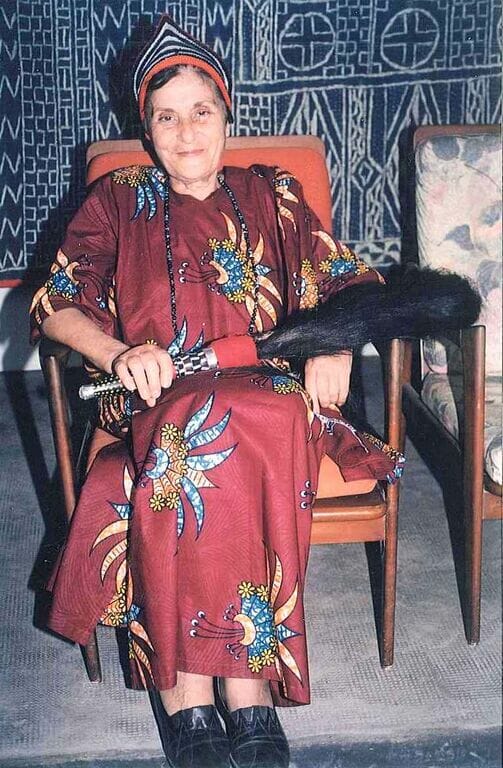
Pia Fatica
7 Sep 2015 | Focolare Worldwide
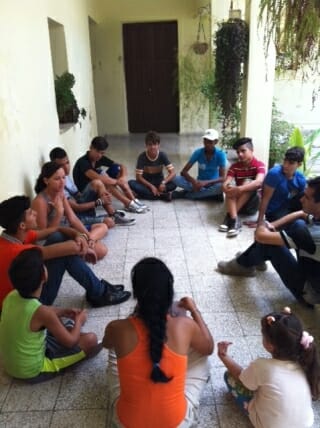
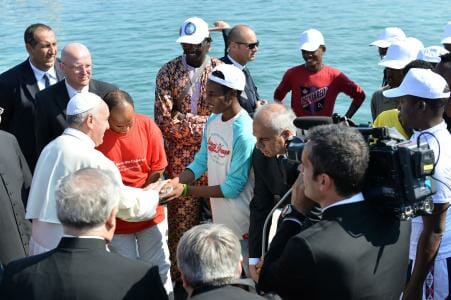 “Often we are closed in ourselves and create many inaccessible and inhospitable islands. Even the most elementary human relations sometimes create realities that are unable to open to each other: a closed couple, a closed family, a closed group, a closed parish, a closed homeland… And this does not come from God!” Pope Francis’s words at the Angelus on 6th September resound strongly, in his call for concrete action to support the hundreds of thousands of refugees forced to leave their homes: “As we draw close to the Jubilee of Mercy, I appeal to parishes, to religious communities, to monasteries and convents and all the shrines of Europe to show the concreteness of the Gospel and take in a refugee family”. In the name of the Focolare Movement, Maria Voce has expressed “gratitude” for this courageous and practical appeal by the Holy Father” and stressed the decision to do what he asks by “opening the doors of our houses and centres to receive people”.
Florence (Italy): Bed & Breakfast project for migrants
5 Sep 2015 | Focolare Worldwide
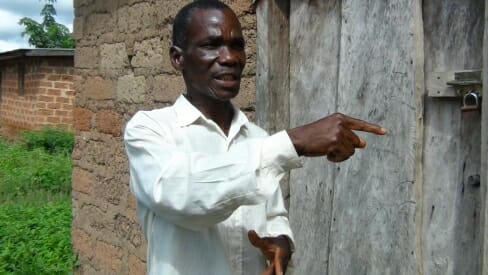
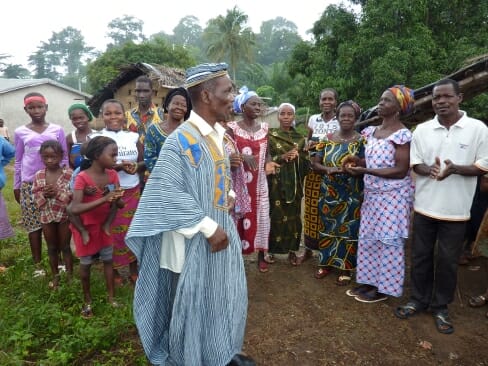
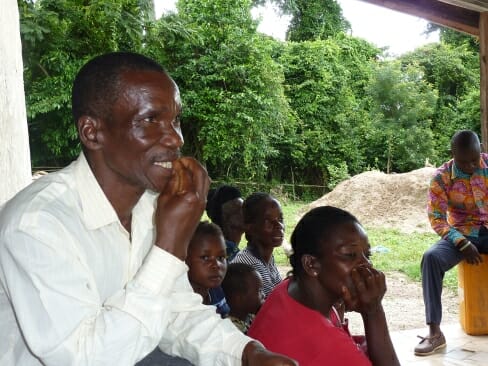 Seven kilometres into the forest, reachable on foot or by baka (van), which is the only thing capable of travelling over the mud and holes during the rainy season, lies the village of Glolé. It is one of eighteen Cantons in the region of Tonkpi, northwest of the Ivory Coast. There is no electricity, and therefore no television, internet or shops. Many of the people in that region have been touched by Chiara Lubich’s ideal of brotherhood. They live it in their daily lives beginning with putting into practice the Word of the Gospel; even the social and political structures have been gradually enriched and illuminated by the experience. Gilbert Gba Zio is a community leader, catechist and head of a family: “One day we asked ourselves what we should do for our little village,” he said during a recent meeting of the Economy of Communion in Nairobi, Kenya. “We saw that living out the Word of the Gospel could provide some guidelines.” Here are some of the concrete results of that decision. House for the strangers (guests). For Glolé the local saying “Kwayeko,” (We have a place for you to stay), was not merely a saying. “There are many people who walk through our area, they walk many miles and have sleep on the roadside until they reach their destination village. We always give our bed to our guests every time. This is also the Gospel’s way, but we said to ourselves: “Couldn’t we do more? Why don’t we build small houses, so when anybody arrives, we can offer them somewhere to sleep? So we began to make bricks, singing songs of joy. There were some bricklayers in our group and we built twelve small houses with one bedroom and a small living room in each. Now we can say to the strangers who arrive: “We have a house, come and sleep there. There is always some food, too, since we are all farmers. In this way, we took the first steps.
  House of Health. During the rainy season it is difficult to reach the paved road and travel the additional 30 km to the city of Man, which is the closest urban centre. This makes it quite difficult in the case of a medical emergency. “One day there was a woman who was giving birth and it was a complicated labour,” Gilbert recounts. “We took her to the asphalt road in a wheelbarrow to get her in a car. Thank God, the woman was saved; but it was tough. Therefore it was necessary to build a house of health and bring some traditional midwives to help women in labour. But where to find the money? We have tenant farming in our region: the proprietor of a piece of land can give it to someone else to cultivate for one season. In the end, the harvest is divided in two equal parts and shared between them. Our community took a coffee plantation: the men pulled the weed out from among the plants, the women harvested the coffee. With the money we could buy the cement and build the House of Health. Children suffering from malnutrition. “There were children dying in the village and we did not know that we could actually save them. In the Focolare’s permanent Mariapolis, there is a centre taking care of them. We explained the problem to them and started bringing the children in. We were surprised to see that the children were getting healed in that place without any medications. They taught us how to feed them. One day, the head of the centre told us: ‘If you want, we can go to your place.’ In our culture a child belongs to the whole village! They explained to us how to prevent and how to cure this illness. We started to change our food related habits, and we learned that it is necessary to eat beans, peanuts, mushrooms . . . and we learned how to conserve food so we could give our children to eat even in times of famine.” Rice Bank. “We store the rice in smaller granaries, but they are frequently ‘visited’ by thieves and mice. So, we built a rammed earth house where everyone sent what they had. In the beginning, we were only 30 people. Nowadays, some farmers who are not members of our group have joined us, too, and 110 people are bringing their sacks of rice keep in our bank. In the months of March and April, during the sowing season, they take what they need for sowing and set aside what they need for feeding their children. At the right time, when the prices are good, they take away their rice and sell it. Everyone donates a part of their harvest according to their conscience and deposits it in the bank as a contribution to compensate for the needs of the community and for those who guard the rice bank.” One village is not enough. “‘Couldn’t you come to us with your business?’ the people of the neighbouring villages said to us. Today there are 13 villages that live like us in Glolé. Unity is our wealth. One day, there came an outside who wanted to help us make a well for the village. But we could not agree about the location of it. Had we insisted on having a well, it would have brought division to the village. So we preferred not to accept this gift in order to keep the unity amongst us. See “Economia di Comunione – una cultura nuova” n.41 – Eitorial insert from Città Nuova n.13/14 – 2015 – luglio 2015 See Nouvelle Cité Afrique Juillet 2015 Glolè (Ivory Coast): Congress EoC 2015
2 Sep 2015 | Focolare Worldwide, Senza categoria
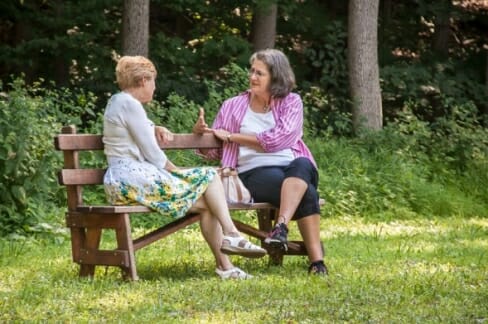
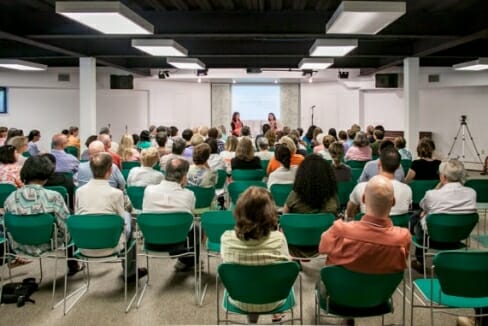 In 1998, Chiara Lubich established the Education for Dialogue Centre in Mariapolis Luminosa, the Focolare’s permanent Mariapolis in the State of New York. For that occasion she wrote: “May all those who take part in the activities of this centre also feel like builders of this new reality, collaborating with love, patience, mutual understanding and solidarity, in order to create an island of peace and a sign of unity for today’s world. . . may it especially be a school where one learns to live out this love, which is the only thing that can make the peoples of the earth a single family.” “These words from Chiara also informed a recent meeting of August 15 and 16 at the North American Mariapolis, titled: Dialogue and the Difficult Questions. It was attended by a hundred people and it focused on how to dialogue and communicate with people who think differently.”
 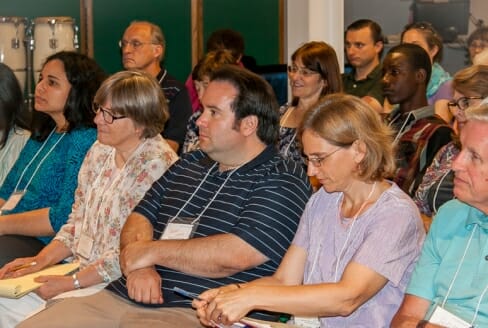 There were also very valuable contributions by four experts in moral theology and political theories from Fordham University (New York), Providence College (Rhode Island) and Georgetown University (Washington D.C.). They write: “We began with some words from Chiara Lubich on the dialogue that emerges particuarly from the spirituality of unity which, if practiced, helps to transform people’s relationships with eah other.” Charlie Camosy (Fordham) and Amy Uelman (Georgetown), examined the “reasons why USA society is so polarized by opposing positions and how the walls between people could be broken down by listening and being open to others.” Dana Dillon (Providence College) dealt with the delicate relationship between love and truth, based on one of the main points of the spirituality of unity: Jesus forsaken. The theologian presented Him as the true model of dialogue inasmuchh as “He entered into the disunity of that moment in which He felt abandoned by the Father, unifying the greatest division possible, the one between Heaven and earth.” In the afternoon there was an interactive programme offered by Claude Blanc, a leadership coach and team work consultant, who guided the participants in several exrecises in “learning to listen deeply and without pretexts.” A reflection on “Different Ways of Communicating” (imposing, discussing, trying to convince the other, and focusing on the common good), given by Bill Gould (Fordham),brought the session to a perfect conclusion. The roundtable discussion on Sunday, evidenced the need for being prepared to confront some current burning issues as well as the challenges of daily life. Two impressions: “The workshop on listening helped me to see how importnat and fruitful this can be in daily relationships;” “I leave quite enriched by this experience.”
