
 He greeted me crying He was an idol for me. I was proud to have a father like him, but one day he left us. My mother never explained why. I had to grow up in order to find out: he had another family. I didn’t want to see him anymore, not even when he came to visit us. One day a classmate who was in a similar situation told me that as a Christian, he had forgiven his father and had drawn a great joy from this. In order to do this concrete act, which was very difficult for me, I went to visit my father. He greeted me crying. There was no need for explanations. We had again become friends. (R.S. – Venezuela) The “troublesome” student One day a rather rebellious boy in my class had a fit, throwing a desk in the air; fortunately, there were no serious consequences. A colleague, who had always wanted to get rid of this “troublesome” student, had thought to proceed with a legal strategy, sending a grim report to the headmaster. On one hand, I wanted to avoid a further rebellion from the boy with a worsening of his psychological condition, but I also wanted to consider the opinion of my colleague and respect his suffering. The report was written, but we did it together, searching for the right words in a way that would not worsen the situation. The causes of his behavior came to light, and a greater comprehension of the problem was born. Now this colleague and I have a new understanding: he has decided to collaborate with me on projects for rehabilitating students at risk. (R.R. – Italia) The grandmother
 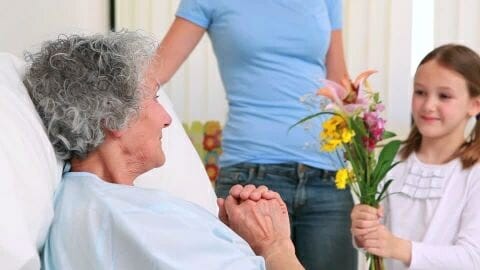 In our neighborhood there lived an elderly woman. She was alone. Every once in a while she came to ask us to read her the letters she received or to ask us to accompany her to collect her pension. On special occasions we invited her to our house, where she always felt at ease. Our children loved her too, and each time they welcomed her with joy: for them she was the “grandmother,” and for everyone she was the “least” of which the Gospel speaks. One day she suffered a stroke, and her neighbours immediately called us, almost as if we were her biological family. She remained in the hospital for two months, and we constantly assisted her. When she recovered, she accepted the offer to move to a home for the elderly. But we continued to look after her, with the collaboration of the others. Thanks to the grandmother, a great solidarity was put into motion in the hospital and in our neighborhood. (M. S. C. – Spagna)
Peace starts within our hearts
Peace starts within our hearts

0 Comments