29 Jul 2015 | Focolare Worldwide
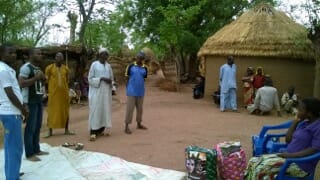
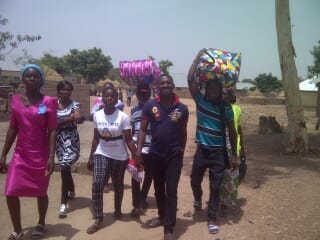 In Nigeria, there is great inequality in the development between cities and rural villages where there are almost no infrastructures and no electricity, medical care, roads, etc. Yakoko is one of these villages located closest to the desert, amid mountains – where the Christian and Muslim communities have always lived in great harmony. In the evening after working the fields, the men gather in the square to discuss while sipping an alcoholic drink produced from their Guinea corn. Some years back, a missionary, Sr. Suor Patricia Finba, had brought to Yakoko the spirituality of the Focolare and Felix, Abubacar, Nicodemus, Loreto, Father Giorge Jogo and others had made it their way of life. Last year they welcomed to their village more than 200 people who had arrived from the various regions of Nigeria, to get to know the Focolare spirit better. This year a group of youth and adults of Onitsha decided to pass a few days there. After a journey of 24 hours – which was at times dangerous – in over-packed public vans, loaded with bags and packs, they were warmly welcomed by the community into their homes. «We participated in their lives – Luce recounted – sharing all with them», «and – Cike added – we noticed that the youth were interested not so much in material goods, the clothes and medicine we had brought, but the spiritual ones, our friendship and our life-treasure: the discovery of God who is Love. » And so they decided to stay with us for a day of meditation, going on an excursion in the mountains which with its arid beauty, is an invitation to meditate. «It was an important event – Imma recounted. In an atmosphere of deep friendship we shared the values we believe in and on which we have based our lives.» And then in the following days, together we brought the material help to those in need, especially the elderly and the children and the many refugees who had come from the northern regions. We visited five villages. A Muslim community welcomed them with particular joy. Some of them had already started to live for unity in the world and with them we immediately felt a family atmosphere in which we shared joys and sufferings in that area. The villages, in fact, were undergoing a really difficult time due to the drought, and by tradition they had asked an important person of the village to pray for rain. But the rain did not come, and they had thus decided to kill this person. «On hearing this decision we were shocked and also started to pray to God to send rain – Luce continued – and in fact, on the third day, He blessed us with a great rainfall! But apart from the rain, we were so happy to have saved a person’s life.»
28 Jul 2015 | Focolare Worldwide
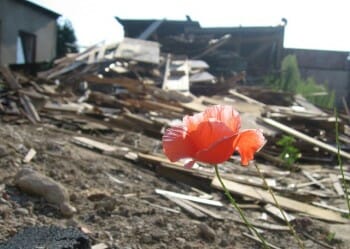
For several years the ROM camp has needed to be removed because of serious health and environmental issues, but it was no easy task given the fact that it was home to thirty families. Mario Bruno, Mayor of Alghero, decided to involve the families themselves in choosing a new location for the camp. There are many unemployed people in Alghero and there are also many people on the list for a house. So, as the Mayor says, it can be difficult to make people understand “that there are specific funds, and sometimes we all have to take to heart social inclusion and sometimes take decisions that are unpopular that are sometimes not understood.” “The 30 ROM minors are just as important to me as each and every Algherese. And I have to try to show with facts that this is possible,” the Mayor went on, “and I have to help the Algheresi to take this step knowing full well that I hold all the problems in my heart and not only those of one side.” Concretely, finding solutions for the Algheresi is one way of showing this value for people. He did it by announcing a 3 million and six hundred thousand euro financing toward the construction of 28 dwellings for Algeresi citizens. BrAs a politician, at times Bruno finds himself in difficult situations which he says he tries to face “with common sense, delving into adminstrative decisions without skipping over them, because we are here to defend everyone’s good and not only our own, we are only administrators.” The Mayor felt the “need of coming to a solution in front of the complexity of the moment we are going through (. . .) in which you can be part of the answer and I believe that this answer can be given individually but also collectively, and giving a collective answer means living for a good that goes beyond us.” Watch the Video – original soundtrack in Italian https://vimeo.com/133758828
25 Jul 2015 | Focolare Worldwide
“Jean Paul is in his last year at the Faculty of Engineering and has known the spirituality of unity for several years. Burundi is going through a difficult political situation, because of the upcoming election. The political impasse has provoked many controversies that give rise to clashes and protests. Some people have lost their lives. It was in this context of great instability and suffering that Jean Paul and a friend, returning home on foot because there was no public transport, found themselves in front of a new and unexpected countenance of Jesus forsaken.” The one reporting is Marcellus, along with the entire Focolare community of Burundi and Rwanda. “It was the summer of May 2cnd when the two young men were assaulted by a group of wrongdoers. Jean Paul and his friend were brutally beaten to the point of unconsciousness. Helped by several police officers who found them thrown into a manhole, they were rushed to hospital. The friend had light injuries but Jean Paul was in serious condition: a fractured backbone and paralysis of the lower limbs. In spite of his serious state Jean Paul was always smiling and hoping to for a recovery. He entrusted himself to God and Chiara Lubich. “The fact that I’m still alive is already a miracle of hers,” he said. In a short time news of what had happened to Jean Paul reached the community which, besides praying for him, began to look for the money to hire an ambulance that would return him to Rwanda, where he would receive adequate care. On May 12th he left for Kigali, Rwanda, accompanied by a nurse and Séverin, a young man from his Gen group. The chain of love and prayer widened, involving the Rwandan and worldwide Focolare family, especially the Gen. Jean Paul and Séverin gave a strong witness of mutual love in Kigali, Rwanda. In hospital the people were astonished that the visits to this boy were more numerous than to all the other patients. They were also amazed that by the fact that Jean Paul and Séverin were not brothers, from the same village or ethnicity. The boys explained to everyone that the engine behind their action was something else: the spirituality of unity based on the mutual love that Jesus asks of us. After a few medical examinations, Jean Paul was operated on the back and chest, on June 10th in Roi Fayçal Hospital. The prices at the hospital were very high, but God intervened with Providence that was never lacking. Jean Paul, who never grew discourage, considers this experience a true miracle. The surgery went well and this was encouraging to everyone. Jean Paul was transferred to another facility where he began physical therapy, and close monitoring by his physician and the team that performed the surgery. His condition is showing incredible improvement. He is beginning to feel hungry, physiological needs, pain and sensitivity in his feet. He is able to get out of bed and move around the hospital in a wheel chair. He continues to say that if it weren’t for this extended family he wouldn’t be alive. Jean Paul is very grateful to the Focolare community in Rwanda, to the Gen around the world, to the international Gen Centres, and to all those who have sent financial support and prayers. All our hearts overflow with gratitude to God for having given us the possibility of having this powerful experience that has aroused attention, communion, authentic love among His children and a powerful witness of the love that conquers all.”
23 Jul 2015 | Focolare Worldwide
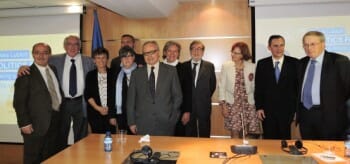
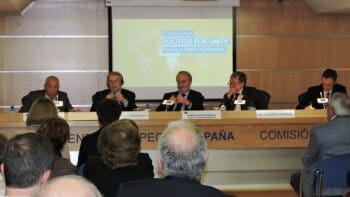 At the base of the itinerary of the Political Movement for Unity in Spain, is the desire to give an answer to a situation of violence being staged in the Basque Province by the armed struggle of the ETA. The objective is to try to heal the still open wounds and make an effort to ensure a future of peace. «It is a utopia, but it may be the only solution for our people.» There was a pressing surge of hope in some members of the Provincial Council of Gipuzkoa when about ten years ago, some exponents of the Political Movement for Unity (MppU) from Italy, spoke to them about fraternity as a political category. This perspective almost seemed like a shock because of the atmosphere existing in the Basque Countries and the work of the ETA.. With the objective of obtaining independence for the Basque people, the armed groups of ETA continuously sowed an atmosphere of violence and terror. In fact, the tension was at its highest. During those times – the first six months of 2005 – a group of politicians belonging not only to different parties but also to diverse ideologies, got together to pave the way to a strategy that sought the renewal of politics, based on mutual acceptance of peoples, without exclusions. Thus a new ground for discussion and acceptance of the other was set, involving politicians of all convictions, State employees, members of labour unions, citizens… all thirsting for a normalized coexistence, and true peace. The meetings were held every two months at different locations, alternating between the various parties. Among the participants, there were those who were
 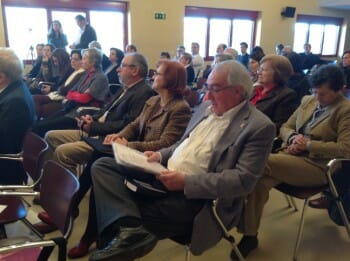 immediately threatened for their pacific membership, and they arrived with their bodyguards. And there were those who feared they would not be well received by their own party or would be ousted. But they all tried to encourage one another, and overcoming every sense of mistrust, wished to testify that fraternity was possible, starting from themselves. As time passed, they saw the need to share this experience with politicians of other regions and communities. A group thus went to Madrid and participated in a series of encounters where they met other experiences, inviting everyone to unite Euskadi with the group of Gipuzkoa. It was a historic moment: four hours of dialogue (after lunching together) to get to know one another, and listening to and begging forgiveness from each other. Subsequently, they felt the need to draw up a document that each could bring to their own parties, to be studied as an alternative to the crisis. Many still felt the need to share the contents of the document and to hold seminars and round tables in other autonomous communities, also to present the experience of fraternity and pacific coexistence based precisely, on fraternity. When the ETA ceased its armed activities (2011) a new process began, though not simple, but which was a harbinger of hope. There are still many people, families, and groups that though sharing the same identity are divided and continue to clash, finding it really difficult to dialogue. The political workshop that had been created during those difficult times and simply called “workshop to learn about peace” – continues its journey toward pacification and search for peace, facing the diverse standpoints on historical facts and healing the wounds that are still open. They drew up a document named “Towards the path of reconciliation of the Basque society” (January 2013), that describes the basis to work on from then. This document is informally known as “The earth we trod on.” Every time dialogue seems to encounter a hitch, they try to start anew by helping one another believe that every man is a brother and that they could build something with all. This does not signify that the crimes should not be recognized as such, or that the great number of people who paid for this with their lives are not acknowledged. On the contrary, by accepting the past and recognizing the injustice and senselessness of the violence suffered, they try to view history like a slow and painful path toward reconciliation and peace, in which all can and must give their own contribution. On 13 March, precisely at the eve of the anniversary of Chiara Lubich during which all over the world her view of politics was being deepened, this group held a meeting at “Las Juntas Generales de Gipuzkoa” (provincial parliament) in San Sebastian, inviting various experts, scholars, and political figures. The debate was on “The relationship between common good and the common goods in globalization,” the basic manifesto of which, was sent beforehand to all and was greatly appreciated, and which described the deliberation to hold a “workshop to learn about peace.” In a climate of mutual acceptance, valid contributions emerged which were then integrated into the document itself, to be later diffused in order to promote the value of fraternity at all levels.

20 Jul 2015 | Focolare Worldwide
“We are honored, grateful and especially happy that the message of unity that we try to spread has been recognized. A special thank you to all our readers who support and encourage us on that path!”, the Living City editorial team reports. Living City received an award for the April 2014 issue for “Best coverage of immigration” by Marilyn Boesch, Susanne Janssen and Lori Chesser. The CPA jury wrote: “These stories are captivating and relevant, and they put the human element front and center.” In the category “Best Explanation of Church’s Position on Marriage”, Living City got the third place for the articles in the July 2014 issue written by Michael and Julie James, Pietro Riccio,Sarah Mundell and Emilie Christy. “The perspective on diversity in these pieces is valuable. There is a clear call to action to those who wish to use their faith to create dialogue and build bridges,” commented the CPA. You can read and share these articles on the website: livingcitymagazine.com
20 Jul 2015 | Focolare Worldwide
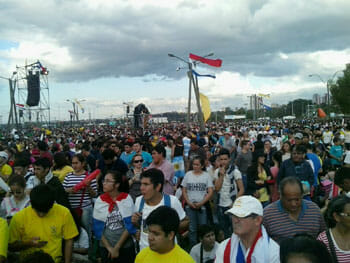
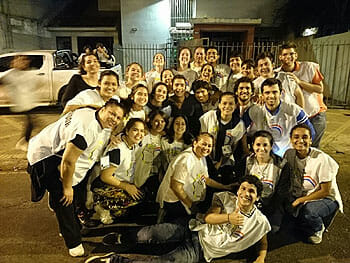 Ore aguije Papa Francisco pe, ha peeme avei pe ñembo’ehaguere ore rehe. In the Guaraní language: «Our thanks to Pope Francis and to all of you for your prayers.» «As we had imagined, overflowing graces have fallen on the entire Paraguay people, ever since His Holiness was here among us,» Nelson Benítes and Margarita Ávalos, heads of the Focolare in Paraguay wrote, after the Pope’s visit to their country. «The children, the sick and the youth were the main protagonists of the visit. Over 80,000 “servidores” (“stewards” – almost all young people) from all over the country worked day and night for three days. But the preparations started at least three months earlier, a concrete fact that gives true hope!» Nahuel Espinola recounts: «I was a ”servidor” of the Pope – It was simply fantastic! I’m 15 and I don’t know when I shall experience something like this again. I hope that his message will reach all the youth.» «There was instant bond with the people,» and some scenes will never be deleted from my mind: the children of the choir of Luque running towards Pope Francis for a group embrace, the thousands of people who filled the streets, his car stopping in front of the women’s jail. «When they found out that the Pope was coming, the children afflicted with cancer in a hospital did not want to be discharged!». Then there was the visit to “Bañado Norte,” one of the poorest districts of the capital, where the Pope visited a sick woman at home. «For that event, she had prepared the “chipa” and “sopa paraguaya,” typical dishes the Popes likes. This was followed by the surprise visit to the parish of Cristo Re, to pay homage to the still intact heart of the martyr and first Paraguayan saint: San Roque González de Santa Cruz.» In Caacupé, Pope Francis consecrated Paraguay entirely to Mary. Then came the meeting with civil society, one of the most striking moments when he launched a discourse on dialogue, inviting all to dialogue, by losing all in order to understand the other, and “enter” into the other. «Concepts like the humane side of development, giving priority to the person, and not treating the poor like objects, impressed me deeply,» affirmed Julia Dominguez, a member of the Economy of Communion of Paraguay, «From now on, we must not dwell on sentimentalism, but live this daily.» César Romero, active in the association for families added: «In the dynamism and freshness of the programme, I saw a Church that was making a big effort to update itself in its methods and messages.» Silvano Malini, a journalist in Paraguay wrote: «In these three countries of the Latin American “periphery,” Pope Francis decisively stood on the side of the “rejects” of society and victims of injustice and inequality, but in doing so did not “attack” anyone but human miserliness – the only sources of the serious and dramatic problems of this country (corruption, egoism, low-quality democracy).» Malini went on to say: «The Pope’s exhortations fell on soil tilled by the Church in Paraguay, as could be seen in the meeting with the representatives of over 1,500 civil society organizations. Pope Francis, with authority, gave an example of concrete dialogue which is not easy but does help to make small but sure steps towards a common project. » «At campo Ñu Guasú, a million faithful awaited him. The sun shone on the crowd that had been waiting for 15 hours in the mud, because it had rained over the last few days. But nothing could stop the celebrations.» Esteban Echagüe recounted: «Neither the mud nor the weariness could deter the immense joy we all felt. I was so struck by the Pope’s affirmation that the parishes should really be places of encounter with one’s brethren, and a place of acceptance and fraternity, and if this is not so, we would not be true Christians.» «After a brief but intense moment with the Paraguay bishops, the Pope “miraculously” regained his strength to resume his pastoral journey! One could feel that he was tired as was natural for a 78 year old! But everyone was convinced that in front of the youth, Francis would be transformed.» In fact, more than 200,000 were waiting for him along the Paraguay River! He asked all to have a free heart and furthermore…, «continue to raise a “ruckus” but an organized one.» Leonor Navaro confided: «The Pope aroused in the youth and in all, the desire to be better… because he saw us the way we should be – and through his eyes the world discovered us as such. From now on we want to reflect ourselves in his eyes!» Along the way back to the airport, he was moved upon blessing a place which is a really painful symbol for the country: the remains of a commercial center where ten years ago, around 400 people died in a fire. Nelson and Margarita continued: «Through Bishop Adalberto Martínez, Secretary General of the Episcopal Conference of Paraguay, we wrote to the Pope that the Focolare Movement is praying for him. We had sent him a gift of a book on the Guaranì culture and on the development of Economy of Communion in the country. To conclude: «This visit, like that of Pope John Paul 27 years ago, will bring about vital and positive outcomes and spiritual effects also in the civil life of the country. Pope Francis was very clear in his words, but conveyed them with the tenderness of a Father! It is now up to them to make use of these moments of grace, “a before and an after” of the first visit of a Latin American Pope to Paraguay».
