

Pope Francis in Bolivia: A multifaceted and inviting harmony.
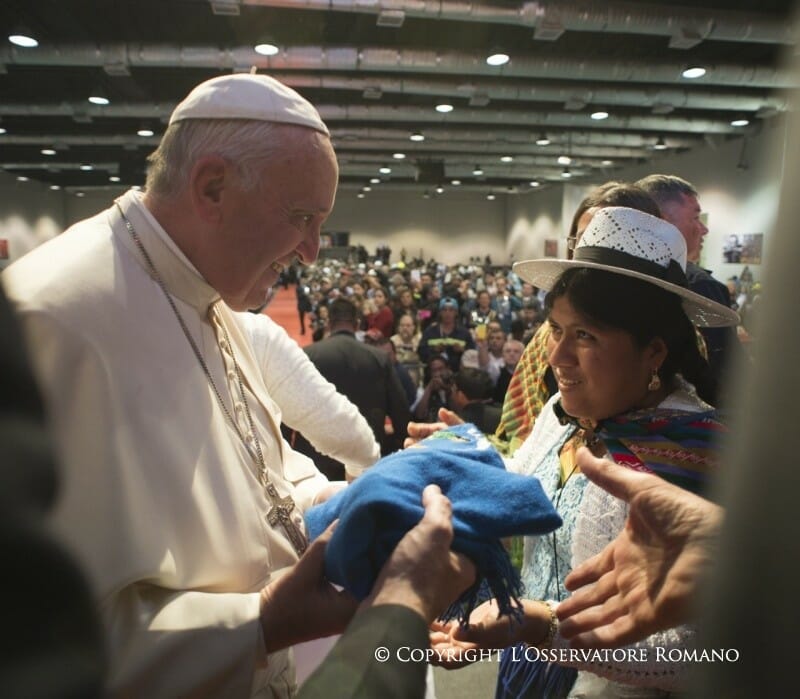 “I’ve discovered how the Pope favors the excluded. In some way it’s also my choice, but by his example I have understood how at times I continue to exclude, or I find myself in a group of people who keep silent in the midst of exclusions or injustices,” says Ana Maria Ceballos, a social worker in Bolivia. An impression that speaks of true conversion towards the excluded, one of the strongest themes of this step of the voyage of Pope Francis in Latin America. The same for Nestor Ariñez di Cochabamba, who lives in the Casa de los Ninos, a social project animated by the spirituality of unity: “In Palmasola the Pope said: reclusion is not the same as exclusion.” There, in the largest penitentiary in Bolivia, the most striking message was the pope’s “listening first of all, and then his saying that he too is a man who makes mistakes and who must do ‘penance.’ A message of hope for all the detainees.” “The pope’s visit to Bolivia leaves us with much to reflect upon,” he continues. “But I believe that what remains very clear is his preferential option for the poor, the motto of the Church in Latin America given to Puebla in 1979, which reminds us that the gospel brings the good news to everyone, but especially to those who are excluded and rejected by society. I felt that the Pope was speaking directly to us.” “His words are a call to conversion,” confides Pat, a Bolivian focolarina, after the meeting with priests, religious, and consecrated people. “But it is also much more: the sole fact of his presence in the midst of many ‘rare flowers of every age’ who one day said their yes to God, pushed me towards a greater commitment to sanctity, which then means to live with coherence the choice I made.” “Even from Bolivia, Pope Francis spoke to the whole world,” writes Lucas Cerviño, now 11 years in Bolivia, instructor in Missiology and intercultural theology. “At the mass in Santa Cruz there were many Latin Americans from nearby countries who listened to his call to not despair before the difficult situations that the world presents to us and that bring us to exclusion.” At the second meeting of popular movements, Pope Francis–before representatives from various continents who welcomed him with enthusiasm and attention–clearly indicated the way for social renewal, both local and global. “Land, Home, and Work,” continues Cerviño, “are sacred rights which permit us to dialogue with everyone in order to contribute to the common good. Pope Francis clearly highlighted for the members of social and popular movements that the fundamental aspect is the process, the starting of processes, for an economy at the service of peoples, to unite peoples on the way towards peace and justice, and for the defense of the homeland.” “Finally,” concludes Cerviño, “he left the Bolivian people a clear and beautiful consignment.” “Bolivia is at an historic crossroads: politics, the world of culture, the religions are all part of this beautiful challenge to grow in unity. In this land whose history has been marred by exploitation, greed and so many forms of selfishness and sectarianism, now is the time for integration. And this is a path we have to walk. Today Bolivia is capable, with its wealth, of creating new forms of cultural synthesis. How beautiful are those cities which overcome paralyzing mistrust, integrate those who are different and make this very integration a new factor of development! How attractive it is when those cities are full of spaces which connect, relate and favor the recognition of others! Bolivia in its process of integration and its search for unity, is called to be an example of such ‘multifaceted and inviting harmony,’ a harmony which invites along the path of strengthening the greater country.”
A family in Hong Kong
EXPO: Solar Power Cookers For Haiti
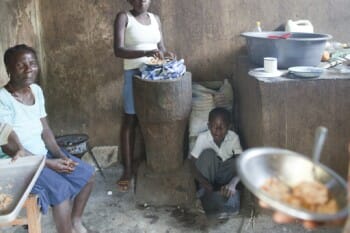 “Haiti, once one of the most prosperous French colonies, Pearl of the Antilles, today is amongst the poorest countries in the world, devastated by a serious ecological catastrophe,” says Ronald La Rêche, ex-deputy and candidate for the senate of Mont Organizé. Thousands of people live without access to traditional forms of energy such as electricity and gas. The constant recourse to firewood has led to to deforestation, which has a direct negative impact on climate change, causing desertification and progressive diminishment of the water supply. This led to the idea of supporting the Haitian population with the help of renewable energy, especially solar energy. The “Cucine solari per Mont-Organizé Project was conceived by the AFN, an association inspired by Focolare values – in collaboration with PACNE (Action contre la Pauvreté du Nord Est), the NationalMicrocredit Entity, the Agriculture Department of the Università degli Studi di Napoli “Federico II” , Tesla I.A. Ltd., and the SIOI (Società Italiana per l’Organizzazione Internazionale). Its goal is to introduce solar power cookers in the centres that are supported by AFN in the Mont-Organisé Haiti territory of Mont-Organisé. The solar cooker uses very simple technology, easy maintenance and installation, and it is possible to learn how to assemble it on site, favoring its dissemination amongst the community. It consists of a device based on a system of solar concentration. Through a lens, solar energy is transformed into thermal energy which is then stored in a battery. The project was presented on Saturday, July 4, 2015 at the “Cucine Solari, una risposta alle problematiche dei Paesi in via di sviluppo,” of EXPO di Milano 2015 in the Cascina Triulza-Civil Society Pavillion. President of the AFN, Andrea Turatti, explains: “The process we propose would use the solar cooker in schools, with the help of the AFN in Mont- Organizé, a rural area in the borough of Ouanaminthe, North-East Haiti. The next steps will be to train the teachers who, in turn, will train families and involve the local population in microcredit projects.” Attention to green technologies and overall sustainability were among the innovation cited by Luigino Bruni, professor of Economics at the University of Rome (LUMSA), and coordinator of the Economy of Communion. Then there is “the exploitation of local resources (such as the sun), the materials at the site, and the involvement of the population.” The economist said: “This is where the true success of the project is played out. It will work to the extent in which it is seen as a true opportunity by the local population.” Focolare president, Maria Voce, wrote: “The Cucine solari” project is in sync with the teachings of Pope Francis who has focused attention on the environment, making integral ecology the main focus of his encyclical letter Laudato si’, that is, the relationship beteen nature and the people who live in it. [. . .] This project that is founded on care for the environment and sustainable development from within the communities that benefit, can offer valid answers to the urgent problems of the country. The project seeks a resolution to the environmental crisis, health, nutrition, and energy supply with an eye toward the basic needs of the most weakest and most vulnerable. It utilises solar energy, while being mindful and respectful of the local culture, offering opportunity for development and social inclusion of the most disadvantaged, such as the children who receive support and education in Focolare schools.
Lisbon: Healthcare: present and future
Teaching methodology: an interactive approach, open to dialogue, sharing, and re-working with the instructors, experts, and students together, through seminars, workshops, and debates. Subject matter: proposals, analysed and studied in the preceding 6 months by an international preparatory committee formed by several of the participating students with the co-operation of the experts.
- Relationships in healthcare activities
- Ethics in daily clinical practice, starting with several documents from international medical institutions, and finishing with clinical experiences on aspects such as end of life care.
Participants: students and young people from 20 to 35 years of age in the various professions of the biomedical field (medical doctors, nurses, physiotherapists, occupational therapists, etc.) coming from various countries. Maximum number of participants: 50 Languages: Portuguese, English, Italian, Spanish Objectives: Offer to healthcare professionals the skills necessary to care for the person and not only the pathology, and to remedy the fragmentation of care, guaranteeing that professionals are united in taking responsibility for the patient. At the end of the programme, a certificate of participation will be issued. Location: Cidadela Arco-Iris, Rua Senhora da Graça, 60 2580-042 Abrigada Tel. +351 263 799 995 + 351 263 790 131 Fax: + 351 263 799 091 Hours: The programme will start September 3rd at 9:00 a.m. and will conclude September 6th at 1:00 p.m. Cost: The cost, including meals and lodging for all days of the Summer School (starting with dinner September 2nd and ending with lunch on September 6th), transportation from the Lisbon airport to the location and return trip, and the touristic excursion to Lisbon, is 180€. Enrollment: Complete and send the registration form (www.mdc-net.org) to the address: mdc@flars.net. Registration will be accepted after the receipt of payment by means of a bank transfer to: ASSOCIAZIONE MEDICINA DIALOGO COMUNIONE (M.D.C.) IBAN: IT68L0335901600100000113321 BIC: BCITITMX For more information, please contact mdc@flars.net. ——————————————————————— Associazione Medicina Dialogo Comunione Via IV Novembre 7, 00046 GROTTAFERRATA (RM) Fax 06-94549841 Email: mdc@flars.net Website: www.mdc-net.org
From Brazil, João’s story
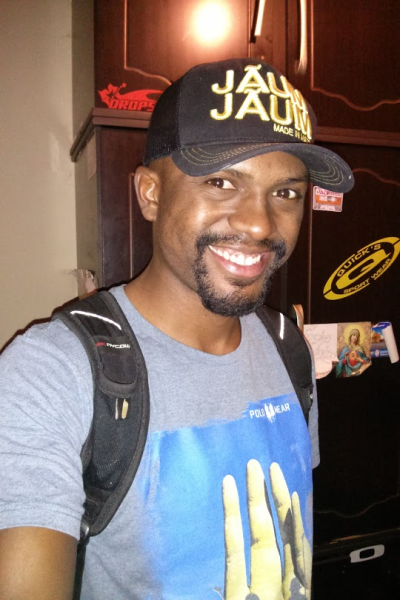
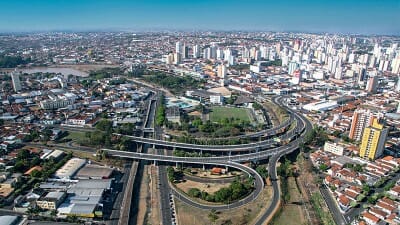 It was in the air. Too many times João had heard his parents argue, and the fact that he and his mother and brothers had to leave home because his father had a child with another woman didn’t surprise him very much. He was 16 then, he was involved in his parish, he had friends. Within him, though, he felt betrayed and dissatisfied, with a strong need for freedom, to be himself. It was an apprehension that led him to discontinue his studies. He took up his schooling again years later, only after he had found the real reason for living. “At 20 years of age,” recounts João, “I participated in a Focolare activity with the youth group from my parish. During those few days, I realized that the Gospel isn’t so much to be commented or reflected upon, as it is to be put into practice immediately. I was particularly struck by those passages which say how to treat our neighbors: the Good Samaritan, the Golden Rule. I had gone to the activity out of pure curiosity, and instead it was the event which changed my life.” In Sao José do Rio Preto (State of Sao Paulo), which is my hometown, there are many people who live on the street. One evening, as I was going back home on my bicycle, I crossed paths with a man who was walking barefoot. His feet were dirty and wounded. At the sight of him, I couldn’t pedal any further. “That man is my neighbor, I have to go back to him.” Before I reached him, I took off my shoes to give them to him. He looked at me, surprised. I saw that he was wearing a T-shirt with my favorite soccer team on it, and I said to him, to take away his embarrassment, “So you’re a Santista fan? So am I! What’s your name?” He took the shoes, and we became friends. I was at the train station, returning from a meeting held in another city. At that hour–two o’clock in the morning–the means of public transportation no longer run, and so I started towards home on foot, crossing the center of the city. Looking around, I saw lots of people who took advantage of the fact that stores were closed to sleep in front of the shop windows. I wasn’t afraid, because this was my hometown. At one point, however, a big, tall man came up to me and asked for money. I must confess that I started to be a little afraid. Who was to say that he wasn’t violent? But I thought, “He, too, is my brother, the Gospel says so.” Calmly, I told him that I couldn’t give him anything because I had no money either. He began to tell me his story, then he had me put on his headphones. He was listening to a sermon by a Protestant pastor. I listened to the transmission for a bit, so that I could tell him that this person was saying nice things and that it’s good to listen to these positive messages every so often. He asked me, “Who are you?” Not knowing how to respond, I asked him why he wanted to know. He said, “Because nobody treats us this well.” This went on for 30 or 40 minutes. I thought about the distance I still needed to travel in order to arrive home, about the fact that I needed to wake up at 6 the next morning to go to work. But I felt that I had to stay a while longer to accommodate this neighbor who needed company and listening. In the end, after he had asked for my address in order to come to my house for a barbecue, we said goodbye, with the knowledge that we had each found a brother. One rainy day, as I was returning home on my motorcycle, I saw a man, soaking wet, who was trying without success to get up from a puddle. I recognized him: he was one of my next-door neighbors who was always drunk. In the nearby bar, there were several men who simply watched the scene without doing anything. Trying not to get angry, I stopped, left the motorcycle there and accompanied him home, explaining to his wife what had happened. Then I retraced my steps to go back for the motorcycle. As I walked, a phrase re-echoed deep in my heart: “You did it to Me.” I was no longer angry. It was enough for me to feel happy and to not blame those men, astonished, who continued to watch me.