11 Aug 2015 | Focolare Worldwide
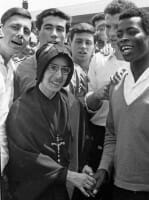
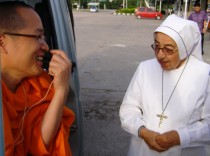 Several Buddhist monks that visited the focolare regularly also knew her well. Benedetta was a woman who let herself be approached and known, without fear and with gentleness. She knew how to welcome people and you could go to her any time. Any problem, great or small, any need, some good news to share: she wasn’t scandalised by anything, she knew people’s hearts and knew how to love them. One bishop once said of Sister Benedetta that she was “a Sister of silver and gold” because of all the money she was able to find for the poor. When visiting the extreme north of Thailand, you were always obliged to go and ‘have a chat’ with her, as she would say. She enjoyed hearing the news of her ‘great family’ as she loved to call the Movement, and she shared its life with many others. We would often meet people in the Mariapolis to whom she had spoken about the spirituality of unity, or else someone who had passed by the focolare to meet us because they had heard Sister Bene talk about us. In other words, Benedetta was a true spiritual mother who gave much supernatural life to so many people, and many of them attended her funeral along with a large crowd of bishops, priests and laity. The small church of Wien Pa Pao and the adjoining convent where she lived were filled to overflowing. Sr Bene, of the Sisters of Charity of the Infant Mary, known to the secular world as Benedetta Carnovali, born in 1925, was a pillar of the Movement and many of the people who belong to the Focolare community of Thailand were personally drawn to the Movement by her (including Buddhists). ‘A real Sister and a true focolarina,’ as she was described by some: an ‘out-of-the-ordinary’ Sister, always on the go and, at the same time, ‘firm’ when personally loving the person next to her. She was a friend who would call you up to wish you a happy birthday, even though her voice became feebler every year, but not her interior strength. Whenever you approached her you were never given the impression that you had disturbed her: it was as if she had been expecting you alone and didn’t have anything else to do but welcome you. But she was quite busy, judging from all the adoptions at a distance which she personally saw to, up until the last days of her life. Sister Bene had met the Focolare’s spirituality of unity from an order priest in 1963, and from that moment spent her life that many in Myanmar – where she was living in that period and then in Thailand when all Religious were expelled by the regime – could know the spirituality and live it. When she was transferred to Thailand, she continued to deepen her friendship with the Focolare. When she went to spend a few days at the focolare, she nourished herself on the words of Chiara Lubich. Like all those who genuinely follow God, Sister Benedetta also encountered her nights, ‘the storm’ as she followed Jesus. She faced them as a true disciple of Jesus, with heroic charity. Deeply united with Vale Ronchetti, one of the first focolarine, she pressed on in the midst of much miscomprehension: ‘How can a nun belong to a movement with so many lay people in it?’ she was often asked; and there were other great and small persecutions that on a human level were completely absurd. Yet, in some mysterious way, God made use of these things to make Sister Benedetta more and more a Sister, more and more a spiritual daughter of Chiara (as Benedetta often said), and an apostle of unity who has no counterpart in the Asian southeast judging from the fruits she bore. She leaves a legacy of love, gentleness, sweetness and strength, loving service to the least: towards the people of the Akha tribe, for example. She leaves us withthat smile so typical of those who have experienced that it is possible to transform suffering in Love and make that Love their reason for living. Sister Benedetta ‘flew” to Heaven at the age of ninety, after listening to the Focolare song that she loved: ‘Solo grazie’. She died consumed but serene, just as she had always lived: in peace because she was certain that the ‘arms’ that had embraced her from her childhood (she was an orphan) and carried her through her life as a Religious, were there waiting for her now on this last stretch of her journey. She was a wonderful woman who shows that it is still possible to become a saint today. Luigi Butori
10 Aug 2015 | Focolare Worldwide
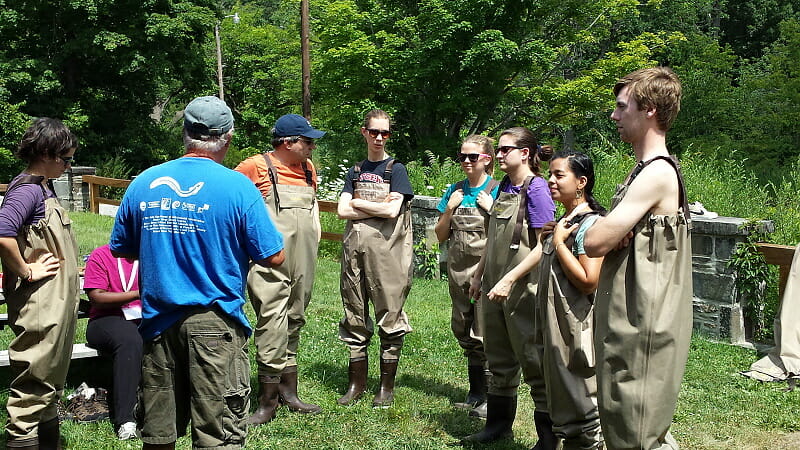
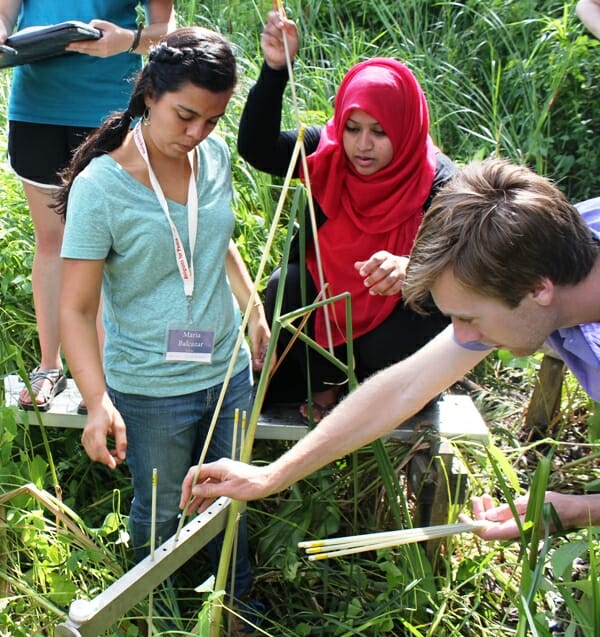 Young people from five religions and several Christian denomination, specifically chosen as emergent leaders in the environmental field, met at Mariapolis Luminosa of the Focolare in the State of New York, USA, to reflect on safeguarding the planet, our common home. Guided by the ideals of Religions for Peace (RFP) and of the Focolare the Teach-in began with an analysis of the current situation of the environment and the strong link between global stability and climate change. The phenomenon of climate change calls for a new awareness and change of view, implied by the title of the three-day event. Perhaps it will find a solution thanks to the synergy between people from different religious backgrounds. This was the wish of the organisers of Teach-in, which was held at the end of July 2015. Despite the variety of their beliefs they came to the same realisation that every effort in favor of the environment will be more efficacious inasmuch as it is done together. Amongst the interventions were those of Rev. Richard Cizik (New Evangelical Partnership) and of the Rabbi Lawrence Troster, bioethicist who said that: “By 2050 we could have 50 million climate refugees, with serious consequences for peaceful coexistence amongst peoples.” His words were echoed by Asma Mahdi, oceanographer and member of Green Muslims, highlighting that the most vulnerable countries are Muslim: “In Bangladesh, for example, if the ocean level continues to rise, by 2050, 17% of the territory will be awash, forcing 18 million people to move elsewhere.” These are alarming figures, and several Polynesian islands would completely submerged.
 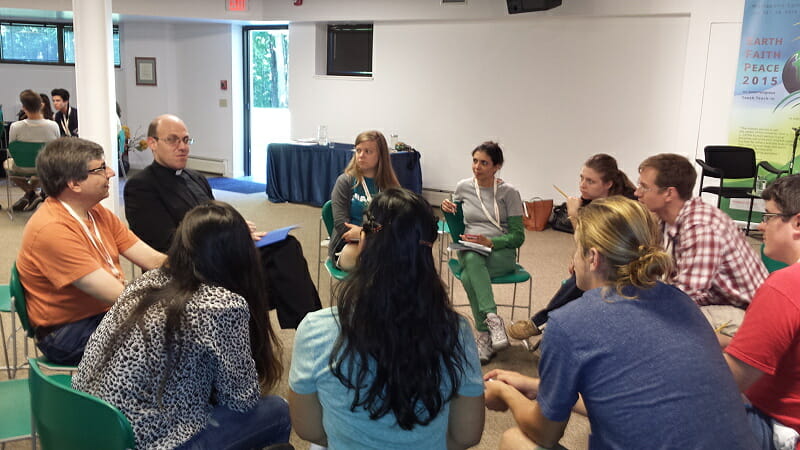 Amongst the speakers was Msgr. Joseph Grech from the Permanent Observer Mission of the Holy See to the United Nations, who referred to several excerpts from Pope Francis’s Encyclical Letter Laudato si while underscoring how economy and ecology walk hand in hand, since all our actions have an impact on nature. Three environmental researchers from three different American universities were of the same opinon: Robert Yantosca (Harvard), Valentine Nzengung (Georgia) and Tasrunji Singh (Ohio), for whom the respective religious convictions have become motivating factors and guides in the scientific effort in favour of the environment. “Go out!” was the catch phrase that conducted the second part of the Teach-in and it led to the delineation of a series of behaviours to put into practice. John Mundell from the Focolare, owner of a company of environmental consultants, presented a landscape of initiatives connected to the “Earth Cube,” whose six sides present daily suggestions for renewing and conserving a healthy environment. There was also the visit to the projects at the nearby Esaurine Federal Reserve. RFP executive Aaron Stauffer, stated at the conclusion: “It has been a witness of the power of multireligious cooperation and peace.” And Brazilian, Lira Raiana, who is finishing her doctorate in ecology: “We’ve experienced that we have at least two things in common: an intense interest in sustainability of the planet and a religious belief that offers the correct motivations to take care of it. Each one of us came with our convictions and personal ideas and now we find ourselves united in the common objective of many: the protection of the earth and of its inhabitants.”

8 Aug 2015 | Focolare Worldwide
 Geneva, Switzerland, Rue de Montbrillant, n. 3. Like every other Friday I go to Jardin de Montbrillant, a welcome centre for needy people in this cosmopolitan city where you can have a free hot meal. Today, as always, at noontime, we welcome around 150 people of every nationality. The room is already full and everything is going fine. Amidst the usual faces in the diverse crowd I always notice someone new. My task is to find a place for each of them, to negotiate with one or another so that they will allow someone new to have a place to sit and eat in peace, which isn’t always easy given the physical and psychological state of many of the majority of our guests. But I’m mainly interested in giving a fraternal touch, to comfort the ones who are sad, depressed – to listen to the ones who feel desperate, to offer them some hope. . . In other words, to create a family atmosphere so that everyone feels loved just the way they are, beyond the diversity of ages, nationalities and religions. While we’re at table, the door opens and three of our Arab friends arrive accompanied by two newcomers. I immediately notice the hard, threatening looks on their faces. As soon as they are inside, they begin shouting that they want to massacre everyone and burn the place to the ground. The reason: they feel seriously offended by the caricatures of the Prophet that appeared previous days in the press, the main news of the week. The atmosphere immediately becomes tense and people propose violence. I already see plates flying and fists showering down blows. It’s time to act without delay, because the situation could quickly worsen. But what shall I say? What shall I do? I feel powerless but recognise in this acute suffering of today’s society that defends absolute freedom at the expense of deep values, the cry of the God-Man upon the Cross: “My God, my God, why have you abandoned me?” This is Him before me now, through the reaction of this pair of Muslim followers. I place everything in His hands and stand up to go and meet them. I tell them that I share their pain and offer to talk about it after having something to eat if they would care to. In answer to my peaceful offer they allow themselves to be convinced to take a place at table. Suddenly their aggressiveness abates and tranquility returns, as if everyone perfectly understood the cause of their angry outburst. Lunch ends peacefully. I stay near them, trying to make them feel all the human warmth that I’m capable of. After lunch they apologize for their words and express regret for having voiced thoughts of revenge. This is followed by a moment of sharing about our respective faiths in total respect and mutual understanding. Before leaving, they embrace me, thankful for having been listened to. Now their relaxed faces express different sentiments than before. (Paquita Nosal – Geneva, Switzerland) Source: Città Nuova, 13/14, (2015).
3 Aug 2015 | Focolare Worldwide, Senza categoria
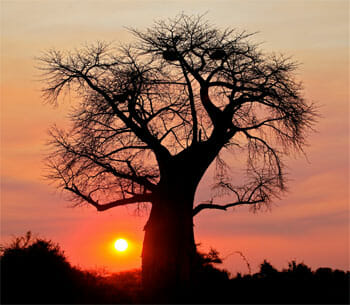
Baobab is one of many refugees welcoming centers, near the Tiburtina train station. It welcomes some 400 young Eritrean, Somali and Sudanese Christians and Muslims. “There’s a warm, happy chaotic and rather anarchical volunteer service – says S. – everyone goes, sees what is needed, helps, calls friends . . . And it works just fine! With the consent of the people in charge of the Food Bank of Rome, together with a young woman who coordinates the volunteers from the Baobab Centre, we went to Fiano Romano and packed twenty tons of excellent food (pasta, sugar, canned meats, 600 yogurts, cases of oil, 120 pineapples, 30 cases of fresh fish and nectarines, 100 pieces of parmesan cheese, and much more). By ten o’clock it was already 40°C (104°F)! We got to the centre at around 13:00, where we found at least 500 quite organised and patient Eritrean youngsters, all of them from those notorious boats that we see on the television news. The temperature was at least 42°C by then. In the span of ten minutes or so, the children formed a queue, and began to unload an overpacked van. Not a single yogurt or drink was taken, and everything was carefully placed in its proper place. Then they all entered the queue for lunch. I was also served a plate, which I was happy to share with them. The welcome centre does not only focus on assistance, but especially on involving and integrating the refugees. This ensures that the individual dignity of each person will be respected and that each of them is welcomed and accepted. Many of them then contact relatives and friends in other European countries. The long line of Roman citizens who bring all sorts of help is constant and also quite moving. So much assistance arrives that we often take boxes of supplies to other assistance centres. As I was there shaking hands and meeting people, the first baby was born to a young refugee woman who had been taken in by the centre. She had just arrived from the hospital, 20 days old. Doctors, nurses, volunteers all gathered around her for a smile, hoping to get a glimpse of her face. It showed how life goes on. I returned home more tired and sweaty than I ever have before. . . but in my heart and soul there was a unique and quite special joy, such tangible serenity, the true recompense for a small gesture toward those beautiful people whom everyone is calling “refugees”. . . At the end of the month we’re already planning on taking another load of supplies. Moreover, through a friend whose family runs five supermarkets, we were able to organize regular food pick-ups of products whose expiration dates would soon expire but could be consumed within a few days at the welcome centre. I thank the Eritrean refugees and volunteers at the Baobab Camp for having given me the opportunity to live a truly beautiful and precious moment, which I am sure will happen again in the coming days and in the future. I feel so privileged, and I truly am!” (S.D. Italy)
1 Aug 2015 | Focolare Worldwide
By the end of 2012 I had an awful experience. I was in a friend’s house with all his family and suddenly three armed and violent men entered their house to rob. They beat us and put us all lying down in the ground of his parents’ room. Then, they started interrogating us and shouting us “where is the money?” with guns in our heads… The father of my friend started saying to one of the thieves that he forgave him, but that was not the way he was supposed to act. The man was getting angry and we were afraid he would do something awful to my friend’s father. Surprisingly, the thief started crying and saying sorry. At that point, all the other thieves were gone with the family car, but this man, who seemed to be their boss, was still there with us. Amazingly he asked my friend’s father if there was something important, so that he would make sure we would get it back. My friend’s father told him that it was ok to take everything with him, but asked him the favour to return the car since he needed it for work. The thief promised to give it back, asked forgiveness to each one of us and left. The car, half an hour later, was found intact by the police. In order to build peace, I needed to forgive, and even if the thief asked for forgiveness, I didn’t quite feel like I could do it, my part was not completed. The fact of having felt powerless in front of a person that could take my life away or the life of people I love, just by a single movement of a finger, made me incapable of forgiving. And also, in front of the eyes of my other friends, they would say I had the right to hate, the right to be angry. I needed time, but I also needed to do something concrete to make sure I’d do my part to understand the root of so much violence, why would a person do something like that to another. So I decided, with other friends that are Youth for a United World (Y4UW), to start going to a shelter of men that have nothing. We wanted to at least start breaking the prejudices, sharing the pain and the difficulties of those who live in the peripheries. We are not politicians and we can’t do huge changes, but like one of my friends, Carolina, said: “I think that these small acts can help change the world, or at least, the reality next to me. Maybe at first sight it’s not visible, but you see the measure of your acts when the other makes you see it”. The moments shared with the men at the shelter helped me know about the “reasons” of that thief’s desperation. Thanks to having met these men of the street, that have, some of them, in fact robbed sometime, I knew they did it because they thought it was their last resource. I don’t know what I would do if people act like I don’t exist, if people don’t even answer me, if no one looks at me directly into my eyes and I have literally nothing and no one even cares… so then I felt that I had to forgive… and then I felt strongly that I was putting a brick on the construction of peace in my country. It’s simple, every Saturday we play games or play the guitar or we watch a football match (the World Cup was awesome) or even we play football together, then we have dinner and we get to know each other more, specially their stories, some of which are actually incredible, they are people that just need the strength to forgive others and themselves, but more than anything, they need to restart their lives. A group of specialists helps them progress, but us Y4UW have another role, as one of my mates, Francisco, tells “we grow next to them and we never stop making them feel our care, which is always mutual”. On December of 2013 the police in my city decided to do a strike and people went crazy and started looping businesses and shops and even the storage of a big charity organization was emptied. Lots of people were violently robbed and people started defending themselves with the help of their neighbors and it was like a small day of war between our people. The next day, after a terrible night of chaos, with other Y4UW we decided spontaneously to go clean the city, especially downtown where there were more ashes and dirt and to gather food for the charity organization. We said it all over the social networks and the media: at the beginning there were 15 of us, and then we ended up being more than 100 (and the people who brought food were even more). https://www.youtube.com/watch?v=9WX_TbWHvVw&feature=youtu.be We realized that the TV news, that night, had at least one good news to talk about thanks to our initiative (because the media came to cover our actions) and a lot of people saw it. But that was not the only “good news”, because thanks to the food we gathered, the kids of a small kindergarten in a very poor neighborhood could eat. The kindergarten’s name is “The Light corner”. From that, a group of Y4UW didn’t want to finish there. As we continued to go to the men shelter, others decided to do something more for the kindergarten, so they started a project. First thing they did was to celebrate Christmas with them, playing with them, doing a live nativity scene and taking presents for the kids. Then they started thinking how to improve the facilities of this very small and poor place. In the meanwhile, they suffered a robbery of some construction materials and then all of us Y4UW, with the help of friends from University and work and families, we cooked and sold sweet cakes to make money to buy back the materials. Then with everyone’s help we gathered educational material, games and curtains for the windows, to also make more beautiful the space for the kids. One of the nicest things they live is what Caro, the Y4UW that leads the project says: “the relationship between us and the kids, their mothers, the teachers and the neighborhood has grown so much that we have become a family, where we share also our personal needs. One of the teachers, for example, is pregnant and she asked me for help because she couldn’t pay for a baby stroller. After sharing this necessity with a friend of mine from work, she decided to give the teacher the one she had at home, it was in great conditions and the nicest thing was that she decided to go and give it personally to her”. They have organized a dental hygiene workshop, an orchard workshop and also they did another Christmas celebration last year with new toys, donated by a Chapel of a city very near from ours. The next projects are to build bathrooms and to remake the electric wiring. Like my friend Caro said: “love is thirsty of love, love spreads in our hearts… and love “makes us cry with the neighbor” (like Pope Francis said in the Philippines). ‘The Light Corner’ gave me the chance to dream bigger and to believe we have all the hands that we need next to us, in our surroundings: family, work, university and friends, to make things go ahead. We just need to make the first step”. Source: United World Project
30 Jul 2015 | Focolare Worldwide
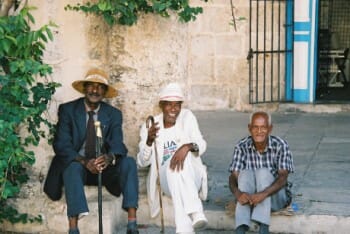
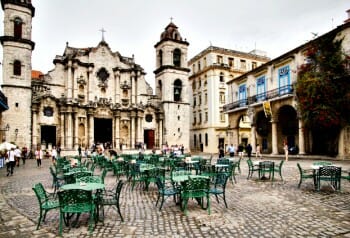 “We received the news that Pope Francis will visit our country from September 19th to 22nd with great joy. The Holy Father wants to show us his affinity in a time in which, thanks in part to his mediation, we breathe the air of hope in our national life before the new possibility of dialogue in progress between the United States and Cuba. What he is doing as universal Pastor of the Church is very, very important in the search for reconciliation and peace among all peoples of the earth!” So write the Catholic bishops of Cuba in a message to all Cubans. While the Caribbean island prepares to receive the first pope from Latin America, we spoke in Avana with José Andrés Sardina Pereira, a Spanish architect with a specialization in sacred art and liturgy, who is also a Cuban culture enthusiast. “The project we are bringing ahead,” explains Sardina Pereira, “aims to be a contribution of the archbishopric of Santiago to the work started by civil institutions; that is, to seek to have the historic center of Santiago (with the complex of its colonial churches and parts of the surrounding area) included in the UNESCO world heritage list, as are already the historic centers of Avana, Trinidad, Camagüey, and Cienfuegos.” Having a Cuban father, Sardina Pereira in addition to being an architect is a Cuban history enthusiast. This nation, also known as the “Big Island,” was also, “one of the last Spanish colonies to obtain independence (1898), therefore the process of ‘transculturation’ has been the most prolonged. Studies on the origin of Cuban culture, as opposed to that of Spain, place its solidification in the course of the 18th century, a time in which social, economic and cultural apprehensions, with a certain antagonism in respect to Spanish models and interests, were reawakened, all of which distinguish the island natives (the Creoles) from those arriving from the other side of the Atlantic.” Sardina Pereira clarifies that, “in the ethnic and cultural processes that give origin to the ‘cubanía’ (the essence of being Cuban), the Spanish and the Africans who arrived on the island brought with them cultures that were much more complex than those that are traditionally associated with ‘Spanish’ and ‘African’ concepts.” “Men and women from different linguistic, social, and religious groups, with different levels of economic development, coming from countries known today as: Senegal, Gambia, Mali, Guinea, Ivory Coast, Benin, Nigeria, Congo, and Angola, arrived in Cuba.” Also people from other European countries, from Asia, and from the American continent itself. “Just think of the presence of the French in Cienfuegos or of the coffee fields on the east of the Island.” It is in this coexistence of a “rich and multi-coloured range of individuals from different geographical locations that the Cuban culture is born, one of the last cultures generated by humanity: audacious, integral, creative, and at the same time open, welcoming and respectful of diversity.” Sardina Pereira stresses how the Gospel message has been key to this genesis, as “this new country was founded thanks to the coexistence of individuals who were very different from each other: whites, coloured, and of mixed race, slaves and free people; many of them united by the love that Jesus came to teach us, a love that goes so far as to lay down one’s life. Just think of the heroism, the consistency, and the love of many fathers of the Cuban nation and of the many men and women who, following their example, generated it with their own lives.” People united by their faith who “travel together on a new ship in the tempestuous sea of history.” At this point in the conversation, our expert adds another element which he holds to be essential. Cubans are: “A people blessed by an extraordinary encounter with the mother of Jesus.” Such an affirmation alludes to that which tradition remembers as “the finding.” It is said that in the year 1612, three salt seekers (one of mixed race, one black and one white, three ethnicities who were up until that moment in conflict) found a small wooden board that was floating on the sea and upon which was the image of the Madonna with the inscription: “I am the Madonna of Charity.” “And this encounter with a Mother,” continued the architect with conviction, “is one of the elements which permits the Cuban people to discover true fraternity, which will be converted into an identifying symbol of this nationality. Mother of all, of sailors of every land, colour and creed.” Sardina Pereira likes to compare this hybridization to a typical dish of the center of the Island, made with a variety of ingredients called “ajiaco.” “In a globalized and ever-more interdependent world,” continues the architect, “many times intolerance of ethnic, cultural, and religious diversity continues to be the primordial cause of grave conflicts. Chiara Lubich, a great personality of the Catholic Church, in her discourse to the United Nations in 1997, affirms that to build a world more united and in peace today, it is necessary to love the homeland of the other as one’s own, and the culture of the other as one’s own.” Sardina Pereira concludes with a personal confession: “Fulfiling this work I realised how much the knowledge and the diffusion of the Cuban culture can be a contribution to peace in the world, as long as we are able to redeem its historical memory and its deep Christian roots and keep them genuine.” By Gustavo Clariá

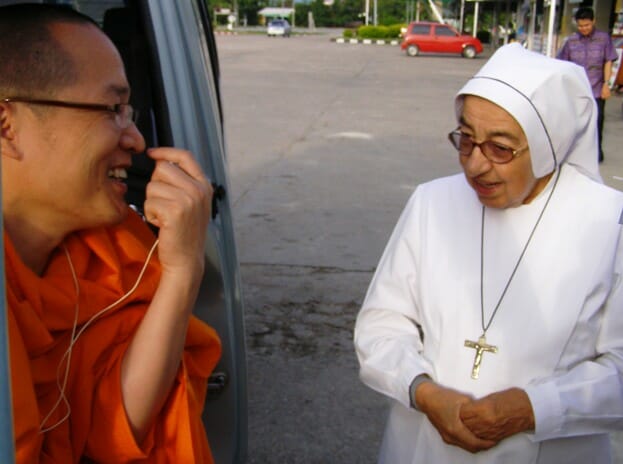 Several Buddhist monks that visited the focolare regularly also knew her well. Benedetta was a woman who let herself be approached and known, without fear and with gentleness. She knew how to welcome people and you could go to her any time. Any problem, great or small, any need, some good news to share: she wasn’t scandalised by anything, she knew people’s hearts and knew how to love them. One bishop once said of Sister Benedetta that she was “a Sister of silver and gold” because of all the money she was able to find for the poor. When visiting the extreme north of Thailand, you were always obliged to go and ‘have a chat’ with her, as she would say. She enjoyed hearing the news of her ‘great family’ as she loved to call the Movement, and she shared its life with many others. We would often meet people in the Mariapolis to whom she had spoken about the spirituality of unity, or else someone who had passed by the focolare to meet us because they had heard Sister Bene talk about us. In other words, Benedetta was a true spiritual mother who gave much supernatural life to so many people, and many of them attended her funeral along with a large crowd of bishops, priests and laity. The small church of Wien Pa Pao and the adjoining convent where she lived were filled to overflowing.
 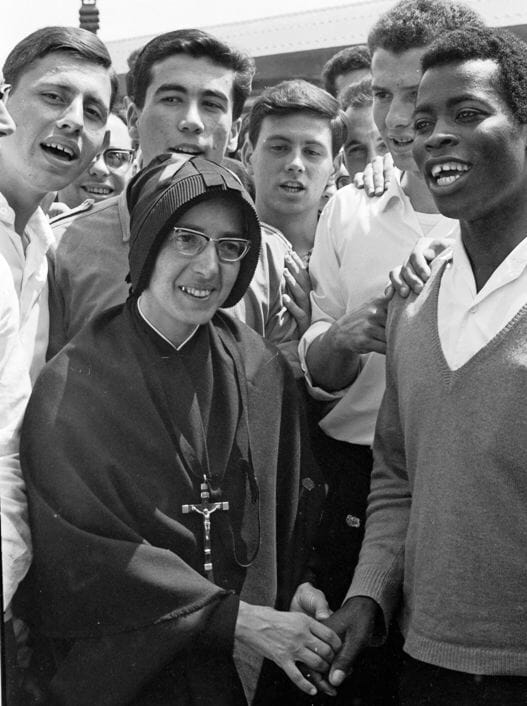 Sr Bene, of the Sisters of Charity of the Infant Mary, known to the secular world as Benedetta Carnovali, born in 1925, was a pillar of the Movement and many of the people who belong to the Focolare community of Thailand were personally drawn to the Movement by her (including Buddhists). ‘A real Sister and a true focolarina,’ as she was described by some: an ‘out-of-the-ordinary’ Sister, always on the go and, at the same time, ‘firm’ when personally loving the person next to her. She was a friend who would call you up to wish you a happy birthday, even though her voice became feebler every year, but not her interior strength. Whenever you approached her you were never given the impression that you had disturbed her: it was as if she had been expecting you alone and didn’t have anything else to do but welcome you. But she was quite busy, judging from all the adoptions at a distance which she personally saw to, up until the last days of her life. Sister Bene had met the Focolare’s spirituality of unity from an order priest in 1963, and from that moment spent her life that many in Myanmar – where she was living in that period and then in Thailand when all Religious were expelled by the regime – could know the spirituality and live it. When she was transferred to Thailand, she continued to deepen her friendship with the Focolare. When she went to spend a few days at the focolare, she nourished herself on the words of Chiara Lubich. Like all those who genuinely follow God, Sister Benedetta also encountered her nights, ‘the storm’ as she followed Jesus. She faced them as a true disciple of Jesus, with heroic charity. Deeply united with Vale Ronchetti, one of the first focolarine, she pressed on in the midst of much miscomprehension: ‘How can a nun belong to a movement with so many lay people in it?’ she was often asked; and there were other great and small persecutions that on a human level were completely absurd. Yet, in some mysterious way, God made use of these things to make Sister Benedetta more and more a Sister, more and more a spiritual daughter of Chiara (as Benedetta often said), and an apostle of unity who has no counterpart in the Asian southeast judging from the fruits she bore. She leaves a legacy of love, gentleness, sweetness and strength, loving service to the least: towards the people of the Akha tribe, for example. She leaves us withthat smile so typical of those who have experienced that it is possible to transform suffering in Love and make that Love their reason for living. Sister Benedetta ‘flew” to Heaven at the age of ninety, after listening to the Focolare song that she loved: ‘Solo grazie’. She died consumed but serene, just as she had always lived: in peace because she was certain that the ‘arms’ that had embraced her from her childhood (she was an orphan) and carried her through her life as a Religious, were there waiting for her now on this last stretch of her journey. She was a wonderful woman who shows that it is still possible to become a saint today. Luigi Butori