23 Jun 2015 | Focolare Worldwide
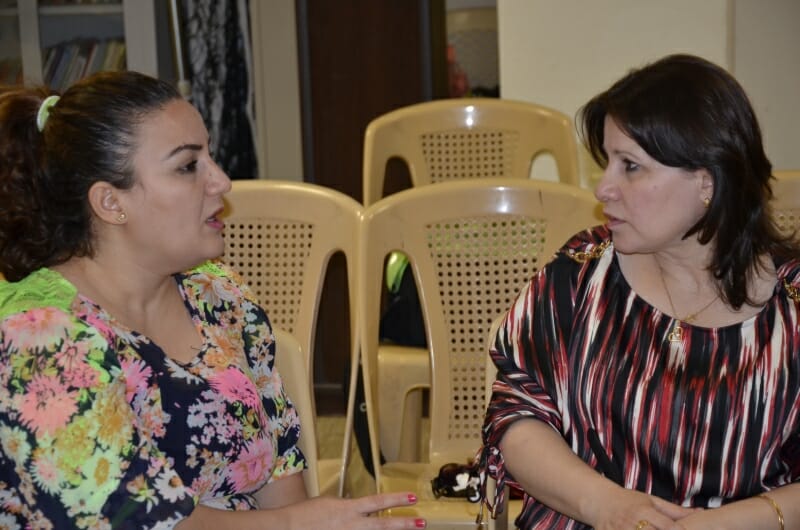
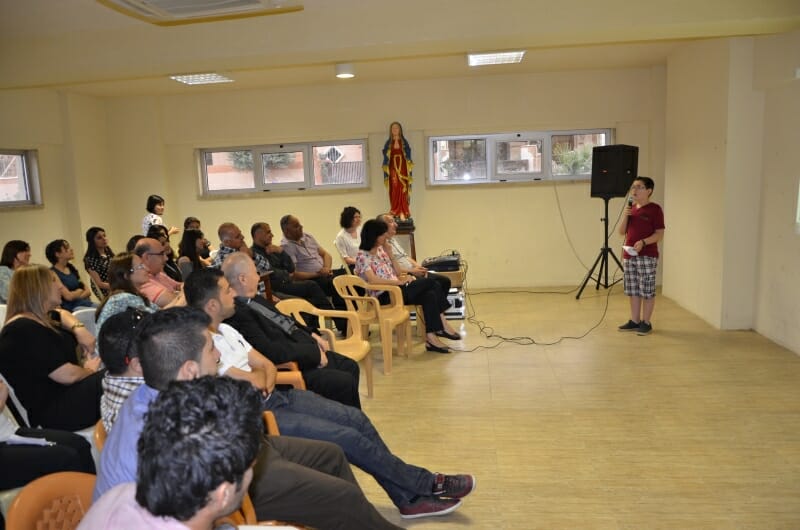 “Iraq is going through its worst period in ten years,” write Gemma and Pierre from the Focolare Movement in Jordan and Iraq, following their short trip to Erbil, Iraq. Their objective was to make the people there feel the closeness of the Focolare community that has been in that region for many years. “Being with them, even though we found them so tried and exhausted, we were struck by how their generosity towards others, and how they continue to believe in in God’s love.” “Nine months have passed since the villages of the Nineveh Plains were invaded by ISIS. The general situation of the country has worsened with recent developments, that is, the taking of new territories. The people, including our friends, feel a great sense of uncertainty about the future. Many have already fled the country and others are planning to do the same.” Spiritual closeness no small matter if, at the conclusion of the days together, one person confided: “We’ve lost everything, I wasn’t able to finish my university studies, there are no jobs . . . but finally, I have peace again, and I decided to begin my relationship with God again.” Pierre and Gemma recount: “During the meeting with the Focolare community there was one very important moment: it was when we openly declared our desire to give our lives for one another, to love each other with the measure of Jesus’s love, so that He could be present among us as He promises. Then we meditated on the link between the Eucharist and Church, using a 1982 talk by Chiara Lubich, The Eucharist makes the Church and the Church makes the Eucharist. We also met Archbishop Bashar Warda, Chaldean Catholic Archbishop of Erbil, who was pleased by our visit. In concluding he asked us to pray for Iraq like never before.” I have come for you, each one of you is like the whole world to me. . .” said Bishop Salomone Warduni, Auxiliary Bishop of Baghdad, from the Chaldean Catholic Church, who had travelled from Baghdad just to be at our gathering. He exhorted everyone: “Have no fear, carry on in the life of the ideal of unity, because each one of us has a mission to accomplish.” One person said: “I try live love in concrete ways until [love] becomes reciprocal within the community. In the Eucharist I find the strength to carry on loving.” Then there is the joy of being together. In spite of the situation there is very lively group children and teenagers who held a local edition of the Run4Unity sport relay for peace, with 35 boys and girls. “These were intense days for us,” conclude the two focolarini from Jordan, “a deep and divine experience. They gave much more to us than we were ever able to give to them. Who knows how much life must be coming from this suffering that is being lived in a Christian way.
22 Jun 2015 | Focolare Worldwide
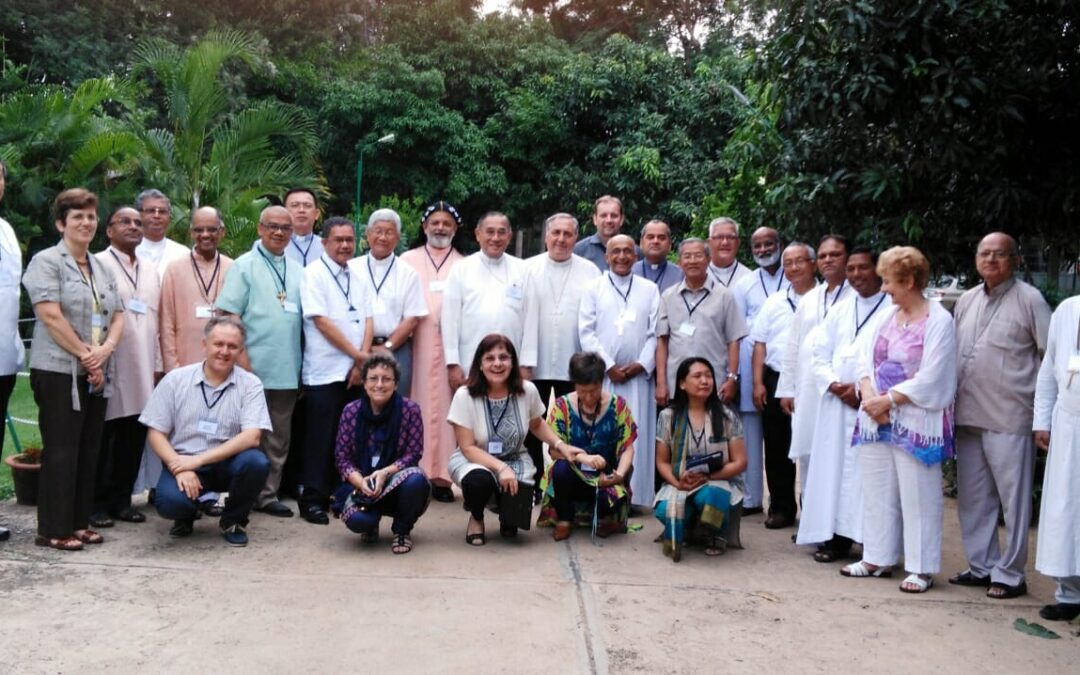
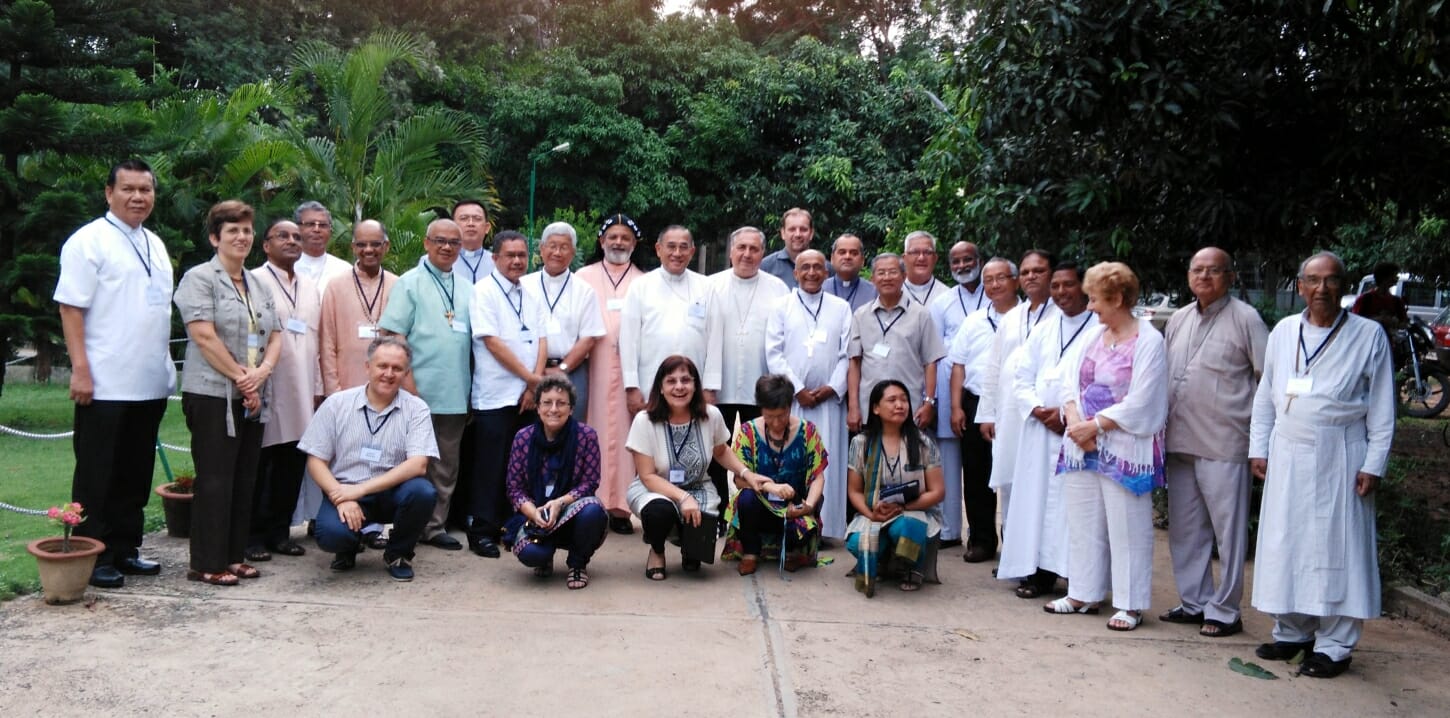 “Upon my arrival, the first person I saw was the cardinal who took my bag. The art of loving, which Chiara Lubich speaks about in such a simple way, is life.” So says Mons. Ignatius Mascarenhas, bishop of Chandigarh, India, one of the 22 Catholic Bishops-Friends of the Focolare Movement reunited in Bangalore from June 3rd to 6th for a pan-Asian meeting. For the first time, among these, there are 12 Indian bishops and one bishop from Pakistan. This meeting was preceded by a preparatory meeting with a few bishops, who went together to visit the sick in a nearby hospital, to stress how contemplation is not separate from action, in the desire to be instruments of God’s mercy. The bishop from Pakistan lives near the border between Pakistan and India. He shared his pastoral experience: “Two weeks ago I was in a great desert near the border. For three days I was with a priest, visiting small towns who have been suffering for the last two years because of the drought. The children are dying. I celebrated the Mass using a box as an altar. Many people came, among them even a few Hindus. During the Mass we prayed that the rain would come.” The Indian bishops and the Pakistani bishop celebrated together: “It’s a sign of hope,” affirms Mons. Bobet Callari from the Philippines. Why the choice of India as the location to host this meeting? India, with its billion and 250 million inhabitants, in which Christians are only 3% of the population, represents a frontier for interreligious coexistence. The bishops, pastors of small communities, live in contact with people of other creeds, faiths, cultures. The “dialogue of life” must therefore precede any theological discourse, and communion, the affinity between the bishops (like that which was reinforced during the meeting and sealed by a “pact of mutual love”) is a great antidote against the discouragement which often seems at risk of prevailing. “In my diocese,” recounts Stephen Lepcha, Bishop of Darjeeling (West Bengala), “I have a lot of difficulty with some sects which sow seeds of hate and which put us to the test. I know it will continue to happen, but during these few days I have understand what to do: love with the love that comes from God, because be they Hindus, Muslims, Christians…they are children of God.” “We need the spirituality of communion,” affirms Mons. Elias Gonsalves, from the diocese of Amravati, India. “At times we are left alone. Communion between the bishops is very important, it helps the youngest but also the most elderly. We must improve our capacity to help one another reciprocally.” At the meeting, Hindu Professor Shubada Joshi also spoke, about her meeting with Chiara Lubich and the charism of unity. In fact, in 2002 Chiara, during a Hindu-Christian symposium, had shared with a group of Hindus her mystical experience of the summer of 1949, experiencing that with them, dialogue can be based on a plane of spiritual depth which is not always possible with others. The words of Shubada Joshi, along with the School for Oriental Religions (SOR), which took place in the preceeding months in Tagaytay in the Philippines, gave a panoramic view of the proposal of interreligious dialogue which starts from the spirituality of the Focolare. The meeting with the community of Bangalore, with various testimonies from families and young people, offered a cross-section of daily life lived in the light of fraternity.
18 Jun 2015 | Focolare Worldwide
Here are some of the topics to be discussed and experimented with the youth, participants and businessmen/women of the EoC, during the Summer School:
- Is economy of communion possible? Experiences of entrepreneurs from all over the world.
- Is man really an homo oeconomicus? If not, what has changed in economic and corporate practices?
- Activity and generativity: keys to building a new economy.
- Experiences of companies that have invented new business modes.
- The courage to change dominant convictions and practices.
- What can we do personalise the changes we desire?
The programme will include dissertations of Professors from various European universities and Sophia University Institute (Loppiano-Florence), along with businessmen/women of the EoC worldwide, entrepreneurial workshops, research, communication and social innovation.. For further information
17 Jun 2015 | Focolare Worldwide
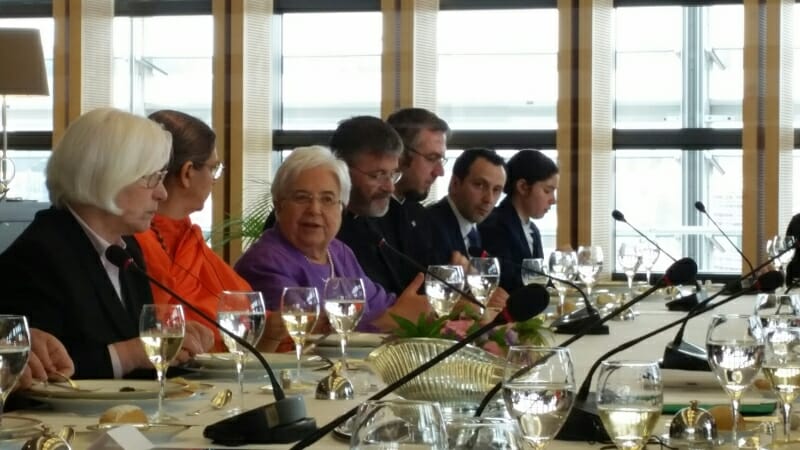
https://vimeo.com/130879600 Video highlights of the event (Italian soundtrack) “For me dialogue is not a ritual; it is not something we do once a year and then put back on the shelf again. For me it is an essential contribution to finding solutions to some of the most difficult problems European societies are facing today, problems linked to fear of what is different, linked to the consequences of the crisis, the need for environmental sustainability. Religions will have to play the role between the communities, to perhaps help us bring Europe in a better place than it is today”. These were Frans Timmermans’ words after the annual High-Level Gathering of Religious Leaders which addressed the theme “Living together and disagreeing well”. With the First Vice-President of the European Commission were Antonio Tajani, Vice President of the European Parliament and 15 religious leaders from Christian, Jewish, Muslim, Hindu, Buddhist and Mormon traditions. An understanding of the role of religions is shown by the growing number of occasions which bring together political institutions and religious leaders. Religious leaders are invited not so much on an individual basis but so as to work together, to find solutions to conflicts and to seek a way forward towards peaceful co-existence. See the recent High Level Debate on Tolerance and Reconciliation at the United Nations, the meeting of religious leaders in Kazakhstan, the invitation to Pope Francis to speak at the United Nations and now, at European level, this meeting organised by the European Commission. Today’s event follows on from the meeting held on 2nd June with the philosophical and non-confessional organisations, and it falls within the framework laid down by the Lisbon Treaty. Some burning issues came up at the press conference – which concern European policies on immigration, the growth of foreign fighters (those who leave Europe to fight jihad), and the rise of far right groups in the European Parliament – which were answered by Imams, Rabbis and Bishops. Metropolitan Joseph, from the Romanian Orthodox Church, also highlighted the role of ecclesial Movements, like the St Egidio Community, referring to its work for the progress of interreligious dialogue. On leaving this long dialogue, Maria Voce, President of the Focolare Movement, expressed her joy at having participated in a truly free exchange, with genuine listening. She emphasised the Golden Rule, shared by all religions. Among the examples she gave of it being put into practice was the experience of the interreligious group “Vivre ensemble à Cannes”. Outside the main meeting she said: “There is no religion that does not want dialogue, there aren’t any religious leaders who don’t seek to do all they can to promote it. This gives hope because, despite all we see around us, religion can truly bring a new message and help in the process of dialogue which can at times seem almost impossible”. She further emphasised “that it is important for communities to be involved in dialogue and not only religious leaders, to foster a synergy that can lead to a shared effort in European cities to enable peaceful co-existence. This can come about only by overcoming feelings of fear – which are understandable when facing the unknown – with feelings of welcome, respect and the capacity to welcome the other truly as a brother or sister.” The outcomes of the debate on 16th June will be included in the discussion material for the first annual conference on Fundamental Rights, of the EU, to be held on 1-2 October 2015 and which will focus on the theme: “Tolerance and respect: to prevent and combat anti-Semitic and anti-Muslim hatred in Europe”.
See also: Video of Religious Leaders being welcomed Video of Press Conference Photo gallery Press Release by the European Commission Press Release by Focolare Movement (June, 12 2015)
17 Jun 2015 | Focolare Worldwide
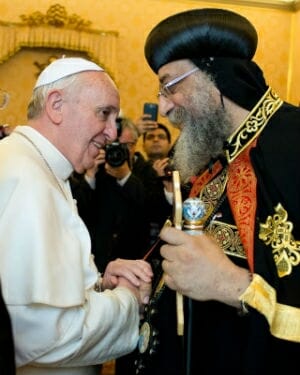
After the historic meeting between Francis and Tawadros II (Pope of the Coptic Orthodox Church and Patriarch of Alexandria), which place on May 10, 2013 at the Vatican, for the first time a day of celebration was held in Alexandria between the two Churches in commemoration of that meeting. Three months after the election of Francis, Tawadros II went to visit him on the day of the 40th anniversary of the historic visit of Pope Shenouda III to Paul VI. On that occasion, the Coptic Orthodox Patriarch had proposed that May 10th be celebrated each year as the Day of Friendship between the two Churches. The event was celebrated on June 7, 2015 at the Jesuit Cultural Centre in Alexandria, Egypt, under the patronage of the Coptic Catholic Patriarch, Ibrahim Ishak, in the presence of Tawadros II, who was joined by 8 Coptic Orthodox bishops and 5 priests. Also present, Papal Nuncio, Bruno Musarò, Latin Bishop, Adel Zaki, and around 100 Religious men and women, and Catholic priests. Promoters of the event included Sohphia University Institute (SUI); the current Director of the Cultural Centre and ex-student of SUI and friend from the Orthodox Church. Following a moment of prayer with readings and songs, a documentary film was presented that recalled the various stages of the historic meeting between the two Churches. In his message, Pope Francis reminded everyone that “what we have in common is much greater than what divides us” and that “we can persevere in our march towards full communion, and grow in love and understanding.The Coptic Patriarch immediately responded. That afternoon he telephoned Pope Francis, confirming his “will to continue in the common effort for the unity of Christians,” as Vatican spokesman Father Lombardi reported. In his speech, which was filled with affection for the Bishop of Rome, Tawadros II expressed his conviction that “today’s world is hungry and thirsty for concrete love. The unity between the Churches is in need of heroes of the faith,” and he indicated some necessary preconditions for reaching unity, such as openmindedness, and praying each day: “Give me an open mind, oh God, like the mind of Our Lord Jesus towards the Samaritan woman, and towards the Good Thief on His right.” But also a big heart, capable of going “beyond the letter.” And, finally, a humble soul that “safeguards the gifts and grace that God bestows.” His Holiness was moved as he described the touching humility of Pope Francis, when he met him and said to him again: “This day we have to celebrate every year!” Tawadros II personally greeted each of the guests. The joyful event ended by remembering the “ecumenism of blood” and the Egyptian and Ethiopian Martyrs in Lybia.
15 Jun 2015 | Focolare Worldwide, Senza categoria
Live streaming of funeral 18 June (3.30 pm Italian time): http://live.focolare.org
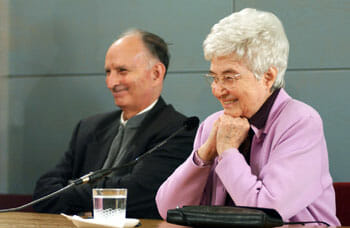
Pasquale Foresi with Chiara Lubich

