6 Jun 2015 | Focolare Worldwide
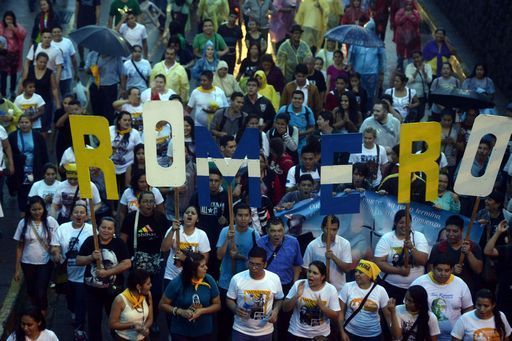
“The last time we ever saw anything like this was when Pope John Paul II visited in 1983,” writes Filippo Casabianca, from El Salvador. It is a land with a population of 6 million people in an area of 21 thousand km2 that had amongst its sons this bishop who is widely recognized as one of the most important ecclesial figures of the American continent. The Cause had been opened by Bishop Rivera y Damas, his successor as shepherd of the Diocese, on the tenth anniversary of his death on March 24, 1980. That was the year Marita Sartori and Carlo Casabeltrame visited three Franciscan friars who had begun to spread the ideal of unity in El Salvador. In that tragic decade, which opened with the murder of Archbishop Romero and culminated with the murder of 7 Jesuits, their housekeeper and her daughter, the Focolare Movement spread in an extraordinary way in several points of the country, in the midst of a theatre of war. The women’s focolare was opened in 1989 in spite of the danger for the foreign focolarine who went to live there. Since then the country has been through a process that led to the signing of a peace treaty in 1992, and then to a more democratic form of governement with some political stability, but not the long desired reconciliation that today is expressed in a destructive polorization. To this is added the scourge of insecurity because of the proliferation of young criminal gangs and of large segments of the country. The Focolare community are involved in many projects in support of disadvantaged families, through programmes of the New Families Project and the Action for a United World, that have allowed hundreds of children to complete their education supported by the projects of educational centres for poor children, and through interventions in one at-risk quarter for the promotion of social integration. With Romero’s Beatification the awareness of an historic opportunity has grown amongst the people. His message is being preceived as a medicine that could contribute to overcoming opposing views, healing hearts that have been hardened by resentment, and provide what is most necessary in the process of reconciliation. Maribel remarks: “It is a challenge that begins with following the example of Archbishop Romero, which for me continues to help me and my students to nurture peace and justice in people’s hearts .” Whereas, for Amaris: “the celebration will have to give way to reconciliation that lies in forgiving and asking to be forgiven, to heal wounds that are still festering.” Commitment to unity and reconciliation have always been present in the Focolare community, but now they take on the new connotation of a mandate in light of the heroic witness of Archbishop Romero “who knew how to weep with those who weep,” Flora Blandon observed, “and rejoice with those who had a reason to rejoice. The Beatification is the recognition of his life that was anchored in love.” In the messages sent by Pope Francis to the current Archbishop of El Salvador, Josè Luis Escobar Alas, the Pope calls Romero “one of the best sons of the Church,” attributing him with the characteristics of the Good Shepherd who was so dear to him. “Because (God) had bestowed upon the bishop martyr the capacity to see and listen to the suffering of his people and to shape his heart that, in his name, he might guide and illumine.” Francis also also recognised his exemplarity and invited all to encounter in the figure of Romero “strength and courage for building the Kingdom of God and being involved in the search for a more dignified and equal social order.”
5 Jun 2015 | Focolare Worldwide
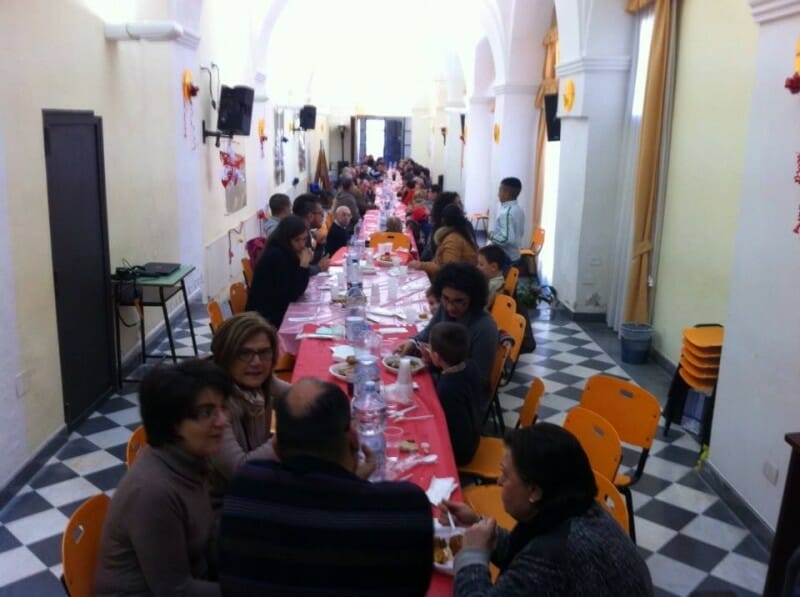
“Last September,” says Luigi, trade unionist, who seeks to live the spirituality of unity along with Fr. Peppino and others in the parish, “we had the idea to organize meals for solidarity for those on the margins of society, for the lonely.” The place to do it? “We realized that with a little work the space we use for parish meetings could become a welcoming dining room. It wasn’t even difficult to make the guest list. Their faces are familiar to us: people we see on the street, who live in the same neighbourhoods where we live, who are our next door neighbours, those who are helped by the Caritas, the elderly, foreigners…” “We started by dividing up the tasks to be done,” interjects Grace. “One offered to do the shopping, notifying restaurants and supermarkets; one offered to cook, with close attention to preparing dishes that even our Muslim friends could eat. The strongest offered to fix up the room and the teen girls offered to prepare the entertainment. A well-rounded team: young people, adults, and even children.” The first lunch was held in October 2014. For everyone involved it was a sunny Sunday, as was the radiant face of the elderly man with the cane and the woman who loved to dance and enjoyed herself so much. A few days before Christmas, the second lunch was held. “You can’t imagine the joy of the anticipation,” remembers Vincent, “when the hall was opened there were already a few elderly participants sitting on a bench waiting. As soon as they saw us they came to embrace us and give us the season’s greetings, and then went to find a place to sit. Immediately after wards all the others arrived, including the children and their parents. Between courses there was music and karaoke, and then the Moroccan girls instructed everyone in dances to songs from their country.” The children, meanwhile, played, coloured, and tried to wait patiently for the big surprise…the arrival of Santa Claus, who distributed gifts for everyone. “For us, the organizers, there were no wrapped presents,” says Carla, “but we received a much more precious gift: the scene of all those people, finally smiling and happy.” After the Christmas lunch followed that of Epiphany, and still many others: a tradition which continues, and each time becomes a chance to intertwine oneself in many cultures and religions. Among the guests, who gradually become more and more numerous, there are Arabians, Ukrainians, Catholics, Orthodox, Evangelicals, people of no religious conviction and especially many Muslims. “Is there difficulty? Commitment? Problems? Of course,” admits Luigi, “because it isn’t easy to organize meals like these from nothing. But the joy that moments like these bring us is indescribable, leaving in each of us the desire and the inventiveness to do more. They are truly opportunities to grow as a person and to grow in the sense of community, in us organizers and in the guests, who are no longer guests but truly brothers and sisters.”
4 Jun 2015 | Focolare Worldwide
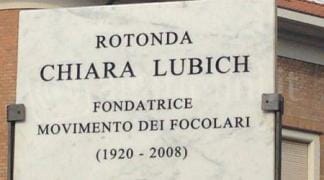
In a ceremony held on Saturday May 30th, a traffic circle was dedicated to Chiara Lubich, foundress of the Focolare Movement and honorary citizen of Rimini, between Savonarola Street, Giacomo Matteotti Boulevard, and Mille Street, overlooking the University complex “Navigare Necesse.” “A moment of attention for an important figure connected to our city,” said Irina Imola, the assessor to the General Services of the municipality of Rimini, who opened the ceremony. “For this, I thank all the authorities present and the many who have drawn teaching and comfort from the work of Chiara Lubich.” In 1997 the Municipality of Rimini had conferred upon Chiara Lubich honorary citizenship, “for her work of construction,” among the motivations expressed by the City Council, “of a civilization of love, tolerance, and solidarity among peoples.” Source: Altarimini online
3 Jun 2015 | Focolare Worldwide
 In order to look toward the future, on the last day of the meeting, the Congress turned its gaze on the new generations. With the first engaging words of Anouk Grevin, Professor of Management at the University of Nantes and member of the International Commission of the EoC, everyone broke into applause: “When a baby is born,” he said, “the whole community shows care, the child that was born belongs to everyone.” His words express one of the most important values of the African continent and that is,”You need a village to grow a child”. Grevin went on to say, “We lived such wonderful dreams with the young people at the International EoC School!” With much enthusiasm Anouk moved around the hall. The walls were covered with pictures of the young people’s projects, and their dreams. With unique creativity and a passion that would be difficult to describe, the young people presented those projects: some already underway, others only dreams, although for them that didn’t matter! John Mundell launched an appeal to his friends: open your businesses to introduce these new generations into the work world: “The experience in an EoC business makes you experience a wealth of true relationships along with professionalism!”
  The real life events of the business people from around the world – especially the young people – gave glimpses of a better future: from Italy to Argentina, to Paraguay, to the presentation of a thesis on the EoC by a young Brazilian woman who is about to finish her studies at Sophia Institute. If today our gaze is pointed towards the future-present, then it is an important moment for making strong and binding commitments: “We should promise ourselves that we will never turn back,” said Luigino Bruni. “ We’ve lived some miracles over the past few days, our stories that need to be told to everyone. The EoC isn’t a consumer good, many people in the world waiting for it. We need to continue to be “producers” of communion, not only its consumers.” The final statement was a powerful appeal. The promise to give one’s life for an economy of communion. Then the business people wished to leave a visible sign of their personal commitment, which materialised in the form of a “pact,” which everyone was free to sign.
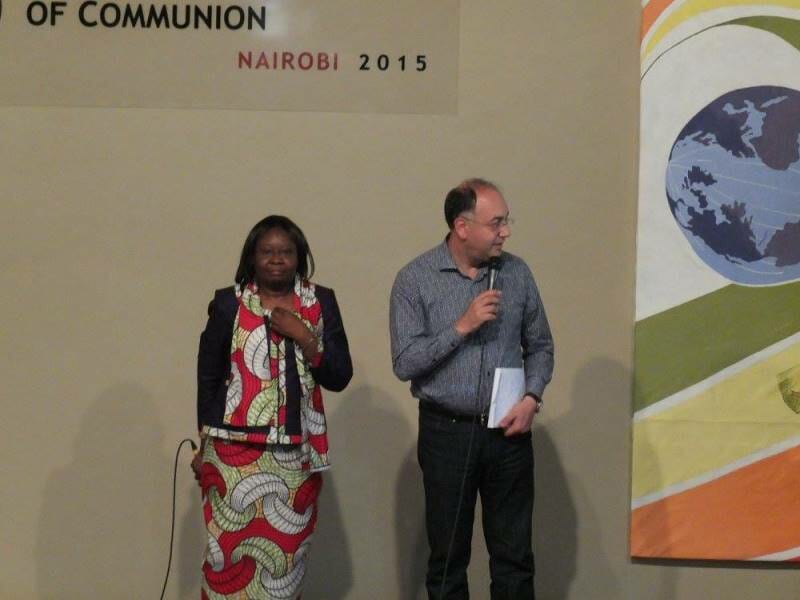
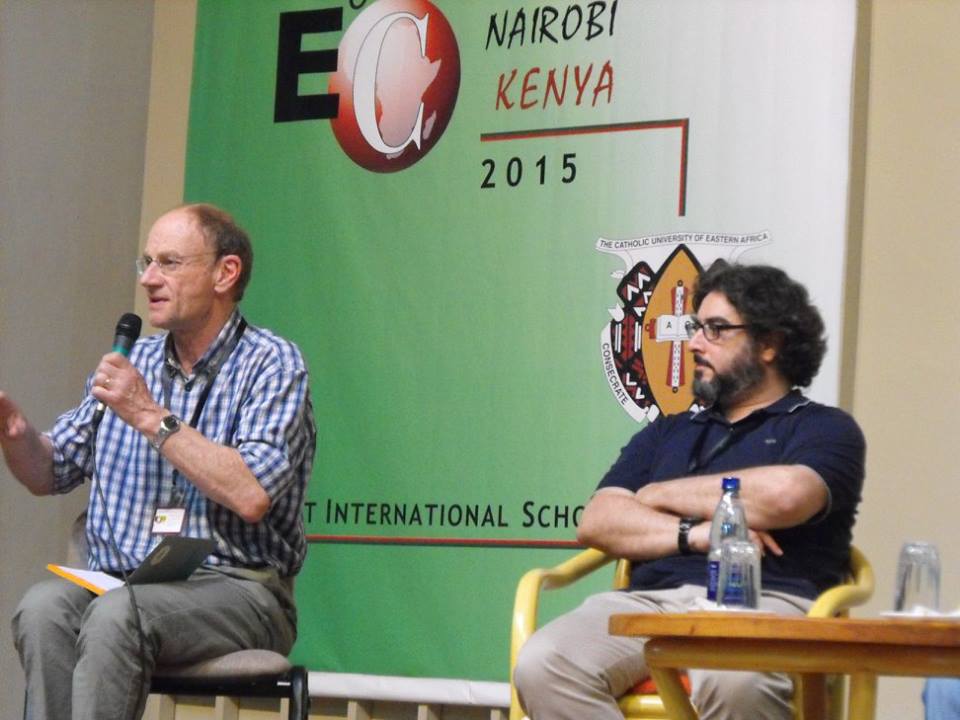
Genéviève Sanzé and Luigino Bruni addressing the conference
3 Jun 2015 | Focolare Worldwide
“The Economy of Communion (EoC) has returned to Africa. We’re here from around world, drawn by both the blessings and the wounds of this great continent, to take a look at the world economy from an African perspective; also to be taught by these peoples, by their great calling to life, social relationships and encounter. I have always been struck by Africa’s ability to create, and by its life. There is a lot of dancing in Africa, a lot of feasting and celebration. One thing that I find stupendous in Africa is that you even see elderly women dancing. Nowadays, in Europe and in the Northern hemisphere it is less common to see elderly men and women freely celebrating and dancing over the joy of being together. We also came to Africa to learn how to dance, men, women and children. Africa certainly has a vocation to generate life in all of its dimensions. The sense of brotherhood with the earth and with all of nature is a great value of African culture. This is one of the many gifts that Africa offers to the entire Economy of Communion worldwide, and many future generations should make this discovery. What messages can reach the Africa of today from the EoC? We will take the time to tell our stories, both great and small, and from there we will set out into a new land. The first contribution that the EoC would like to take to Africa is appreciation and esteem for what Africa already is and not only for what it might become. The people’s first strength is their dreams, especially their collective dreams and those of the poor. Generating is very connected to an economic term that is important for Africa and for everyone: innovation. A first message that we receive from the logic of this new budding is subsidiatiry: our hands and our technology can only subsidize, that is, help the bud to bloom; they cannot invent it. The economic and social innovations of Africa will grow primarily from its own soil, from its land and not from the outside. The gift of the EoC is that of having eyes that can see buds where others see only deserts. There are many young people here in Africa who have already begun the walk, often together: and it is from these buds that we should learn to see the forest. The essential energy of any undertaking is the hunger for life, and for the future of young people and the poor, who are very abundant here in Africa. In order for the poor and excluded to become an engine of change of a country, the role of political and economic institutions is essential. New financial institutions are being born from the EoC. But banks and all the other institutions are only able to assist economic innovations, not create or invent them. Without people with creativity, talent, competence and passion, you will never give rise to the experience of a new economy. It is necessary that each individual activates his or her own innovative skills and, if possible, join it to that of others who have the same wish to do and create. Our dream is to create one of these institutions right here at Mariapolis Piero. It will be a centre that can be a place for trust, for accompanying and serving new EoC ideas that will be born especially from young people.”
1 Jun 2015 | Focolare Worldwide
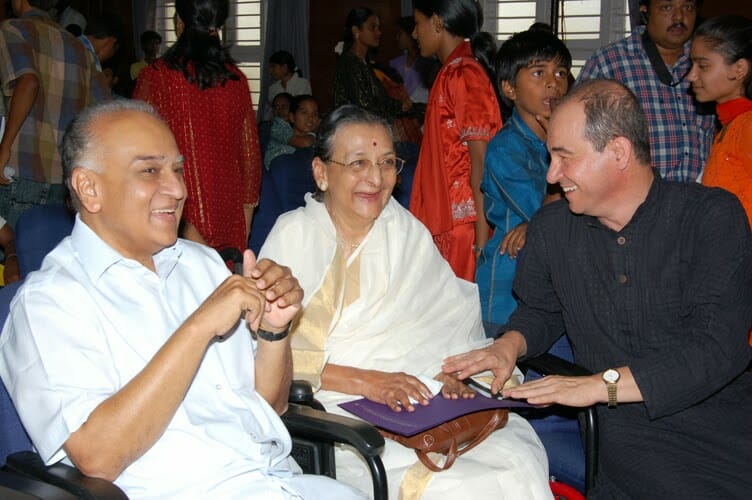
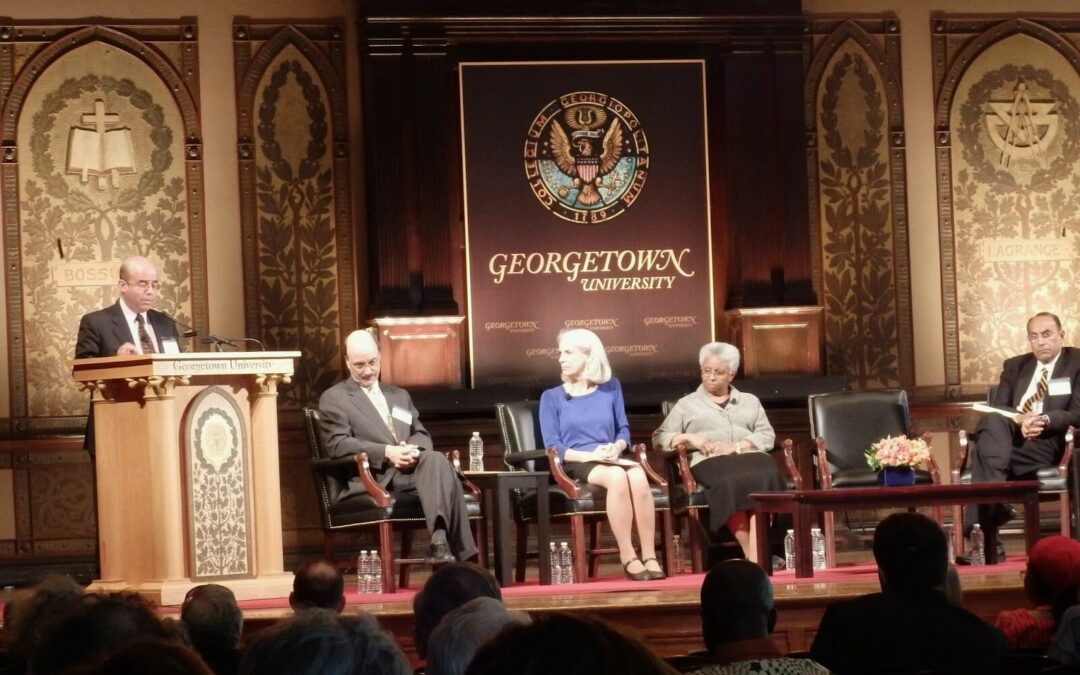
Roberto Catalano (right right) with Minoti Aram, of the Shanti Ashram in Combiatore (India), and other Hindu participants at an interreligious workshop.
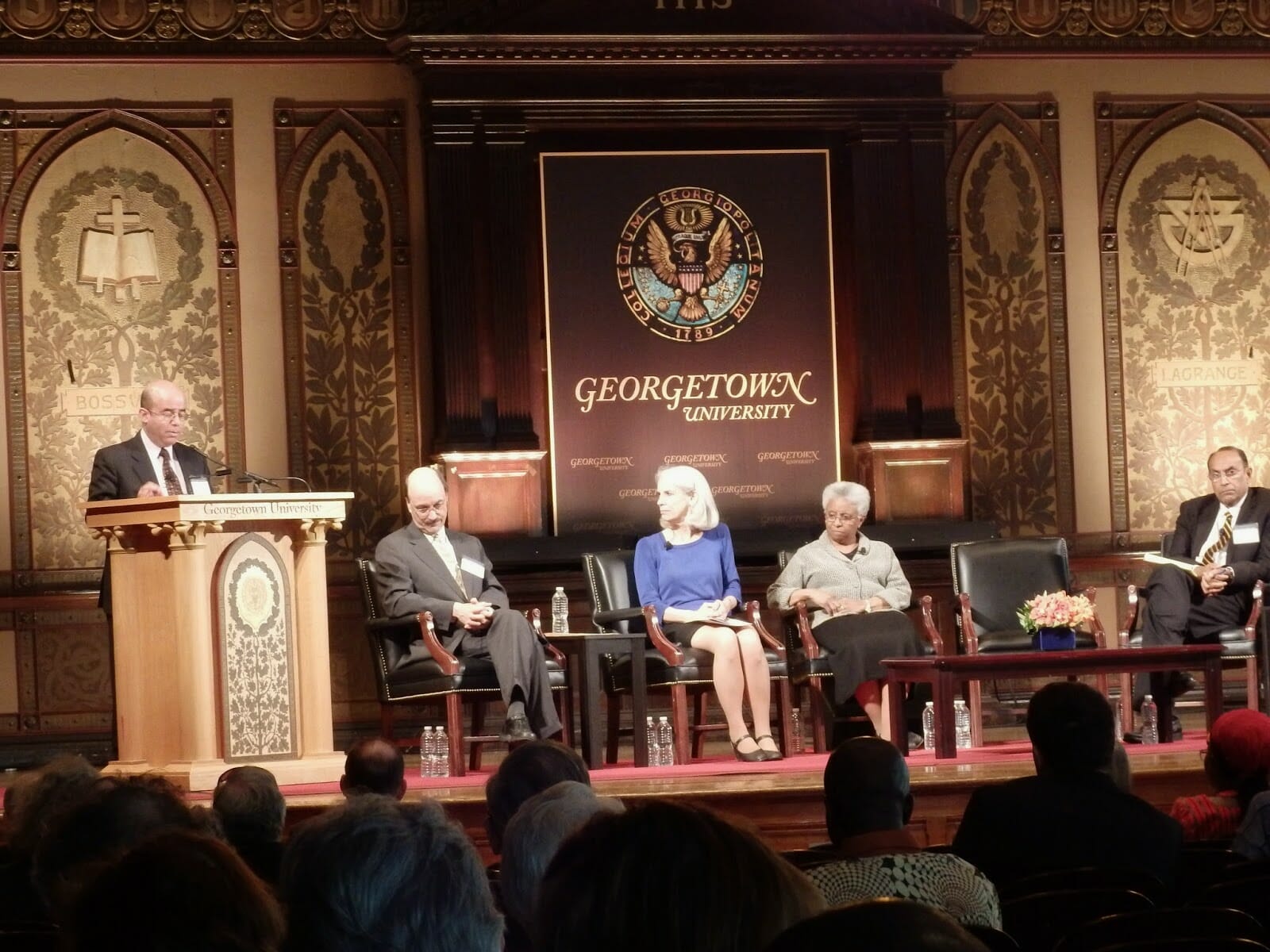 “The conference is of great value,” continues Roberto Catalano. “There were speeches in the plenary session and also in parallel sessions of great theological and spiritual depth. Great human and intellectual openness, and a desire to deepen our understanding of an event like the Council from different points of view: geographical without a doubt, but especially of perspective and of content. There were speeches that sought to contextualize what happened between 1962 and 1965, and why. Others confronted the historical aspects which brought about the unfolding of the council event. But another important topic was the interpretation of all that has happened after the council and how these fifty years have not been sufficient for its fulfillment. The opinions came in succession in an atmosphere of profound listening, interest and intellectual and spiritual openness.” “Even among different opinions, the Council emerges from this period of study half a century from its conclusion, as an event that changed the Church and humanity. The prophetic dimension which characterized the documents that were promulgated at the end of the council assembly is especially striking.” And it is precisely on this dimension of prophecy which his discourse is founded, upon the role of some movements, such as the Focolare Movement and Sant’Egidio, in the actualization of Nostra Aetate. Dialogue as a duty, dialogue as a culture of meeting, dialogue as a pilgrimage and dialogue as open and emphatic thinking are just a few of the points expounded by Catalano. One day of the convention was entirely dedicated to ecumenism and to what the Council has meant for this aspect. There followed discourses by Catholics, Lutherans, Presbyterians, Orthodox, and Episcopalians: “There was also a serious tone due to missed appointments and obstacles that still remain for a true communion between the various Churches. But the most significant speech, marked by several minutes of thunderous applause within the Episcopalian National Cathedral, was that of Cardinal Walter Kasper, who, after a masterful analysis of the history and a few theological aspects of the ecumenical matter, concluded with his pragmatic but refreshing optimism; “Unity perhaps has already started!” “It is clear,” concludes Catalano, “how in these fifty years enormous steps forward have been made, and that unity will never be a ‘return’ or a unification, but a ‘communion.’“
