
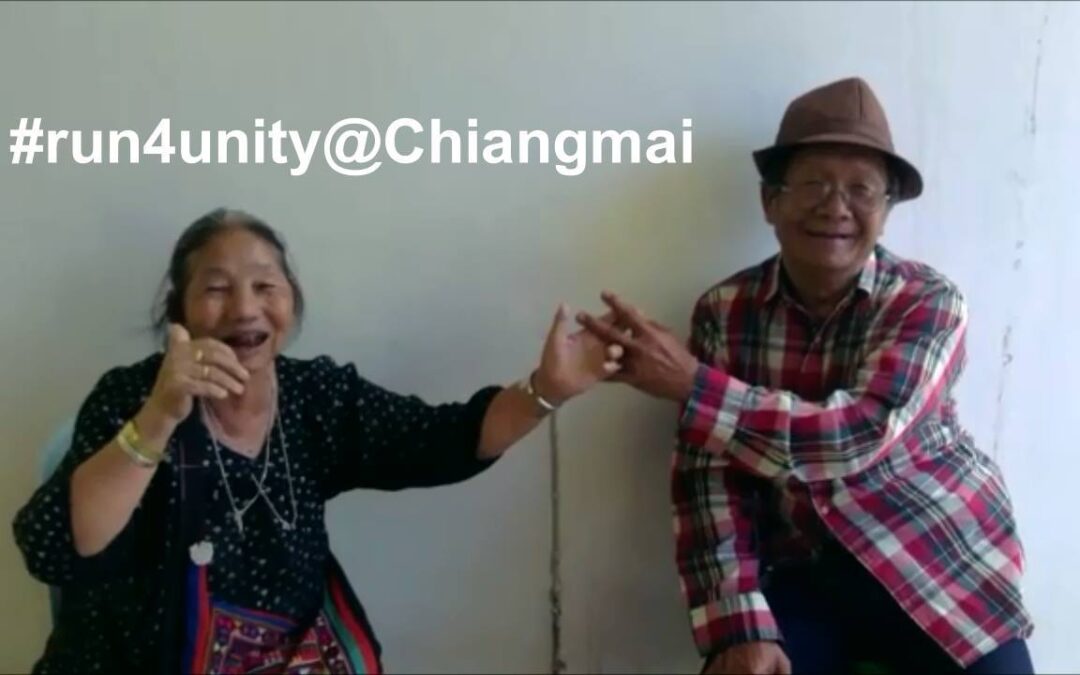
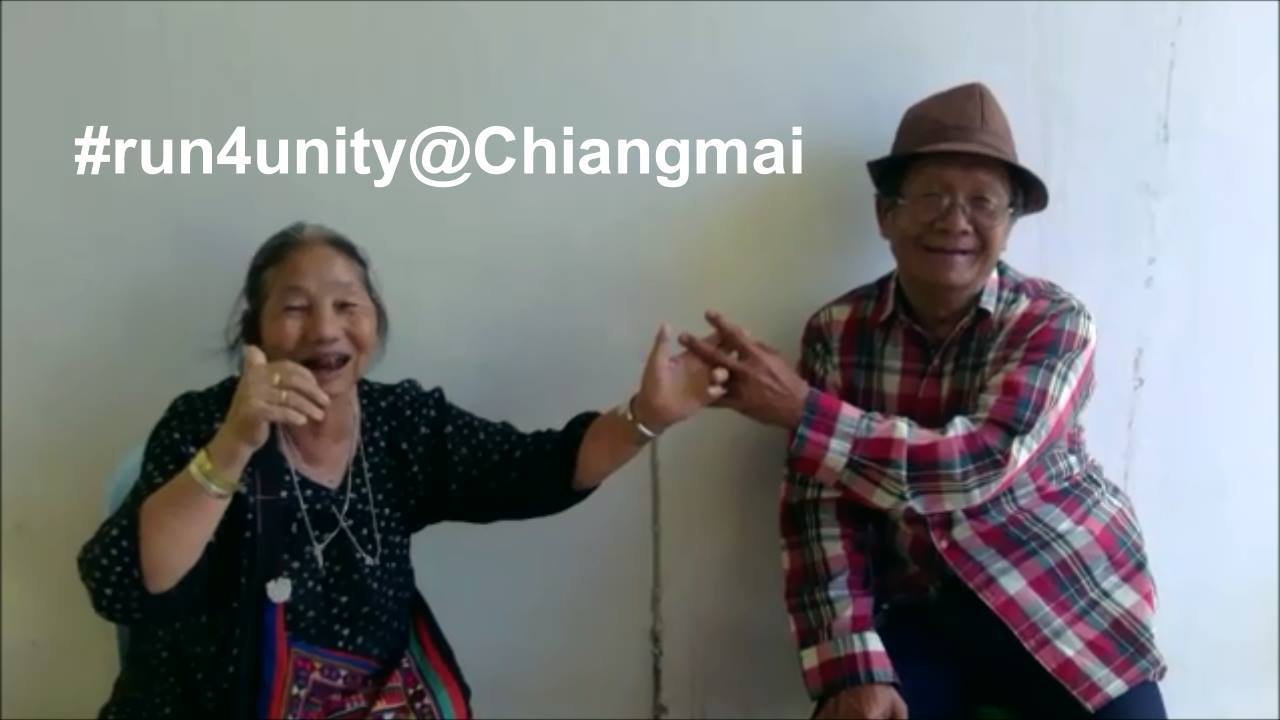
United World Week and Run4Unity 2015
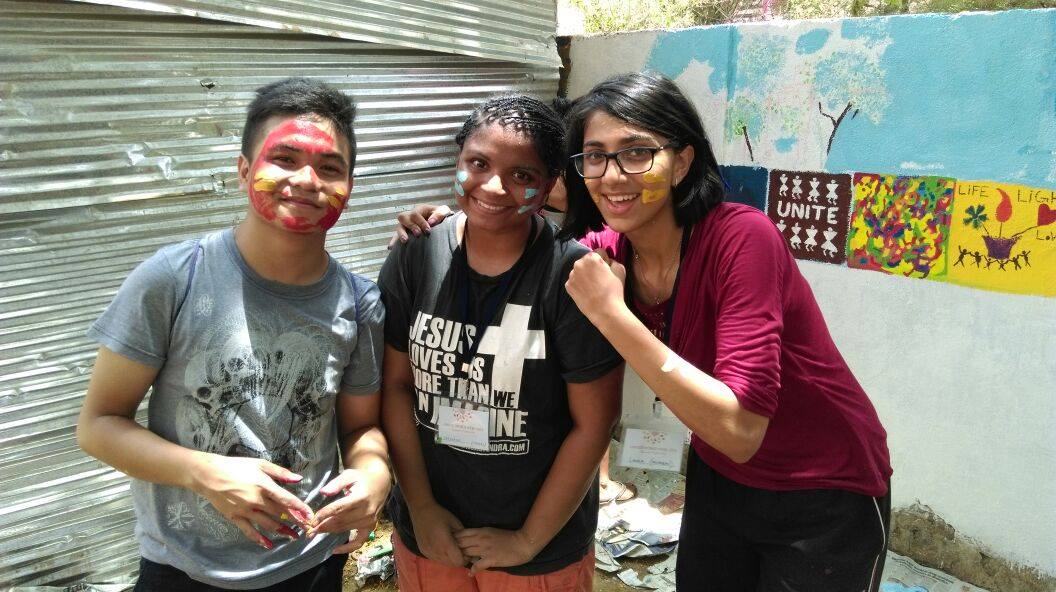 Focolare Youth and children and their many friends. Signs of persistent commitment towards peace in the whole world. A focus on some initiatives, not amongst the most crowded or those held in well-known cities, but very significant because they show that everyone, anywhere can contribute towards peace. Kinshasa, Congo. A convinced crowd of a thousand young people, Christians and Muslims demonstrated in front of civil authorities: mayors, governor, members of parliament, ambassadors. (One boy managed to invite 70 friends who took part in the activity and paid their participation fee in advance). These youngsters marched for about an hour in the chaotic city of Kinshasa until they reached Petite Flamme, the school run by the Focolare Movement and found in Ndolo. This project offers many teens the opportunity to build a future in their own country without having to emigrate. Other young people marched in the unstable east region of Bukavu, Kikwit and Goma. Damascus, Syria. Syrian children have been asked to comment on their situation and answered through social networks: “I am M., and after managing to escape from home I now live in Damascus. During the night our neighbourhood was very heavily bombarded and rockets hit some of our friends’ homes. The Focolare families did their best to find accommodation for them….Some of us lost relatives, friends, school…. But in spite of all this we believe in peace, we live for peace and pray God for peace. We visited children in an orphanage. We organized ourselves and prepared for them sweets, salted biscuits, bracelets….. We played with these children and spent a very nice day together”. Another group of 65 youngsters, coming from different parts of the country, faced the risk of a journey to spend a couple of days together: “It seemed an oasis as it was for the people of Israel who for 40 years journeyed in the desert amidst many hardships”.
  Cascais, Portugal. 900 young Portuguese gathered at the small town of Cascais welcomed the Syrian youth’s commitment to pray and be points of reference for peace in everyday life so as to spread love and peace around them. “They instilled strength and determination in us, helping us to give relative importance to our small difficulties and challenges”. The commissioner for youth policies encouraged them saying: “Continue to believe in what already believe. Continue to be what you are. The world needs you!” Bahía Blanca, Argentina. Through the initiative “Papelitos in the city”, positive messages were scattered everywhere: on school benches, doors, in elevators, in mailboxes, on motorcycles, cars, bicycles…. The golden rule found in sacred books and in other texts stimulated the idea: “Cheer up everybody’s day and contribute to lessen violence”. Other groups (scouts, etc.) took part in this initiative through Whatsapp and Facebook. It has also aroused conflicting ideas that reinforced the youth’s determination to “write those words with their lives”. Hamm, Germany. Catholic and Evangelical youth walked together through the city and stopped at various places of worship, including a mosque and Hindu temple. Slovakia. Slovak and Ukrainian youth and children met at a town on the border between the two countries and organized different activities. Above all, they shared the suffering of a conflict that continues to cause death and destruction. Hong Kong And Macao: The necessity of peace and its absolute priority were promoted in one of the most busy commercial places in Hong Kong, which youth chose as their meeting place. Bethlehem. Christian and Muslim children from Jerusalem, Nazareth and Haifa, who took part in this year’s edition of the relay race for peace, met at the Square of the Basilica of the Nativity in Bethlehem. From there they walked to the Salesian monastery in the Cremisan Valley, where the local people protested without any violence and prevented the building of a part of the wall that separates Israel and the Palestinian Territories. Source:Press releases
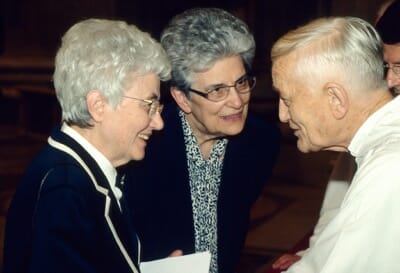
Centennial of Brother Roger Schutz

Chiara Lubich, Gabri Fallacara, Frère Roger Schutz (1978).
Chiara Lubich, Eli Folonari,
Stories in times of economic crisis
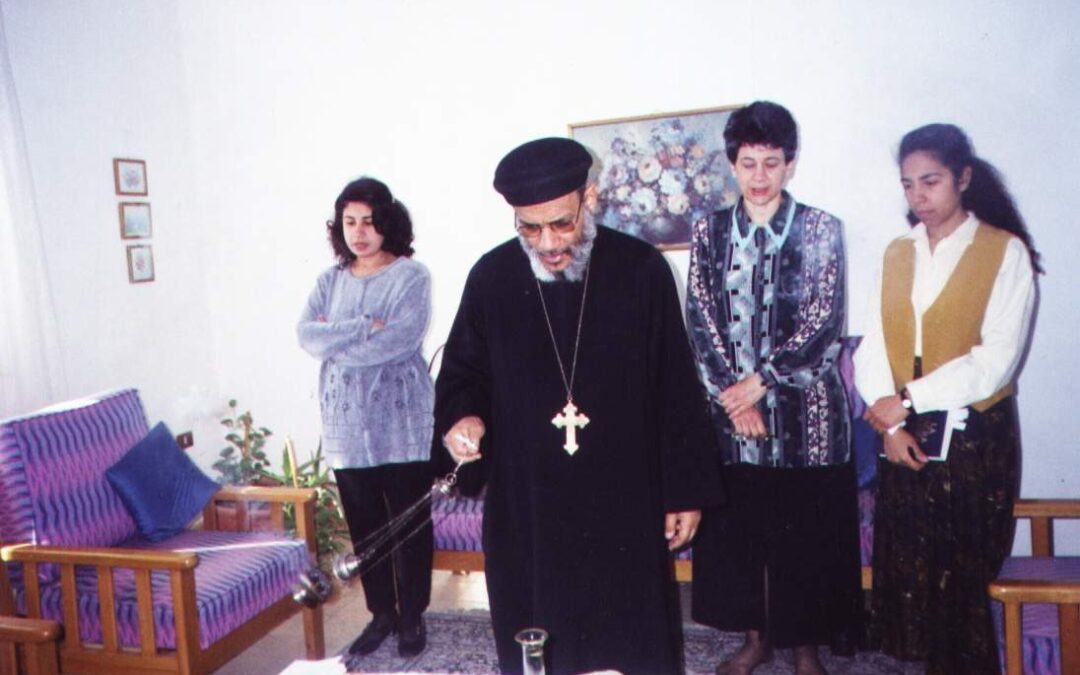
A day of friendship between Copts and Catholics
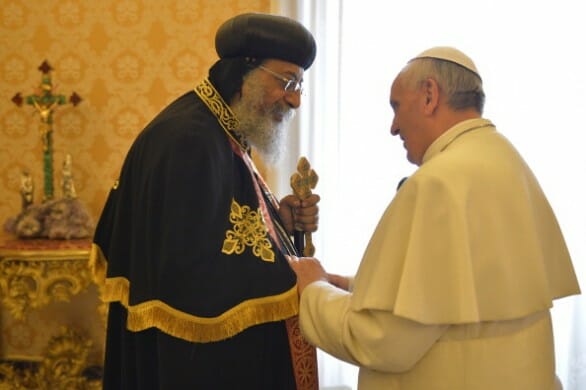 May 10, 2013. Pope Francis and Pope Tawadros II meet at the Vatican to remember the historic appointment that took place 40 years ealier between their predecessors, Pope Paul VI and Pope Shenouda III, and their Common Declaration on the one faith that is professed by churches with different traditions. During his remarks, Pope Francis stated: “I am convinced that – under the guidance of the Holy Spirit – our persevering prayer, our dialogue and the will to build communion day by day in mutual love will allow us to take important further steps towards full unity.” During an interview Pope Tawadros II stated: “I believe in the diversity in unity. Being in a garden where all the flowers are red and of the same hight, is boring. But being in a garden where I see a pink rose, a yellow rose and a white rose; and I see trees of different heights – this diversity expresses beauty and strength. When I am sitting with you I am rich of my brothers and sisters in Christ.” Coptic focolarina, Sherin, offers her thoughts: “These are words spoken by someone who has the courage to love his brothers and sisters, to shorten the distance and time in favour of understanding and renewed sharing after years of distance, enabling the two Churches to take up a path of peace and brotherhood. It will not be possible to erase these words from memory nor from the history of ecumenism until the churches rejoice on the day of the full unity of thier children.” The 2013 visit of Pope Tawadros II had been the first, following his election. Perhaps he wished to pay a visit to the Successor of Peter, Pope Francis. It was the second historic visit of a Coptic Pope to the Pope of Rome, that helped to lessen the distance between the two Churches.
 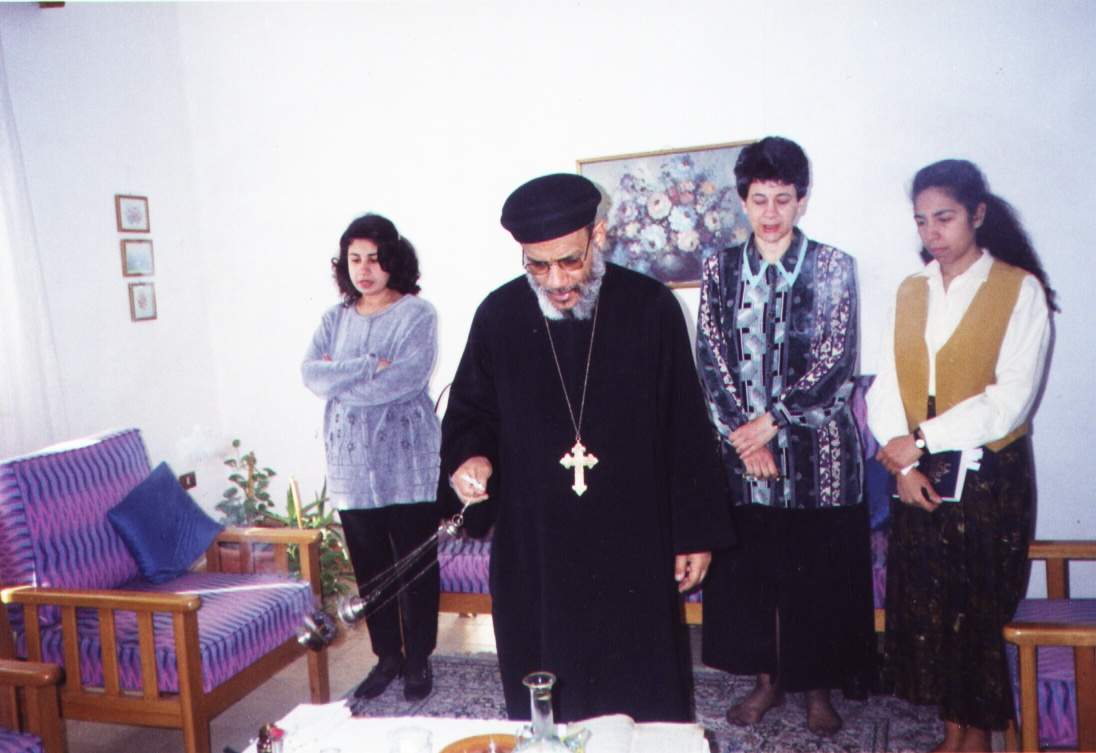 “That encounter between those two great men of God is still alive in my memory as, under the guidance of the Holy Spirit, they continue to conduct their flock towards the one Church that will come in God’s time. The memory of their fraternal embrace and the mutual love that could be visibly seen between them fills me with immense joy. I join my sisters and brothers of both Churches in celebrating this occasion, and with enthusiasm I look towards the near future, confident in the steps that will draw us closer and closer. This is a cause of great rejoicing for the entire Church! It encourages me to live for unity even more, a possibility that had fascinated me years ago when I met the Focolare Movement where I discovered the ‘precious pearl’ of the Gospel, for which you sell everything you have. I share this life in focolare with sisters from various Churches, and this is where I experience the joy of the Risen One, a sign of what the Church will be in its full unity. Each day we pray, work, share moments of suffering as Pope Francis said when he spoke about the ecumenism of suffering, and it makes us grow in love and mutual respect, believing that on the Cross, Jesus has overcome all our divisions and filled every void. I am grateful for the many people across the world with whom I share this experience. We live and pray for this unity, that it might be experienced and lived by everyone.” Sherin, focolare, Sohag, Egypt
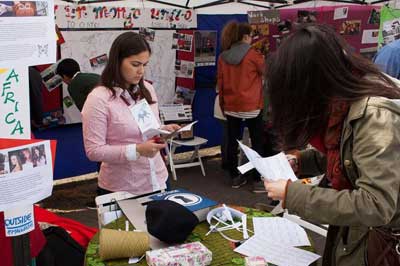
1400 young people at the Loppiano Meeting
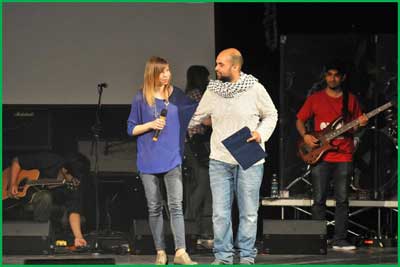 “During these hours in which we are literally bombarded with violence, war, and indifference, we wish to powerfully testify that there is another way, because there is!” This was the introduction that came from the stage of the Auditorium of Loppiano, Italy where Nino, Nahomi, Luigi and Anna had held a two hour long discussion with 1,400 young people. The 42cnd Meeting of young Italians of the Focolare was held on the 1st of May in the permanent Mariapolis of Loppiano, Italy. This year’s title was: OUTSIDE, Look, Choose, Be.” Many proposals were presented by the Young For A United World in support of a culture of fraternity, as a way of emerging from personal and social inertia and bring change to the world. Their “Fragments of Unity” Expo highlighted solidarity and social involvement, through a network of organisations which the young people run. One powerful testimony: “My name is Kareem. I’m Palestinian. I’m 23 years old with a degree in Administration. After the fall of Arafat’s government things began to be difficult for us Christians on the Garza Strip. At that time there were around 2000 of us out of a population of one and a half million. Then our numbers dwindled. Two churches were bombed. The war began in 2008. One day, a bomb exploded near me, and I was thrown to the ground. So much destruction, so many dead! I first tried to go to my father at the United Nations office because it seemed a safe place, but it wasn’t possible. It took me four hours to reach my home, having to walk over many dead bodies. My mother was in tears, because she hadn’t heard from me. We lived through 28 days of that constant tension. Then we managed to leave the Garza Strip and get into Jordan. With the people from the Focolare, experiencing such a life of fraternity, I was little by little able to overcome the powerful trauma and to believe that with love we could build a world of peace. I’ve been in Loppiano for seven months. Living with young people from so many different cultures, religions and experiences is something new for me, because we didn’t have any outside contacts in Gaza. But now, as I try to open myself and be accepting of others, I feel at home; I’ve discovered the treasure I’ve been searching for.” “After the 2010 earthquake in Haiti which caused the death of more than 220 thousand people, thousands of Haitians migrated to Brazil,” says Joao from Florianopolis, in south Brazil. “Many of them have university degrees but, since they don’t speak Portuguese, they are only able to find work as bricklayers, and are often paid very little and treated with scorn. We asked ourselves what could be done. We began by gathering clothing and foodstuffs. We felt a bit awkward, because they only spoke French and Creole, and we were unfamiliar with their culture. But our strong desire to practice the Gospel sentence: “I was a stranger and you welcomed me,” overcame all the obstacles. Little by little we got to know them and also their problems. The first was language. We began offering them Portuguese lessons with slides and music. Then we helped them to obtain their documents and enrol in free technical training courses that are offered by the government, so that they could find employment and a better life. We held cultural nights, with food, song and dance from their country. We went to the seashore and played football together. . . We have begun to build an association to take advantage of all the possible opportunities offered by institutions in favour of their full insertion into local society. Not everything has been worked out and we still have a lot of work ahead of us, but it seems that a seed of fraternity has been planted.” This has been a glimpse of the 2015 Meeting, rich with testimonies and many concrete proposals for responding to the urgent needs of many people. Meanwhile, a network of young people, associations, and organisations has already been very active for several years in Italy, operating at many levels of the social fabric, in what Pope Francis has called the existential peripheries: “We want to bring into the light this undergrowth of solidarity that is building a present and future of peace, but is not well enough known,” the young people from the Focolare explain.