
Perù. A school on the Andes for the most remote village
Dominican Republic: Dreaming of an Orchestra
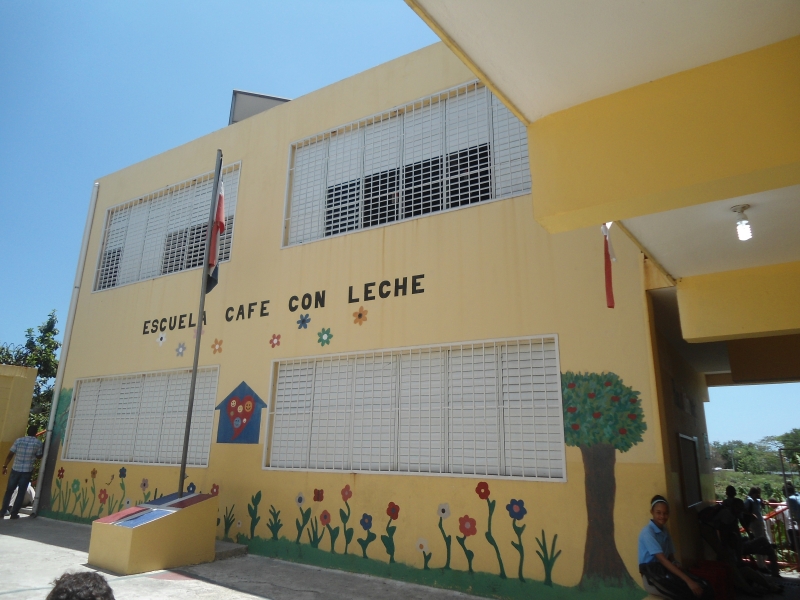 “I could go to the Dominican Republic and teach music for a couple weeks at Cafe’ con Leche School,” I nonchalantly expressed, not ever expecting that my comment would actually be taken seriously. So be it this unexpected trip turned into one of the most fantastic experiences I’ve ever had,” says Diane Gregory,former member of the Gen Verde Performing Arts Band, and who now lives in the United States. Before I knew it, I was on the plane heading for Santo Domingo. It was a chilly morning last April 9th. With snow still on the ground, I left New York’s JFK airport heading towards the Caribbean Island that welcomed me with its warm tropical climate and turquois sea. Along the drive to the colonial zone of the city where I would be staying, I was “taking in” everything, from the beautiful seashore with its coconut trees, to the automobiles, surprised at the number of people they can fit into those vehicles and, most strongly of all, I was being struck by the many impoverished neighborhoods that we passed along the way. The morning after I arrived I was on the Guaguita (a 9-seater van that I’ve seen holding up to 23 people!) with Kathi, a young German girl who is also volunteering at the school. Our stop was the town El Café. We were told of the violence that exists but also that we need not worry for our safety since it was “assumed” that we were there to help in the school. In fact, suffering, violence, unemployment and abandonment, are common amongst many of the families. Café con Leche, one of the many social projects of the Focolare Movement, amazes us with its warmth, liveliness, color and vibrancy. The classrooms are not like the ones I was used to in the US but more creative and just perfect for these 570 students from 1st – 8th grade. And to think that twenty years ago the school had begun in a wooden building with 20 students! Now, with the help of many people there is a school building and a gym that is able to welcome students providing them with a good education and nourishing daily meal – but not only. There is an atmosphere that is difficult to describe, a harmony of relationships that provides the students a very wholesome environment in which to study and grow.
 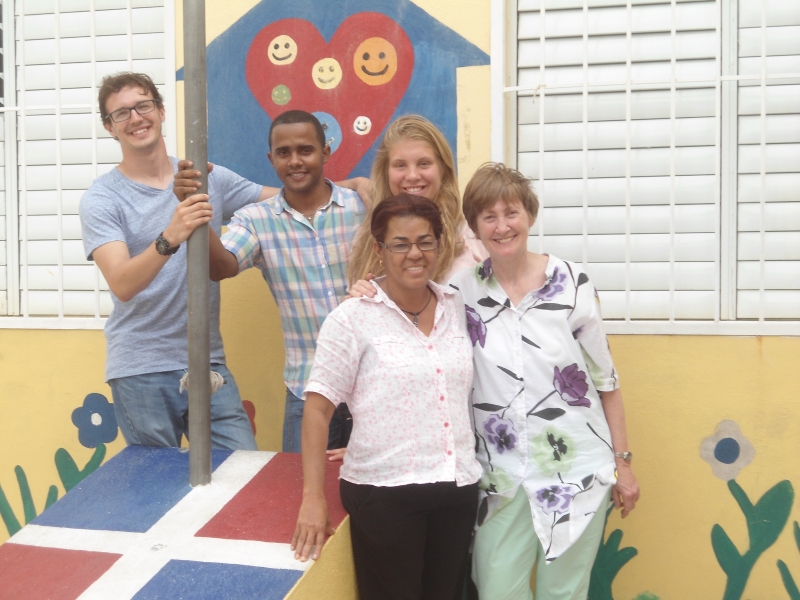 The 10 days that I spent at the school were extremely dynamic. Together with Marisol Jimenez, the founding director, there was a continual flourishing of ideas that we implemented immediately in the classrooms: saxophone and piano lessons; we formed a choir; did musical games and exercises, lessons on reading music; we made our own percussion instruments; put on skits; danced and even had macramé classes. Marisol’s dream is to have a school band. They had already received the instruments from Switzerland and the students are amazing with such a desire to learn (they have a natural rhythm and so much enthusiasm) but, unfortunately, they do not have the funds to hire music teachers on an ongoing basis. We hope that will happen soon! Café con leche is no longer a place that I’ve read about and heard so much about; it has become an “experience”. Now this school, the children, the teachers and everyone here have a name, a face, a story. I left convinced that everything is possible when we “catch the moment” and give it our all.
Asia: a new image of consecrated life
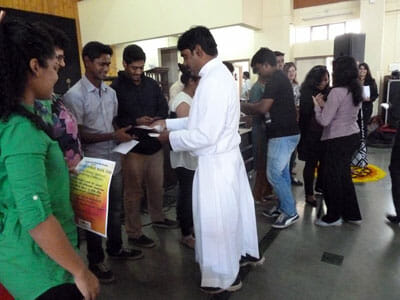
 In India, a boom in vocations to consecrated life is seen in various points of the subcontinent: Andra Pradesh, Orissa, and the North Eastern States. “The sense of faith and vision of religious life is well esteemed and the youth feel the urge to enter the novitiate to cultivate their union with the Lord,” Fr Attulli states in an interview with Unità e Carismi (Unity and Charisms) of the Città Nuova editorial group. “They aspire this primarily with experience and prayer – he continued – and they wish to dedicate themselves more to the works of charity. The example of Mother Theresa of Calcutta is strong. From her concrete experience of India, she was able to discover herself and her own vocation, through a profound life of prayer from which her new vocation sprung.” The youth who enter the novitiate come from a part of society that is unable to hide social inequality and poverty, despite the fact that the Indian subcontinent is enumerated among the new world economies. But they have not lost their spiritual dimension, and on the other hand, “Look to God for the solution”. They have found at the same time a solution in social commitment, and in fact “draw inspiration from the works of charity in which they are involved, to solve the poverty in material needs, education, etc. They start with an experience of God, which leads them to undertake apostolic works for the needy.” The Catholic Church has called this the Year of Consecrated life. What should be done to make improvements? “Within the Indian setting, “Fr Attulli explained, “the Church in general and the religious in particular can bear witness to the presence of our Lord Jesus by taking greater care of the poor, in both their spiritual and concrete needs. It is a challenge in this secularized world where we are totally intoxicated with wellbeing! The people want to rediscover God in us, detaching themselves from this addiction to wellbeing.” “Why do people stray from God? Why do they not feel the need to go towards Him? the religious asked himself. And the answer came from his own life experience. “If we stand by the poor and those in need, we discover God’s presence in them. The missionaries who live with the poor, come in contact with people who have faith, even if they need to be helped to grow in the “’culture of faith’, through catechism, prayers and the sacraments.” “In the Indian continent,” he concluded, “not only is there material poverty, but there are also existential peripheries. We are made for love and called to live a serene, peaceful and joyful life in love. Faith does not weigh on our minds, but is there to make us live with joy, not only in the life to come, but here and now. This is why our presence in the existential peripheries and with the poor is of great importance.”
Towards a new season of the Church in Italy
At the opening session, Bishop Nunzio Galantino, Secretary General of the Italian Episcopal Conference (IEC), declared that «The spirit of the Episcopal Conference is to start from those involved,» underlining how this is also proven by the meeting which saw the participation of all the ecclesial organisations operating in the social fields. «The ecclesial congress of November will start in Prato, the ideal periphery of Florence and home to Chinese immigrants, and where the Pope is scheduled to make his pastoral visit.» In an interview, Prof. Coda summarised the objective of the two-day work session. «We want to reflect and offer our testimonial through the experiences of some dynamic groups of the Church in Italy, that are working in the frontlines of service to the poor and homeless and in creating an open dialogue in all spheres.» The preparatory meeting delved into the theme on “The Servant of the Lord and the humanity of mankind” (15-16 May), organized by the Abele Group and their magazine, “Il Regno,” with the cooperation of the Italian Catholic Action, Carits, CNCA and the Networks of Charity and the Focolare Movement. “Together with the others, Piero Coda continued, these experiences «open out to all the existential frontiers of society, as Pope Francis says.» Furthermore, «in Evangelii Gaudium, Pope Francis uses a beautiful expression: we must say “yes” to all the new relationships generated by Jesus. All the groups involved in this event actualise in various ways, this “yes to new relationships” with the cultural and social divides, marginalisation of all sorts, the world around us, and the home common to all Creation, precisely as an expression of this reality of relationships.» Maria Voce’s presence underlined the Focolare’s adhesion to this preparatory path which aims above all to highlight the life of those who give all their energy every day to creating this “new humanism.” «The Church breaks through the confines of the building of religious rites, and in full communion between the clergy and laity, comes closer to present day humanity,» she affirmed in her speech. This Convention «targets the start of a new season in the life and mission of the Church in Italy: not only with regard to the pressing need for “pastoral conversion” but also for the role and public conduct of Christians in facing the social, economic and political realities of our country and keeping an open attitude toward Europe and the world.» She then referred to the challenges of pluralism and the need to harmonise the multitude of diversities in the public field. «This new season stands for the transformation of the world, starting from the radical conversion of our hearts and minds in order to be ready to meet Jesus in each person. God cannot receive us alone, he wants us to go to him with our brethren… To give the Christian name of fraternity to social relationships means committing ourselves to harmonizing the weft of relationships, recognising our mutual belonging and the bonds of responsibility implied, and orienting personal and collective efforts towards the common good.» This is why «we must give a voice and dignity to those at the periphery, extend the spheres of inclusion, and heal and rebuild the frayed social fabric. It is primarily the youth who wish to give their own contribution. So many initiatives have started up locally, in the heart of numberless fragments of “fraternal” civil life!» As a confirmation of Maria Voce’s words, were the almost 200 members of the Focolare Movement attending the meeting, and involved in many ways in the ecclesial organisations, and active in various fields: interreligious dialogue, reception of immigrants, politics, culture and legality, schooling, and the real opening of worksites for the good of Italy. It is a participation which demonstrates their concrete commitment, together with many other active groups.
Living Peace 2015: Words and Images from Cairo
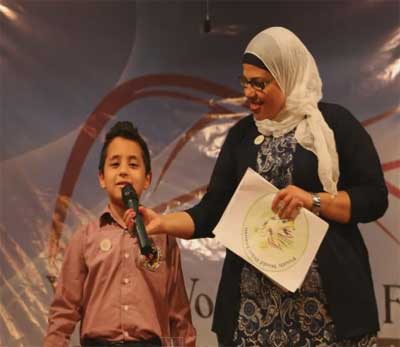
“The Peace Forum was a unique experience. I enjoyed every moment of the programme. Such a meeting (. . .) makes one hope that better days are coming and that one day poverty, hunger discrimination and violence will see their end.” This is how Rasha, an English teacher at Rowad American College, describes Living Peace 2015 which was held in Cairo on May 4-6, 2015, following a three-day congress in Alexandria, Egypt that provided the young people with the necessary background knowledge. In Alexandria there were moments of sharing and mutual understanding, sharing the joys and sorrows that they brought with them from their own countries. In Cairo, there was a beautiful welcome, with festivities along the Nile on a large boat, with games, dancing and song. Then came the actual World Forum of Students for Peace. The project was promoted by New Humanity, an NGO, through the Cayrus project approved by the European Union. Various partners and sponsors from different countries adhered to the project and sent youth representatives to Egypt. For three days 1300 students and professors from more than 20 schools and 8 Egyptian universities shared testimonies of their common commitment to peace: best practices, more than 50 educational projects for peace, workshops, seminars, exhibits and artistic performances. Also present were ambassadors and diplomatic representatives from Argentina, Brazil, Uruguay, Guatemala, Cuba, Democratic Republic of Congo, Cameroon, Pakistan, Portugal, Croatia, Mexico, Germany and Sudan. Begun in 2011 by an English teacher at El Rowad American College of Cairo, as an educational project for peace, today, Living Peace involves more than 2500 students from around the world. A main feature of the project is the way it directly engages the students and teachers in the creation of an educational peace initiative, involving a global network of people and institutions. Membership in the project enables each school to develop projects in accordance with their own possibilities, favouring the creativity of the students along with the awareness that they are contributing towards a common goal. This creates a dynamic of participation that motivates the different components of the school, reinforcing solidarity amongst students, teachers, directors and families, with repercussions in civil society. The 2015 Forum was the occasion for presenting Scholas Occurrentes, the large global network that the Pope wished to see when he was still archbishop of Buenos Aires, and that now connects more than 400,0000 schools around the world. The presence of Dominicus Rohde from Germany, President of the World Peace Forum, raised the tone of the events. Since it was the first world forum held by young people, it opened the doors to a new road. The worldwide forum on peace has awarded the Luxemburg Peace Prize to New Humanity. The prestigious Nelson Mandela Medal was consigned to Cecilia Landucci who represented the NGO in Cairo. See video: Living Peace 2015 https://www.youtube.com/watch?v=nugDbxgoccg&feature=youtu.be Source: ONG New Humanity, AMU e Umanità Nuova. Updated May 27, 2015