8 May 2015 | Focolare Worldwide
 Bobo Dioulasso is the second city of Burkina Faso, the closest to Bamako, capital of Mali, where some cases of Ebola had been detected. There is a dynamic social and economic relationship between the two cities, with a continual movement of people and merchandise. “We need to act urgently to reduce at best the risk of the virus reaching also Burkina – wrote the Ebola awareness team of the Focolare Movement in Bobo Dioulasso. We practically had to inform as many people as possible on the preventive measures, but the political situation in the country is such that government interventions are not always possible.” “So we decided to act on our own. Félicité is a volunteer epidemiological doctor at the Healthcare Organisation for West Africa (OOAS). Her specific role is to train the healthcare practitioners in fighting epidemic outbreaks, since she herself has worked in countries like Guinea Conakry, Liberia, and Sierra Leone. Félicité immediately offered her services.”
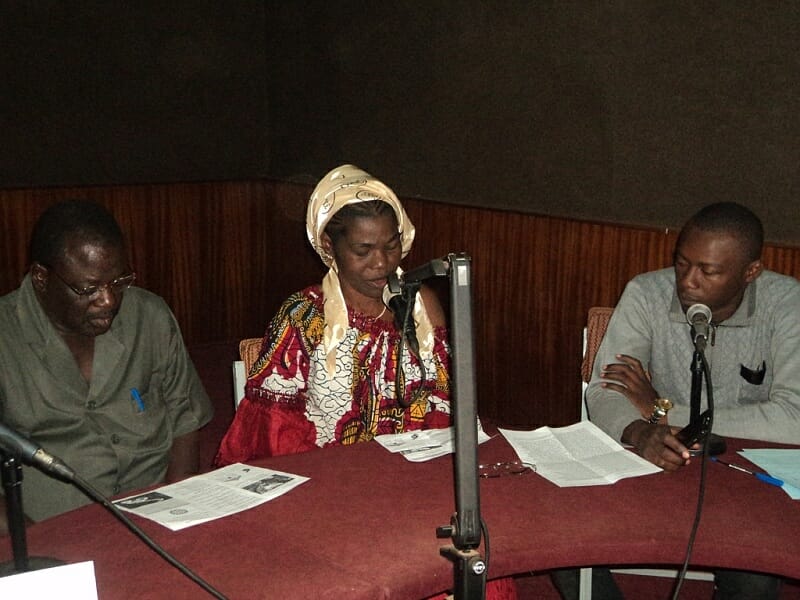
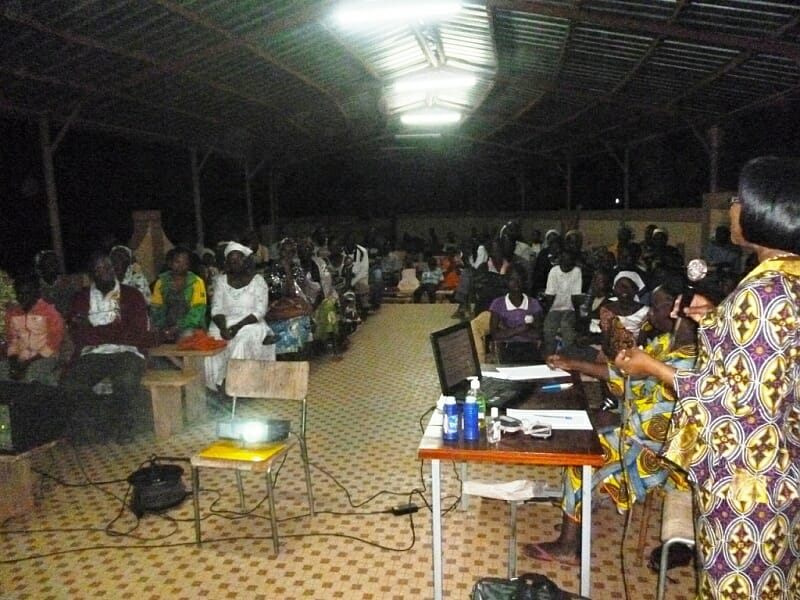
 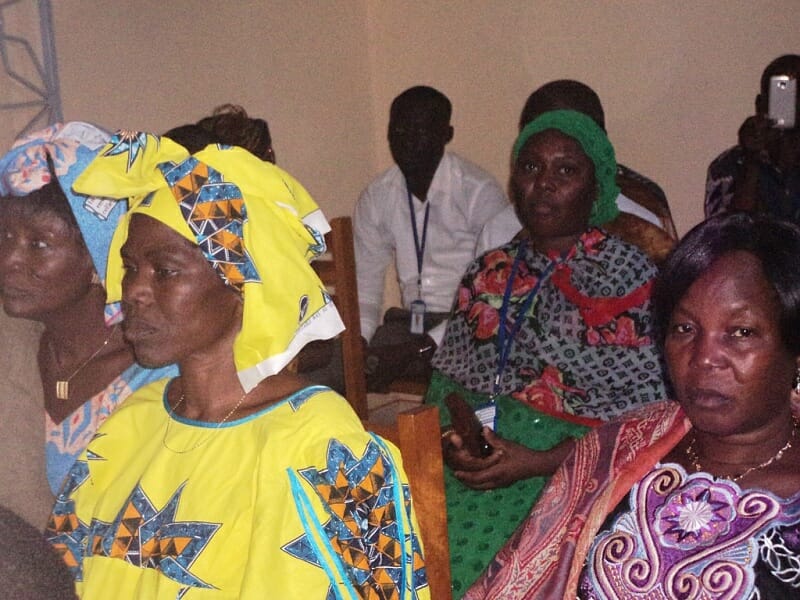 “The first thing we thought of doing was to notify the Bishop who was not in town at that time. We then went to speak to the Vicar Genera”l, Abbé Sylvestre, who assured us of the full support of the diocese, and in exhorting the clergy and faithful about the necessary precautionary measures to take. Carlo, a focolarino doctor of the dispensary of Mariapolis Victoria (Man) of the Ivory Coast, sent us some audiovisuals which we copied for the various youth and adult groups that would work for the awareness campaign. We also sent this material to a priest and a teacher in two other cities (Dedougou and Toussiana), interested in our campaign. Félicité took charge of forming groups, with the help of 15 students of the western countries of Africa sent by the OOAS, some of whom are Muslims.” “The campaign started in November 2014, but before that was already taken up during the meetings of the Focolare Movement. Campaigning was done in parishes in order to expand towards the various districts, and during a big youth meet organised by the diocese of Bobo Dioulasso itself. On Sundays we went to speak also in the churches. We spoke in a private radio broadcast, and in those of the national and also diocesan radios, in the three languages spoken: French, Dioula and Moré.” “This campaign gave us the opportunity to meet many people. When Jean-Bernard explained to his neighbours what he wanted to do in the district, everyone offered help: some attended to the amplifiers, some invited a singer to entertain, another took care of the transport of the material and others brought water to drink. At the presentation there were about 200 people. Word spread also to the neighbouring districts and Jean-Bernard had to repeat the program several times. In one of these occasions, a professional nurse offered to answer the questions of the audience. In another meeting, an expert of local tongues came and was an excellent translator. The officers of the Town Hall, who had given the permit for these meetings, expressed their gratitude for all this.» “In the meantime, we heard from Mali that the disease had been overcome. So the risk had been drastically reduced. The important thing now is to continue to comply with the preventive measures. It was a great opportunity to learn to work together for our people. We must continue.”
7 May 2015 | Focolare Worldwide
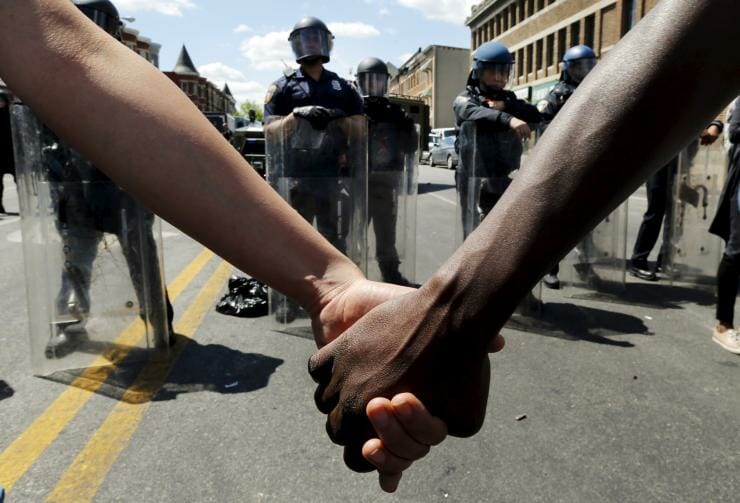
“The events that came about have stirred up the support of the citizens. Many leaders, religious groups and civil organisations decided to work together to clean the streets and buildings and to help in various ways, revealing the positive side of the city, though deeply offended,» Lucia, Co-Director of the Focolare Movement wrote from Washington. We all know about the people’s protests triggered in Baltimore last month, which are still ongoing, after the death of the 25-year-old Afro-American Freddie Gray while he was under arrest. Baltimore, the biggest city of Maryland with more than 600,000 inhabitants is a melting pot of ethnic groups, especially Afro-Americans. Leonie and Jennifer, two volunteers of the Focolare, live in the city centre. “The situation is still very tense, and yesterday the mayor closed the schools and the governor of the state deployed the armed forces. However, all those we know are fine.” Leonie lives close to the place of the clashes and teaches in a primary school of almost all Afro students and where there is great poverty. “On TV I saw one of my third-year elementary students participate in the sacking of buildings and properties.” “We cannot remain indifferent; we want to do something concrete, though aware that our contribution to establish true relationships between people is urgent, more than ever. Furthermore, every act of love builds new relationships that help foster fraternity between people,” wrote Marilena and Mike. “In the meantime we participate in the various moments of prayer organised by the religious authorities, starting from the Mass that Archbishop Lori will celebrate in our district, to invoke peace.” “I returned to school today,” Leonie recounts, “and tried to see my students (those who participated in the plunders) with ‘new eyes’.I contacted an Afro-American Muslim teacher who knows two black religious representatives in the school to offer our solidarity, and we agreed to work together.” Jennifer works in a company where almost all are whites. «A colleague of mine who lives close to the place where violence broke out, came to visit me today, and told me of her suffering in seeing all these events, but did not have the courage to mention it to anyone for fear of being marginalised by her colleagues. It was the occasion to tell her that we can start from ourselves and build a dialogue with all, one at a time, and in this way spread a new mentality. My colleague is not a practicing believer, but her face lit up and she told me that this is precisely what she also wants to do.” Meanwhile, the leaders of the various religious communities have started to work together for peace. “I was invited by the Imam Talib of the mosque of Washington, to give my testimony on the the 5th of May as a focolarina and the ideal that inspires us,” Lucia continued. “He wanted me to speak in a meeting open to the public, something they had organised with the District Procurator, to integrate the religious perspective as an essential dimension to subdue the violence. The event was entitled: Heal the Hurt, Heal the Heart. It seemed to be a great possibility for dialogue between religions but also an opportunity to show, more than the clashing, the richness of our society’s ethnic diversities.”
6 May 2015 | Focolare Worldwide
“Over the last few days in South Africa, there has been a lot of unrest, violence, violation of human rights… there are some South Africans who have refused to accommodate other brothers of other African nations in the country. It is difficult to see why these sparks of violence have emerged so strongly. We really need to promote tolerance towards the differences in the groups and communities everywhere. The migrants live in fear and many have already returned to their countries of origin, wrote Jacira from Johannesburg. This was the atmosphere in which the 7th death anniversary of Chiara Lubich (22/01/1920 – 14/03/2008) was held, and the seminar was entitled “Religion at the Service of Peace.” The speech of Ela Gandhi, niece of Mahatma, was very meaningful. On her many trips to Italy she had been impressed by the figure of Chiara Lubich and the spirituality of unity, as she so extensively stressed in her long speech. Among other things she also affirmed: “Upon acknowledging, like Gandhiji, that no results can be reached when people are jobless, and lack food, homes and clothing, Chiara conceived the idea of the Economy of Communion in liberty. Taking care of one another is her strong exhortation!” And further explained: “It is love for the others, in the form of mercy, love that opens hearts and hands to embrace the derelicts, the poor, those who have been marginalised from life and the repentant sinners.” “If we believe we are practicing our religion faithfully, when then is there so many battles, wars, abuse of power and sufferings perpetrated by man against man and indescribable atrocities committed by man in this world?” she asked, and strongly affirmed: “Every community of faithful must take the responsibility of correcting the erroneous interpretations of their own faith, and must not abandon their faith.” “Here in South Africa, during the apartheid period which was based on an erroneous interpretation of the Bibles,” according to Ms Ela Gandhi, “Our Christian brothers and sisters agreed with one another to produce the Kairos Document. This document affirms that “the problem in South Africa is not just that of a personal fault, it is a problem of structural injustice.” And Ms Ela Gandhi thus concluded: “Today, when the world and also our country is undergoing a high rate of violence and madness, anger and destruction, poverty and misery, we need to turn our gaze once again toward our concept of Ubuntu and see in what way each one of us can start introducing in his life, the agape, bhavana and many other similar concepts that refer to pure love so as to help create a better world.” More than ever today, to give our own contribution, the members of the Focolare in this country of such immense distances, commit themselves to reach the farthest communities to share the message of peace and unity, fruit of the Gospel lived.
4 May 2015 | Focolare Worldwide
 “I was one of the Petite Flamme children, and schooling gave me the chance to do something fulfilling in life,” recounted Trésor, 29, and currently a mathematics student at the National College, in a video projected during the awards ceremony held last 29 April at the Jewish Museum of Berlin. Jean Paul Ngandu Masamuna, 31, Engineer and seventh of nine children, added: “When I was a child, my father had gone to war, and my mother had nothing to bring us up with. We had to fight for survival and Petite Flamme gave me daily sustenance and the possibility to study. My friends went to Europe but every time I speak to them, they tell me that they have nothing, and being unemployed and without documents, they do not have the liberty I have, and that their dreams have not been fulfilled. I love living in Kinshasa with my Congolese people. I want to stay and work in Africa to save the lives of many people who suffer.” Petite Flamme is a scholastic organisation of the Focolare in Congo, that offers many kids the chance to build a future in their country of origin, without needing to migrate.
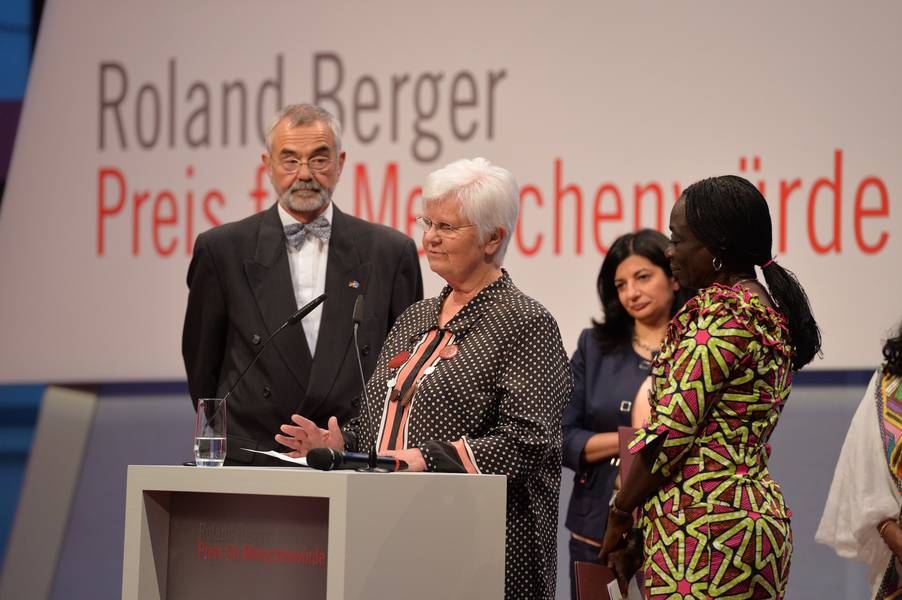
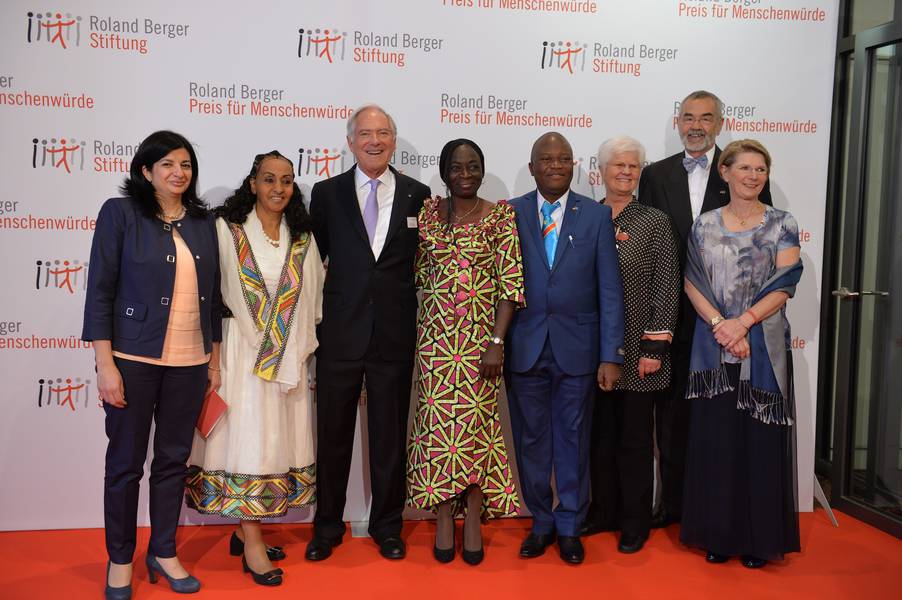
 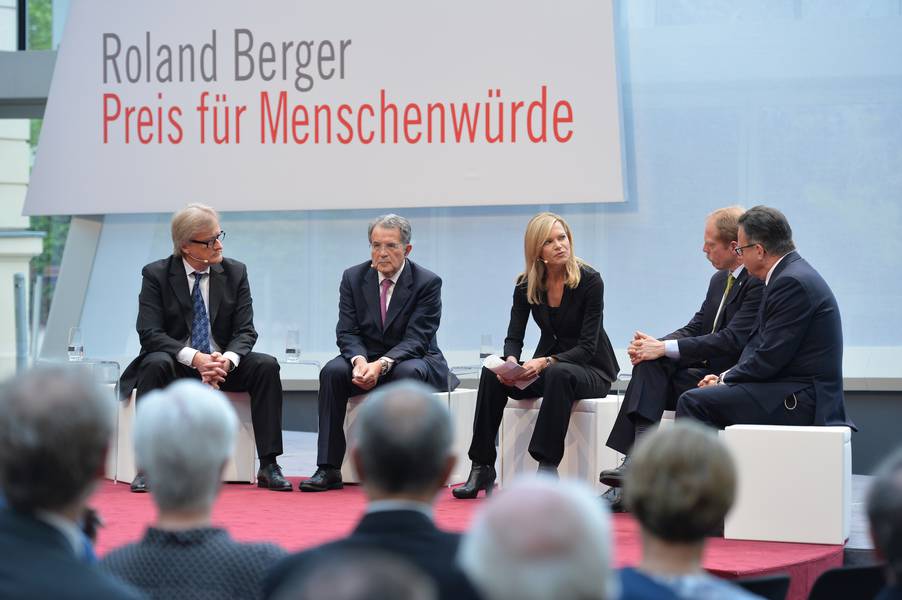 Immigration, the need to stop the carnage at sea, the urgency for political initiatives of the international community in favour of some Sub-Saharian and mid-oriental regions, were the topics discussed during the proceedings of “The Roland Berger Human Dignity Award” in Berlin. The event was attended by: the German Minister of Foreign Affairs, Frank-Walter Steinmeier, Romano Prodi, former President of the European Commission, and other exponents of the economic and political worlds. During the event, the “Roland Berger Foundation” operating in Germany in support of human rights and disadvantaged students awarded the 2015 prize, dedicated to the commitment to defend the life and dignity of refugees and forestall immigration issues. Among the winners, besides Petite Flamme, were two heroic women involved in helping refugees: Dr. Katrine Camilleri from Malta, who has been involved for years in giving refugees legal support, and Dr. Alganesc Fessaha, President of the NGO, “Gandhi,” who offers humanitarian assistance to African refugees. “It all sprang from an idea of Chiara Lubich – recounts Dada Diambu who, together with Odon Makela, coordinates the local project – when she launched the New Families’ “support from afar” project in order to cope with the difficult situation many children worldwide undergo. Petite Flamme was created in 1996 to offer education to the children of Ndolo, an extremely poor district of Kinshasa. The children are undernourished, and because of this the priority was to offer meals and necessary medical care. In the following years new centres were opened, and the scholastic cycle expanded the offer to adolescents and families, with classes for blind and deaf kids. Then the experience went to include “after-school under the tree” activities: 14 classes held under 14 trees due to the lack of other structures. Under constant development, the project centres located in the poor outskirts of Kinshasa then spread to Idiofa in Bandundu at 750 km from the capital, and to Kisandu in Bas-Kongo and Kikwit. The project is financed by various associations and NGOs, and by the Association for New Families onlus, that ensures education, medical care, and nutrition for 2,400 boys and girls, helping them to become free persons, since they have the possibility to be free from poverty and have the capacity to build a dignified life for themselves and the community. «During the European Union’s “Eufor” military mission tasked with safeguarding the elections in Congo in 2006 – explained Monika-Maria Wolff for years a resident in Congo – the rear admiral Henning Bess, head of the German soldiers and Vice-Captain of the mission got to know about “Petite Flamme.” Since then he has been involved, with his troops, in many huge aid campaigns. After the end of the mission the rear admiral continued with his wife, Julie Müller, to support Petite Flamme – along with the “support from afar” project of the New Families that has a network of over 350 German supporters.» The ceremony featured a round table on the outcomes of the recent special EU Summit on immigration, attended by Romano Prodi, Foreign Affairs Minister, Steinmeier, a representative of the UN’s High Commissioner for refugees, journalists and members of the various humanitarian organizations. The summit highlighted two solutions as the only ones possible for a sustainable support: that the International communities cooperate in a more compact and decisive way for peace, and support the initiatives aimed at resolving – following the example of Petite Flamme –the problem at its roots, and give the youth a chance to conduct a dignified life in their own countries without having to turn to escaping towards the north and wellbeing. Photo gallery
2 May 2015 | Focolare Worldwide
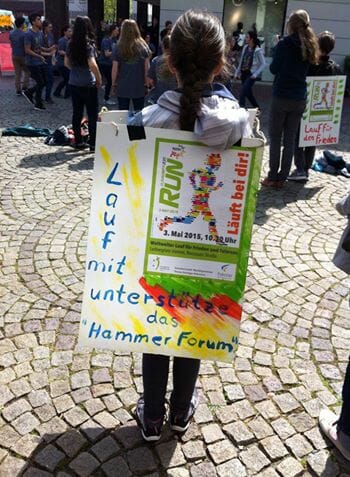
https://www.youtube.com/watch?v=SNo_9JOXWzo One video from the Teens for Unity in Syria shows how they are keeping hope alive in their battered country. It will be viewed by their peers in other countries, who are equally committed to bearing witness with gestures of fraternity, towards the building of a peaceful present. Teenagers from Slovakia will head to Ukraine, just outside Mucachevo: “Even though the war is underway in another part of the country,” they write, “here you feel the great economic crisis and atmosphere of hopelessness.” A small group will go to Kiev in support of their Ukrainian friends. In Bethlehem, a city of peace, Christian and Muslim teenagers from Bethlehem, Nazareth and Haifa will run together. They will take off from Nativity Square: “We’ll announce to Mayor Vera Baboun and the people we find there, our commitment to living out the Golden Rule in order to build fraternity.” In Arequipa, Peru, 2,300 metres above sea level, a chain of solidarity will be unleashed. Each teenager will take foodstuffs and school materials to two centres – one for abandoned children and the other for children with disabilities. The group from Wellington, New Zealand, will be the first to run; and Los Angeles, USA will close the event. In Malta, the race will be opened by the President of the Republic, M. Luise Coleiro Preca. Some symbolic sites along the race course include the Statue of Liberty on St Gellert Hill, in Budapest, Hungary. In Cochabamba, Bolivia, the teenagers will climb to the feet of the statue of Cristo de la Concordia where it is written: “That all may be one.” In Trelew, Argentina, a peace mural in the centre of town; and in Houston, Texas, a food collection for refugees. All the activities in the Southern Cone and Brazil promise to be colourful and have a strong social imprint. In Kaunas, Lithuania, and in Hamm, Germany, there will be interreligious events. Sponsored by Mayor Thomas Hunsteger-Petermann, the Run4Unity in Hamm will include a “Reli Rally” that will link several places of worship around the city, including a mosque and a Hindu temple. The Bahai teenagers will grab crowd’s attention with a flash mob. Together, they intend to raise contributions for a local social project that helps children from war-torn countries (www.hammer-forum.de). In Goma, Congo, Christians from different Churches and Muslim teenagers from around the city will take part. All the events will be linked by a moment of prayer for peace, the “Time-Out,” offered every day at the noon hour of the different time zones. The teenagers will join together in prayer for all teenagers who live in situations of suffering, the victims of the recent earthquake in Nepal, the teens living in war zones, and those who have had to flee their homelands. Run4Unity will also be racing through the social media. With the hashtag #run4unity, all the links of peace and unity that are being built or rebuilt, can be shared with photos and videos that will be placed on the event’s website: http://www.run4unity.net/2015/. Run4Unity will take place during United World Week 2015. This year’s title is: “Discovering fraternity” as a way to promote peace at all levels of society. This year’s main event will be held in India.
2 May 2015 | Focolare Worldwide
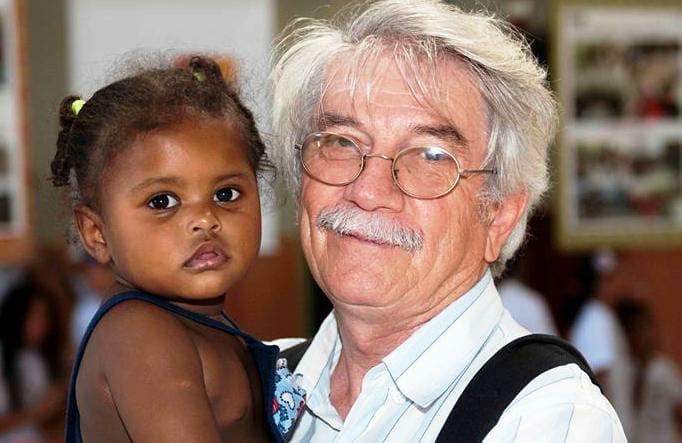
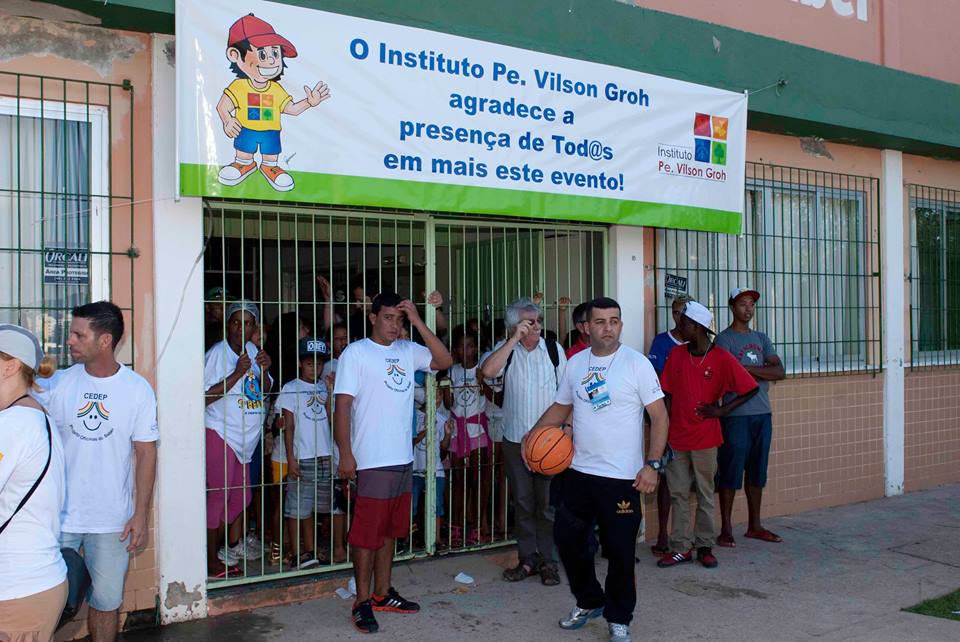 With a network of organisations and a generous and concrete presence, “Fr Vilson” promotes the life and dignity of the most excluded. We asked him the significance of the Eucharist, as the source of unity, for his work in the peripheries. We offer a few excerpts of what he said. “The other day I was with a person who was living on the street, a journalist and a poet. During the course of our conversation he asked me: “What are you doing here on the streets with us?” I answered him that it had seemed a great contradiction to me that I celebrated the Mass in the cathedral every Sunday, and when I stepped out of the church building I would meet seventy to eighty people who didn’t have a roof over their heads, and they hadn’t eaten. How could I go home?
 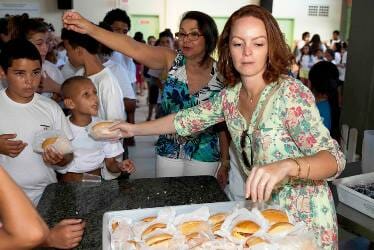 My house stands on the hills of Florianópolis where the number of very poor houses is growing. My house is simple and doesn’t have a key. People come throughout the day to have a cup of coffee or eat something. We’re always adding another plate at table. That door that is always opened means to say that I am open to the neighbourhood community. There is always a place for anyone who knocks at the door. And this is a way to remember that the Eucharist “never closes,” never. He is “at our disposal” twenty four hours a day. In practical terms it means that our refrigerator has to be the refrigerator of the people; our bread, their bread; our clothes, the clothing of the poor. I have been blessed to have the tabernacle in a small chapel in my house. Going home at the end of each day means going to rest where Jesus is waiting for me in the Eucharist, and to rest my head on Him, rather than running to the t.v. or internet that can lead us to many other places. There is a sentence engraved on the paten I use for Mass. It’s the Gospel sentence from my Ordination: “I was hungry and you fed me, thirsty and you gave me to drink,” all the way to the end of the text: “Whatever you did to the least of my brothers, you did it to me.” So, every time I place the Eucharistic Bread on the paten, I see those words and they help me not to waste the day. One day a lady from the neighbourhood asked me: “Father Vilson, do you know why Jesus wanted to remain in the Eucharist? So the people wouldn’t feel the solitude and be orphans.” The Eucharist is the great human cry. “There cannot be any gap between the Table of the Eucharist on one side and the table of social justice on the other. It is with our gestures, our arms, our ways of organising that we extend the reality of Jesus in the Eucharist, and we give the world a signal of sharing and support. Guided by this conviction, with the passing of years and along with many other people, we set up a network of 340 people who receive a monthly salary; 7 organisations and one institute. 5000 boys and girls, teenagers and young people gravitate to our network of relationships each day. In order to help build bridges we decided to open an unused church right in the heart of the city, and this gave rise to a large local community with intellectuals, middle class people and business owners who are involved in our activities in a variety of ways. We celebrate Mass there every Saturday and Sunday, and, in this way we believe we create a point of encounter between periphery and center.
