1 May 2015 | Focolare Worldwide
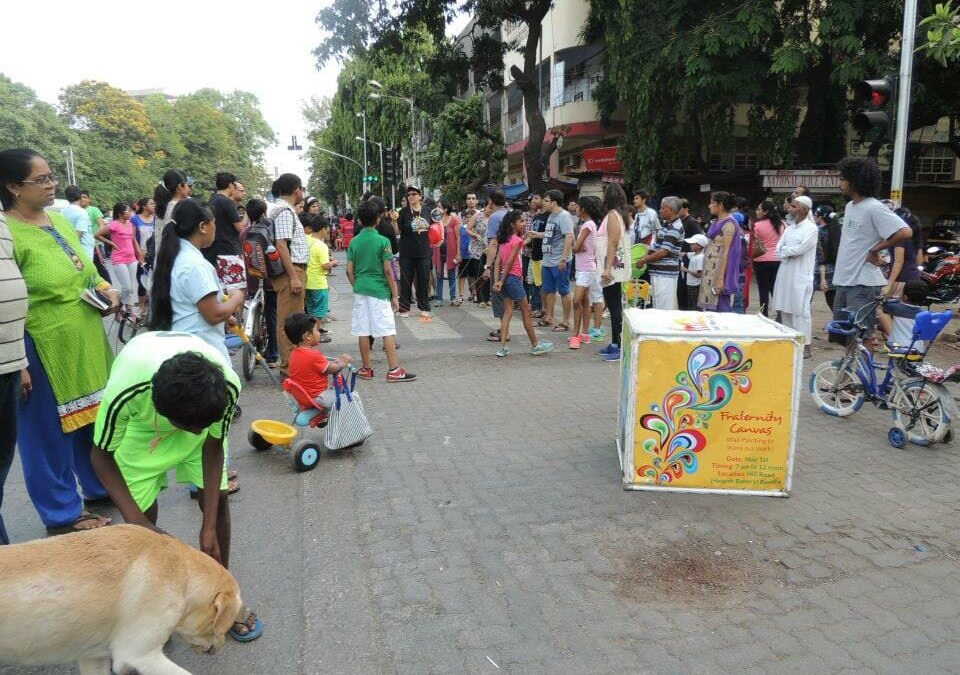
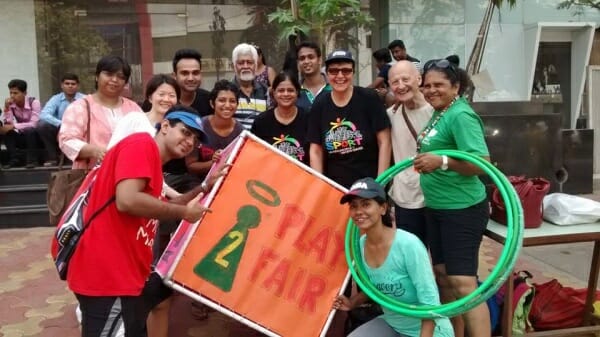 More than 120 young representatives from 25 countries: from Japan to Italy, from Korea to Colombia, from Nepal to Romania, take part in an annual event that takes place within the framework of United World Week which is celebrated around the world and gives a witness that cultural and religious differences are not an obstacle between peoples but a springboard for a more united and fraternal world. This year’s title: “Fabric, Flavour, Festival – discovering fraternity,” focuses on 360° dialogue. Fabric. Face the challenges of dialogue in order to build a more United World: discovering one’s own identity; accepting and respecting others; and having the courage to take the first step. Festival: discovering one another as brothers and sisters. Flavour. Dialogue in action: living the Goldenn Rule, “Do to others what you would have them do to you;” opening the way to reciprocity and sharing. Multiculturalism was the leitmotif of the days in Mumbai. Representatives from the Shanti Ashram (Hindu Movement) and the Rissho Kosei-Kai (Buddhist Movement) joined with young Christians to share moments of brotherhood and service towards Indian young people and civil community.
  Lawrence from Religions for Peace says that he is here because “we need to show positive things to the world. We need to show the world that fraternity can change history.” Crisfan, a young Hindu, says that he met the Young People for a United World a few years ago: “ever since then, I have wanted to build bridges of fraternity. Religion is never an obstacle in India. Each person follows a path, but we’re all brothers and sisters.” He married a few months ago and also involved his wife in the adventure. The days were busy and intense, sharing in tragic events like that of Nepal where the earthquake produced thousands of victims. Sana and Roshan are also here in Mubmai; they have not been able to contact their families, but seem serene: “we’re sure that God is taking care of them.” Meanwhile, everybody prays. At day’s end we receive some nice news: their family are fine. They fled, but God’s love didn’t force them to wait. Maria Chiara, an Italian, tells us how she had long been hoping for such an experience. “When Christian invited me, I felt like I couldn’t let this opportunity slip by. I’m here to know other young people and to learn to live the other person’s culture as my own.” Christian is Romanian and studies at Sophia University Institute in Italy. After visiting the Holy Land (2013) and Kenya (2014), this year I decided to close my books “and find out how fraternity is lived in a different culture than my own.” Concrete brotherhood is already a living experience at this international site in India, as all sorts of activities in favour of peace are being held in many other parts of the world.
![PRESET Eco-sustainability Project in Argentina]()
28 Apr 2015 | Focolare Worldwide
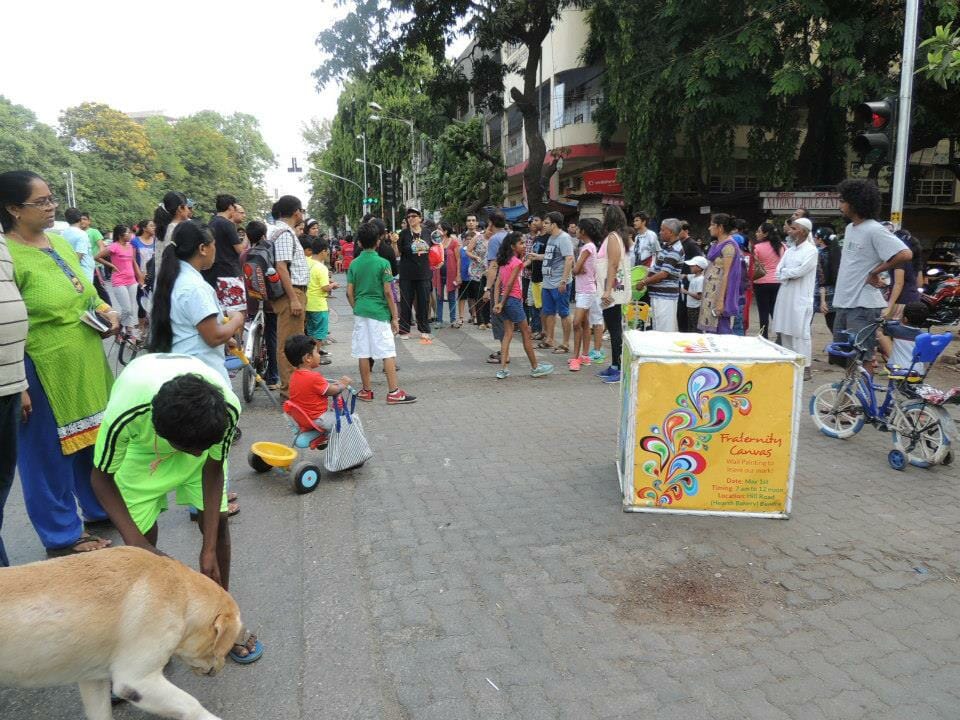
 Forty-two professionals of eight different countries in Europe and Latin America accepted the invitation. The event which was held in the Focolare’s Lia town at the outskirts of Buenos Aires, not only hosted the seminar (9-21 March) financed by the European Union, but was also subjected to the study for the creation of a sustainable management and development model of a sustainable place to live in. To coincide with these times when we feel the urgency of questioning ourselves on the environment and promoting the quest for new technologies – with the planet’s survival at stake – the initiative was joined by the group, “Dialogue in Architecture,” a network of scholars and experts of the sector, inspired by the spirituality of the Focolare, given the actuality of the theme.
By immersing themselves in the discovery of the territory and its structures, the youth started by studying the PRESET (“Participation, Resilience and Employability through Sustainability, Entrepreneurship and Training”), a study project promoted by the association Starkmacher – on the sustainability of the towns of the Focolare – and other partners such as the Fazenda da Esperança (Brazil), Fundación Unisol (Bolivia), New Humanity ((an NGO with Special Consultative Status within the Economic & Social Council of the United Nations) and Economy for tomorrow (Slovenia), and to work specifically on an integral eco-sustainable proposal for the town of Lia.
The youth participated in five thematic workshops guided by the value of fraternity as a lifestyle, and reached an integral eco-sustainable proposal (Ecocity Mariapolis) in which they involved all the inhabitants of the town, and also the youth of the district who attended for an afternoon to recount and speak of the environment.
 The EcoCity Mariapolis that will implement the proposal while respecting the history of the town and carrying out concrete dialogues with its inhabitants, created during the seminar, a biogas system for one of the houses of the town, and explained the procedure to make compost, a study for the installation of a photovoltaic system, for the insulation of the constructions in order to save energy and for the replacement of bulbs with Led lights and many more. This seemed to be a step by step growth in the education on the environment. A set of didactic handouts will be prepared for the inhabitants and the visitors of the Mariapolis, to be diffused also in schools through the Web.
Also art was utilised for the efficacy of the proposal through the creation of a line of products (hair, hats, etc.) decorated with ethnic motifs and produced with ecologic material, and with a theatre performance connected to the theme.
A pleasant coincidence in those days was that the Dean of Sophia University Institute of Loppiano, Prof. Piero Coda, happened to be visiting the town and said: «I think this is not just a coincidence. Perhaps it is God’s design that is leading to something new, and creating a network of communion, work for solidarity and justice.»
Francesco from Udine gave a significant testimonial: «I work as an architect and am doing a Master’s in almost zero energy buildings. What I found most interesting in this workshop is the fact that people with diverse potentials and specializations are working together, and not only architects like us. I think this is the most enriching part for everyone: starting off with different potentials to reach a common objective which is that of sustainability, not only from the environmental but also from the economic and social points of view.»
Likewise Riccardo, an Italian architect, is convinced of the importance of working together: «I firmly believe that what I can do is but a small part, while together we could reach the objectives that will allow the entire society to exploit the resources well, and create satisfactory wellbeing for everyone including professionals. »
27 Apr 2015 | Focolare Worldwide
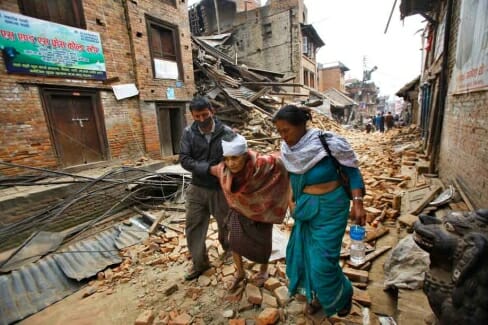
Some of our Nepalese friends wrote:«The situation is really bad. I myself am alive, but we have lived without a roof above our heads for days and nights. Many have died and others are dying, and many are wounded. Besides the rising number of victims according to the UNICEF estimates, 940 thousand children are at risk, and urgently need healthcare. The Focolare Movement joins the prayers for the people struck, their families, in their requests for consolation in this immense tragedy, and is making the move to gather funds. From Mumbai, where the youth of the Focolare have gathered to prepare for the United World Week – and among which there are three from Nepal – the group has launched an appeal to the Youth for a United World worldwide, to start up a support action for all the people struck by the calamity: «The United World Week – they wrote – may be an immediate occasion to concretely express our support.» Pope Francis, after praying during the Angelus for the victims of the earthquake, urging all to “give their fraternal support,” expressed in a message sent to the Apostolic Nunzio in Nepal, his own personal prayer and support for the Nepalese population. Caritas Nepal, in the meantime, has started up an action plan to face the emergency, but it needs a lot of backup. Tents and food are being distributed: the main problem at the moment is to offer a refuge, to protect the people from the cold and the rain.
Funds can be deposited directly in the Youth for a United World special bank account: SAVINGS ACCOUNT OF THE CENTRAL SECRETARIAT OF THE YOUTH FOR A UNITED WORLD (GMU) Description: EMERGENCY NEPAL ACCOUNT NAME: PIA ASSOCIAZIONE MASCHILE OPERA DI MARIA Via Frascati 306, Rocca di Papa, 00040 Rome, Italy BANK NAME: BANCA PROSSIMA Piazza Paolo Ferrari 10 20121 Milan Italy IBAN CODE FOR NATIONAL AND INTERNATIONAL TRANSFERS: IBAN IT62 W033 5901 6001 0000 0113 348 BIC BCITITMX
27 Apr 2015 | Focolare Worldwide
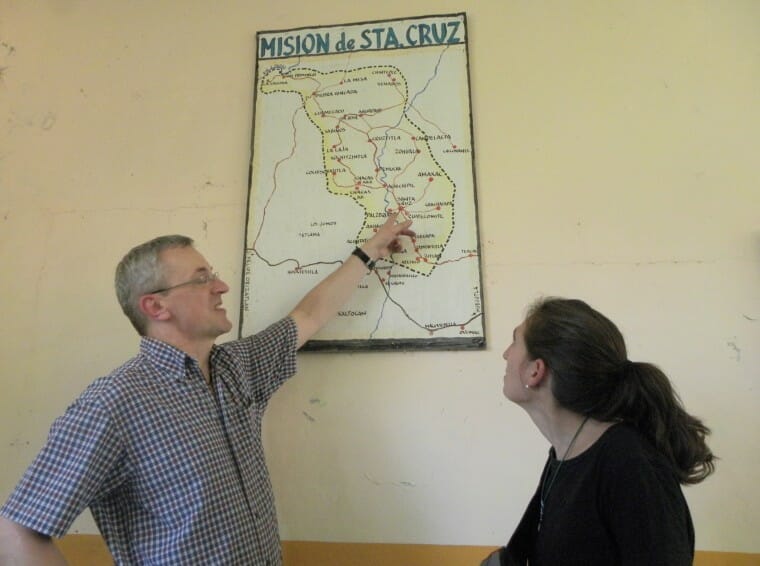
First time visitors to Santa Cruz de la Sierra are met by an unexpected scene: the exuberant and inviting natural environment, an unfamiliar language, the quite diverse local culture, the poverty, simplicity and endless generosity of the people.
One group of young people and families from the Focolare decided to spend Holy Week in Santa Cruz with their friends from the Nahua. Due to the great pastoral need, the local Church gave permission to certain prepared laypeople to act as extraordinary ministers at the discretion of the pastors. They share what happened:
“The sun has just appeared over the horizon and the bus clambers along the mountain roads of east Sierra Madre, carrying 43 young people and families from the Focolare. The journey promises to be long and exciting; the tiredness goes unnoticed because of the great joy. At the road’s end there are brothers and sisters from 33 families of the Nahuas community ready to celebrate Holy Week with us.
Eight hours away from the City of Mexico we are welcomed into Santa Cruz by a generous and humble folk living in the heart of the huasteca hidalgeuense (unfading flower): a humid region with high temperatures, covered with cedar, ebony and mahogany wood trees.
At one of the mission parishes we split up into seven groups and go out to be with the people, to help with the liturgical services in seven communities where the seed of the spirituality of the Focolare has been growing for several years.
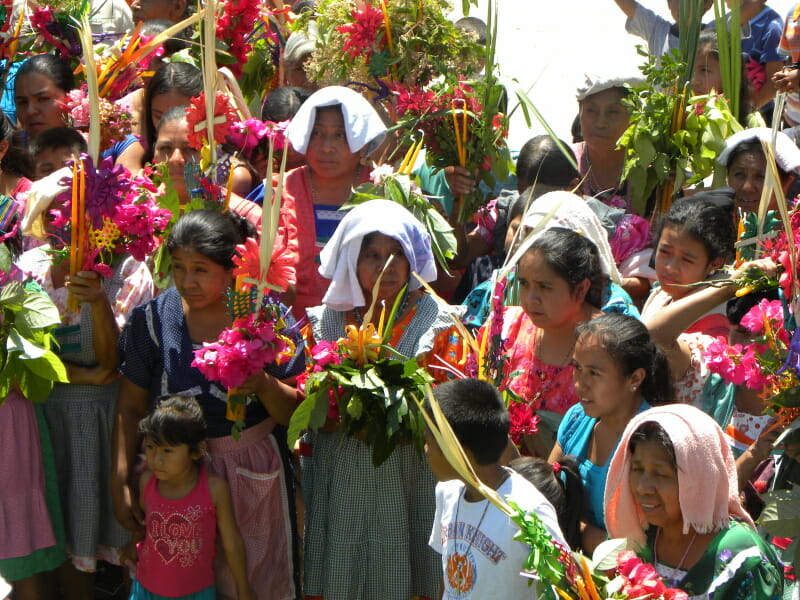 The encounter is overwhelming as the life, faith and bread begin to be shared. Several testimonies of Gospel life are shared, as well as small gift items. After the celebration of the washing of the feet, one of the young people exclaims: “It’s so fantastic to feel like a Christian!” One teenager said she had attended many missions, but “with Jesus among us it’s different; indeed, He’s the one who draws people and that’s why we wanted to attend the meetings and the liturgical celebrations.”
Amongst the many personal encounters, one particularly touched us: We visit an alone and elderly man, who has been immobile for a long time. The state of his hygiene is extremely poor. We bathe him and clean his tiny room; help him to prepare for receiving Jesus in the Eucharist, and give him Holy Communion. The next day, he dies.
Following a Holy Week of intense living and after having experienced mutual giving and receiving in simplicity and generosity, the moment arrives when we must return to Mexico City. During the return trip, many of us remember the words spoken by Chiara Lubich in the Basilica of Guadalupe in 1997: “Inculturation requires an exchange of gifts.”
Seeing the enthusiasm of the young misioneros and the members of the communities we visited, there is new hope that the Misión in Santa Cruz will not remain an isolated event, but the sign of a new beginning of a process of increased giving by the Focolare in Mexico.”
![PRESET Eco-sustainability Project in Argentina]()
24 Apr 2015 | Focolare Worldwide

Photo credit: WFP/Abeer Etefa
23 Apr 2015 | Focolare Worldwide
Video of High-Level Thematic Debate
What are the religions in today’s world? Many see them as obstacles to peace, the residue of ages past that today are the cause of violent extremism. What would the world really be more peaceful without the religions? The High-Level Thematic Debate on Promoting Tolerance and Reconciliation suddenly became animated. The second day of the UN meeting offered some directives. During the opening address, Secretary General Ban Ki-moon proposed an advisory committee formed by the leaders of the world’s religions, to help the United Nations find solutions to the current conflicts, often between the followers of different religions. The plenary session that followed included testimonies from 15 religious leaders. All present agreed that religions should help to build peace, moving beyond mere tolerance to mutual acceptance, with the awareness that there are already people around the world who are already living like this in their daily lives. In her talk, Maria Voce recalled the long experience lived by the Focolare Movement: “The encounter between religions and cultures is an ongoing and fruitful experience that is not limited to tolerance, mere recognition of differences, and it goes beyond reconciliation, although that is fundamental, and it creates what could be called a new broader and shared common identity.” And this takes place in contexts that have been struck by serious crises, such as in Algeria, Syria, Iraq, Lebanon, the Democratic Republic of the Congo, Nigeria and the Philippines. 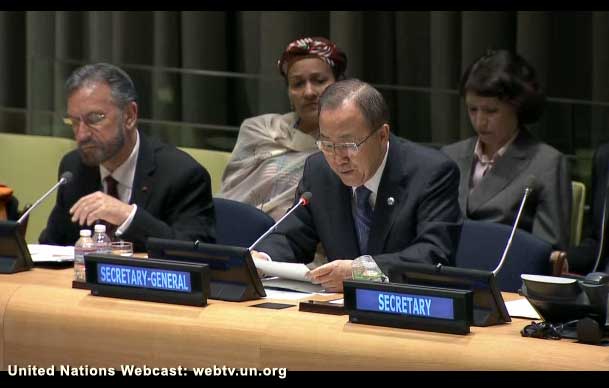 In response to the challenges and to the violence, she proposed an “extremism in dialogue,” that is, a dialogue requiring maximum engagement “that is risky, demanding, challenging, that aims at severing the roots of misunderstanding, fear and resentment.” Then she invited all to aim for a “a universal civilization that leads all peoples to consider themselves part of “civilization of alliance; a universal civilization which enables peoples to see themselves as part of a great happening, which is both varied and fascinating, that is humankind’s journey towards unity. She invited the UN to rethink its own calling, to reformulate its mission in order to be “an institution which truly works towards unity among nations, while respecting their strong identities.” According to Maria Voce, to say that religions are the cause of the tensions is to have a too restricted vision of the situation. What we are witnessing in many areas of the world, from the Middle East to Africa, has very little to do with religion, but has much to do with the structures marked by the culture war. From any point of view, in these cases we should not speak so much about wars of religion but more concretely, realistically and prosaically, about the religion of war. Everyone was in agreement: religions lead to peace, if not, they are instrumentalised for other ends. And so the vocation of religions is clearly stated: The Golden Rule, the foundational inspiration of all religions, which unites them, the idea of one universal human family. In the roundtable at the afternoon plenary, which was moderated by BBC’s, Laura Trevelyan, Rabbi David Rosen asked why so many young people feel drawn to extremism: “Perhaps because they are searching for their own identity, or for some meaning in life.” “You normally do not mention God at the United Nations,” Rabbi Arthur Schneier dared to remark: “How are we to deal with this problem – that the UN has to be neutral – when 5 of the 7 billion people on this earth belong to a religion?” For Bhai Sahib Mohinder Singh, Sikh from Birmingham: “God is omnipresent, in each one of us, therefore you cannot say that God is not here.” Maria Voce: “You speak of God when you speak of justice, sharing all the goods of the earth, sustainable development; you speak of God when you think of what we are preparing for the future generations. This is speaking of God. It is not necessary to speak of him in the abstract.” How can we preserve the integrity of interreligious dialogue? Are the religious leaders here renouncing something by coming here to the UN to talk about resolving conflicts? “I’m not renouncing anything,” affirmed Maria Voce. “I’ve come out of love, thinking about bringing my contribution of love to humanity. I’ve felt enriched by this possibility.” She concluded with a glance towards the new generations: “Returning home, what I will do will be to support the activities of the young and the very young, because I believe in their prophetic power.” Then she gave the floor to Ermanno Perotti, a young Italian had accompanied her on her visit to the United States. The twenty five year-old, with a Master’s Degree in Development Economics, used the occasion to present the l’Atlas of Universal Fraternity, a dossier of projects that promote universal fraternity in all corners of the world. Maria Voce added: “With the hope that one day even these ‘fragments of fraternity’ can be presented to the United Nations,” and that the United Nations will gather them. With this vision it becomes clear that religions have a great opportunity, but also a great task: to build peace and respond to the challenges with “extreme dialogue” rather than closing in on their own group. Susanne Janssen, New York
Video of Round Table Debate: http://webtv.un.org/high-level-thematic-debate Press Release Press Area
