22 Apr 2015 | Focolare Worldwide
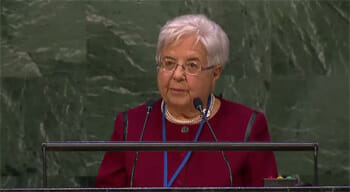
To risk your own life so as to relieve the suffering of the poor. This was Maria Voce’s invitation as she spoke of the last terrible phase of the Second World War, when in 1943 “a group of young women got together in the small city of Trent in northern Italy. While their city was being bombed, those young people, who were guided by a young teacher named Chiara Lubich, and urged on by a new understanding of the radical nature of Gospel love, decided to risk their lives to relieve the suffering of the poor.”
A choice many people make today too, helping to regenerate the fabric of society: Maria Voce referred to the refugee camps in Lebanon, Syria, Jordan and Iraq; the slums surrounding some huge cities and the united strength of those who “introduce into the destructive cycle of conflict a commitment to regenerate the fabric of society, by doing – according to the vocabulary of this organization would say – peace-building action”. She affirmed: “Those young women decided to break the vicious circle of violence by responding with attitudes and actions which in the atmosphere of conflict might have seemed unrealistic or even irrelevant. However, they were not and they are not!”
“Today too we are experiencing very serious political, institutional, economic and social breakdown, which requires equally deep-seated responses, able to change the prevailing paradigm. It seems that conflict and violence prevail in many parts of the world, affecting innocent people, guilty only of being in disputed territory, or belonging to a particular ethnicity or adhering to a specific religion.”
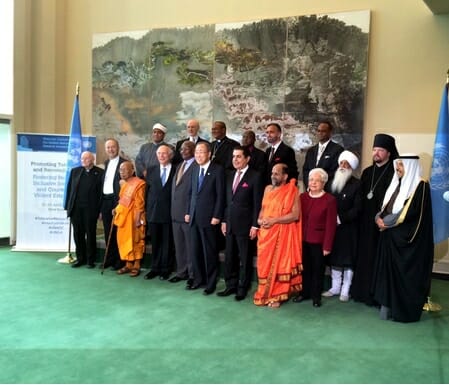 The encounter between cultures forms a new identity: “In the Focolare Movement, which I have the honour to represent – Maria Voce said – the encounter between cultures and religions (Christianity, Islam, Judaism, Buddhism, Hinduism and Traditional Religions) is an ongoing and fruitful experience not confined to tolerance or the mere recognition of diversity. It goes beyond reconciliation, essential as that is, to create, so to speak, a new identity, one that is broader, more general and shared. It is an effective dialogue which brings together people of very different beliefs, including non-religious beliefs. It spurs us to see what the real needs are and to respond together to the most difficult challenges in society, culture, economics and politics, as our commitment to a more united and socially inclusive world. This is happening in places which have been or are at present characterized by very serious crises, such as Algeria, Syria, Iraq, Lebanon, the Democratic Republic of Congo, Nigeria and the Philippines.”
The Focolare President dispensed with half measures. “If violent extremism exists – she stated – (…) our response must be similarly radical, but one that is structurally different, by which I mean “extremism in dialogue”! A dialogue which requires the highest level of engagement, which is risky, demanding, challenging and which aims to sever the roots of incomprehension, fear and bitterness.”
The civilisation of alliance: referring to the United Nations “Alliance of Civilizations”, one of the promotors of this event, Maria Voce asked “whether, nowadays, we could get closer to the roots of this new outlook and focus not only on an alliance of civilizations but on what might be called the “civilization of alliance”; a universal civilization which enables peoples to see themselves as part of a great happening, which is both varied and fascinating, that is humankind’s journey towards unity. A civilization which makes dialogue the pathway to recognizing each other as brothers and sisters, as free and equal.”
Among the many organisations represented at the debate, she mentioned New Humanity, the NGO which represents the Focolare Movement at the UN; and regarding the United Nations Organization itself she posed the question:
“Shouldn’t the United Nations Organization perhaps reconsider its own vocation, and reformulate its own fundamental mission? What does being a “United Nations” organization mean today, if not an institution which truly works towards unity among nations, while respecting their strong identities? It is certainly essential to actively maintain international security but, although security is vital, it is not necessarily the same thing as peace.
Conflicts within nations and international conflicts; the deep divisions we are aware of at world level, together with the great local and global injustices, in fact require a true conversion in the actions and choices made in the field of global governance, to put into practice the motto formulated by Chiara Lubich, and launched in this very place in 1997, “love your neighbor’s country as your own” so as to build up universal fraternity.
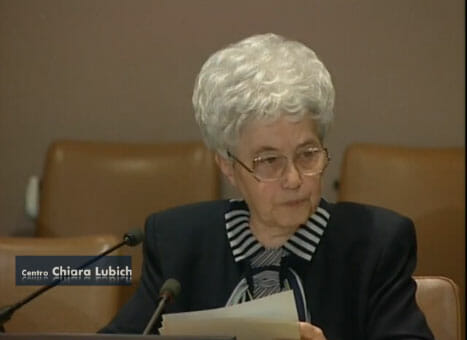
Chiara Lubich: “Toward a Unity of Nations and a Unity of Peoples” – United Nations Headquarters (New York), 28 May 1997
War is irreligion: “Lastly, we cannot give ground to those who attempt to describe current conflicts as “wars of religion” – Maria Voce went on. “War is by definition irreligion. Militarism, economic dominance and intolerance at all levels are causes of conflict, together with many other social and cultural factors among which religion is often only an unfortunate pretext. What we are witnessing in many areas of the world, from the Middle East to Africa, including the tragic deaths of hundreds of people fleeing wars who are shipwrecked in the Mediterranean, has very little to do with religion. From any point of view, in these cases we should not speak so much about wars of religion but more concretely, realistically and prosaically, about the religion of war.
What can be done? Quoting Chiara Lubich, Maria Voce invited the audience to have the courage to “invent peace”. “There are many signs that a new awareness may finally emerge, out of this serious international situation, of the need to work together for the common good, (…) and with the courage to ‘invent peace’. The time for ‘holy wars’ is over. War is never holy, it never has been. God does not want it. Only peace is truly holy because God himself is peace.”
She ended with reference to the Golden Rule which reflects the foundational inspiration of religions and unites them, so that they should “not [be] a tool used by other powers, even for the noblest aims; or precepts studied so as to resolve conflicts or crises, but rather a spiritual process which can be lived and becomes a community able to share and give meaning to the joys and sufferings of people today, channelling everything towards the realization of one universal human family.”
Read the full text
22 Apr 2015 | Focolare Worldwide
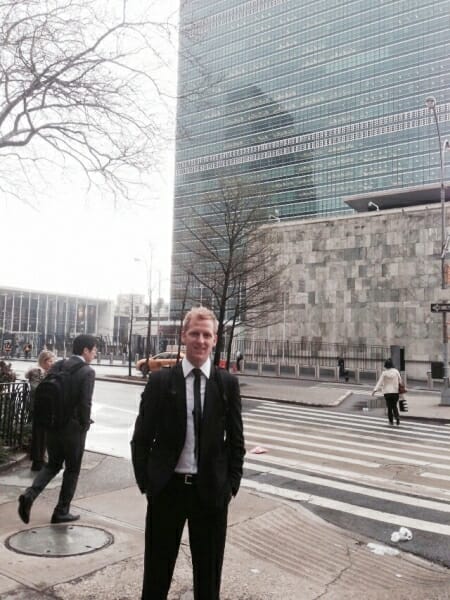
The UN headquarters with the thousands of people who work there, heads of state and other VIPs, going there would be a dream for many people. Ermanno Perotti, a 25-year-old student of economics and development is there now, but not as one of the many visitors who wander along the endless corridors with their guide. He was asked to accompany Maria Voce, President of the Focolare Movement who had been invited, as one of the religious leaders to speak during the High Level Debate on “Promoting Tolerance and Reconciliation: Fostering peaceful, Inclusive Societies and Countering Violent Extremism.”
The impression of Perotti is shared by many: the representative of each nation gives his or her contribution, many beautiful words and positive initiatives – but they seem almost isolated and each one appears to see this meeting as a platform to promote their own ideas. But what I find a bit hard to digest is that they don’t really listen to one another. But what does attract me is to see their efforts to fill this emptiness with true listening and dialogue. With this vision that he learnt from the life of the young people of the Focolare, he understood the attraction of taking on a commitment in politics so as to bring about truer relationships.
However, on the subject of how to prevent violence and fanaticism, almost all the speakers were in agreement, that there is no other way but dialogue among cultures. “I would love to run a school on dialogue right here at the UN” says Perotti. In fact 90% of the speakers emphasised the need for education and many spoke of the need to give women a voice and to fight against poverty.
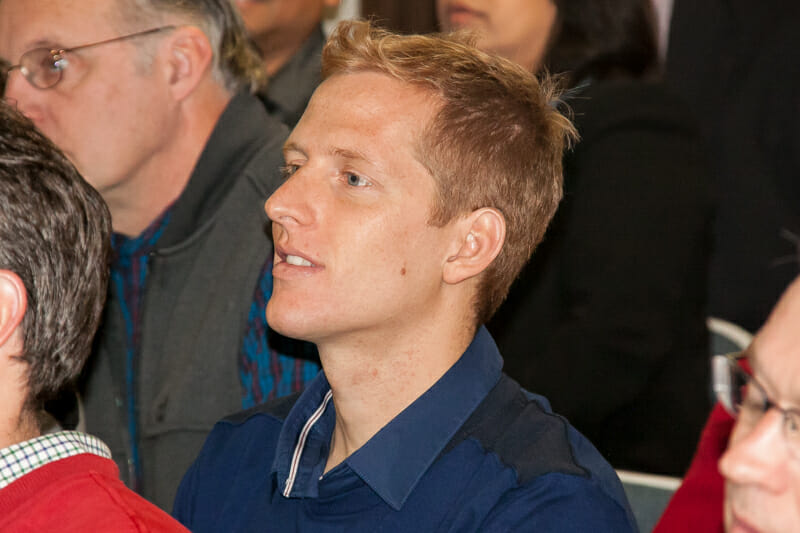
Ermanno Perotti
Many spoke of the hope they have in young people and we have to start there. Perotti wasn’t completely happy: “It’s always adults who speak about young people, where are the young people who speak about the young people?” He thinks his generation is already prepared for a multicultural future: “I grew up with this idea. In my class there are people of 10 different nationalities and 4 religions. We can show the world how we live in a spontaneous way in our daily lives.”
Today is the high point for him, to be part of a panel at the UN. Ermanno Perotti is not worried at all: “Speaking with Maria Voce we were saying that we wanted to live these days first of all as an experience of God. Today too at the UN will be an experience of God. As some of the speakers said today. In the end everything is summed up in the Golden Rule which means love of neighbor. So going there with the President, it’s simple because you go to love, to be one body with all the young people in the world”.
Susanne Janssen, New York
Live streaming at http://webtv.un.org/live/

21 Apr 2015 | Focolare Worldwide
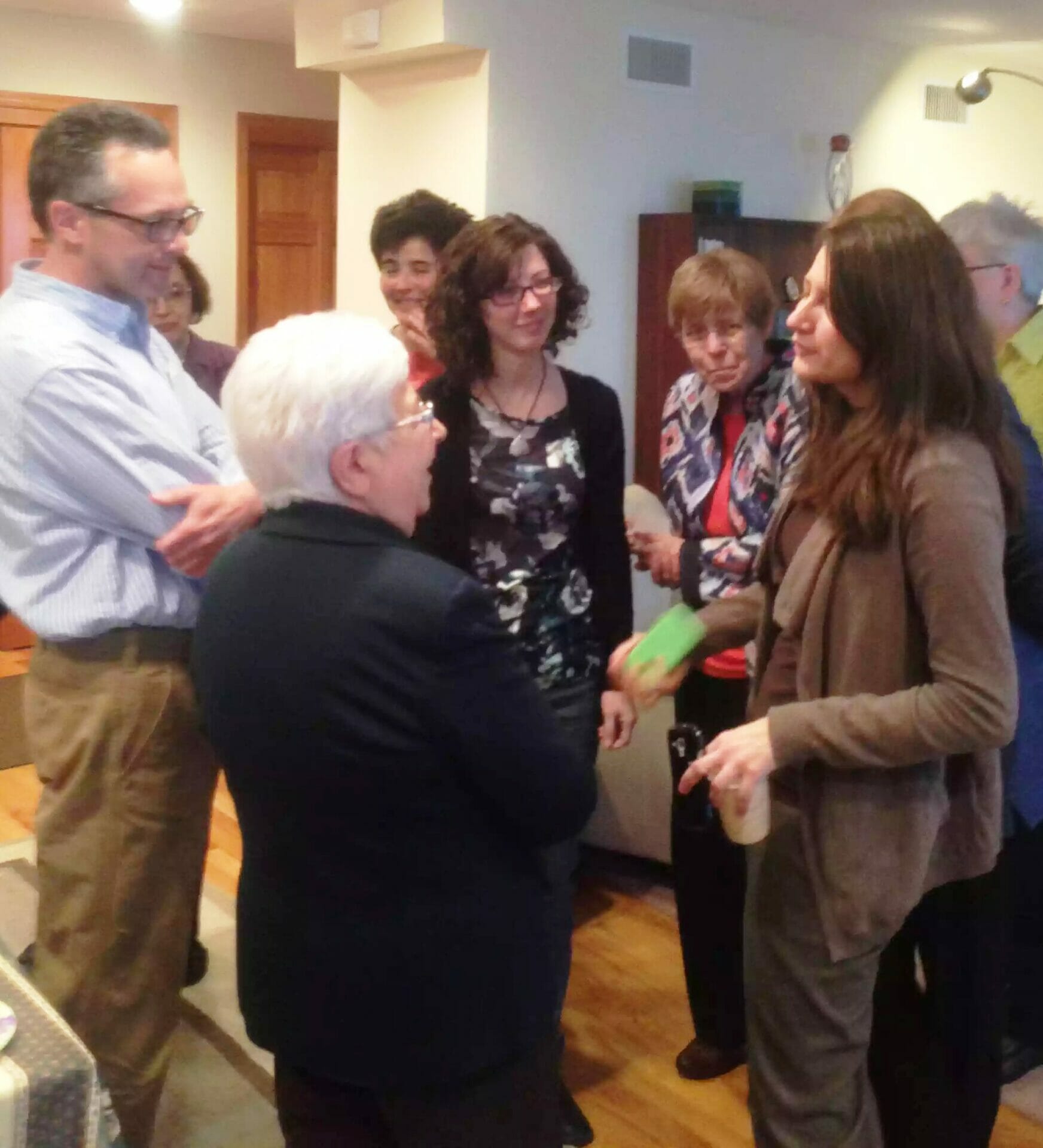 Today marks the beginning of the debate of the United Nations: “Promoting Tolerance and Reconciliation: Fostering peaceful, Inclusive Societies and Countering Violent Extremism”. Among the religious leaders invited to give their contribution is Maria Voce, President of the Focolare Movement. We asked her three questions before she entered the headquarters of the UN.
How do you feel before participating in this high level debate with representatives of 193 nations?
«I am quite at peace. What is often missing in these organizations is precisely the witness of what is already happening to bring about peace. My impression is that people often feel isolated and they need to be aware that someone else is out there with them, working for the same aims as they are. With such a great ideal as the one Chiara Lubich has given us, we do not work only for reconciliation or only for social justice but these are steps on the way towards unity».
If we look at the world today some might think that religions are the bearers more of division than of peace…
«Certainly religions are not supporters of war, none of them. The word religion means bond, it’s a bond between people, how can a religion make war? War is born in the hearts of people and people, whatever religion they belong to can be good or wicked. Instead religion is often exploited under the pretext of justifying a motivation that is anything but religious and is in fact inhuman, the desire for power, overthrowing the weak, selling one’s own merchandise including arms. The root of war certainly doesn’t lie in religion but in other motivations which are basically always egoistic».
When we look at today’s conflicts, for example in the Middle East or in Nigeria, are you still optimistic that peace is possible?
«I cannot help being an optimist because Jesus is peace. And since we follow Jesus we have to believe that peace is possible. It is true that Jesus said ‘I have come to bring the sword’ which means we have to take a stand too. I think that religions can help to reawaken the conscience of humanity: peace isn’t just one good among many but without peace all the other goods are useless. We can work for peace if we do it all together, both the rich and the poor, those who have power and those who do not, people who are religious as well as those who do not identify themselves with any religion. We have to commit ourselves to building these relationships of peace in the whole human family where we are all equal and therefore we should all witness to this equality».
The initiative for this high level debate at the United Nations in New York came from the President of the General Assembly, Sam Kutesa, the Secretary General Ban Ki Moon and the High Representative of the Alliance of Civilizations Nassir Abdulaziz Al-Nasser. Today’s topic is Strategies for fostering inclusive societies. Tomorrow, leaders representing various religions will be invited to give their witness to the role played by religions in building bridges of tolerance and reconciliation.
Susanne Janssen, New York
You can follow parts of the program on live streaming of the United Nations’s TV at http://webtv.un.org/live/
20 Apr 2015 | Focolare Worldwide
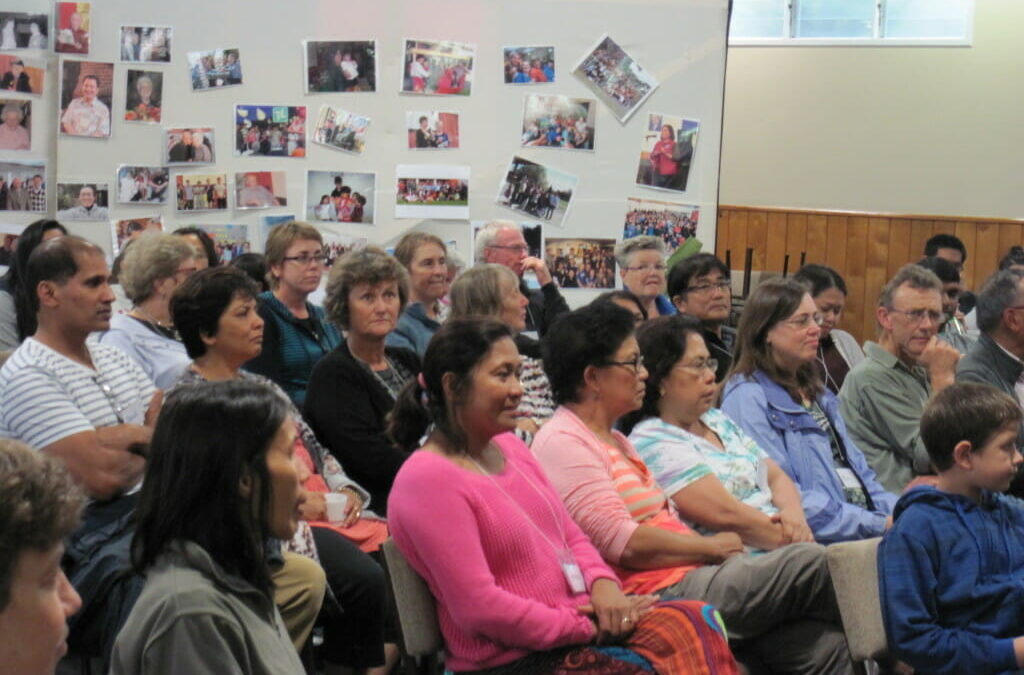
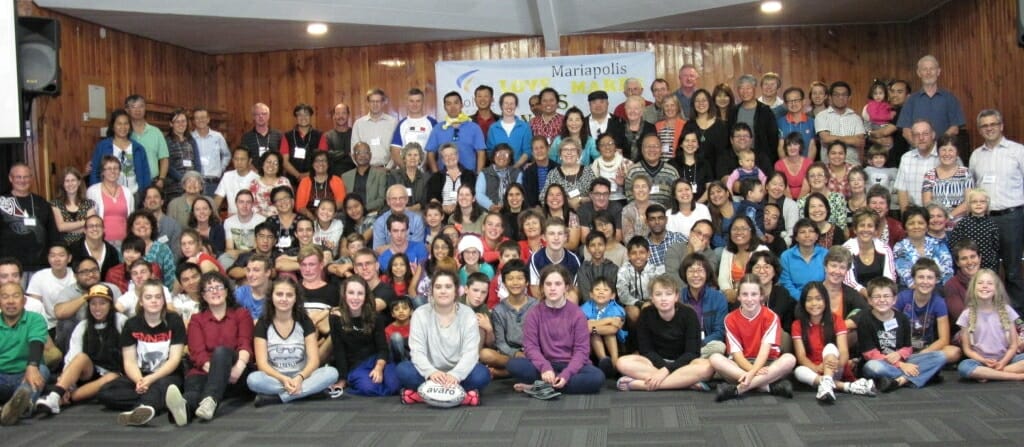 In the district of Rotorua (New Zealand) the earth’s crust is only 4 km thick. Here, one can admire the magnificent spouts of geysers right in the heart of the city, steamy puddles with bubbles gushing out of the surface. The ground emits a heat that even reaches 120°C. This is where the English colonisers had tried to install Roman baths. Still today thermal activity is at the centre of the touristic prospects of Rotorua, a city immersed in the greens and surrounded by hills. On the banks of the lake with the same name, rises the Keswick Christian Camp, a summer facility. This is the where, the Focolare scheduled to meet, about 156 people from the various cities of New Zealand’s two main islands. The objective was to spend three days together, away from the daily routing, to go deeper into the spirituality of unity.
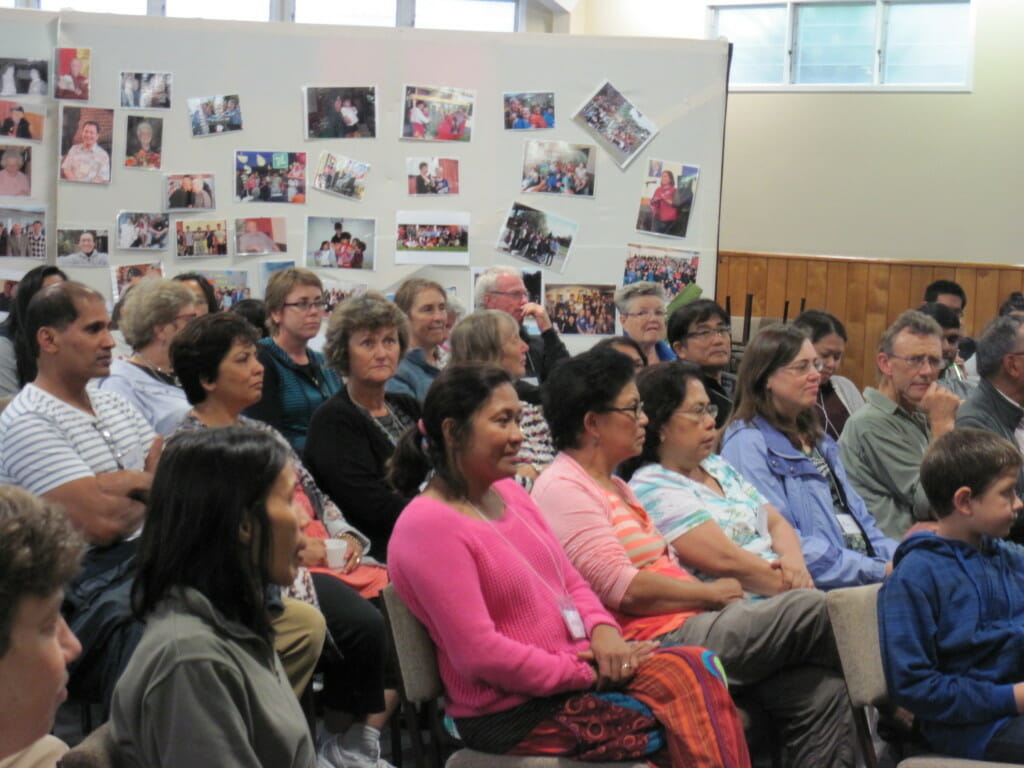
 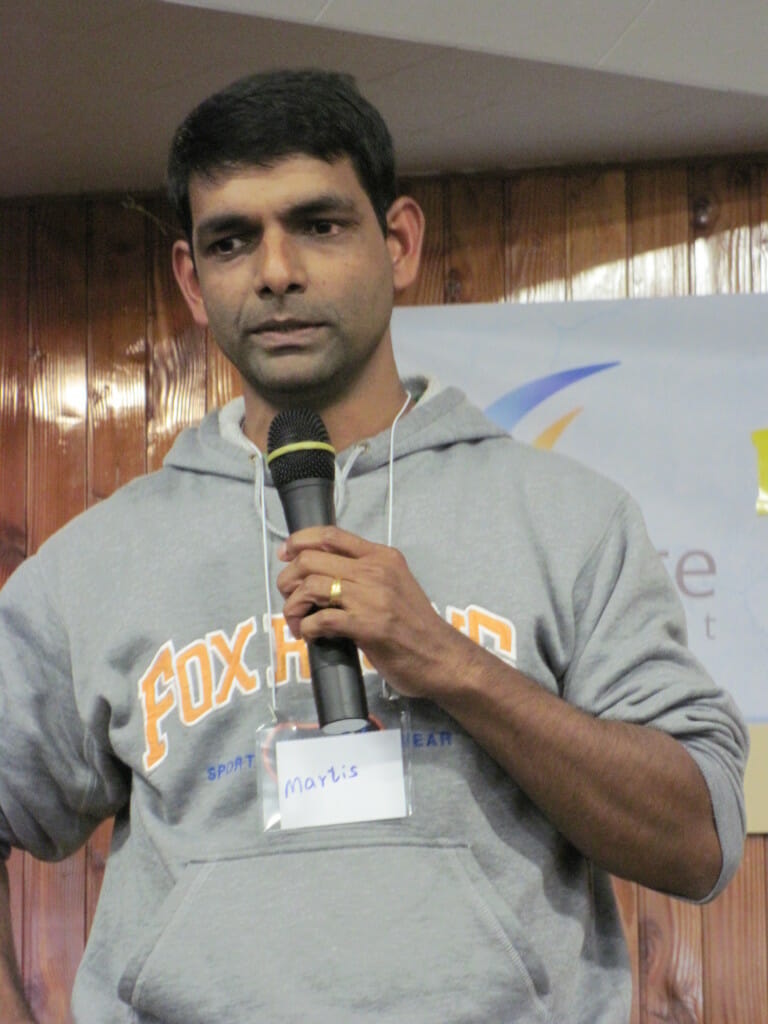 Maori, Filipinos, Chinese, Koreans, Dutch, Anglo-Saxons, Italians, Maltese, Singaporeans, Taiwanese, French, Tokelauans, Indians, Pakistanis…: an overwhelming variety of ethnic groups in a unique model of humanity. Despite such diversity, there was a family atmosphere from the start. Besides moments of spirituality and recreational activities, the programme dedicated a lot of time to getting to know one another and exchanging of experiences. The Pitcaithly family from Chistchurch, the country’s second city recounted a very moving experience of when the city was devastated by two big earthquakes. A tragedy that united the population in a sole slogan of solidarity “Kia kaha, stay strong Christchurch!” that also stood for the Focolare’s effort to gather funds offered by people from various parts of the world. The group from Gisborne, the city that has the privilege of being the first on this earth to see the sun rise, presented the “Fish & Chips Club” project. One its aims was to gather funds for the educational activities of young people, which has been fostered for many years now by people from the various Christian Church, together with others of non-religious beliefs. Together they were able to do something useful for others. Despite the multi-features of the youth and adults, they meet once a month to reflect on the Gospel and share experiences on how they try to put it into practice. A really significant way of growing as a persons and draw strength to bring ahead the various handicraft and sports activities of a club where everyone can be oneself and where people try not to stress the differences but the values all can share
  . Even if New Zealand seems to be a wealth land, an Indian-Pakistani family recounted their difficulties in integrating with society. Martis, father of two kids, was working in a home for the aged and his wife Antoneta in a small butchering company. All of a sudden they both lost their jobs. The quest for a new one went on without any results, so much so that they had decided to return to their homeland. Just ten days before the expiry of their visa, from a nearby town someone managed to arrange for a job interview for Martins who thus could renew his stay permit. It was an immense joy for this family that had given a strong testimonial of God’s love which manifests itself also through the community. Theresa, on summarising the wish of the youth present said: «What we experienced these days has given us a big boost to return to our respective cities and start all over again.» Anne, an elderly Maori lady, held in high esteem by her tribe, concluded: «Aroha te mea nui o te ao Katoa»; which in her language means: «Love is the biggest gift in the world.»
17 Apr 2015 | Focolare Worldwide
“In 2014 the company I was working for – Rosette recounts – assigned me to the region of Iraqi Kurdistan (KRI). To facilitate the job placement of my husband, Eric, who also had an excellent CV, we decided to settle in Dubai, in the rich United Arab Emirates where life is pleasant and comfortable. Due to all this wealth many foreigners come to Dubai in pursuit of a better life for themselves and their families, even if this entails leaving one’s own loved ones in their homelands. During one of my trips to Kurdistan, though I was two hours early for my flight, my name was removed from the list of passengers. I was nervous because this meant that I had to take a smaller plane which was scheduled to leave only at one o’clock at night. There was still a lot of time before boarding, but I went to the terminal just the same since we never can tell. Strangely however, there were a lot of people, and many were sleeping on the floor. I asked them how long we had to wait. A woman said: “It depends: we could leave immediately but also within a few days.” In fact, she had been there for two days due to a spelling mistake on her visa. And they would not allow her to leave. Just to start a conversation I asked her if she had something to eat: “Yes, I still have some crackers and a bit of water.” I invited her to have a meal with me and after a lot of insistence, she finally accepted. While we were chatting, her boss called her to check on her and to know if she had enough money to stay there. She had no money. She had sent her entire salary to her son so he could pay his university fees. After the phone call she told me her story: she was separated from her husband, and her two sons lived with their grandparents in her homeland. She had come to Dubai because her daughter was finishing high school and needed money for university. After a while I heard the announcement of my flight. I wondered how long more she would have to wait. I encouraged her take the money I was offering. And I promised I would pray for her family. Her story was just one of the many of how the immigrants live. Some families are in Dubai because of the wars in their countries (Palestinians, Syrians, Iraqis): Dubai is like a safe haven where people can live a normal life. For them, work is everything, the start and the end, since without work they would not have a visa and would not be able to stay in Dubai. Especially for those who are here alone, with the passing of time the physical distance and solitude in a foreign country often obscure their good intentions. We know of people who have extra-marital affairs, destroying in this manner the very family for which they had come here, limiting themselves to just furnishing money to their loved ones. Unfortunately most of these people accept these solutions as unavoidable facts, even if the price to pay is immense. And in the end, also we were asked to pay this same ‘price’. My frequent trips to Dubai led me to spend less and less time with Eric. So we decided to move to Kurdistan, even if this meant renouncing the good job Eric had in Dubai. Initially my company had accepted but during my talks and some violent events in Kurdistan, we were told that the company could not guarantee Eric’s safety and that he, therefore, could not move there. One of my bosses had said: ‘…with time you will get used to being separated …’. In the face of this perspective we immediately decided to resign. We were not going to be separated in any way, even if this meant giving up a well paid job and a career we had studied so much for. I must confess that it was not an easy choice at all. But in our hearts we both knew we were making the right choice. My last working day was 31 December 2014. Last January the Pope came to the Philippines, and in the meeting with families he strongly affirmed the value of the family: “We must be strong in saying “no” to any intent for ideological colonization that can destroy the family.” It seemed as if he was precisely speaking to us, and confirmed the counter current decision we had made.”
15 Apr 2015 | Focolare Worldwide
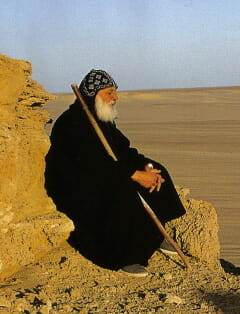
«Many have tried to explain the roots and reasons behind the start of monastic life, but the sayings and experiences of the Fathers show that the monks are “living martyrs,” and that they “abandoned the world to embrace the sole reality worth living for – God.” It is as if they wanted to respond to God’s love, which is fully described in a verse of the Coptic Mass we call the Divine Liturgy, which addresses God saying: “Of all the words said, there is nothing that can describe Your love for mankind.” St. Jerome says that their asceticism and life as hermits proclaim, “we have been struck by the darts of Divine love,” and each one repeats: “I have found what my soul longs for; I will hold on to it tightly and never leave it.” These monks, therefore, only wishing to give themselves completely to this love and to consecrate themselves to Him, had no choice but to leave the cities.
St. Basil clearly announced: “Whoever loves God leaves all and goes towards Him.” And it is said that St. Tawadros, disciple of St. Pachomius, “had only one interest in the world – to love God with all his heart by following the command of Jesus Christ.” We can sense that the root of ascetic life is to resemble Christ: completely stripping oneself of all things, and following the Father’s will which is virginity, in continual contact with God the Father through prayer. Fr. Matta El Meskin explained it thoroughly: “The warranty of our consecration (as monks) lies in our holding on to Christ personally, and following the Bible’s teachings. In this way, with Christ and the Bible, we will be able to pursue our path in continuous growth, to the very end.”
The choice of the consecrated person is to follow Jesus, the “Way, the Truth and the Life.” This means living for Christ and for him alone and following him in his lifestyle. He chose poverty, virginity and obedience. The monk, therefore, does not choose poverty, but Christ the poor one. The choice is the person of Jesus himself, and so, of what Christ lived, and the how and why he lived in this way. As for the communitarian aspect in the ascetic life of the desert monks, let us recall how – for example in the monasteries that followed after St. Pachomius – the life of communion became the extension of the primitive Church during the time of the apostles. Looking at the life of the Fathers, we can trace some communitarian characteristics: mutual love (St. Pachomius always exhorted his disciples to love one another, and that it was due to the charity among the monks that this life spread and continued up to today), and life together (the dominant feature of these first Christian communities was the “sharing of all they had” in all the aspects of the monks community life).
The teachings of the Desert Fathers remind me about the meditation of Chiara Lubich, “The great attraction of modern times,” which fully expresses what I feel: “To penetrate to the highest contemplation, while mingling with everyone.” It is a contemplation that actualises the life of the Fathers in this century, but in the midst of the world.
T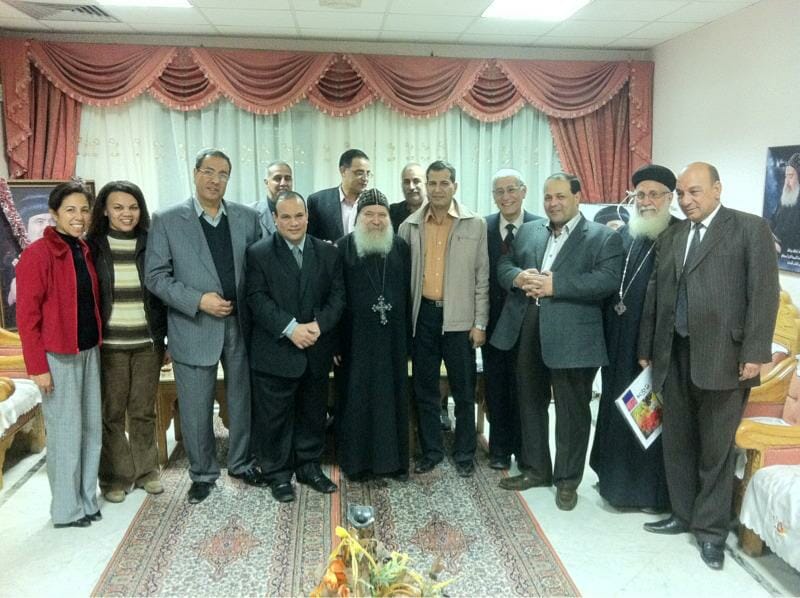 he spiritual presence of Jesus in our midst with the Catholic focolarine with whom I live in the Focolare Centre in Sohag, and the commitment to love each other, have made us like real sisters and caused us to experiment the joy of the Risen Lord, beyond all our differences. In our daily life we share everything we have: we pray, work, rejoice and share the moments of suffering of the people around us. We try to bear witness through our lives, that God is love.
Living for the fullness of unity in Christ’s Church “that all may be one,” fascinates me more and more. I rejoice about the beauty and variety of the gifts of God I find in the various Churches, and the aspiration and emotion of seeing that we are united in Christ in our midst and in the future of the Church in God’s design.
My country also testifies to this with the big and small steps taken along the ecumenical journey. For example, there is now an ecumenical commission which was formed some years ago, with people of every Christian confession existing in Sohag. We meet in a different Church every time: this year it will be in the Coptic Orthodox Church. On 5 March almost all the local heads of the churches were present. The main theme was “the victory over evil,” starting from the persecution of Christians in Libya, which traces the steps of the people of Israel on their departure from Egypt. «The flag that flies above us is that of God’s love,» affirmed the Coptic Orthodox Bishop Bakhoum, who wished that all those present «will always meet in Love.»
