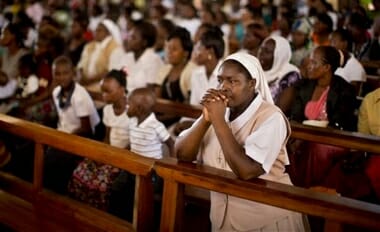
15 Apr 2015 | Focolare Worldwide, Senza categoria
”The slaughter in Garissa took place on Good Friday. 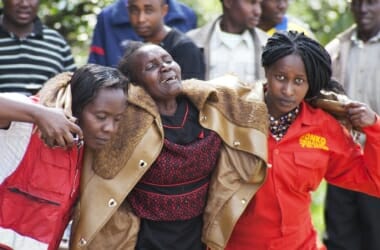 I went to the morgue where they were taking the bodies of the students for identification, not far from my home in Nairobi. I took my camera along. It was impossible not to hear the sirens. I found the parents of the murdered students fainting on one side. . . and on ther other my colleagues with news cameras. I could certainly have shot a few interviews, but I just couldn’t do it; I found myself weeping with the families. There was strong pressure from all sides, opinions from the public who were anxious for news. But I needed time to digest the painful situation in order to be able to say something that would be constructive. I felt my task was to remain quiet with this pain and resist the pressure.”
 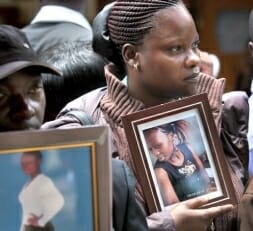 There were over 150 victims of the attack by Somali extremists at the Garissa University College in North East Kenya. The terrorists began their attack on April 3rd, targeting the Christian students. It was only a day-long front attack by government forces that prevented an even worse slaughter. But the general fear of new attacks remains so high that any incident is enough to unleash panic with very serious consequences as happened on April 12th in another university college at Uthiru, near Nairobi. An electrical transfomer caught fire on the fourth and fifth floor, causing an explosion that was similar to that of the bomb. The number of the dead reached 150 with several others seriously wounded. “From the first days of the attack, many of us from our community were in the morgue where 148 bodies of murdered students were taken, in order to console the people who had lost children,” Charles Besigye from the local Focolare community recounts. “Today, on April 11th, we and some of our young people spent the afternoon at the morgue. It was so heartbreaking! People in total suspense who, a week later have not yet found their children. Some bodies have already been identified and they are carrying them back to their villages for burial. The suffering is huge. . . the relatives a desperate sight.We stayed with them to share their suffering, and to help them carry this heavy cross. To weep with those who are still able to, because there are some who have no more tears to shed. One of us offered to help prepare the bodies of the deceased students before their relatives saw them. It was a powerful experience! There’s much solidarity on the part of several associations and the Kenyan people. They bring bread, milk, beverages, and so on. . . The sacred atmosphere that we breathe is overwhelming. There are people who offer comfort, others who pray to God.” During the Way of the Cross at the Roman Colosseum on the evening of Good Friday, the Pope used harsh words: “The thirst of Your Merciful Father,” said Pope Francis, “which in You wished to embrace, forgive and save humanity, makes us think of the thirst of our persecuted brothers and sisters, beheaded and crucified for their faith in You, right beneath our eyes, or often with our complicit silence.” It is a strong warning that urges us not to remain silent.
13 Apr 2015 | Focolare Worldwide
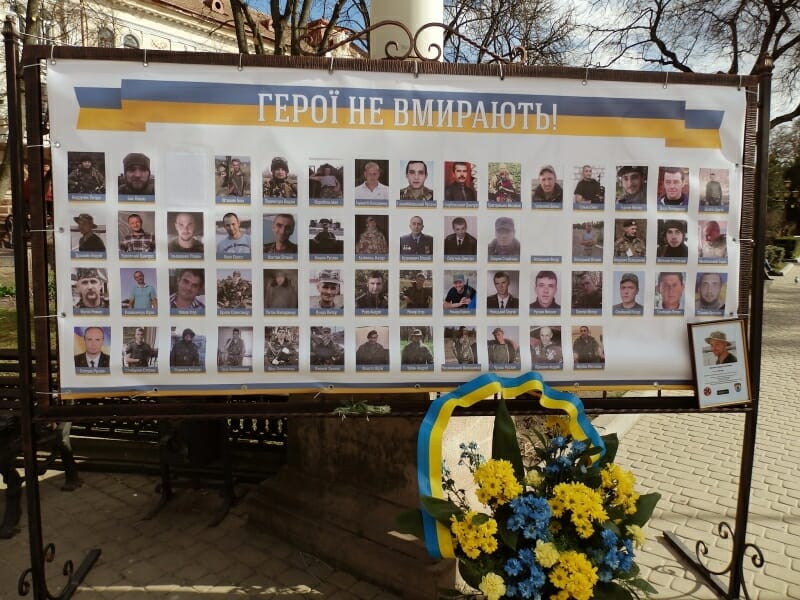
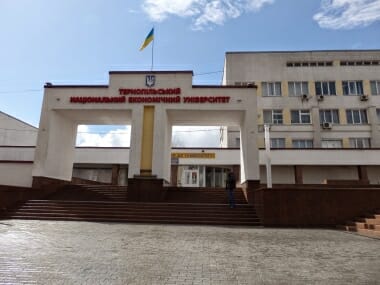 In his heartfelt plea for our many brothers and sisters in the world who “unjustly suffer the consequences of present violence and war,” the Pope also prayed for “the beloved Ukraine” that “it might find peace and hope thanks to the commitment of all interested parties.” Yes, because the war in Ukraine even now continues in its absurdity and violence. We are talking with Roberto Catalano who has been invited to hold conferences on the topic of dialogue, at the Universties of Leopoli, Ivanova Franziksva and Ternopil. It is significant that in the midst of the ‘crisis,’ the young people (and their tutor), rather than becoming entrenched in their private worlds, are out working for deeper dialogue as the only resource that directs their every effort. Roberto, what was the general feeling among the people you met?
 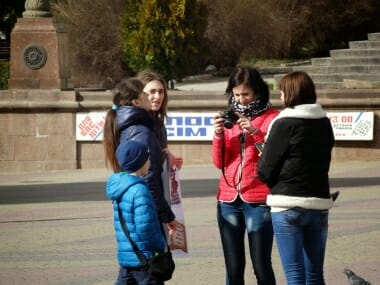 “At the end of one conference, one of my scholastic colleagues showed me three photos of some ex-students of the University who had been killed in the conflict in the south of the country. With eyes filled with tears, he told me that every evening after lessons, a group of students gathers in the cafeteria of the university to cook Ukrainian dishes, which are then frozen and delivered to soldiers. Annother woman told me about her six year-old son who draws cartoons and sends them to soldiers, as a sign of thanks for defending his country. Unfortunately, unlike last year, the news is no longer reporting on what is taking place in Ukraine. Yet, there is actually a war underway in East Ukraine.” There seems to be no way out of the situation that is generating suffering and suspense in the hearts of the people. . . “I had living proof of this deep suffering during every moment of my stay in Ukraine. Students and professors asked me what I thought about the situation in the country and, above all, what the rest of Europe was saying. I didn’t have the nerve to express judgements. Faced with their fear and suffering I preferred to listen and stay silent. I was impressed by the strength and dignity of that people, but it also frightened me that the rest of Europe and of the world have abandoned them to their fate, aggravated also by the growing nationalism, another phenomenon that could be hiding large dangers for the future.” Exactly as the Pope said when he talked about the slaughter of the students in Kenya. In the face of these atrocities, it seems like the international community turns its eyes the other way. And yet, the Ukrainian people are also our brothers and sisters, because of our common humanity and our common Christian faith that inspires them. “I visited a large church where the liturgy was being celebrated according to the Eastern Rite. The beautiful and very modern iconostasis was quite striking, but more surprising was the religiosity of the people who were so attentive and wrapt in prayer. I was struck by the long queue of people waiting for Confession. Seventy years of Marxism didn’t wipe out the faith of the people.” In your opinion, is there any hope there will be peace? “I only visited one half of Ukraine and wasn’t able to hear the other side, but they also have their suffering that is perhaps more difficult to understand. And it’s another story over here with its own twists and turns, but also with its present problems that are dictated by international interests in gas and oil. There is the risk of silence that covers up the suffering of millions of people. As the Pope suggested, there is a need for commitment from all the interersted parties. This is the only way an enduring peace will be able to be reached.
![Orthodox Easter]()
12 Apr 2015 | Focolare Worldwide
 |
Christos anesti! Alithos anesti!
Христос воскресе!Christ is Risen! Indeed He is risen!
Khrishti unjal! Vertet unjal!
Hristos voskrese! Vo istina voskrese!
Khrystos uvaskros! Sapraudy uvaskros!
Le Christ est ressuscité! En verité il est ressuscité!
Kriste ahzdkhah! Chezdmaridet!
Christus ist erstanden! Er ist wahrhaftig erstanden!
Cristo è risorto! Veramente è risorto!
Cristos a inviat! Adevarat a inviat!
Khristos voskrese! Voistinu voskrese!
Cristos vaskres! Vaistinu vaskres!Christ is risen from the dead,
trampling down death by death,
and on those in the tombs bestowing life!Христос воскресе из мертвых,
смертию смерть поправ,
и сущим во гробех живот даровав!
|
10 Apr 2015 | Focolare Worldwide
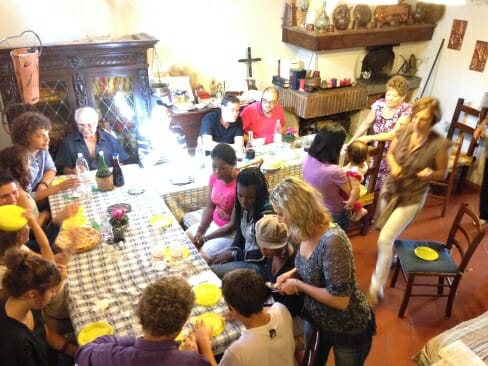
https://vimeo.com/131567545 Cesar, an 18-year old from Ghana, was saved just when he was about to drown, after he had drunk water and fuel. On that journey, 72 people were saved while 32 died. Maria, a Nigerian and seven months pregnant, had received a phone call from her father while she was out with her husband and little son. He told them not to return home because the church had been burnt and her mother killed. They escaped with the little they had, and arrived in Libya. They had money for the journey to Italy of just one person, and so only she left. Her husband and little son remained on the other side of the Mediterranean, waiting for another embarkment. «These are heartbreaking glimpses of life. They remind us of Jesus’s words: “I was a stranger and you shared your home.” We would like to be the arms and heart for each of these refugees.» This is the story of Carla and David of Florence (Italy), who as a family opened their hearts to the welcoming of migrants. «In summer 2013, we participated with our three kids in the World Youth Day in Brazil. We took the opportunity then to spend some time to do missionary work in Salvador Bahia. It was a strong experience that opened our hearts to the spirit of sharing with those in need. Once we returned home, we decided to dedicate a part of the B&B we run to migrants. In that moment the mission had come to us! Since then, 756 people have passed through, coming from Syria, Pakistan, Nepal, Bangladesh and some countries of Africa. Some stayed only to take refreshments and depart for other European destinations while others remained longer. And in these cases, our relationships became close and very fraternal. 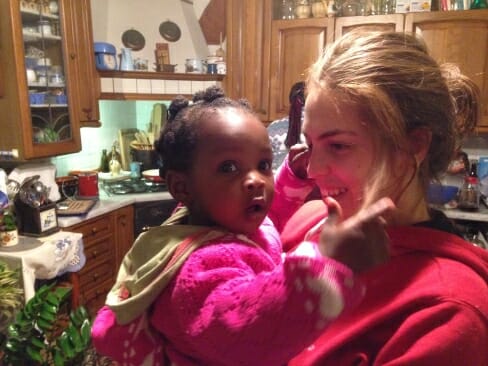 An Eritrean family now on its way to Norway, stayed for two months: he is Muslim while she is Christian, with six children who were left free by their father to choose their religion. When their mother arrived with the youngest son, they were hospitalized for dehydration, after which so also was the father, due to an infection. We remember their joy when we handed them a cell phone so that they could call their relatives to say they were all alive and well. On Sunday we all went to mass together in that tiny Church at the outskirts of Florence where Cardinal Betori was holding a pastoral visit. His whole homily centred on welcoming the homeless. In the end he embraced them and blessed everyone. Three girls, one from Mali and another from Libya, both Muslims, came together with a young girl who escaped from Nigeria after witnessing the massacre of their parents because they were Christians. A sisterly relationship was created between them and with us, as if between parents and daughters. One Sunday while we were taking a walk, Mersi was very sad because that day on TV there was the news of another massacre in Nigeria. Finally, they received a phone call: their younger sister was able to escape to Libya with her father’s friend. The Libyan girl immediately contacted her family and the child – a Christian – was taken in by them who were Muslims. Here’s another picture: of Joy and Lorenz, who had seen their father killed because he was a Christian. I, David, as a social worker can get on the bus when refugees arrive. I do this at the risk of contracting diseases, but I know that the first approach is fundamental since it is then that we are able to identify the groups that, in the meantime, have been created among them. I saw that Joy was pregnant, and so I invited them to our centre. Also when the Prefecture moved them to another place, we continued to visit them, and when the baby was born, we brought them a pram and clothes which the New Families of the Focolare had gathered for them. Joy and Lorenz asked us to be little John’s godparents. This family was then sent to Puglia. The parting was strong but the relationship continues. The call us Mom and Dad. When they obtain their stay permit, they want to come to live close to us.»
