
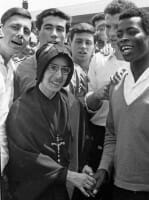
Sr. Benedetta Carnovali
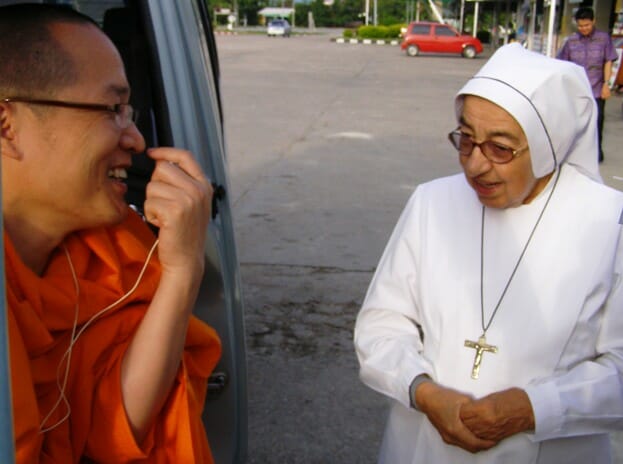 Sister Benedetta, amicably called ‘Sister Bene’ was known to everyone in the Church of Thailand: priests, nuns, bishops and laity from north to south of the country. Several Buddhist monks that visited the focolare regularly also knew her well. Benedetta was a woman who let herself be approached and known, without fear and with gentleness. She knew how to welcome people and you could go to her any time. Any problem, great or small, any need, some good news to share: she wasn’t scandalised by anything, she knew people’s hearts and knew how to love them. One bishop once said of Sister Benedetta that she was “a Sister of silver and gold” because of all the money she was able to find for the poor. When visiting the extreme north of Thailand, you were always obliged to go and ‘have a chat’ with her, as she would say. She enjoyed hearing the news of her ‘great family’ as she loved to call the Movement, and she shared its life with many others. We would often meet people in the Mariapolis to whom she had spoken about the spirituality of unity, or else someone who had passed by the focolare to meet us because they had heard Sister Bene talk about us. In other words, Benedetta was a true spiritual mother who gave much supernatural life to so many people, and many of them attended her funeral along with a large crowd of bishops, priests and laity. The small church of Wien Pa Pao and the adjoining convent where she lived were filled to overflowing.
 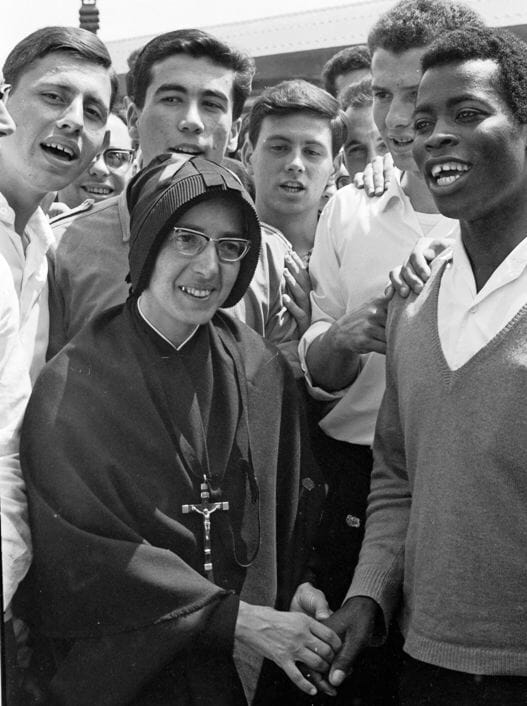 Sr Bene, of the Sisters of Charity of the Infant Mary, known to the secular world as Benedetta Carnovali, born in 1925, was a pillar of the Movement and many of the people who belong to the Focolare community of Thailand were personally drawn to the Movement by her (including Buddhists). ‘A real Sister and a true focolarina,’ as she was described by some: an ‘out-of-the-ordinary’ Sister, always on the go and, at the same time, ‘firm’ when personally loving the person next to her. She was a friend who would call you up to wish you a happy birthday, even though her voice became feebler every year, but not her interior strength. Whenever you approached her you were never given the impression that you had disturbed her: it was as if she had been expecting you alone and didn’t have anything else to do but welcome you. But she was quite busy, judging from all the adoptions at a distance which she personally saw to, up until the last days of her life. Sister Bene had met the Focolare’s spirituality of unity from an order priest in 1963, and from that moment spent her life that many in Myanmar – where she was living in that period and then in Thailand when all Religious were expelled by the regime – could know the spirituality and live it. When she was transferred to Thailand, she continued to deepen her friendship with the Focolare. When she went to spend a few days at the focolare, she nourished herself on the words of Chiara Lubich. Like all those who genuinely follow God, Sister Benedetta also encountered her nights, ‘the storm’ as she followed Jesus. She faced them as a true disciple of Jesus, with heroic charity. Deeply united with Vale Ronchetti, one of the first focolarine, she pressed on in the midst of much miscomprehension: ‘How can a nun belong to a movement with so many lay people in it?’ she was often asked; and there were other great and small persecutions that on a human level were completely absurd. Yet, in some mysterious way, God made use of these things to make Sister Benedetta more and more a Sister, more and more a spiritual daughter of Chiara (as Benedetta often said), and an apostle of unity who has no counterpart in the Asian southeast judging from the fruits she bore. She leaves a legacy of love, gentleness, sweetness and strength, loving service to the least: towards the people of the Akha tribe, for example. She leaves us withthat smile so typical of those who have experienced that it is possible to transform suffering in Love and make that Love their reason for living. Sister Benedetta ‘flew” to Heaven at the age of ninety, after listening to the Focolare song that she loved: ‘Solo grazie’. She died consumed but serene, just as she had always lived: in peace because she was certain that the ‘arms’ that had embraced her from her childhood (she was an orphan) and carried her through her life as a Religious, were there waiting for her now on this last stretch of her journey. She was a wonderful woman who shows that it is still possible to become a saint today. Luigi Butori
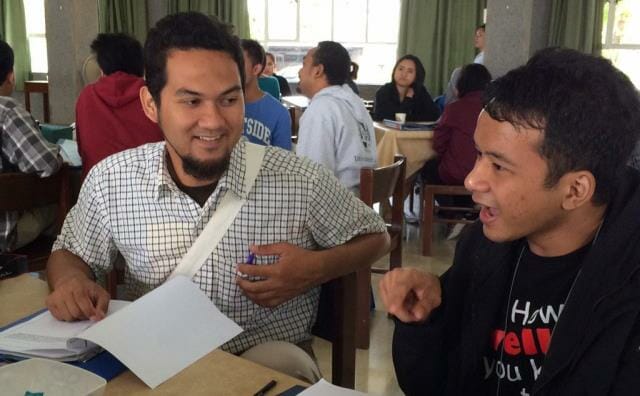
South East Asia: Celebrating Differences and Building Bridges
“The road to a peaceful world is a long one and the choice to take it necessitates the kind of courage that will not falter in the face of suffering, pain and defeat.” This is how Val Fajardo, a young member of the Focolare Movement, expressed her sentiments at the end of the 5-day conference on United for Peace Project 2015 held at Mariapolis Peace, Tagaytay City.
The YSEALI (Young Southeast Asian Leaders Initiative)* United for Peace project brought together 30 youth-leader representatives from Thailand, the Philippines and Indonesia to discuss religious and cultural conflicts in Southeast Asia and share best practices in mitigating conflicts in the ASEAN (Association of South East Asian Nations) region. The delegates were varied – fashion bloggers, presidential advisers, teachers, journalists, students, heads of NGOs, and social workers – but all committed to working for peace. During the conference, the group also discussed and explored ways in which intercultural dialogue can serve as a tool to resolve disputes.
“Project for Peace” – The conference covered relevant issues such as Understanding Conflict, The Paradigm of Fraternity, Unity, Reciprocity, The Power of Collective Action, all essential to the peace building effort. The various workshops proved to be effective in bringing to fore the strength, creativity and commitment of each participant. And, compelled with the dire need of peace in the world, the delegates worked intensely on project proposals to address conflict mitigation and resolution that will be implemented simultaneously in their own countries. The peace projects that the three nation delegates have worked on are, “Peace Attack” by Indonesia; “Youth Leaders for Peace Camp” by Thailand; and “Peace for Real” for the Philippine delegations. All the proposed projects are meant to involve countless young people and adults, each as a protagonist for peace!
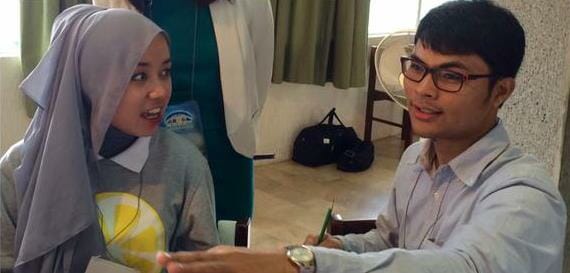 Following the 5-day conference in Tagaytay, three national workshops will take place separately in March in the Philippines, Thailand, and Indonesia involving 150 young leaders.
At the conclusion of the intense conference, a “Peace Park” was inaugurated and the delegates planted trees in a public school near the Mariapolis Peace. In the middle of the park sits a “Cube of Peace” where various points in building peace are written on each side of the cube, like Treat each person with respect, Share each other’s joys and hurts, Be the first to reach out to the other, Treat others as you want to be treated.
Present during the inauguration were local civil authorities, school heads, educators and students.
The “Peace Park” represented the vision of youth’s United for Peace Project 2015 which is to be united in celebrating differences, building bridges, and bringing about peace, harmony, and unity in the region and in the world. This historical moment bound the hearts and minds of the delegates as they sung together with the youth of the Focolare and all those present the songs Hopes of Peace and Let’s Bridge.
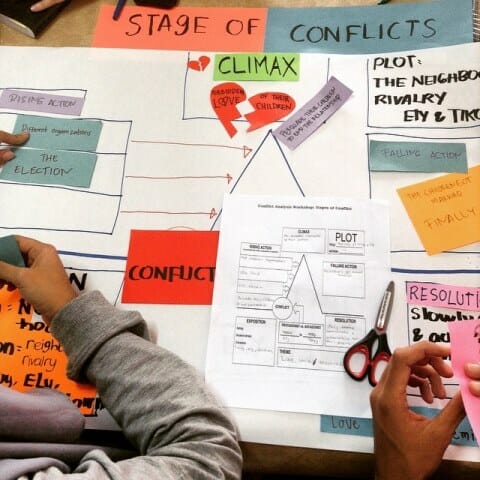 YSEALI gathered young people from different backgrounds, and came out with a solid, efficient and effective project plan to bring peace back to the world. The Focolare Movement has been asked to be a partner in this project until September 2015. A committee – consisting of adult and youth members of the Focolare – was set up in order to design the content of the program and to select suitable resource persons. The Focolare Movement welcomed this opportunity to work with young people and to help them discover that universal brotherhood is the way to resolve conflicts.
Nikko Yumul, a member of the Focolare and one the program’s coordinators states: “Young people are at the stage of life where the attraction of working for something much greater than themselves and the will to pursue it are at its height, and where deep, life-long convictions are moulded in their minds and hearts.”
Some impressions shared by the youth: “Building a united world necessarily entails that we go out, as young people, and relate with those who have a vision of the world the same as ours. We are not alone in our efforts. There are others we can share our goals with. Maybe it is about time we involve ourselves with them.”
Source: New City Press Philippines
* Launched in 2013, the Young Southeast Asian Leaders Initiative (YSEALI), which is sponsored by the US Embassy, is a program which aims to strengthen youth leadership development and networking in Southeast Asia. This is done through civic engagement, environment and natural resources management, and entrepreneurship and economic development.
Shiite Students in Loppiano
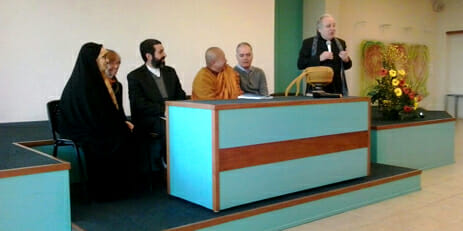
“In times of hatred and fear I thank God for having chosen us to encounter a spirituality like that of Chiara Lubich, which is able to make humanity experience peace and the real joy of unity. Here in Loppiano, we are experiencing a foretaste of God’s kingdom.” These were the words of one of the six Iranian students who will stay in Loppiano for a month, and take part in the little town’s daily life, 24 hours round the clock. “It is a new experience for all of us,” affirmed Rita Moussallem who with Roberto Catalano is co-director of the Interreligious Centre of the Focolare, “a prophetic sign and promise of hope which tells us that love will overcome all things.” The students come from the women’s seminary, “Jami’at al-Zahra” in the city of Qum (Iran), at about 200 km from Tehran, the capital. This is an academic centre of excellence for Shiite Islam and is the biggest in the world with about 6,000 female students, a thousand of which come from other countries. Qum is a Sciite sacred city due to the presence of important shrines, visited by thousands of pilgrims every year, and seat of numerous universities, with about 100,000 students. This visit is the fruit of the fraternal relationship and dialogue that started a number of years ago between the Centre for Interreligious Dialogue of the Focolare and Dr. Mohammad Ali Shomali, professor at the international section of the women’s seminary of Qum and founder and director of the International Institute of Islamic Studies (in Qum), and also a member of the councils of various academic institutions. He currently resides in London and guides the Islamic Centre of Great Britain. “Last April, upon the invitation of Dr Shomali, we went with some focolarini to Qum,” Roberto Catalano explained, “to visit various university institutes and to get to know each other better. It was because of this that the concrete possibility for a group of students to visit Loppiano came about, to allow them to personally experience the spirituality of unity.” In Loppiano, Dr Shomali with his wife and the students visited the various schools and work sites, and got to meet Loppiano’s inhabitants, listen to their experiences and immerse themselves in the life and activities of the town. An important moment was Dr Shomali’s encounter with the professors and students of the Sophia University Institute. On referring to the name of the Institute he underlined how the concept of wisdom signifies something more than knowledge: “We can listen to the words of knowledge of many people, but the quality of wisdom can only come from God.” The students will now continue to explore the spirituality of unity and its concrete aspects.
Chiara Lubich: “Love the other’s country as one’s own”
[:de]Chiara Lubich: “Das Land des anderen wie das eigene lieben”[:fr]Chiara Lubich : “Aimer la patrie de l’autre comme la sienne”[:zh]盧嘉勒:「愛別人的國家如同自己的國家!」