17 Mar 2015 | Focolare Worldwide
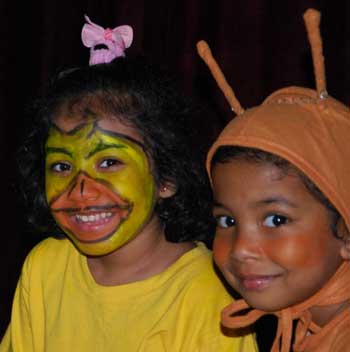
6 weeks of preparatory work, 34 actors and an audience of 250 people 36 thousand rupees gathered, equivalent to about €500 which is quite remarkable, considering that the sum will allow 10 adolescents of the city to participate in the 5-day programme to be held in Mumbai.
The Focolare has been in India from 1980. Today there are centres in Mumbai, Bangalore, Goa and New Delhi that promote various activities: Mariapolis, monthly meetings for adults, families and the youth. In various cities –Vasai, Pune, Panjim, Margao, Vasco, Trichy – there are active groups that have adhered to the spirit of the Focolare.
This year, the great goal ahead regards the United World Week (SMU), annual appointment of the Youth for a United World with the objective of diffusing the steps undertaken towards fraternity in various parts of the world.
The SMU 2015 transits through India. As occurred last year in Africa, the event that highlighted the Ubuntu concept, this time the event will focus on the subcontinent, cradle of an enormous variety of ethnic and religious groups that will host the main event of the week in Mumbai, from27 April to1st May, to conclude in Coimbatore, Tamil Nadu (southern India), on 4 May.
Already in 2009 Coimbatore had hosted the “Gen 3 Supercongress”, with adolescents from all over the world, and with the cooperation of the Gandhian movement Shanti Ashram.
As can be imagined there was an enormous load of work for the preparations of all the details- Due to this the entire Focolare Community of the city has decided to roll up their sleeves and support the youth in this initiative.
A first concrete job was to prepare their own musical “The brook in the woods,” staged last 22 February. A story that begins with the message of unity which the Gen4 (the children of the Focolare Movement) sing about. Rehearsals, performed with enthusiasm and commitment by the children, and even with some unexpected problems that came up: the day before musical two of them got sick with high fever and the authors had to change the lyrics!
“My children are so happy!” a mother explained, They made new friends and say that they miss the rehearsals., even more than their schoolmates, because they were so happy to be together.”
“Even if the children are talented in song or dance,” another mother said, “it’s so nice to see these talents used for a beautiful and valuable cause.”
भारत की ओर से आप सभी को बधाई (Bharat ki ora se aap sabhi ko badhai)
Greetings from India!
16 Mar 2015 | Focolare Worldwide
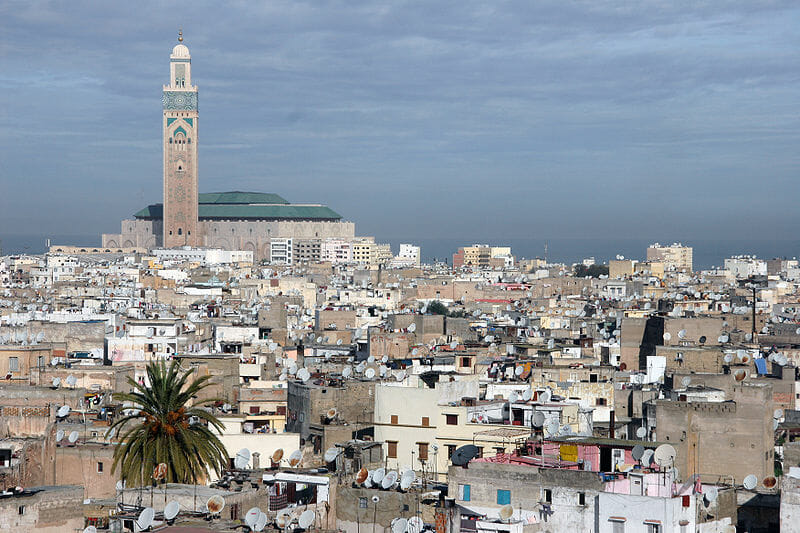
The so-called “Golden Rule” proposed by the Gospel, “Do to others whatever you would have them do to you” (Mt 7.12), is also found in Islam and other religions, and if put at the basis of every relationship generates – as what occurred in these lands – that love which stirs up a fertile “dialogue of life” with every person one meets. It may be a dialogue woven with small gestures, care for the other, respect, and listening. It was due to this concrete love for the other that some Focolare communities were formed in Morocco, and where love and respect have prevailed over differences in culture, traditions and religion.
Here are some excerpts of the travel diary of the two focolarini during their visit to these communities at the end of January and the first days of February 2015.
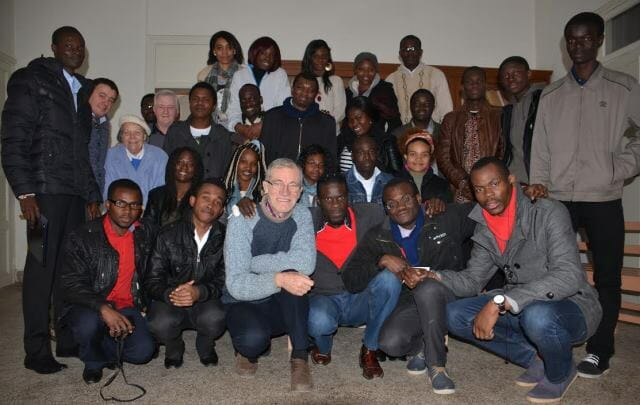
«Here we are at Fez, an imperial city that is very proud of its highly spiritual tradition. Numerous students from sub-Saharan Africa come here for their secondary studies. They willingly frequent the French parish and the parish priest, Fr. Matteo, asked us to hold a catechesis on the sacraments for about 20 young people. It was an occasion to have a deep and pleasant exchange of ideas. The parish’s Word of life group gathered about 30 students of medicine, chemistry, informatics plus other five who arrived from Rabat. Lucile recounted how she tries to live the world of life in the public hospital where she works. We had dinner at the convent of the little Sisters of Foucauld.
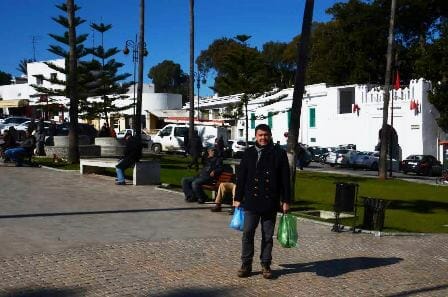 We reached Tangiers to meet a group of 15people, Muslims and Christians who live the spirituality of unity. In the evening we stayed at the home of a couple who consider us their blood brothers. He was transferred to a workplace that takes 24 hours to reach, but this distance from his wife became an occasion to rediscover the positive aspects in one another.
We had breakfast at Mohamed’s. His wife wants to deepen her knowledge of the spirituality of unity. He told us that the guard of the building where he works stopped greeting him ever since he refused to bring him the oil of the Spanish landlady, taking advantage of her absence, as he would have wanted. When he later received a litre of oil from his mother, he offered it to the guard, explaining that this time the oil was his own, and could thus do as he wanted with it. The man, a bit surprised, thanked him and excused himself. They had reconciled. We spent the afternoon with the group of families of the community: Ahmed invited us to stay for the night. We passed the evening with his family, and they offered us a typical dish for dinner.
 A visit to the small periphery school founded by Fawzia. The district is full of children playing in the muddy and chaotic streets. Houses sprout out everywhere like mushrooms. Felice told us about two children who asked to enroll in her school, even if for some time now, a neighbour stationed himself at her school’s entrance to convince the parents to enroll their children elsewhere. After asking him for some explanations about this, Fawzia continued to love and do her work with excellent scholastic results. Six days later, due to the good reputation the school achieved in the area, there were new enrolments!
Journey to Casablanca to visit Susana and the evening with Mohammed and Nadedj in a Japanese restaurant. We talked to them about Loppiano, the recent Mariapolis in Algiers, and the meetings we held. Tomorrow we shall return to Algiers and Italy, respectively, with the joy of having built and strengthened many relationships in unity, enriched by the meeting with these people who have undertaken the commitment to live their daily lives, for a more united world. »
Claude and Ivano (Morocco, January/February 2015)
15 Mar 2015 | Focolare Worldwide
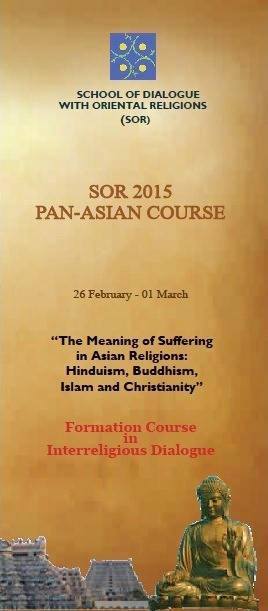
SOR is the acronym for “School for Oriental Religions.” In his blog Roberto Catalano, co-director of the Focolare Movement’s Centre for Interreligious Dialogue wrote: “It was one of those ideas so typical of the brilliance of Chiara Lubich’s charism.»
Towards the end of her first trip to Asia in January 1982, the founder of the Focolare launched an idea which seemed almost like a dream. It entailed the startup in Tagaytay City in the Philippines, of a central reference point for the Focolare in Asia, with educational courses in which duly trained Catholics could open a dialogue with the faithful of other religions. Chiara Lubich had come from Japan where she had met Rev. Nikkyo Niwano, founder of the Rissho Kosei-kai, a Buddhist renewal movement, and had spoken before thousands of Buddhists about her Christian experience. The event had a strong impact not only on the Buddhists who had listened to a Catholic woman for the first time in their Sacred Hall in front of the giant statue of Buddha, but also on Chiara. Upon arriving in the Philippines, Asia’s only catholic country, she felt the need to launch the Focolare Movement in that continent, particularly to dialogue with the Buddhists, Muslims and Hindus. But she already saw the need to prepare herself adequately for a difficult task which should not undermine the religion of each one. After confiding her dream to some of the leaders of the Movement, a person offered a house that could host professors and small courses.
And thus the SOR was formed, which through these three decades, has carried out educational courses for Asian Christians on themes regarding the various religions. From 2009 onwards, with the spreading of religious tension and fundamentalism, they decided to deal with specific transversal themes: God in Asian traditions, the commandment of love, the role of the Sacred Scriptures, and this year, the role and meaning of suffering.
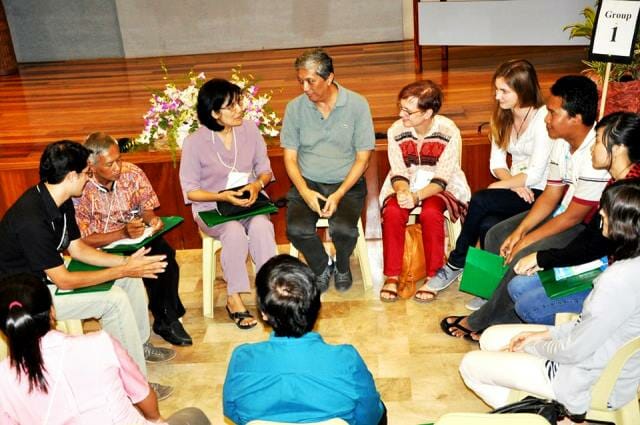 From 26th February to 1st March the Pace Citadel (Tagaytay) hosted about 300 people, mostly from the Philippines but with delegations also from Pakistan, India, Myanmar, Thailand, Vietnam, Hong Kong, Taiwan, Indonesia, Japan and Korea. The majority were mostly Catholics, but among them were three Buddhists, active members of the Focolare from Japan and Thailand. The theme was The meaning of suffering in the Asian religions: Hinduism, Buddhism, Islam and Christianity. The objective was to highlight the value and meaning that the respective religions give to pain in general, whether physical, spiritual, psychic, or caused by natural disasters.
The lecturers of the various sectors, in the presence of three bishops (Roberto Mallari, from S. José, Nueva Ecija, Philippines, Brenan Leahy, from Limerick, Ireland, and Felix Anthony Machado from Vasai, India) and an American professor, expert in Buddhism (Donald Mitchell of Purdue University) connected via skype. The school also offered the occasion to share experiences of dialogue in countries where Christians are but a minority as in India, Thailand, Japan, and Taiwan.
«I came to learn to dialogue with the other religions, but what I discovered is Christianity in its deepest sense, and at the same time its openness to all peoples and creeds.» concluded Catalano. Chiara understood the need to train Christians to dialogue in a continent that is a kaleidoscope of faiths, dialogue which does not diminish or level out, but where all have to be genuine and in meeting the others, discover their own roots.
14 Mar 2015 | Focolare Worldwide
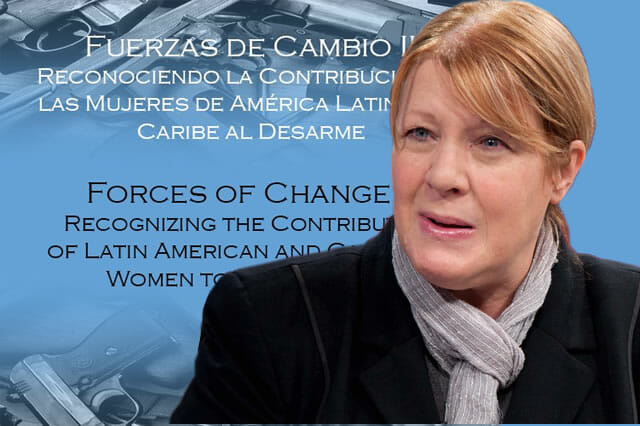
Margarita Stolbize
Latin America is made of unity and diversity and that is what makes it strong as it journeys towards integration. This is undoubtedly an achievement that has not yet been fulfilled with a comm-unity of sentiments, emotions and fraternal bonds based on shared history. This was the prophetic visioin that Chiara Lubich had intuited for this region of the world, and it is towards that vision that we are strenuously marching.
Latin American democracies, even though they little by little consolidated thanks to post-dictatorial processes of democratisation and regional integration, did not in terms of quality, follow a line of progressive improvement.
Latin America has to face a complex and uncertain future. The economic growth of the past few years has not been able to completely uproot poverty, nor did it make a dent in the social inequality or insecurity. It is here that the close link between politics and the idea of universal brotherhood becomes evident. The idea of brotherhood, especially in the testimony and in the words of Chiara Lubich, is related to two central poins of politics. The first is the idea of politics as a collective project of Latin America that reaches beyond our individuality, which implies a gesture of communion, an act of brotherhood since it consists in recognising the other and respecting his or her diversity. Dialogue is the chief means for constructing brotherhood.
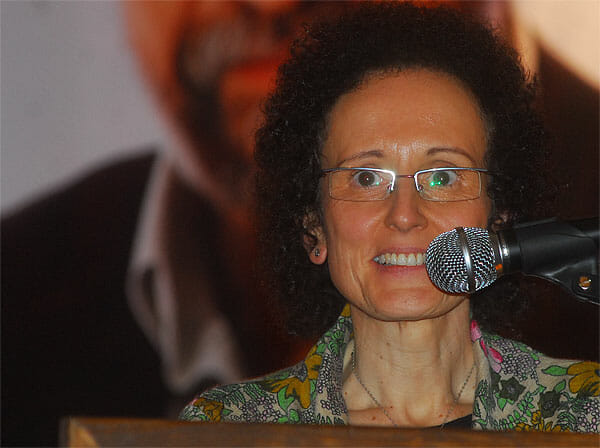
Cristina Calvo
The second element is the mid-term perspective. The idea of working for projects and never witnessing the final results, and this is the greatest gesture of greatness in politics. Chiara Lubich has given rise to countless projects not only in Latin America but across the world; mainly, in four areas: the state, social orgainisations, the private sector, and the field of knowledge. Access to basic rights, education and work must return to being the underpinnings of national identity.
The institutions need to be rebuilt not only as buildings, but as environments in which the rights of people are garunteed and exercised and not merely in rhetorical claims. Chiara Lubich also highlighted the ethical dimension of politics that has to do with transparency and is directly linked to the idea of brotherhood. Ethics enables us to become equally indignant in in front of corruption, poverty and inequality. We are certain that Latin America, from the political standpoint, must recuperate a model and economic development plan based on inclusion, garuntees access to human rights in their entirety and supports dignified conditions of life.
We need to regain a trustworthy, predictable and exemplary leadership. Above all, we underscore the idea of exemplarity, which does not discipline with money, or buying off, but with one’s own conduct and behaviour. This examplarity can not only be individual, but should also build collective, participative leadership,
A development project that does not give priority to finding solutions to the living conditions of the most vulnerable, of the poorest sectors of society, is no development project at all. The idea of brotherhood as a value that is linked to the priorities of the public agenda must also be regained. It is imperative that we regain a politics of convictions. This involves the acceptance of diversity.
In Argentina and in the rest of Latin America we need to regain the trust but, first and foremost, a culture of values, of ethical values that are incarnated in the practices and in political thought. And we hold up the principles and testimony of the person whose life we are celebrating today, Chiara Lubich. For Latin America, Chiara combines charism, knowledge, leadership, actioin and destiny. We are in that destiny and in that effort!
By Margarita Stolbizer (1) and Cristina Calvo (2)
(1) Avvocato argentina, deputato nazionale, presidente del Partito Generazione per l’Incontro Nazionale – GEN e candidata del centro-sinistra alla Presidenza 2015 della Repubblica Argentina.
(2) Economista argentina, dirigente del Partito Generazione per l’Incontro Nazionale – GEN)
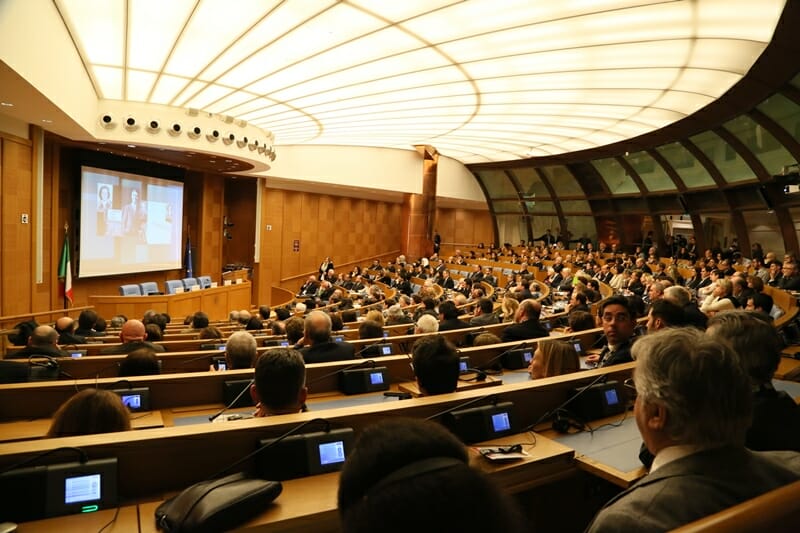
13 Mar 2015 | Focolare Worldwide
Is there a “politics that is really worth the trouble” at a time in history moment when politics is totally in crisis, often associated with corruption and special interests? This was discussed during the first of numerous worldwide events marking the 7th anniversary of Chiara Lubich (1920-2008). “Her strong and simple faith,” President of the Italian Republic, Sergio Mattarella, stated: “united to a remarkable ability to read the modern world and accept its challenges, has inspired the life of thousands of people around the world, constantly exhorting national and international institutions to promote values of brotherhood and mutual respect in families, community, and among peoples.”
For the Focolare foundress, entering into politics signified responding to the call: “to the love of loves,” as she put it. A calling to which the response “is above all an act of brotherhood: one acts in favour of something public that regards others, desiring their good as if it were one’s own.” For this reason, said Focolare president Maria Voce, in her opening address to the “Chiara Lubich: Unity and Politics” gathering, “it is absolutely necessary to begin from unity, which is the only thing able to give the correct relevance to freedom and equality.”
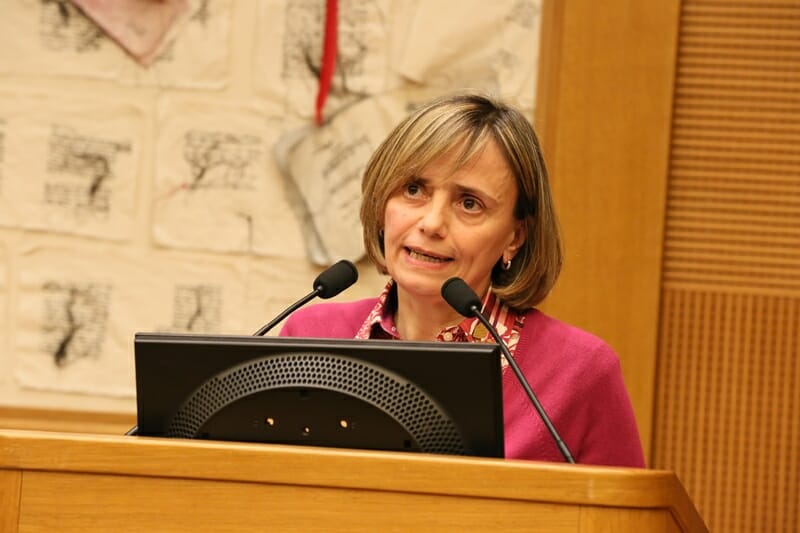 What does it mean to live universal brotherhood in such an environment? Iole Mucciconi, who plays a leadership role at the Presidency of the Council of Ministers, shared his testimony : “It is important to begin each day by committing oneself to do one’s job to the best of one’s ability. I always remember Chiara Lubich’s recommendations for living brotherhood: aim to live an honest life, with moral purity, detachment from money, sharing the joys and sorrows of your sisters and brothers.”
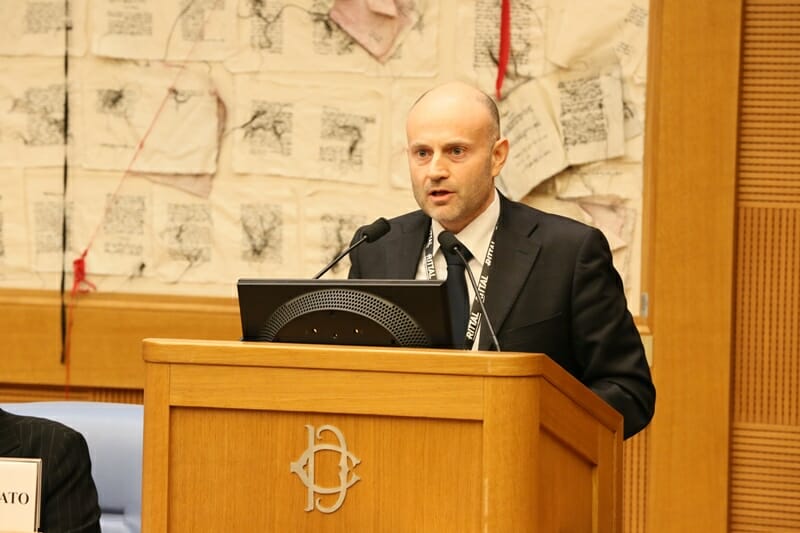 The problem of corruption, which unfortunately pervades the Italian State, was also much felt by Raffaele Scamardi, Commissioner of Public Works in the XII District of Rome at a time when magistrates and law enforcement are trying to dismantle a network of brothels that has entangled the Roman capital. “And yet, a politics in favour of others is still possible: repairing roads, listening to citizens and their need for justice, as well as working with the transparency so as to keep corruption at bay.” A similar point was made by Dieudonné Upira Sunguma, one time Civil Service Minister for the Democratic Republic of Congo, who often had to refuse gifts that were meant to corrupt him.
Young people of the Focolare the Italian Parliament. The tragedy of Syrian refugees in Jordan and Lebanon interrupted the morning in the parliamentary hall. The words of Lara and George were simple and sharp and hopeful as any twenty year-old’s would be. The war that is tearing Syria apart is a real drama that is being enacted before our very eyes. Abraham, on the other hand, comes from a land torn by drug trafficking: Mexico. One of the features of the 7th anniversary of Chiara Lubich’s death has been the political projects and engagement on the frontiers by young members of the Focolare. Three hundred of these young people are in Rome to attend the events, and to display their projects spread across the planet in favour of dialogue, solidarity, and peace.
When questioned about the role of politics in healing conflicts and protecting human rights, the president of the Chamber of Deputies, Laura Boldrini, was thankful for the young people’s courage in “shortening the distance between institutions and citizenry” and she asked that we “not give in to those who would change the DNA of our people, which is made of hospitality and solidarity.” She encouraged the young people to place themselves at the disposal of public affairs with generosity, in order to influence choices and decisions,” performing a service for the country and never falling flat because of an opposing sides and adversarial approach to politics, because “there is a vision of society contained in the values of Chiara Lubich, and this is politics, this is never removing yourself.”
A discussion followed about the wounds of our own times: the relationship with the Muslim world; wars and epidemics in Africa; natural disasters in Southeast Asia. Political scientist, Pasquale Ferrara, insisted that “dialogue is the weapon of the weak;” and economist Luigino Bruni spoke about huge social disparities, recalling that “the most important happiness isn’t our own, but that of others. And so it is worthwhile to become involved in finding creative solutions to problems, and joining with one another to do new things”
According to Paolo Frizzi, the communitarian sense of the projects that had been presented by the young people of the Focolare, which were monitored by the Universal Brotherhood Observatory and promoted by the United World Project, demonstrates “the anthropological and civil prospective of the charism of unity, which is capable of forging a new humanity capable of sharing projects that even begin from our very differences, in order to build things that will endure and help the world.”
“Fraternity on the way” the title chosen for the event, calls for concrete steps by politicians and citizens together.
13 Mar 2015 | Focolare Worldwide, Senza categoria
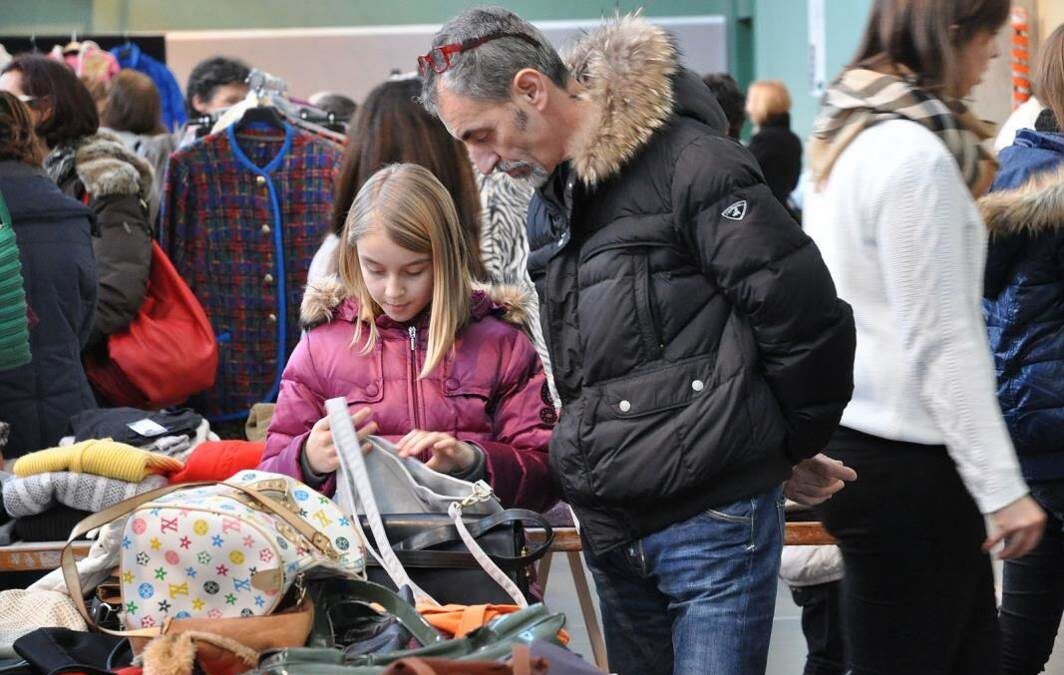
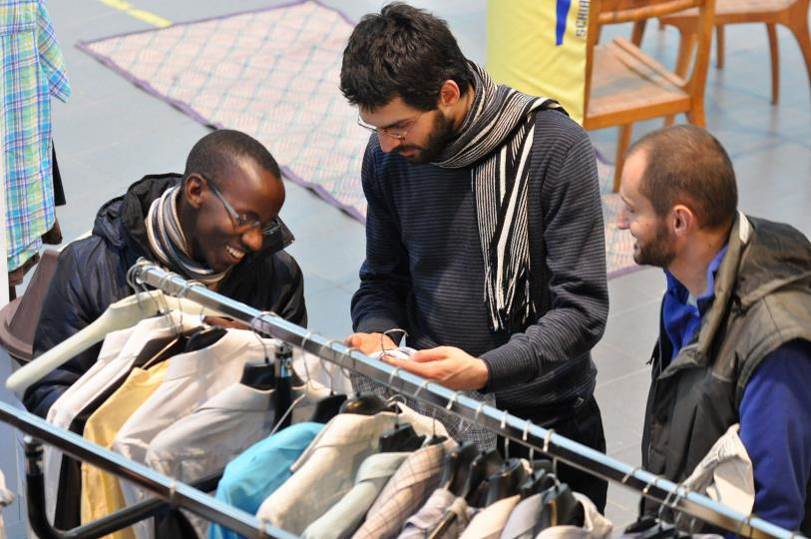 This permanent sharing of goods helps many who are in need during the current economic crisis.” These are the first words of a document describing the Bundle Project which began in May in Loppiano. The carrying of a bundle, or swag, is associated with a vagabond. It was used to hold a few poor possessions and therefore associated with the poor. For Chiara Lubich it signified sharing, giving and redistributing material possessions among the members of the nascent Focolare community of the mid-1040s. This is how a practice was begun of freely depriving oneself of what was excess, or even necessary, in order to share a gift with those in need. That is the origin of the bundle, which has now found a home at the Lionello Bonfanti Business Park in Loppiano, a meeting place between those who have something to share and those who are in need. “Three thousand people have already shown up,” say coordinating team members Roberta Menichetti and Araceli Bigoni,“mostly families who live in the region.” Up until today thousands of clothing items, home furnishings, books, tools, utensils and games as well as intangible items such as time, talents, and availability – have come and gone off with new owners.”
 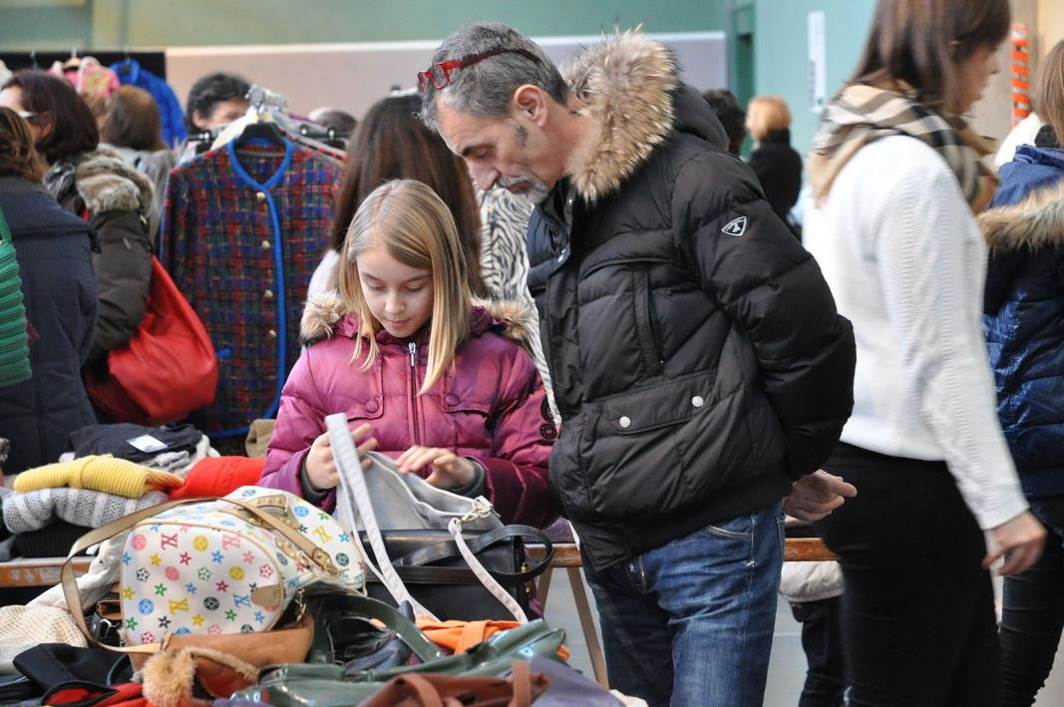 “It’s not by coincidence that the project is hosted in the Lionello Bonfanti Business Park,” reiterates Eva Gullo, President of the EoC Association which administrates the Business Park. “This space is ‘home’ to all the components of the Economy of Communion. It is also dedicated to spreading the ‘culture of giving’, that is, the ability to contribute to the the social welfare beginning from one’s self.” There are many stories of generosity surrounding this project. Like the family that was living in some buildings on the parish grounds of a nearby town. When they were able to move into a small house, they found all the furnishings for their new home here at this opportunity shop. Our network of friends also arranged for the transport and set up of the small house at zero cost. Words like “providence” and “trust” are quite common around here. Like that afternoon when an infant’s crib was found and, just as it was taken away, another request was made for the same type of crib. Not even a half hour later the new crib arrived! The Bundle Project won the “Engaging in Society” award offered by the New Poverty Section of the Catholic Insurance Foundation. Those funds will be used for a more functional layout of the premises. Evening events were begun as a result of the sharing and giving. Formation courses and evening discussions with experts in the field, on topics such as consumerism, relational goods and trust, as well as training courses in economic approaches that are centred on the dignity of the human person. There is a “contributions” box at the entrance for anyone who wishes to leave a few euros for what they have found. The monies collected in the box have been used to pay the insurance bills of some local people and even the basic needs of others. Source: Loppiano online Source: Loppiano permanent sharing of goods project
