From Nairobi (Kenya), the story of Millycent
https://vimeo.com/171535556

https://vimeo.com/171535556
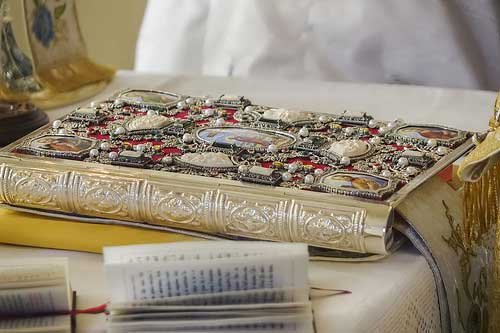
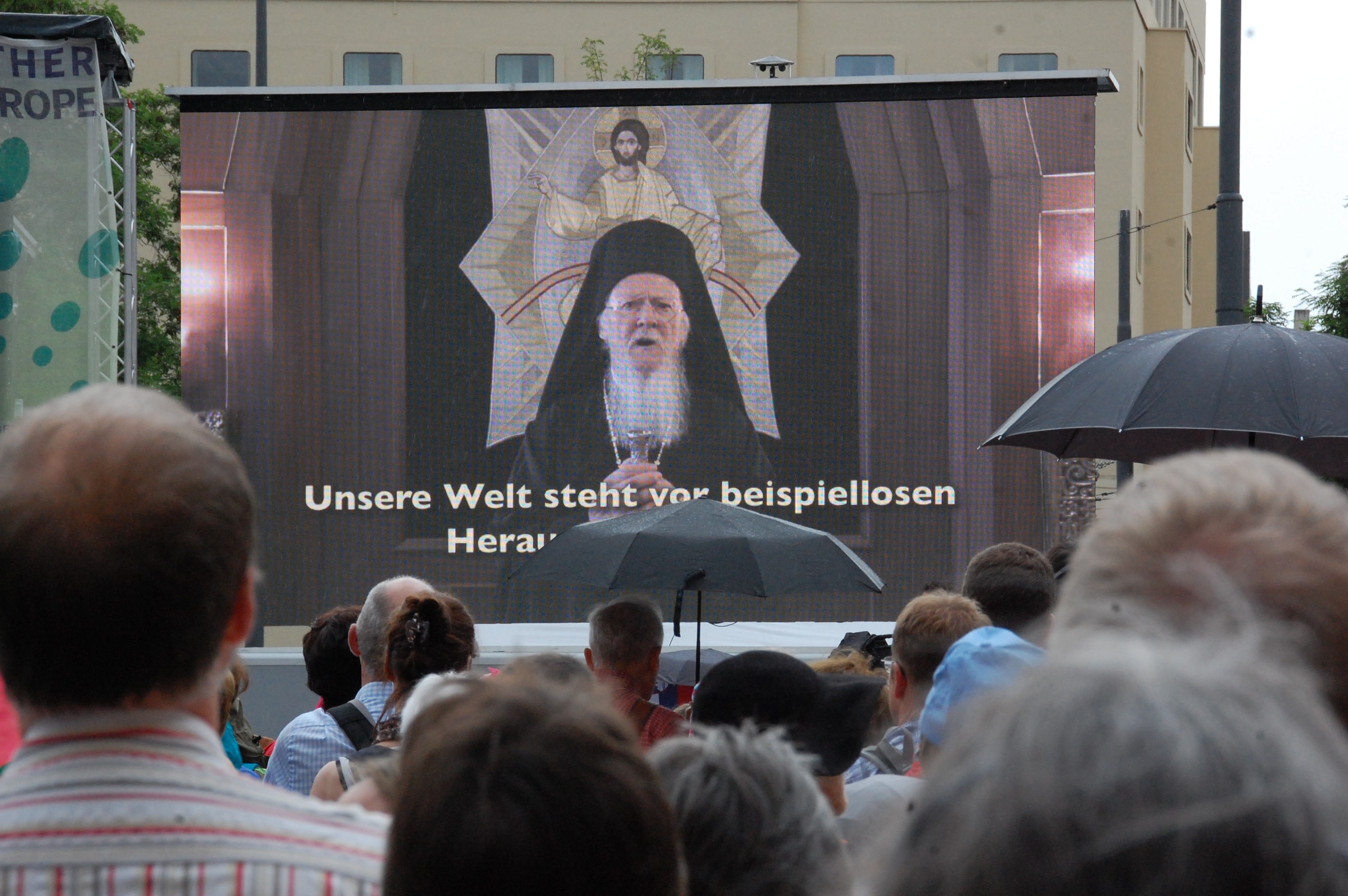
Divine Liturgy at the Patriarchal and Stavropegial Monastery of Gonia. PHOTO: © POLISH ORTHODOX CHURCH/JAROSLAW CHARKIEWICZ.
Message of the Holy and Great Council of the Orthodox Church
Maria Chiara De Lorenzo
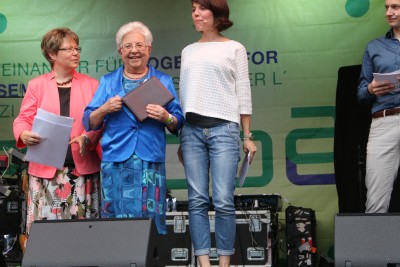
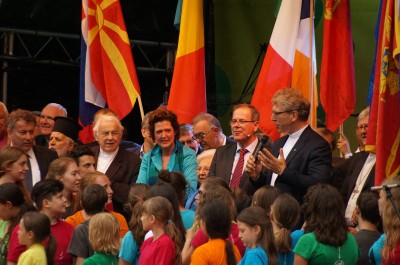
(c) MfE, Foto: Grill
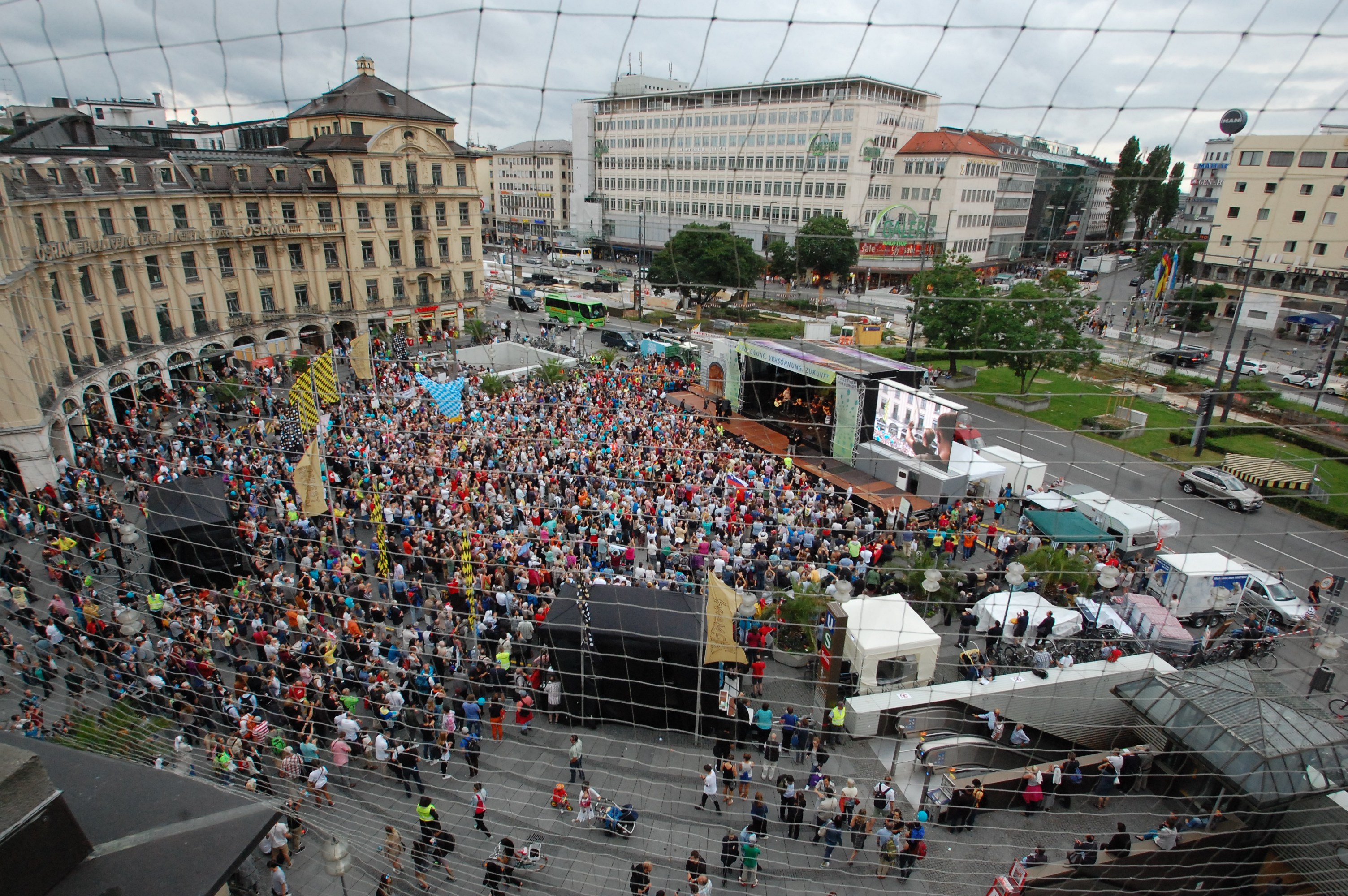
What we can offer – by committing our lives – is the newness of the Gospel. Before dying Jesus prayed: “Father, may they all be one”. He showed that we are all brothers and sisters, that one “single human family” is possible; that unity is possible; that unity is our destiny. We commit ourselves here, today, to be catalysts of this change, catalysts for a new vision for Europe, so as to speed up the journey towards unity by starting a profound dialogue with and for all the men and women on earth. Dialogue can happen because of the so-called “Golden Rule” which says “Do not do to others what you would not wish done to you” (Cf Lk 6:31). Basically it means to love. And if love becomes mutual it brings fraternity to its fullness among all. In universal fraternity Europe can rediscover its vocation. In the 1950s Chiara Lubich wrote “if one day all peoples were able to set themselves aside, setting aside the idea they have of their own homeland … for the sake of the mutual love among states which God asks of us, just as he asks mutual love among brothers and sisters, that day will be the start of a new era”. So let’s live for this new era! Unity is possible!». Maria Voce Together for Europe, Public Event Munich, 2 July 2016
![[:it]Insieme per l’Europa: l’unità è possibile[:de]Einheit ist möglich![:es]Juntos por Europa: la unidad es posible[:fr]Ensemble pour l’Europe : L’unité est possible[:pt]Juntos pela Europa: A unidade é possível](https://www.focolare.org/wp-content/uploads/2016/07/20160701_161752_9438MfE_Fr_Podium5_FotoFischer-e1467623076552.jpg)
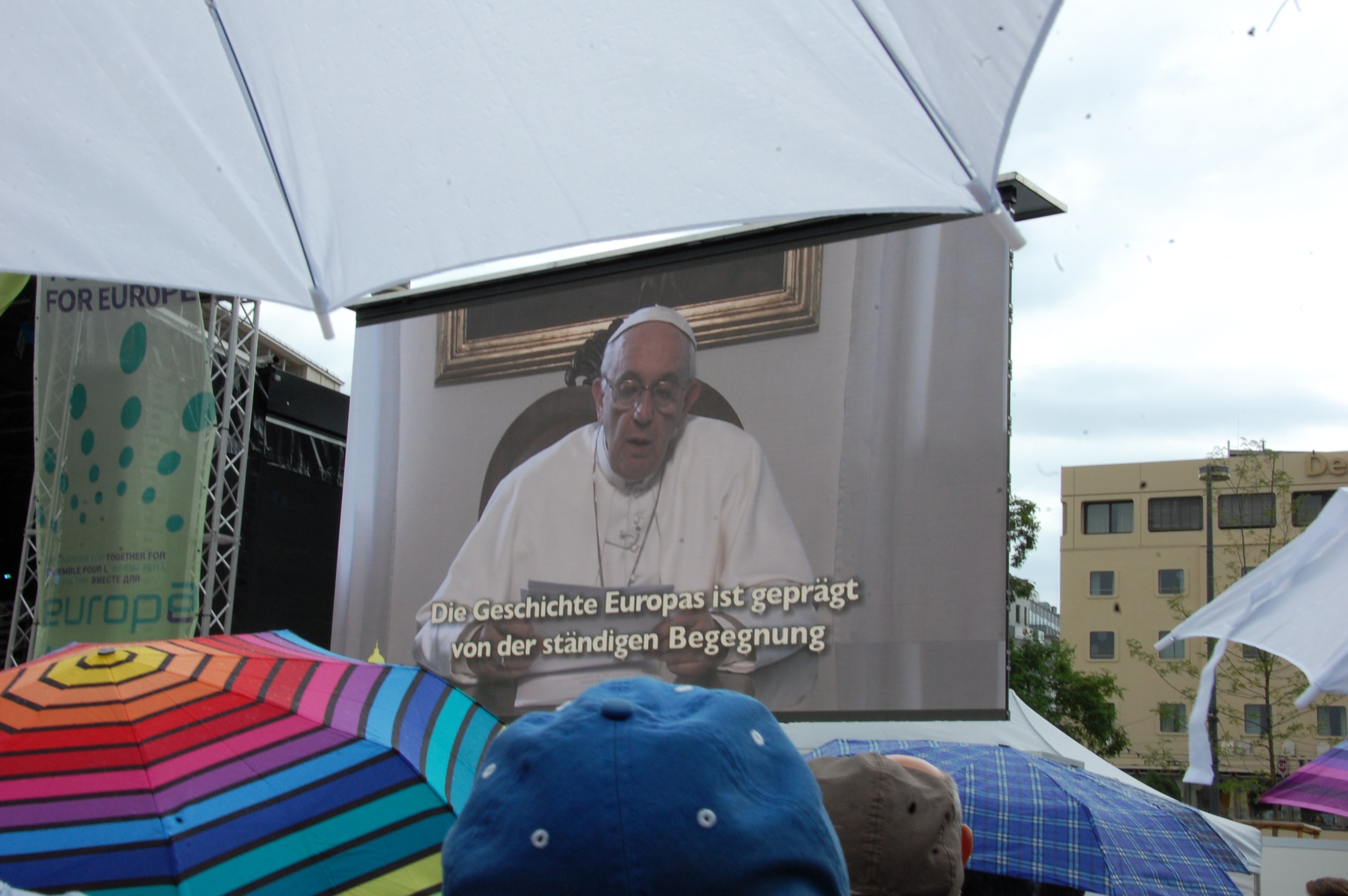
(c) MfE, Foto: Brehm
(c) MfE, Foto: Brehm
(c) MfE, Foto: Brehm
(c) MfE, Foto: Fischer
What are the challenges for Europe today? What about social and political responsiblity toward the other continents? What contribution can Christian movements make? There were many questions at the beginning of the second day of the Congress that focused on the current situation of the European continent with its local and global challenges. “We have to move on from the Europe of the fathers and make [the Europe] of the sons [and the daughters],” exhorted president of the Community of Sant’Egidio, Marco Impagliazzo. “Christians have to re-choose Europe together; we can’t do it alone. Europe can’t live for itself; it should live its Christianity in favour of the others and with the others. Now is the time for ‘spiritual humanism’ and for the life of the Churches and communities to emerge and bring their own contribution.” Gérard Testard from EFESIA in Paris accented the need for Christian action in the public sphere. We shouldn’t have heavenly citizenship on one side and earthly citizenship on the other. They need to exist together. Michael Hochschild, sociologist and professor of post-modern thought at Time-Lab of Paris, underscored the socio-political importance of spiritual Communities and Movements in Europe. But for this to be so, he said, “you need to consider yourselves and show yourselves to be a decisive force for shaping the cultural landscape.” “You need to become socio-civil Movements.” He also said that in a time of uncertainty and lack of vision, Communities like those involved in Together4Europe offer alternative models for living. “It could be the fear of the future that constrains us to do all we can so that [future] might be better,” stated Herbert Lauenroth, expert on interculturalism at the Ecumenical Centre of Ottmaring, Germany. According to his analysis the current situation in Europe arises from a reaction to fear and uncertainty that is the result of a sense of existential suffocation. Such a situation represents a challenge with the passage of time: The fear could become a learning experience. “It’s a matter of preferring what is unknown, foreign, what lies at the extreme, as a place in which to learn the faith.” Through confrontation with the depths that society is facing, we can come to realize that a new direction based on faith is possible.” “Europe is passing through the night of its values, the night of its role in the world, the night of its dreams,” Focolare president Maria Voce affirmed in her intervention. “Together4Europe seems to be precisely the entity that would be capable of inspiring individuals and associations in their efforts for a Europe that is free, reconciled, democratic, supportive and fraternal, a Europe that could be a gift to the rest of the world.” “Steffen Kern from the Evangelical Federation of Wuerttemberg, continued the reflection on Europe and Hope: “Where do we Christians place our hope? A sense of responsibility is needed and taking on the pains and shadows of our cities. In Stuttgart we opened the House of Hope that welcomes women and others who are alone to show them that God never abandons anyone.” Thomas Roemer from the YMCA in Munich made it clear that if we don’t substitute the Europe of fear with the Europe of hope, the latter risks dying off. Like the disciples, Europe is also on a boat with Jesus. “Jesus is still here in the storms; we need to have faith. He got on the boat to save us.” In the afternoon, Together for Europe opened its doors to anyone who wished to join the discussion on confronting and planning. At the roundtable on “Christians and Muslims in Dialogue” the need to know one another emerged, to meet and work together on social and cultural challenges. Pasquale Ferrara, Italian neo-ambassador to Algeria, underscored the fact that dialogue is not done by cultures or religions, but by human beings. We all need to take a bath in concreteness and realism. Imam Baztami invited everyone to an encounter with others, to get to know others. Many ideas and projects emerged from the debate between Religions philosopher Beate Beckmann-Zoeller, Dr. Thomas Amberg from the Evangelical Church and French Bishop M. Dubost. At the “Towards Sustainablity in Europe” roundtable, Cardinal Turkson, environmental engineer Daniele Renzi, Hans-Hermann Böhm and other experts took up the Pope’s invitation for serious and open debate on climate change and ecological challenges. “Science and religion should be in dialogue,” Turkson remarked, “so they can make a common contribution to society.” The roundtable on “The Mysticism of Encounter” put Europeans from the left in dialogue with theologians and philosophers from Christian Movements. “Regarding the ultimate questions of meaning, we’re closer to one another than we think,” said Walter Baier, member of the Austrian Communist Party and coordinator of the “Transform! Europe” Network. Focolare co-president Jesús Moran supported a new and inclusive form of integration for people with no religious affiliation. He concluded: “The harmony amongst us here today is a reason for much hope.” The President of the Council for the Promotion of Christian Unity, Cardinal Kurt Koch, spoke about encounter, reconciliation and future, three words used in the main title of the event. “It is God who has taken the first step towards us.” “And you can forgive only when you acknowledge the wrong; for this reason the negative is hard work for the heart.” Therefore Christian Movements are “called to be missionaries of reconciliation, beginning from prayer that is then translated into daily life.” Source: www.together4europe.org
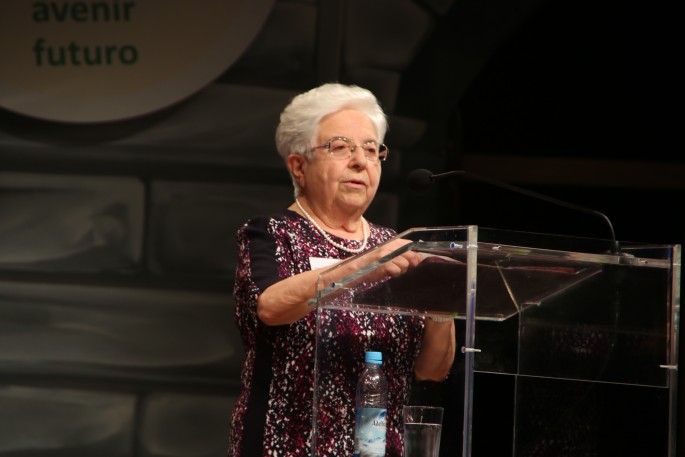
«It is paradoxical that the new Europe, which arose out of the demolition of the Berlin Wall, should be tempted, through fear, to shut itself behind new fences, building new walls and fences, in the illusion of being able to stop history that is once again knocking at its doors. The single currency project was supposed to be a big new step towards political union, a great new identifying moment in which solidarity and the sharing of sovereignty, in order to achieve common objectives, were to represent the fundamental pillars. Actually two examples show us how little this has been achieved. On the one hand, the serious delays and heated debates that followed the Greek debt crisis, which greatly undermined the foundations of solidarity among the member states, even leading to speculation on Greece leaving the Euro. On the other hand there is the Brexit issue and other separatist tendencies which also test solidarity severely. Because going out of the Union is not like leaving a club, but is equivalent to, and much more like, abandoning partners with whom we no longer share the same reason for being together: the founding pact. Europe is going through the dark night of its own principles, the dark night of its dreams. In reality, a great sense of disorientation reigns in our continent because of the presence of three simultaneous crises: an unprecedented migratory crisis, together with a deep economic crisis, against the backdrop of a demographic crisis. While leaving it to others to analyse the reasons for these crises, I believe that the deeper causes of Europe’s weakness today can be found in the denial of God and of the transcendent. This is a result of the gradual emergence and spread of secular culture which wants to do away with any link with the supernatural. In the search for total freedom, Europe no longer recognizes that its culture was formed through 2,000 years of Christian tradition. Denying this means cutting its own roots and finding itself like a lifeless tree. So is everything collapsing then? Is the continent’s dream of unity being shattered? No. We are here together, as Christian movements and communities in Europe, because we believe there is something that does not collapse. It is love; God who is Love. Our movements are bearers of charisms which are certainly very different from each other and yet all are the work of the Holy Spirit. But the Holy Spirit is precisely the one who creates fraternity (so to speak) among the Persons of the Trinity and who unites all Christians. So the idea of fraternity originates in Heaven and is the purpose of life on earth. All of us can bear witness that we met Christ one day and let ourselves be fascinated and drawn into his Gospel. Living his words led us to change ourselves and reach out to others, building relationships of gospel love and thereby creating communities that become leaven wherever they are. We have discovered a new willingness to be open to all, crossing the boundaries between Churches, between religions, between ethnicities and cultures, in a 360-degree dialogue, until we rediscover everyone as our brothers and sisters. In this way we have found the root of our European culture once more and, on this foundation, we have tried to interpret our present times, which concern the entire planet and all humankind as never before, from the perspective of moving towards a united world. In fact, applying the ideals of peace, justice, freedom and equality today means having a universal dimension, which fraternity makes possible (read the full text)».