21 Dec 2015 | Focolare Worldwide
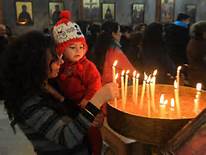
“The life of each day varies, because the danger varies. On some days nothing happens, and you could even forget that there was a war. On other days you could be on your way to work and get hit by stray bullets, or walk into a battle, or under falling bombs in the middle of a civilian area,” Pascal reports. He has been living in a focolare in Syria for several years. How are we preparing for Christmas? In Aleppo, Kafarbou and Damascus our communities are focusing mostly on the children, because in spite of the fact that it’s such a celebrated feast in Syria, families are finding it hard to experience the joy of Christmas. Therefore, the young people have done a lot of projects to raise funds which, joined to the donations that have come in from outside, has allowed them to expand their project of giving back the meaning of Christmas to the children and their families. In Aleppo, for example, there will be a feast for around 70 families; in Kafarbou they will visit houses in small groups, with food and gifts. In Damascus, where there are more possibilities, they’ve organised a Christmas concert and, in the meantime, will visit families with food, gifts, songs and games. . .” And in recent months with the escalation of violence, have you focolarini ever reconsidered your decision to stay in Syria? “No, never. The focolare’s presence is so important! There mere presence even without doing anything. It’s a sign that the Movement around the world is with them, with the Syrian people. I don’t know how to explain it. . . We’re not obliged to stay; we can leave. We’ve shared so many hardships with them over these years that they feel like we belong to the them, and we feel that they belong to us. Our reasons aren’t rational but affective, a matter of the heart. There’s no rational reason for staying in Aleppo. The Syrian families that stay do it because of their connection to the land, to their people, because everything else says: get out! Here, everything is disappearing, day by day there is less and less of a future for your children. I saw some remain out of a choice of love, to give witness. For example, some remained so that a school for deaf children could continue. Living for others gives you the meaning to life, it gives meaning to your existence.”
20 Dec 2015 | Focolare Worldwide
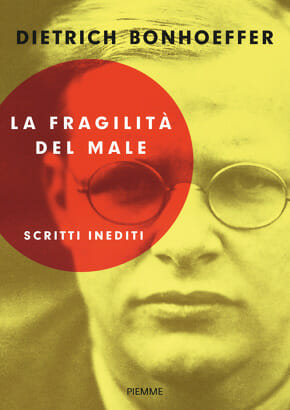
Bonhoeffer was among the first to criticise the Third Reich and was in the United States when the Second World War broke out. He returned to his homeland to suffer with his people. Conscious of the risk, he faced it in a spirit of freedom and with a strong sense of justice. A theologian and Lutheran pastor, he died at a concentration camp in Flossenbürg on April 9, 1945 after being condemned for his opposition to the Nazi regime. We remember him with some of his thoughts on mercy published in “La fragilità del male, raccolta di scritti inediti”. “Each day the Christian community sings: ‘I have received mercy.’ I have obtained this gift even when I closed my heart to God: when I took up the path of sin; when I loved my faults more than God; when I encountered misery and suffering in exchange for what I had done; when I was lost and was not able to find the path of return. Therefore, it was the word of the Lord that came out to meet me. Therefore, I understood: He loves me. Jesus has found me: he was near to me, only Him. He gave me comfort, forgave all my errors and did not find me guilty of evil. When I was his enemy and did not respect his commandments, he treated me like a friend. When I did him wrong, he returned to me only goodness. He did not condemn me for my misdeeds, but unceasingly sought me out and without rancour. He suffered for me and died for me. He put up with everything for me. He won me. The Father had found his son again. We think of all these things when we intone that song. I can hardly fathom why the Lord loves me in this way, why I am so dear to him. I cannot understand how he managed to and wanted to win my heart with his love, all I can say is: ‘I have received mercy.” Dietrich Bonhoeffer, La fragilità del male, raccolta di scritti inediti (Piemme, 2015)
18 Dec 2015 | Focolare Worldwide
The 11th edition of the School of Inculturation will be held in Kenya at the Mariapolis Piero, from 17 to 23 May 2016. Maria Voce and Jesús Morán will also attend. In May 2016 the “Mariapolis Piero” in Kenya, close to Nairobi – will host the 11th edition of the School of Inculturation, a reality which Chiara Lubich prophetically foresaw. The 250 or more delegates from Sub-Saharian Africa will focus on the theme, “The African Family,” and will reflect on the relationships of “man-woman” in their roles and responsibilities in family life, and the challenge of educating towards values. It will be held as part of the Pan-African meeting of the continent’s New Families. The national commission will present the speeches and dissertations that will trace the roots of the cultures, to be demonstrated through the concrete experiences of men and women who have embraced the charism of unity. There are great expectations and a particular joy in knowing that Maria Voce and Jesús Morán, President and Co-President, respectively, will attend together with some central councilors. Further details to be announced.
18 Dec 2015 | Focolare Worldwide
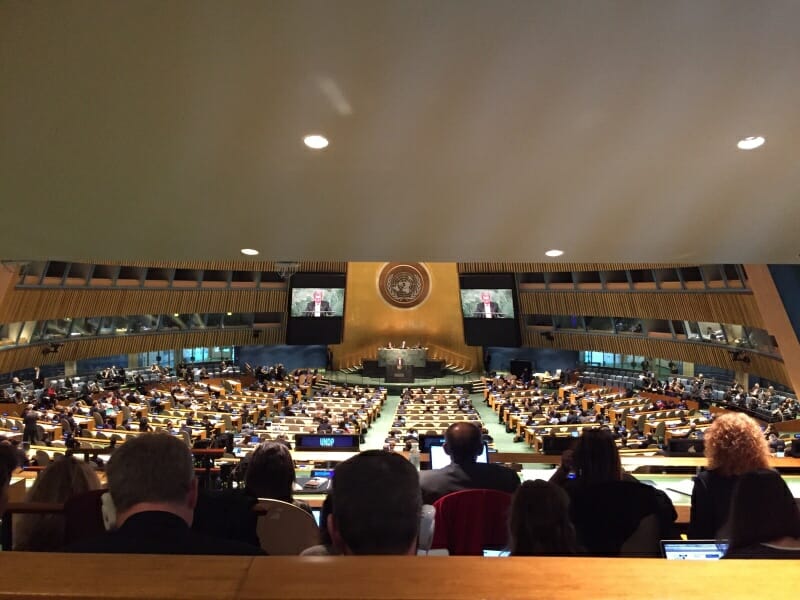
A working session during the conference
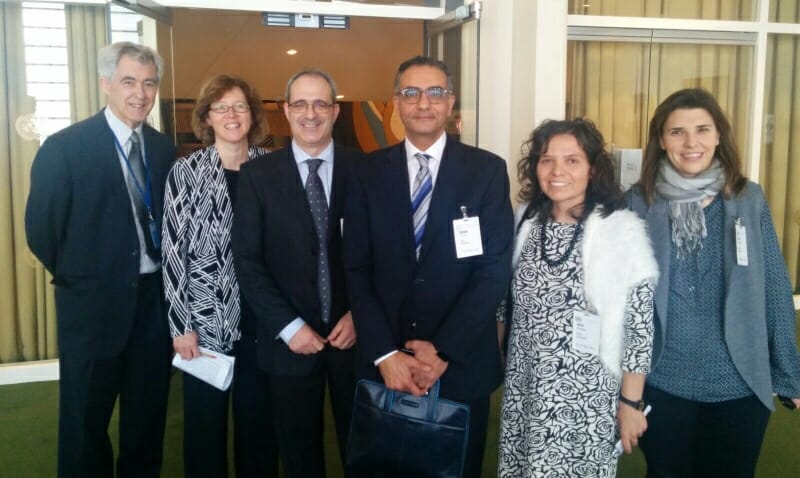
With Mr Fadi Chehade, President of ICANN (centre), a non profit organisation which administers the assignation of top level domains on the Internet.
16 Dec 2015 | Focolare Worldwide, Senza categoria
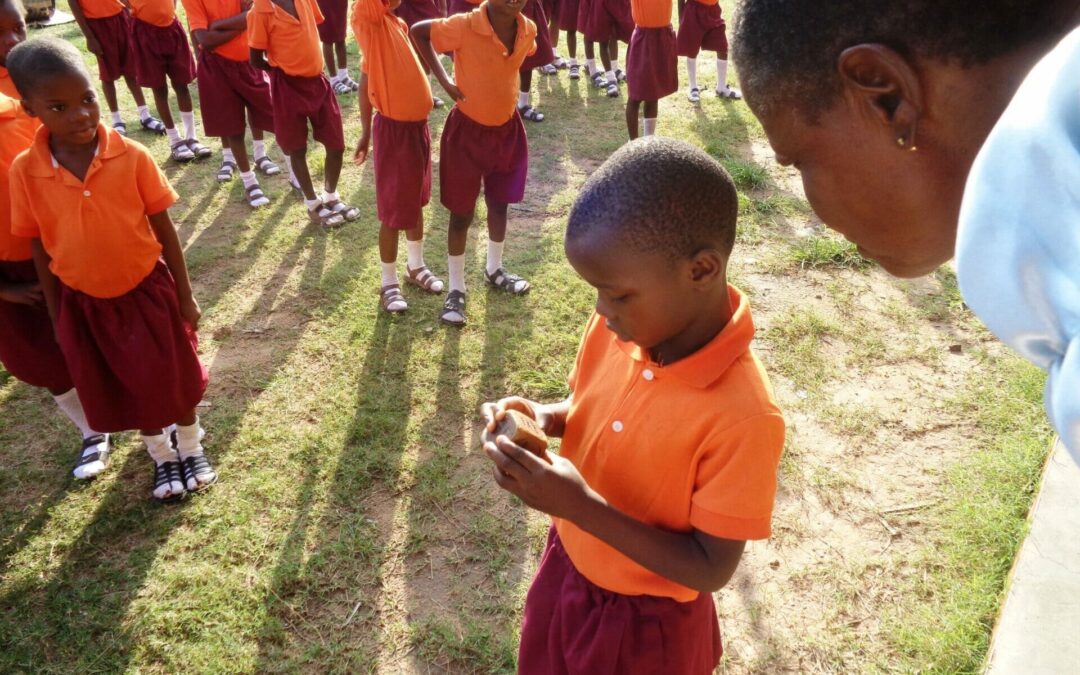
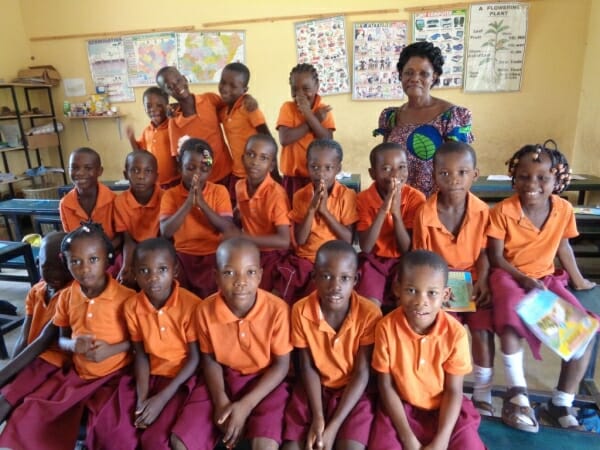 Education is one of the most important challenges the Nigerian schooling system has to face, and where at times Nigerian society has to deal with aggressive behavior and religious traditions that imbue fear and a sense of helplessness in the face of evil. “One day,” Christiane recounts, ” a mother stopped bringing her daughter to school because we had asked the parents to cut the hair of the children who were about to start the first year of nursery school. She said that someone who was believed to be in contact with spirits had told her that her daughter would die if she cut her hair. And this explained why the child no longer went to school.” Christiane who is of German origin, had worked for many years in the youth section of the Focolare. Through support from a distance project of the New Families association, today she still works with children in Igbariam, a village 40 km away from Onithsa city, south-east of Nigeria, and where the “Fraternity School” is established. The project started in 1995 as a result of the efforts of a group of the Focolare, which started in the 1980s a human promotion process to offer concrete development opportunities through deep relationships with the local people and respect for local traditions. “Through concrete acts of love for some children, an after-school club was formed, which later, slowly turned into a nursery and then an elementary school. Starting from the nursery school, the endeavour is to give the children a global education, preparing them to face the many challenges of this great nation.” Instituted in 2006, today the school counts 223 students, with 75 in the nursery and 148 in the primary school. With time, also the parents became involved in an educational and social project which avails of an educational method based on human values, a teaching style that believes in and respects the dignity of the child as a person. Attention is paid particularly to the smaller ones, just as the Gospel says, offering new tools for global human growth. For example, the “dice of love” is used, with which students and teachers live their daily commitment to peace and solidarity.
 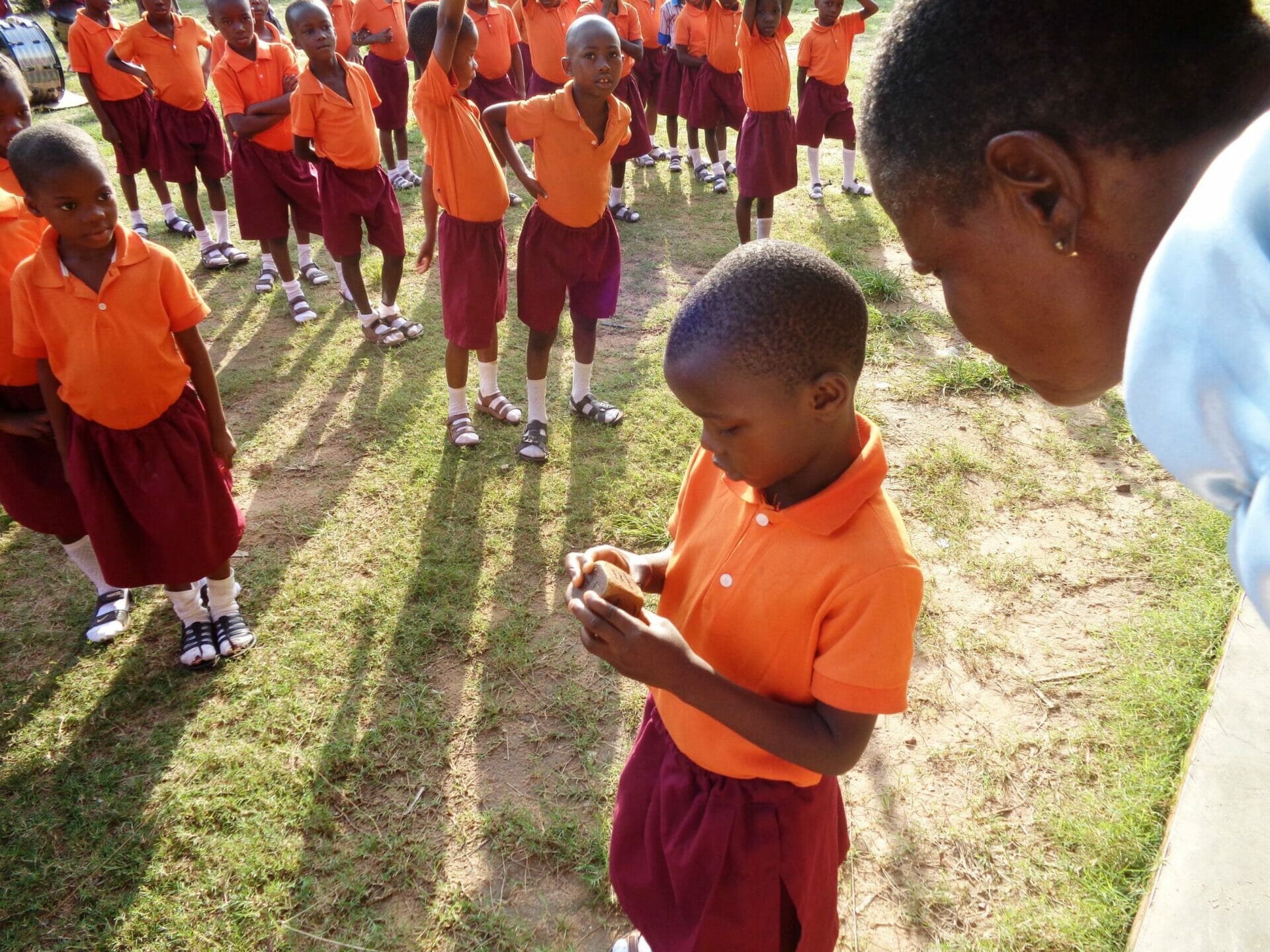 It is also a novelty since in many Nigerian schools, physical punishment is considered a necessary practice in the educational process. The idea in force is “Spare the rod and spoil the child,” and it is not easy to change this mentality. However, in an interview with the newly instituted “New City Nigeria,” Mrs. Akwobi of the Nwafor Orizu College of Education Nsugbe, affirmed that “current psychological studies have demonstrated that the negative effects of these corrective measures surpass the positive ones and that the children often become tense and aggressive with physical punishments. They are unable to empathise with the teachers and transfer this rejection to the subjects they teach.” Mrs Akwobi went on to say: “Instead, it is important that they are able to develop awareness in choosing the good and not only to avoid punishment. The teacher should behave as one who always has something to learn, because teaching is a two-way process. Listening to others, patience, and comprehension have a positive effect on the children and their learning abilities. Furthermore, adopting nonviolent measures in school relationships helps to also reduce the rate of violence in society. These educational principles are being implemented in the Fraternity School in Nigeria.” Christiane concluded by saying: “Here, many people leave to look for a better life in Europe. Our job aims at helping people to build a liveable experience in their own countries. Thank you for whatever help you can give! You cannot imagine how much it is helping us to proceed with social works, spread a new culture, and contribute to the development of this country based on Christian love.” Solidarity at a distance: http://www.afnonlus.org/
14 Dec 2015 | Focolare Worldwide
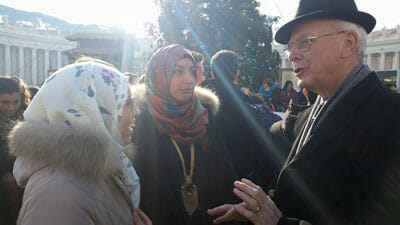 “Carry on! Carry on with courage along the road of dialogue and brotherhood, because we are all children of God!” Pope Francis forcefully told the hundred people from the Focolare and several Italian Muslim communities at the end of the December 13th Angelus. They had come together to testify to their common journey that has been underway for many years, “Christians and Muslims Together in Building Peace,” as the banner they held read on Saint Peter’s Square. There were imams with their communities from Rome, Trieste, Teramo, and Catania, young women and teenagers from the Mosque of Centocelle in Rome, families and children, scholars and journalists. There was also a delegation from the Buddhist, Risho Kosei Kai Movement, and representatives from Religions for Peace and from other religions. From the festive atmosphere on Saint Peter’s Square, the group of 400 people moved to the seat of the Augustinianum which is just a few hundred metres from the colonnade surrounding Saint Peter’s Square. The lunch they shared provided a setting for some jovial interaction that everyone was looking forward to; there was a prayer room for Muslims; Mass for Catholics – such an unusual event that it was widely covered in the press.
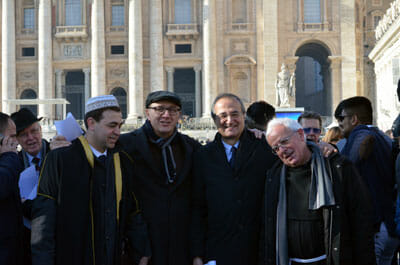
From left: Imam Maher Akkad, Antonio Olivero, Michele Zanzucchi, father Egidio Canil
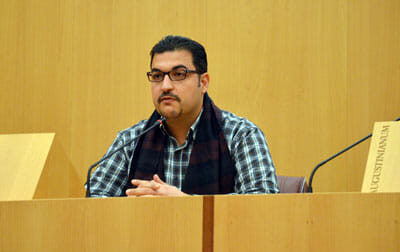
Amjad Zedan, a Syrian student from Sophia University Institute
