4 Nov 2015 | Focolare Worldwide
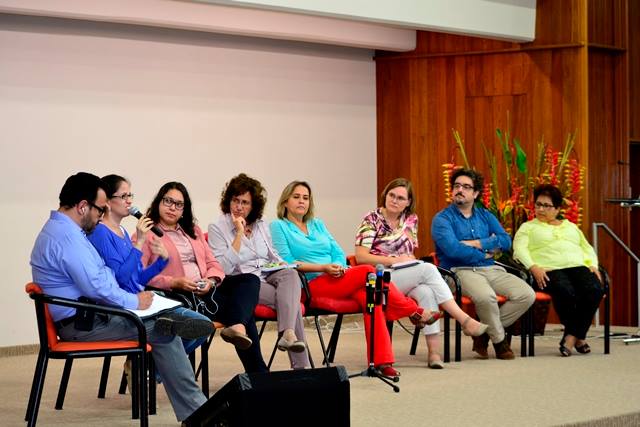
 Connect dreams and spread a new culture was the title of an inter-American workshop by the Economy of Communion, which was held on October 26-31 at Mariapolis Ginetta, San Paolo, Brazil. Mariapolis Ginetta is the place where Chiara Lubich’s inspiration for the EoC was born in 1991. Sixty young people from Paraguay, Argentina, Mexico, Guatemala, Cuba, Colombia,, Bolivia and Brazil attended the even and have decided to embrace the EoC project and its innovative principles as they were first presented by the Focolare foundress. The business owners promised to accompany the young people on this difficult path. At the conclusion of the school every student received a certificate of participation from their partner. Thus a new form of communion was begun that has been called “Operation one for one”. Clézia Maria Pinto, head projects for Anpecom (the association that coordinates Economy of Communion projects in Brazil), announced the launching of a financial support programme for small businesses that operate in socially vulnerable situations, offering nutritional products or services in favour of educaiton health and housing, as well as to projects that focus on middle, low-income, and the neediest groups. The programme is inspired by projects that are already underway in other areas of the world, that offer funding and benefits linked to general adherence to the EoC. In the invitation, those who worked in preparing the workshop, wrote to their peers: “Let us not give up in front of social injustice and inequality” and posed a challenging question: “What if this change were to begin from becoming aware of what poverty, economy, work and interpersonal relations are?” These were only some of the topics that were presented during roundtable discussions, small group meetings where the main actors were the young people themselves and their expert business owners who had years of experience under their belts. In his final remarks, Anouk Grevin from the International Commission of the EoC admitted that there was the hope that the present workshop would function as a laboratory that would open new roads for the EoC not only in Latin America, but around the world.
30 Oct 2015 | Focolare Worldwide, Senza categoria
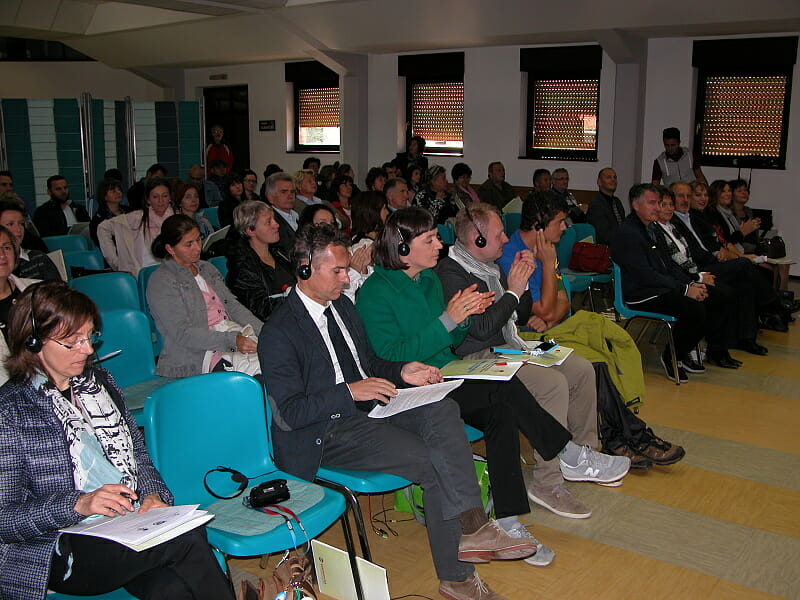
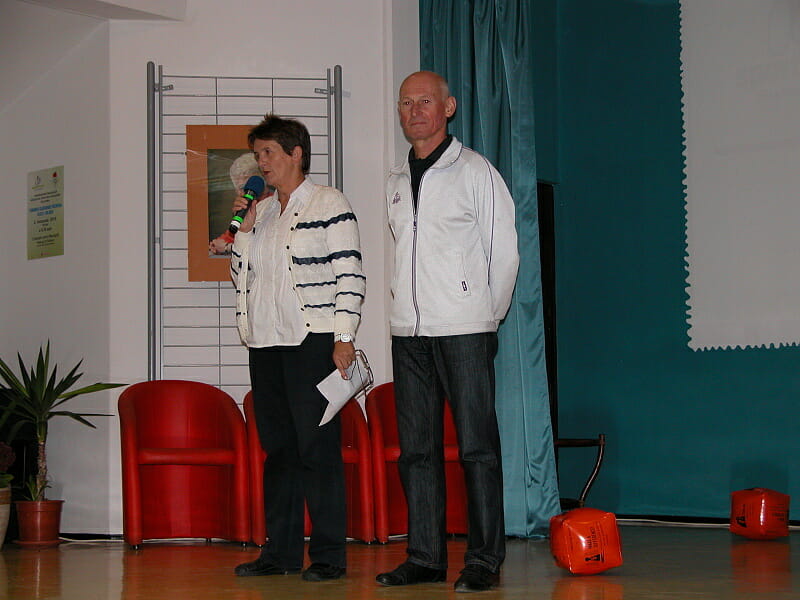 Can sports contribute to building a more united world? Could it become a field of action and a tool for unity among individuals and peoples? These were the queries that sparked up the experience of the founders of Sportmeet, motivated by the sharing of the common passion for sports. “Since we were not sure we had all the answers, we scouted out the people and experiences of the sports world that could help us, and through the years were able to establish, specifically three elements that trace the identity of Sportmeet: the high consideration for sports as an important aspect of society; the capacity and objective to unite the most diverse categories of people interested in sports; and the challenge to merge theory and practice in a framework which tends to separate the sports specialists from those who practice it.” These were some excerpts from the speech of Paolo Cipolli, President of Sportmeet for a United World, which opened the seventh convention organized by the Sportmeet network in Krizevci (Croatia). The intent was to consider sports in dialogue with contemporary society, with the conviction that it can give a specific, stimulating and positive contribution to culture and the construction of active and responsible citizenship. About a hundred participants – deans, teachers of movement control sciences schools, pedagogists, athletes, heads of sports clubs, referees, educators, university students, and sports journalists, most of whom did not declare any religious convictions – coming from various regions of Croatia and Serbia, turned up at the event held at the “Mariapolis Faro” in Croatia from 2 to 4 October. Also present were the local and regional institutions that sponsored the Convention, as well as the national TV channel, local radio, and athlete, Branko Zorko, half-marathon road running specialist and three times world Olympic champion in the 1500-metre race, a native of the place and who has been in contact with Sportmeet for some time now. The theme of the convention “Free time as a resource for the young generations,” which evidenced the great changes and risks deriving from the massive use of the internet and diffusion of new technologies, was clearly and passionately underlined by Mirna Andrijašević of the Faculty of Motor Sciences of Zagreb. Alexandar Ivanosky of the private Sports and Health Faculty of Belgrade (Serbia), underlined the importance of the presence of adults, and called all to face the challenge of seeking creative approaches together with the youth who are often alone in facing the powerful stimuli of technology and the social networks. Milan Čapalija, psychiatrist, and Majda Fajdetić, pedagogist of the Zagreb Ministry of Education, highlighted the various methodologies that promote pedagogic action in reassessing the importance of games and sports. Various interactive workshops ended with a game for boys and girls of the high school in the city’s charming main square. It was a testing ground and at the same time also an occasion to divulge the typical activities of Sportmeet which centres on dialogue as a resource and essential opportunity to promote a new sports culture. As a sign of the atmosphere of esteem and trust which has grown over the years, Alexandar Ivanosky (Serbia), underlined the capacity of Croatian sports athletes to excel in team sports and encouraged even greater stringent interaction to share the spirit of fraternity that drives this group in the Balkans and also in other parts of the world. The convention closed with the announcement of the next Summer School 2016 to be held in the same city of Krizevci from 14 to 17 July.
29 Oct 2015 | Focolare Worldwide
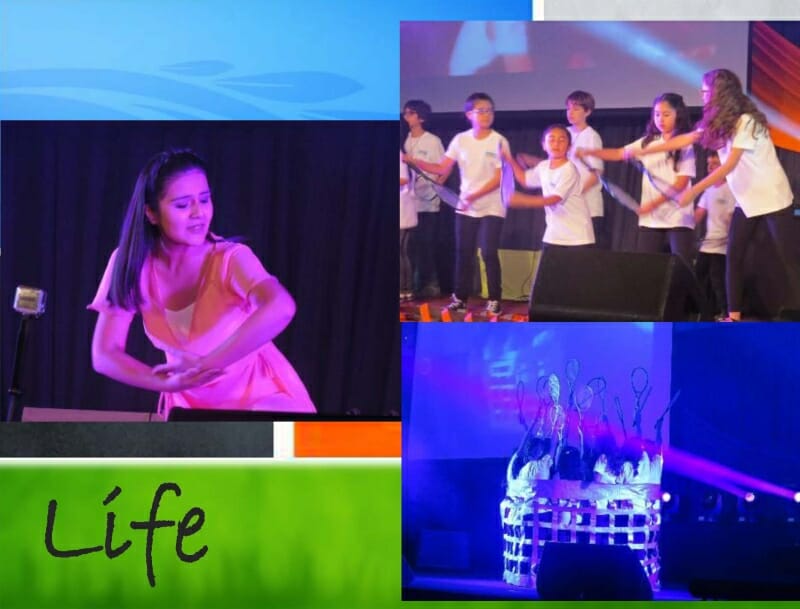
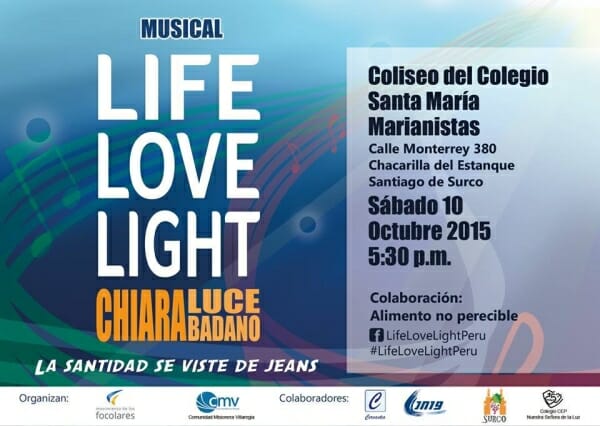 The musical, “Life, Love Light,” inspired by the life of Blessed Chiara Luce Badano, has arrived in Peru: on October 10th, just a few days after the 5th anniversary of the beatification of the young woman from Sassello, the show took the stage in Lima. Months ago, the Peruvian young people of the Focolare Movement had already contacted their Spanish peers, who had put on the same show in Burgos in their language, in order to obtain the materials. They were helped by the collaboration of the Community of Villaregia and the Misioneras Identes and several professionals – as they admit, “The show was beyond our capacities,” – who undertook the preparation of the musical.
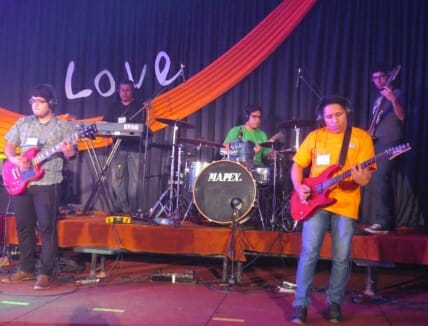
 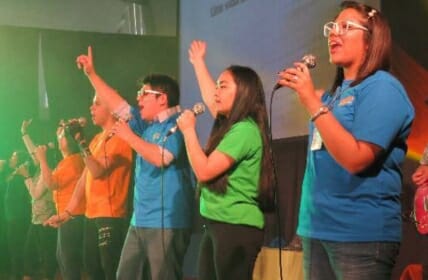 There were 75 young people who participated in the musical production, both from the Focolare and from other Movements who got involved. And one cannot overlook a series of “fortunate coincidences” in which the young people saw the hand of God’s Providence: from the availability of a hall which seats hundreds in a well-known section of Lima, to the meals brought for the whole team, thanks to the generosity of an adherent of the Movement, to the interviews released to two television stations – one of which taped the show for a pre-recorded broadcast.
  Even the 500 spectators did not hold back their generosity: while the admission was free, they responded to the appeal to donate dry or canned goods, which arrived in great quantities, to give to the needy people in the Community of Villaregia. The show was a great success in other ways, as the participants testified that it helped them to discover and value many hidden talents. A touching testimony was given by a mother of a 13-year-old girl affected by a serious form of depression, who said: “You have changed my daughter’s life.” A message sent by Chiara Luce’s parents, Ruggero e Maria Teresa Badano, closed the evening, with their thanks for all that was achieved: “Her push towards sanctity and her faithfulness to the values of the Gospel of Jesus,” they wrote, “guided Chiara Luce even in the most difficult moments of her existence, and we are convinced that she will know how to inspire you. Because, as her spiritual mother Chiara Lubich said, ‘You have only one life, it’s worthwhile to live it well.’“
28 Oct 2015 | Focolare Worldwide
© CSC Audiovisivi
© CSC Audiovisivi
27 Oct 2015 | Focolare Worldwide
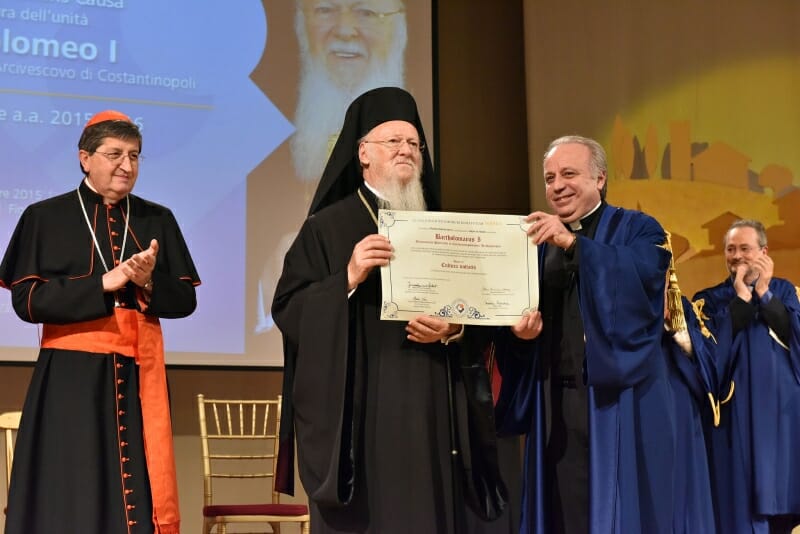 During his lecture on October 26, 2015, following the conferment of the title of Doctor in the “Culture of Unity” by Sophia University Institute, Bartholomew I recalled the history of relations between the two “sister” churches. Those relations had been marred by centuries of misunderstanding and, in time returned to the path towards unity with the lifting of the mutual excommunications and the steps taken by such figures as Paul VI and Athenagoras I whose legacy has been embraced by Bartholomew I. It is a path that has recently recalled the value of “synodality” as a key element in guiding the Church of Christ, and there were several occasions that expressed spiritual synergy. In his message, read by Cardinal Betori, Pope Francis addressed “the beloved brother Bartholomew” stressing “the common journey our Churches take towards full and visible unity, to which we aspire with dedication and perseverance.” The Patriarch was deeply touched by the Pope’s words and said he was “very” happy, confiding that he would “return to Istanbul stronger, more certain” knowing there was a “a brother in Rome who wished to work and pray with us to accelerate the unity of our churches” and to whom he responded with the “Kiss of Peace” invoking the prayer for a long life for Pope Francis.
 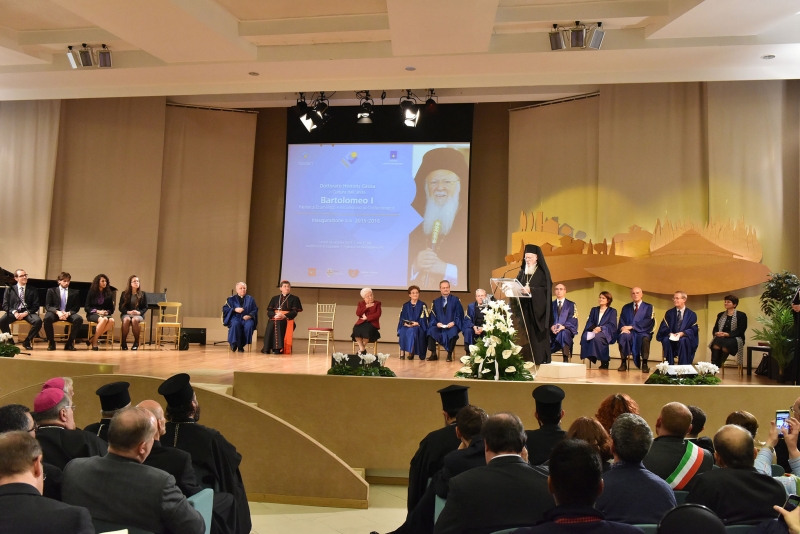 The Patriarch’s words breathed a history that had gone from “the refusal to recognise the other as Christian” to the rise of “protagonists of the new springtime in the Church who would make unity the main focus of their pastoral activity for the good of all” and because of their single desire of “advancing the ways of God.” His words also breathed a future history in which both Church and human institutions would understand that “diversities are a gift and not contrapositions, richness and not imbalance, life and not death” The ceremony was held in the Focolare town of Loppiano, Italy, where Sophia University Institute is located, and that day marked the opening of Sophia’s 8th academic year. More than a thousand people attended the extraordinary event with the presence of His Holiness Bartholomew I – several delegations from the Orthodox Church, representatives of the Roman Catholic Church, civic leaders, a Muslim community and over 4 thousand viewers connected via internet. The recognition statement presented to the Patriarch of Constantinople expressed gratitude “for his courageous, enduring and fruitful patience in favour of a culture of unity” of which he is a “beloved and listened-to protagonist on the international level, on the ecclesial level in the dialogue between the Churches, on the interreligious level in the encounter amongst different religious traditions and experiences, and on the cultural level in the collaboration amongst women and men of all beliefs who follow the path of universal brotherhood.” In an interview, Dr. Piero Coda, President of the Institute, went on to say – explaining the culture of unity – it is not a utopia, but an “inspiration through which Chiara Lubich understood that the charism of unity given to her by God, could also be expressed by culture. There is always a need for mediations, models, as Pope Francis says, a cultural revolution, to channel existence towards new frontiers. This is why Sophia University Institute was begun.” Focolare president, Maria Voce, spoke for the whole Movement expressed to the Patriarch the joy and the honour of welcoming him to the town of Loppiano, mindful of the leading role he plays as a spiritual and intellectual figure, the value of his testimony and of his “calls to justice and the safeguarding of the environment which is our common home.” “Dialogue is our common priority,” Maria Voce continued, as she stated our wish to “pursue the path in total harmony of ideals and life witness.” Another step, recalled by Bartholomew I during an interview at the conclusion of the ceremony, was the November 2015 gathering in Istanbul, of Bishop Friends of the Focolare from different churches: “There,” he said, “we will be able to express our will to work for the unity of our Churches. We are glad and ready to welcome them and to exchange the Kiss of Peace between East and West.” Unity in diversity was one of the “new terms” that were mentioned, and that University president Piero Coda strongly emphasised: “the Gospel is not uniformity, but appreciation of differences. Flowing from the same font, they are ‘unity’ precisely in the measure to which they enter into relation with one another; that is, that they mutually recognize the gifts that each of them carries. Therefore, diversity is the flower of unity when it is lived as a relationship, as fraternity, as communion.” “And it is precisely in the acceptance of the diversity” – the Patriarch concluded – “through the dialogue of love, mutual respect, acceptance of the Other and our availability to welcome and be welcomed, that we will be able to become for the world icons of Christ and like Him, in unity, also be diversity.” Replay streaming Message from Pope Francis Press Release
![At the conclusion of the Synod on the Family]()
26 Oct 2015 | Focolare Worldwide, Senza categoria
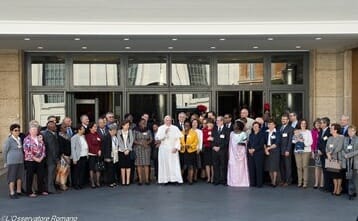 It was a living experience of the Church that was very important for them, a unique experience in their life that they will always carry in their hearts. That is how the family from Colombia described their experience – María Angélica, a dentist, and Luis, Director of the Ethics Department at the University of Gran Colombia, and their two sons of 18 and 20 years. From October 4th to the 25th, they attended the Ordinary Synod on the Family “The vocation and mission of the family in the Church and the contemporary world.” They have been working for families for over 20 years in connection with the Focolare Movement, accompanying couples in the process of preparing for marriage, and for the years that follow when the inevitable crises threaten to deteriorate the sacrament and the love. You had an active role in the work of the small groups. Which moments seemed important to you in making a contribution to the Synod? The experience in the small groups was quite beautiful, because we were able to offer our own experience and that of other families, presenting what we wish to live as a family: the dynamic of love that is lived in the Trinity – in which each of the Three Divine Persons is Love for the other. This is one thing we were able to contribute. Also: emphasising the importance of the Eucharist; we highlighted the need for the presence of Jesus amongst families through mutual love; and so we shared with them about the times we have asked forgiveness of one another when there was not full unity. Another contribution was the point about divorced and remarried couples. It is important to feel a particular love for these families. And that according to the measure in which the experience of faith in them begins to grow – accompanying them to the point that they feel that Jesus is also in their neighbour, in the Word of the Gospel that is meant to be lived, in the community that lives in mutual love – their nearness to Jesus grows. We felt that one important point to be presented to the Synod fathers was Jesus crucified and forsaken, since He took upon Himself the sufferings of humanity. In Him we see the one who was betrayed, humiliated, feeling alone, abandoned, culpable, left without an answer to His question. We are all joined in Him because He lived through all that, and in Him we can have this unique communion wherein all are contained in this yes to Him. This was our proposal: that there is no difference between the family that has not suffered failure and the one that has, because we have all feel accepted by Him. We described the experience of many families, also in the Movement, in which they had said this yes with the pain of not being able to receive the Eucharist, but still knowing that they were called to holiness. Therefore, they are not excluded from the invitation to holiness. As Pope Benedict once remarked: they highlight the beauty of the indissolubility of marriage; they are also builders of this indissolubility, so they make a huge contribution as they grow in this yes.
  At times, it’s a matter of understanding the deep meaning of the sacrament. For many people of our day the sacrament of matrimony doesn’t say much, also because the couple has not been provided with an adequate formation, neither by parish nor ecclesial movement; whereas, it is a part of the journey of every human being to understand how to be human and to discover the transcendent dimension within oneself. It needs to be discovered how this sacrament can help in forming a family and why, through the family, we are responsible for children.” One day, coming out of the small group session, you felt the wish that the bishops would comprehend your deep love for the Church. . . “The relationship and the dialogue with the bishops has been drawing us closer and closer over the past few weeks, closer in knowing one another, listening to one another, also in trying to be ‘mothers’ towards them. For example, if they had a cough, a cold . . . we wished that they would be able to feel that we families also love the Church as they do; that we suffer for the Church as they do; that we also give our life for the Church. We’re on the same journey. As Chiara Lubich once told us: each one of us is like a piece of a mosaic, so our value lies in helping to create the beautiful reality that is the Church. It was very important that this was said – and heard.” One of your own offerings was included in the final document. “Yes, in the final small group meeting the relator asked if we would describe our experience as a family. Then, what was proposed for the final document also contained what each one of us had said. You can’t even tell, really, what was proposed by a family and what was proposed by a Synod father: it was everyone’s proposal, unanimously agreed upon.” What would your wish be for the conclusion of the Synod? “Many best wishes! The hope that, little by little, all families will discover the richness contained in them, no matter what their situation – ‘regular’ or ‘irregular’ – if they live as a real family, to make society better: for the growth of humanity.”
