24 Oct 2015 | Focolare Worldwide
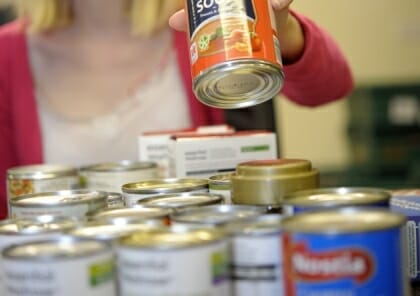
“We also felt the need to do something for all the poor families in our city. And we discovered that here in Teramo (Italy), the Caritas association runs an emporium where they collect basic goods for those in need. And so, with our parents, we visited this emporium and having discovered – to our great joy – that some bakers in the city donate not only the leftovers but also fresh bread, we decided to take eggs, jam, toilet paper, and refreshing tissues (since, as they said, they work like water). We filled up three trolleys with gifts!!! We all, kids and adults were all very happy, because we discovered a way of helping people who have nothing to eat. Now that we know about this special supermarket, we shall return and try to involve all our friends.” (The gen4 and gen3 boys and girls of Teramo, Italy)
20 Oct 2015 | Focolare Worldwide
http://vimeo.com/95726085 Jerusalem, May 24th: the encounter with Pope Francis and Patriarch Bartholomew recalls the historic embrace of 50 years ago between Paul VI and the Ecumenical Patriarch of Constantinople, Athenagoras I, which was the start of a new page in history following centuries of separation. We retrace this unedited page in the history of ecumenical dialogue.
15 Oct 2015 | Focolare Worldwide
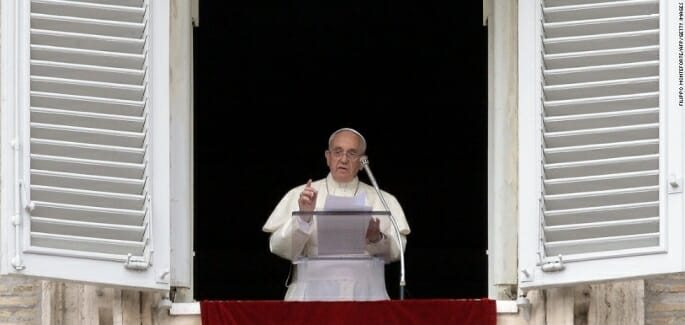
“We are painfully wounded and follow with deep concern what is taking place in Syria, Iraq, Jerusalem and the West Bank where we are witnessing an escalation in the violence that involves innocent civilians and continues to increase a humanitarian crisis of enormous proportions. War only brings destruction and multiplies the sufferings of entire populations,” stated Pope Francis during the works of the Synod on the Family. “Thank you for your prayers, for this situation we are going through in the Holy Land,” writes the local Focolare Community there. “The hatred leads to violence, and the violence to more hatred . . . a vicious circle is spinning out of control. You can see the situation here transmitted on the media every day. All of us, from both sides, like many other people are deeply saddened and feel helpless in front of this evil. We try to move carefully; we pray more; we try to sow love with a smile or an act of kindness. . .” “We continue to pray and to build peace,” they conclude, “hoping that the longing for reconciliation prevails.”
13 Oct 2015 | Focolare Worldwide
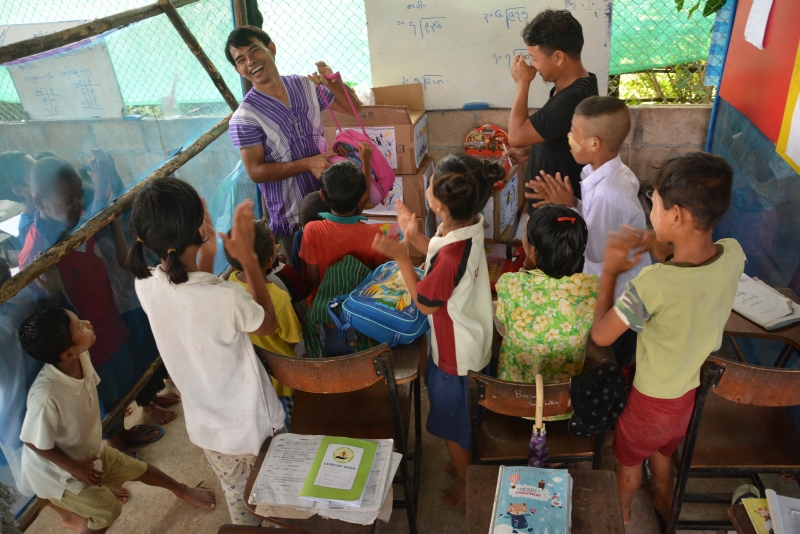
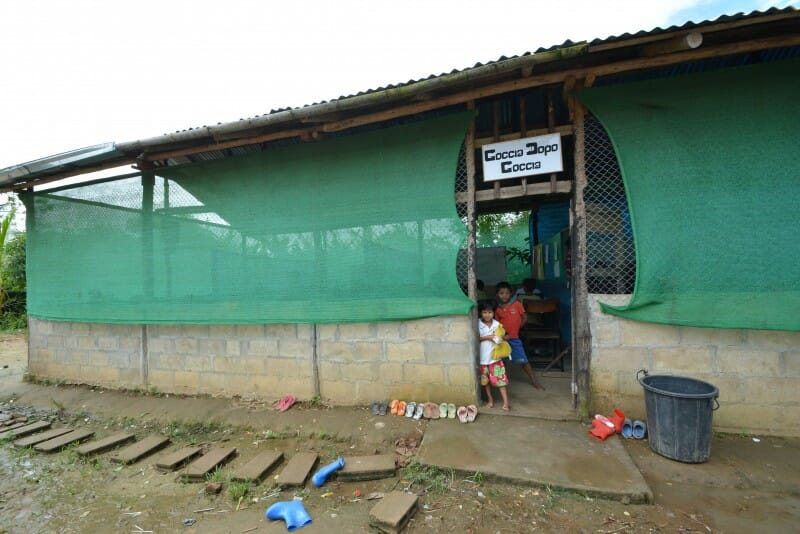 “It’s early morning, following a night of rain on the border between Thailand and Myanmar. Our breakfast consists of a hard-boiled egg and coffee. It’s the beginning of our adventure: four days in Mae Sot with a priest who works for refugees, the least of the least, the ones who don’t get into the official United Nations camps, the ones nobody cares for and who are often unpaid by those for whom they do a week’s work. They’re undocumented and don’ts have the power to protest, because nobody will defend them. Many of them have spent many years in the forests, and finally they can come out. Living amongst the walls and tunnels of factories and makeshift huts, it’s a miracle they’re still alive. Nobody talks about them, and nobody knows about their situation, but everyone knows that they’re worth their weight in gold, a low-cost work force of people ready to work for small salaries, just enough to live on. It’s why Mae-Sot will become such a special economic zone with many industries. We want to be here for at least a few of them. We’ve begun a project that helps the children in a school that didn’t exist too long ago, if not in the dreams of the children of Latina, Italy, and the refugee peers in Mae-Sot.
 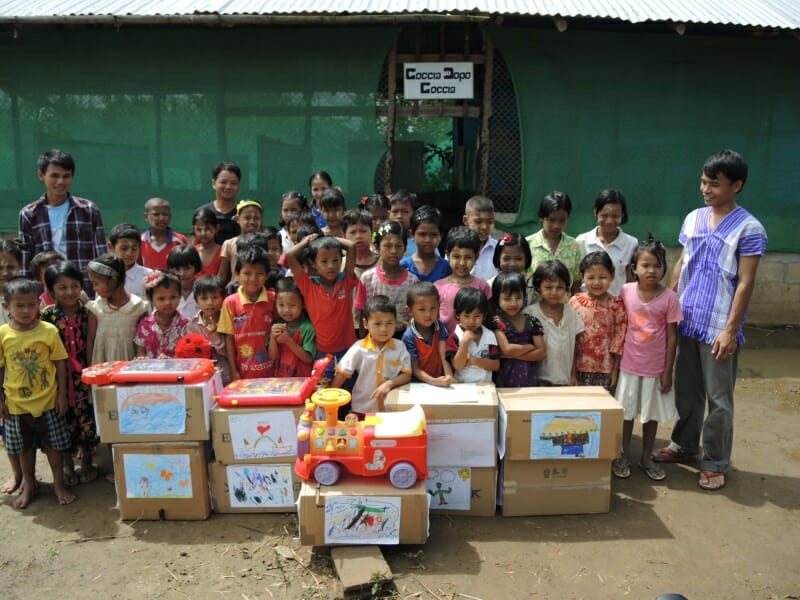 Now, the school does exist and it’s named is “Drop by Drop”. It’s an unlikely pairing between Latina and the mire of Mae-Sot: injustice, illness, rape, abuse, and so on. Some do well, and some thank God that they are still alive in the morning. . . and at night! Like one of the children at the school. I ask his mother: “What is your son’s name?” “Chit Yin Htoo,” she tells me. It means: “If you love me answer me.” “Did you give him the name when he was born?” I ask. “Maybe 3 or 4 years ago, maybe 5 or 6.” At this point I stop and am unable to go on writing. I can only pray that I don’t cry in front of this mother. How can this be? This project was a “loving folly“’ that only the mind of a child could dream up. And that’s what love is, it makes the desert flower, it spurs you to do the impossible, and it makes you glad! We adults follow these children with fear and trembling and respect, I would say: “Their angels gaze upon the Father in Heaven.” When I’m with “If you love me, answer me” I find it hard to make him smile. He’s shy and reserved. Only after much time am I able to take him in my arms: 6 years old, or perhaps 5. . . nobody is really sure . . . fragile and light as a feather. What have his small eyes seen? With a faint voice he’s just able to whisper a message. We distribute food, milk and especially puppets and toys: lanterns, then clothes that make everyone happy. “We don’t have enough for everyone, but let’s ask for a miracle,” I suggest. Let’s try to love one another and take care of each other as we do of ourselves.” Their eyes brighten when they see the football and football uniforms that have been given by a Football Academy of Priverno, Italy. So much love arrives, and the children are gladdened because they feel the love. It changes their sad eyes. The school doesn’t have actual walls: slightly damaged blackboards. The teachers are volunteers who are only able to be paid a monthly salary of 50 €. Then there is the net and the toilets. . . I feel that I am inside a sanctuary of love, the kind of cathedral that Pope Francis would like. Years ago, I made a vow – that this would be my people and I would never abandon them. In front of this school, this “Drop of love” in the ocean of evil that surrounds us, I renew that vow.” Luigi Butori https://vimeo.com/140934325
12 Oct 2015 | Focolare Worldwide
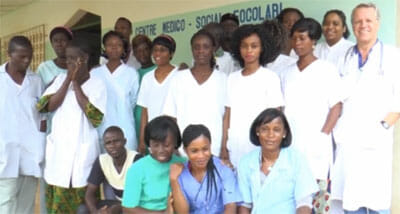
«During these years I think I alone visited 50,000 patients,» says Dr. A. Carlo Montaguti, a focolarino doctor and Director of the Social Medical Centre of the little Focolare town in Man, Ivory Coast. «I was a doctor in my country, Italy, but my practice was not so intense. Those who preceded me when there was still the war, told me before my departure: Carlo, if you don’t treat them, no one else will.» The patients arrived also in the night. The health records were compiled in the apatam (shed) in front of the hospital, and then they entered for the medical checkup by any of the three doctors of the centre, one of which is Muslim. The doctors prescribed the lab tests and got the results in about two hours. In a second visit, the diagnosis was done and the treatment prescribed. In the span of a morning one manages to get everything done. «It is not usual to have a lab for analysis in such a small centre in the suburbs,» Carlo continues; «I worked for four years without a lab and it was really difficult.» Luc Dro, head of the laboratory, explained that being in a tropical zone, there is great need for studies on parasites that cause malaria and other endemic diseases, but the lab is able to perform a complete check-up. The centre also has a small pharmacy, where over a 100,000 consultations were registered. «We do all that is possible to put the patients at the core of our work – says Dr. Alavo Bazini – and this explains the great influx. It does not suffice to say “the medicines are free of charge,” if the people are not satisfied. This is where the centre’s originality lies.» When possible, there is also a cultural mediator who translates into the local tongues. «We also have the internet and wi-fi connection – explained Dr. Eliassa Sow – In this way we can do research work and cooperate with other doctors from afar.» Dr. Montaguti continues «I came in 2004 – when the centre consisted of two tiny rooms for visits and one for medications. The people have appreciated our work especially because during the war in 2002, in the most difficult moments when all the foreigners were leaving the country, we decided to stay on, and risk our lives. They understood that we were there for them and this generated their trust. At times it came about that on a Monday, after the weekend break, the patients said: ”Doctor, I tried to endure in order to come to you.” If their situation was not too serious, they preferred to wait another day and suffer a bit more, to be able to come here!» One of the strong points of the centre is also the healthcare team which is involved in the entire care process. When the political-military crisis ended and the situation in the region calmed down, the term of the centre was extended and in 2008 we moved into a new facility. «It seemed like a dream – Carlo recalls – but after two years with the influx of patients – more than 80 a day plus their relatives – quite a crowd! – the old structure could not take any more. And we continued to dream.» And so last 10 October, the new Focolare Social Medical Centre, opened last 7 September, was inaugurated in Man, a stone’s throw from Mariapolis Victoria. It is a modern architecture for a facility of over 1,000 sq. m, with the addition of new services: 15 beds, a dentist’s studio, a physiotherapy room, and new diagnostics equipment (ultrasound scans, hemoglobin electrophoresis and microbiology). In the last days the nutrition centre, previously located in the district of Libreville, was completed and transferred to cure infantile malnutrition..
Video presentation of the Medical Centre (in French) https://vimeo.com/141902777
9 Oct 2015 | Focolare Worldwide
“Dear Synod Fathers, dear brothers and sisters, In resuming this morning the work of the General Congregation, I invite you to dedicate the prayer of the Third Hour to the intention of reconciliation and peace in the Middle East. We are painfully struck and we follow with great concern what is happening in Syria, in Iraq, in Jerusalem and the West Bank, where we see an escalation of violence that involves innocent civilians and continues to fuel a humanitarian crisis of enormous proportions. War brings destruction and multiplies the sufferings of peoples. Hope and progress come only from choices for peace. Let us unite, therefore, in an intense and confident prayer to the Lord, a prayer that intends to be an expression of solidarity at once with [our] brother Patriarchs and Bishops from those regions, who are present here [at the Synod Assembly], as well as with their priests and faithful, and to everyone who lives there. At the same time, together with the [whole] Synod, I send a heartfelt appeal to the international community, that the nations of the world might find a way effectively to help the parties concerned to broaden their horizons beyond the immediate interests and to use the instruments of international law [and] diplomacy, to resolve the conflicts underway at present. Finally, I wish to extend our prayer also to those areas of the African continent, which are experiencing analogous situations of conflict. May Mary, Queen of Peace and loving Mother of her children intercede for all”. (from Vatican Radio)
