9 Oct 2015 | Focolare Worldwide
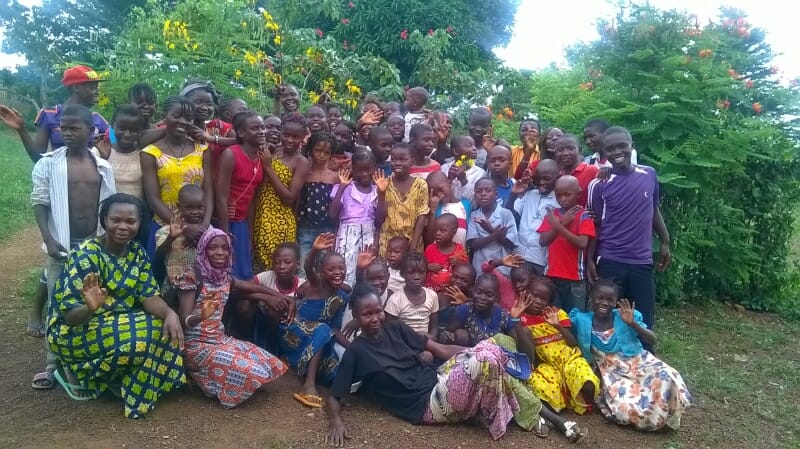
It is difficult to know the numbers – Misna sources report 60 dead with 300 wounded – and describe the events in a country that has been sinking in political crisis since March 2013 when a group of rebels overthrew the president; and there have been further outbreak in recent days. “The socio-political situation has worsened,” writes Geneviève Sanzé from the Central African Republic. “Christian families live between the house and the forest, so that they won’t be discovered at home and lose their lives. One priest, who lives in the north where the situation is quite serious, is offering shelter to 12,000 refugees in his parish, who are taking refuge from projectiles that are being launched all around them. He doesn’t know how he will care and find food for them. There is no more adminstrative , political or military authority in the region, and there is the constant danger of bombs in crowded areas.” From the Focolare of Bangui they write: “We were preparing to do something concrete to help promote the peace that our country is so much in need of: a sport competition with mixed teams of Christians and Muslims; a march for reconcilliation comprised of all sorts of ethnic and religious groups; a concert by several musical groups, including our own to help sway public opinion towards the need for peace; continuing visits to refugees here in Bangui and in the prison. We invited our Muslim friends and friends from different Christian churches to take part in organising these and other events, and they enthusiastically accepted.” “The first event had been planned for the 26th of September, but was not held because of a massacre that taken place here in Bangui on that day,” recounts Berndadine who works at the Nunciature. “It all began with the discovery of the lifeless body of a young Muslim woman in a Christian area. But the murderer and the circumstances surrounding the death are still unknown. In the span of a few hours non-Muslim homes were attacked, and many people were killed.” Death is everywhere, looting, destruction of houses, churches, schools, offices of international organisations and many displaced persons, including several from the Focolare community. Some have lost close relatives. They write: “We encourage each other to love, each one of us wherever we are, ready to die for our own people. Pray with us, for us and for everyone living in similar situations.” The city has seemed dead for days. “You didn’t go to work,” wrote Bernardine. “The shops were closed, the only vehicles on the street were those of the United Nations and the French Military. The population organised a protest calling everyone to civil disobedience, demanding the restoration of the national military to protect the people. More people died during the manifestation and everything stopped. Things have improved a bit in recent days, we’ve resumed some of our activities, although schools are still closed. We’re in God’s hands and we always believe in His love. Sooner or later there will even be peace in the Central African Republic.” And this hope is supported by the upcoming visit of the Pope in late November. Fidelia, from the focolare in Bangui, recounts: “The entire population, regardless of ethnic or religious group, joyfully awaits his coming. You can feel it in the air, that the people are expecting him as the bearer of hope. Everyone is preparing spiritually and materially in order to be disposed to welcome the graces that Pope Francis’s visit will bring.”
7 Oct 2015 | Focolare Worldwide
© Focolari-Alain Boudre
© Focolari-Alain Boudre
© Focolari-Alain Boudre
7 Oct 2015 | Focolare Worldwide
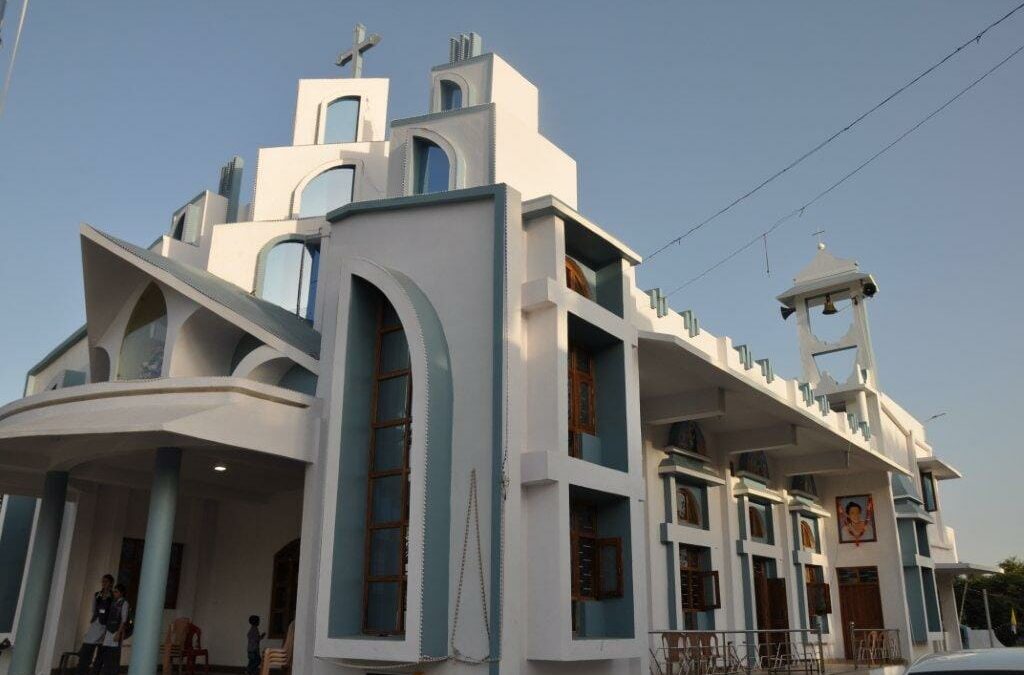
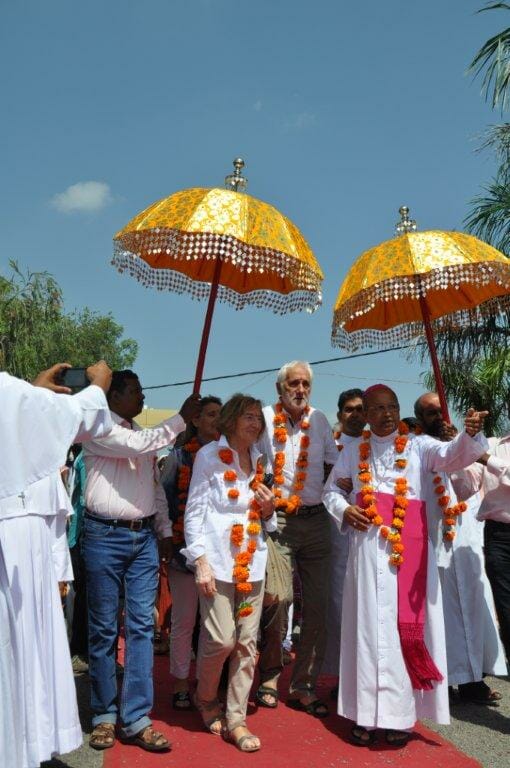
 Msgr. Anthony Chirayath, bishop of the Syro-Malabar diocese of Sagar, consecrated the new church in the presence of the parents of Chiara Luce Badano, saying it was “an inspiration to all students in the country”. The couple arrived from Italy for the occasion at the invitation of the bishop. Many faithful and young students of local high schools, as well as groups of adherents to the Focolare Movement from Mumbai and Delhi, attended the ceremony.
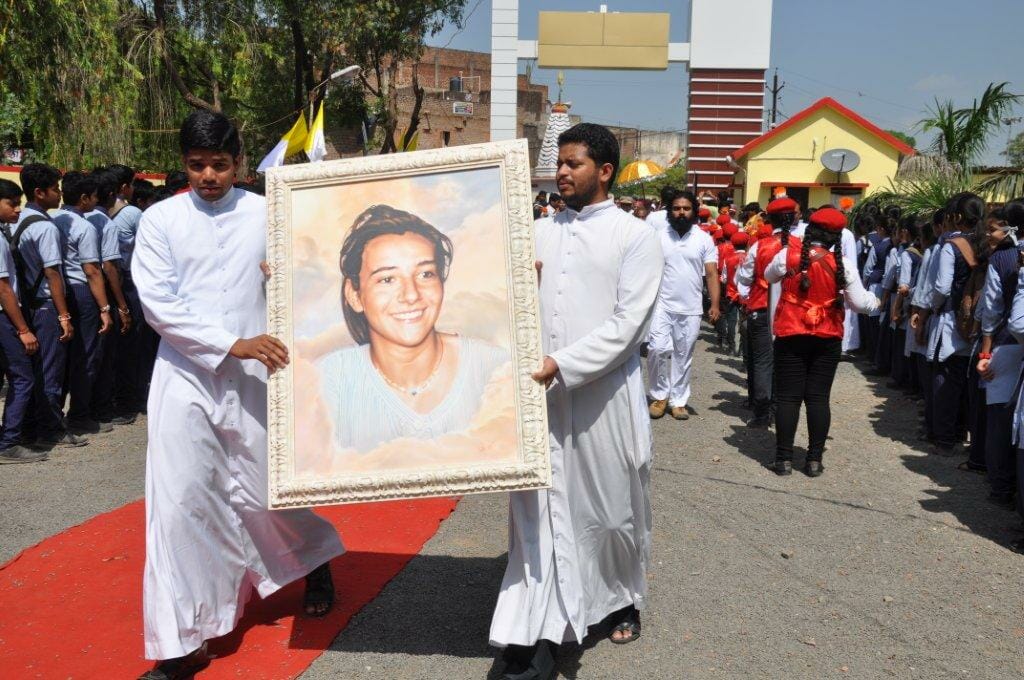
  Chiara Badano, named Chiara “Luce” by Chiara Lubich, founder of the Movement (or Work of Mary), was a young Italian, who died at the age of 18 from aggressive bone cancer. She was beatified on 25 September 2010 by Pope Benedict XVI, who acknowledged her heroic virtues and tireless work for the poor, despite the pain of the disease from which she suffered. The Sironi church was dedicated to the Blessed at the express will of Msgr. Chirayath, who learned of the life of Chiara Luce during one of his trips in Italy. Keeping in mind the large youth population that resides in the Indian town and who attend the prestigious English schools in the district, Bishop Sagar sensed that Chiara’s life could serve as an “example and inspiration for students.” The celebrations were attended by Maria Teresa and Ruggero, the parents of the young Blessed, accompanied by her best friend Chicca Coriasco and her brother Franz Coriasco, who wrote Chiara Luce’s biography. Approximately 1,000 participants attended, including priests, religious, seminarians, teachers, high school students and young Focolare members, who organised performances to celebrate the event.
  After the inauguration of the church, the parents and friends of Chiara Luce met some members of the Focolare Movement in Mumbai, eager to express their gratitude for the “witness of love and unity”. Also in Mumbai they had a meeting with “Jesusfriends4u”, a youth group inspired by the example of the life of the girl, who awarded the Badano’s the first prize dedicated to their daughter, the Effective Parenting Award. Source: Asia News
5 Oct 2015 | Focolare Worldwide, Senza categoria
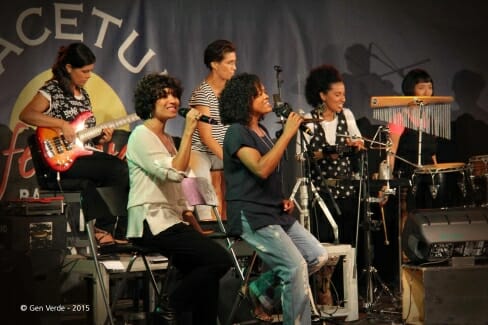
“We worked hard. For three years we listened to thousands of people, especially the young people that we met at home or on tour. We composed music and wrote lyrics, but above all strived to live out the meaning of our words: putting ourselves in the game, taking risks, welcoming both the ugly and beautiful in humanity. We can’t wait to go to Great Britain. The one talking is Sally McAllister, Gen Verde’s manager, Irish by birth and English by adoption: “I’ve lived in London for more than 30 years and learnt to know and love the people. So it is with much joy that we are accepting the invitation to return there.” The Focolare has been in Great Britain since 1963, spread throughout many cities of the United Kingdom, and its members are Roman Catholic, Anglican and faithful of the Free Churches. There are also Muslims and Sikhs who, in their own way, are true witnesses of a living unity that is at times lived out painstakingly in daily life. “Why did they invite us,” Sally asks. “The Focolare communities arranged the entire tour:a group of twenty young people and adults, families that are spread throughout the United Kingdom. We dreamed it up and organised it together. They told us that they wanted to open hearts and hands, to recompose relationships, overcome hatreds and distrust: to encounter the people and share the gift of communion in diversity.” “That took courage, and I must say that these people have a good dose of it! We’ll have 12 engagements with a total of 7 “Start Now” shows, 5 acoustic concerts and several other encounters.” Listening to Sally’s words one realises that they are only the tip of the iceberg and that Gen Verde’s musical tour in the United Kingdom is capable of touching a chord with the people. “We’ll go on stage in complex places like London, Birmingham, Glasgow, Oxford, Liverpool, Portsmouth and Cardiff,” Sally explained, “with a social and cultural fabric that has been defined as post-Christian and disintegrating, but where ecumenical and interreligious dimensions are still strong. Through the music, words and choreography we will describe the life amongst us and many other parts of the world: a life of communion, fraternity, sacrifice and reciprocity. We would like to show the ‘much more’ that is already there but not being spotlighted by British society; what is being done for others but risks remaining hidden behind media titles that often broadcast exclusion, defensiveness and fear.” In London, Gen Verde will also meet young people from the Islamic Centre, invited by Imam Dr. Mohammad Ali Shomali. “Let us focus on the values that unite us and and work together.” Judging by the passion that Sally is putting into this, it is obvious that young people will have the place of honour during this tour: “They are the thermometer of society, they often live in the darkest depths and it is no mystery that even Great Britain, like other European countries, violence and suicides are very much on the rise amongst people under 30. The new show that will go on stage in Great Britain will also include some new pieces “On the Other Side,” their latest released album. “It is geared towards young people and its themes are universal. It presents a journey in four parts: We begin with the challenges, the deep ones, the ones that make you look into yourself. Then comes the question: Is it even possible to overcome them? Finally, there is the invitation to go out and build the present and the future together, and this part is called “No frontiers,” because together we can make the difference.” See official Focolare website for news and events: www.focolare.org/gb https://www.youtube.com/watch?v=llkkHKzywrM
2 Oct 2015 | Focolare Worldwide, Senza categoria
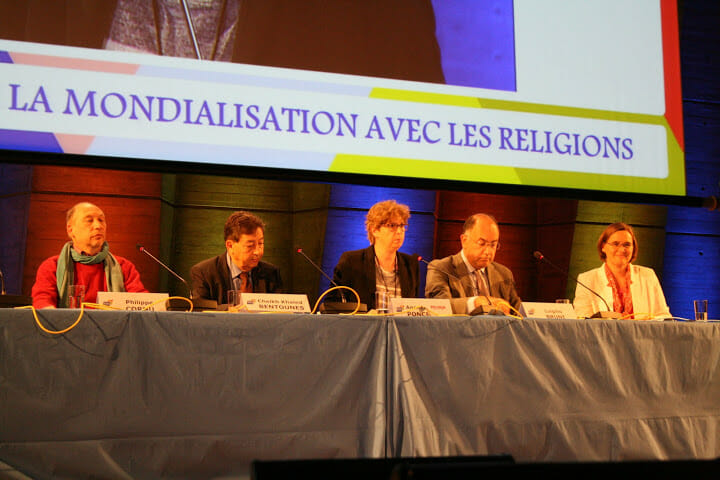
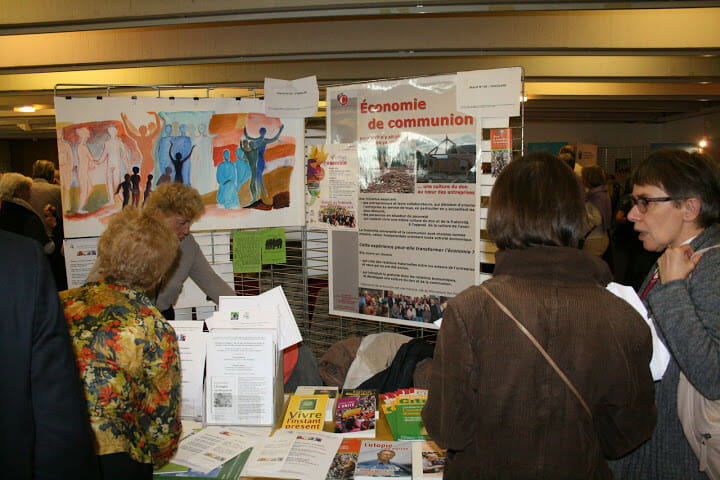
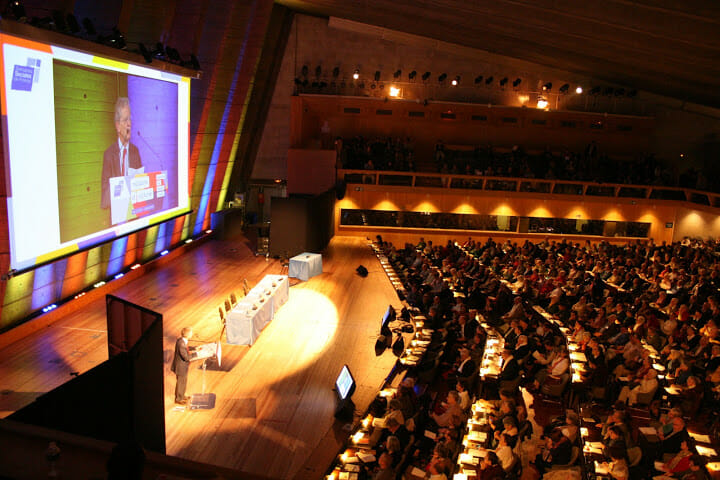
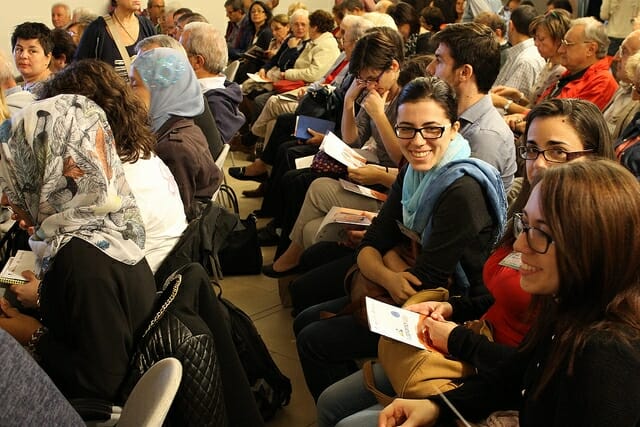 “Hosting the extraordinary in the ordinary things, training one’s perception to see the growth of the tree: without prophets, life would be a place of pessimism and not of hope which unites us.” In brief, this was what the economist, Luigino Bruni, said at the National Congress of the EoC networks during the 6th edition of LoppianoLab, attended by more than 2,000 participants from all over the country, and also others. Economy of Conmunion as a model to start with. “Only by regenerating relationships can we overcome fear and relaunch the economy: today, while mistrust and pessimism are holding back the relaunching of the economy in Europe and the Western world, we dare to look at the economy with the eyes of the African youth. – Bruni began – If we want to contribute to the rebirth of the economy, we have to regenerate the territories, families, relationships and rediscover and practice the civic virtues”. Not by chance, the title chosen was “Beyond fear. The culture of dialogue, active citizenship, civic economy,” for the 2015 edition of LoppianoLab, promoted by the Città Nuova Publishers, the Polo Lionello Bonfanti-Economy of Communion (EoC), Sophia University Institute (SUI) and the Loppiano International Centre (FI). Obviously there was a pressing call to the economic sector that involves about 200 businesses in Italy and 800 throughout the world, to adhere to and focus on man and his relational dimension in all their economic dealings, by practicing an Economy of Communion. Dreaming of Africa. The workshop often referred to the EoC’s international congress held last May in Nairobi, the vitality of which was discussed by Geneviéve Sanze, an economist from Central Africa. In her continent, as of today, there are about 30 businesses that have joined the project which gave life to a network of support for the youth by the EoC entrepreneurs. People at times think that “Economy is a science of wealth: and believe that you have to go to the big cities to practice it, but with EoC, it has become the science of communion – she affirmed. Exchange of ideas, dialogue, and fraternity: in Nairobi we saw that every person brings a certain wealth within him that is all-inclusiveness and uniqueness, in the same way as the creative entrepreneur tries to enrich his ambience and his territory without catering to standards that are remote and far from the attention of the outskirts in need. And a totally new way of facing the topic of economy at international levels is to start from Africa, but even more so when considering the contribution Africa can give, rather than receive, thus giving trust and new drive to the Africans themselves, to empower their opportunities in their own countries.” Africa is a young continent, as testified to by Gloria and Melchiot, two African students enrolled in the Sophia University Institute in Loppiano: “Allowing the African youth to have their dreams signifies avoiding the phenomenon of immigration: so why don’t we open businesses in Africa, so that they can find jobs there?” Anouk Grevin, Economist (University of Nantes and Sophia University Institute), announced that “Two business projects have started up in Nairobi. The Catholic University Institute of Buea (CUIB) in Cameroon has announced the institution of a Degree in the Economy of Communion, and the start in 2017 of the project incubator, “Siobhan,” to support the birth of new businesses in Africa. The second project dedicated to François Neveux, French pioneer of the EoC, will bring together entrepreneurs from all over the world, and create a network of economic support and project design, addressing especially young entrepreneurs.” Source: Città Nuova
1 Oct 2015 | Focolare Worldwide
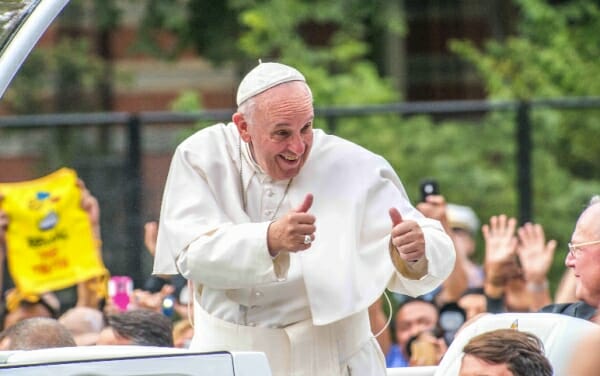
Photo © Renato Araujo
Photo © Andrea Re
