1 Jul 2026 | Idea of the Month
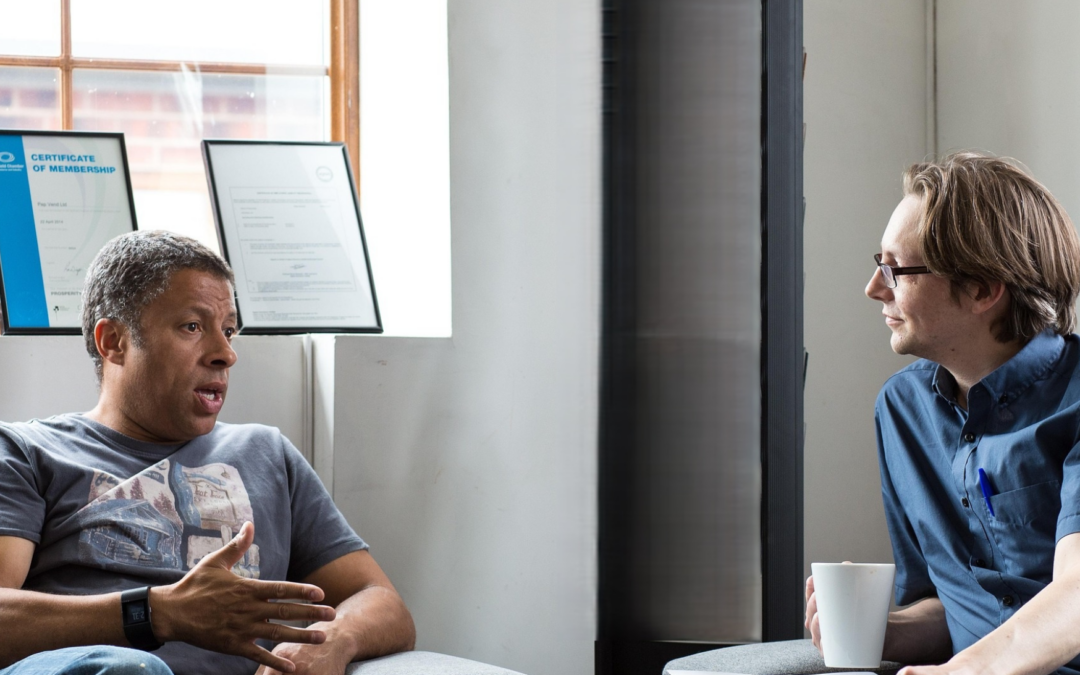
If we are attentive to the world around us, we realise that it is often the clamour of different views and opinions that prevails. Everyone wants to have their say and there is a proliferation of forums for debate in which it seems as though everyone knows everything. However, we do not always find genuine wisdom there; on the contrary, there is sometimes a risk of encouraging superficiality, ignorance and gradual cultural impoverishment.
Faced with this scenario, what truly deserves to be heard? There are words and Words. What distinguishes them? We can call them Words with a capital W — whether written or spoken — which, once embraced, have the power to transform us. These are words that express wisdom because they offer a key to understanding human existence, the desire for transcendence and the relationships that bind human beings to one another and to nature. As Rabindranath Tagore, the Indian poet, philosopher and writer, writes: ‘Words that come from the heart, go to the heart.
The Word does not belong to a particular era, place or religion. Xavier Melloni, an anthropologist and theologian observes that for some people, the Word is inspired by the Holy Spirit whilst for others it is the fruit of the enlightenment of the conscience. But how can we recognise the Word that conveys value?
‘We might say that the Word enables us to open up to others, to give of ourselves, and pausing in silence, go beyond our own being towards an always greater depth. The true Word generates life[2].
This is how the Word, understood in the broadest sense, frees us from the constraints to which we are subjected; it does not depend on hidden interests and it is not coercive but it becomes idolatry when it ceases to be wise.
Nonetheless, the Word may have a different resonance within each of us, even when it is expressed in the same way. How we receive it is closely linked to whatever we are experiencing and our stage of life. Superficiality, excessive self-suffiiciency and indifference are obstacles that prevent the Word from bearing fruit within us and, through us, in others.
The wise Word becomes a fixed point of reference on the journey through life. Sometimes it offers us answers; sometimes it raises new questions; it allows us to view things from a different perspective and to open up to dimensions of reality that we were previously unable to perceive. The Word sets us free and leads us to experience what is truly essential to our existence. Only the authentic Word, the Word of wisdom, can transform the way we think and act. When we welcome and live by it, it helps us to give greater meaning to our lives, to live deeper relationships and to build a more humane and fraternal society together.
Jordi shares his thoughts: ‘Every encounter with the Word is personal and intimate. My encounter with the Word came after years centred on work and technology. Reading books from various fields – biographies, novels, philosophy, etc. – reawakened in me a search for wisdom to make sense of life’s big questions, to sustain my existence and to understand why the Word manifests itself in such diverse and seemingly contradictory forms. On this journey, I came to know the wisdom of Chiara Lubich, expressed in a fresh and vibrant reinterpretation of the Gospel and borne out by an inspiring way of life. Despite its confessional nature, this wisdom has proved capable of resonating with people who, like me, have no religious convictions, and of drawing them into the path of fraternity.’
This month, let us nourish ourselves with words of wisdom, make them our own and transform them into life. And, if we have the opportunity, let us share the fruits they bear with those who, like us, are on a journey. In this way, we will build together a more humane and meaningful way of living together.
Photo © James Oladujoye – Pixabay
[1] This expression is taken from an address given by Jordi Illa at the International Conference for People of Non-
Religious Convictions, 2013, entitled “The Word.”
[2]Xavier Melloni, Vers un temps de síntesi, FragmentaEditorial, Barcelona, 2011, p. 55.
THE IDEA OF THE MONTH is currently produced by the Focolare Movement’s “Centre for Dialogue with People of Non religious Beliefs”. It is an initiative that began in 2014 in Uruguay to share with non-believing friends the values of the Word of Life, i.e. the phrase from Scripture that members of the Movement strive to put into practice in their daily lives. Attualmente L’IDEA DEL MESE viene tradotta in 12 lingue e distribuita in più di 25 paesi, con adattamenti del testo alle diverse sensibilità culturali.
dialogue4unity.focolare.org
1 Jun 2026 | Idea of the Month
Are we content to live in a world dominated by ‘the law of the jungle’ where we must crush or overpower others in order to succeed? Are we happy living in a world where we view other people with suspicion and, for fear of losing what we have, erect physical or invisible barriers around us? Do we resign ourselves to letting the days pass by without hope and without finding meaning in what we experience? Furthermore, do we even ask ourselves if this is
really living life to the full?
In a complex and uncertain world, we have the opportunity to be bearers of a new way of understanding life. But to do so, we must first experience it. How can we do this?
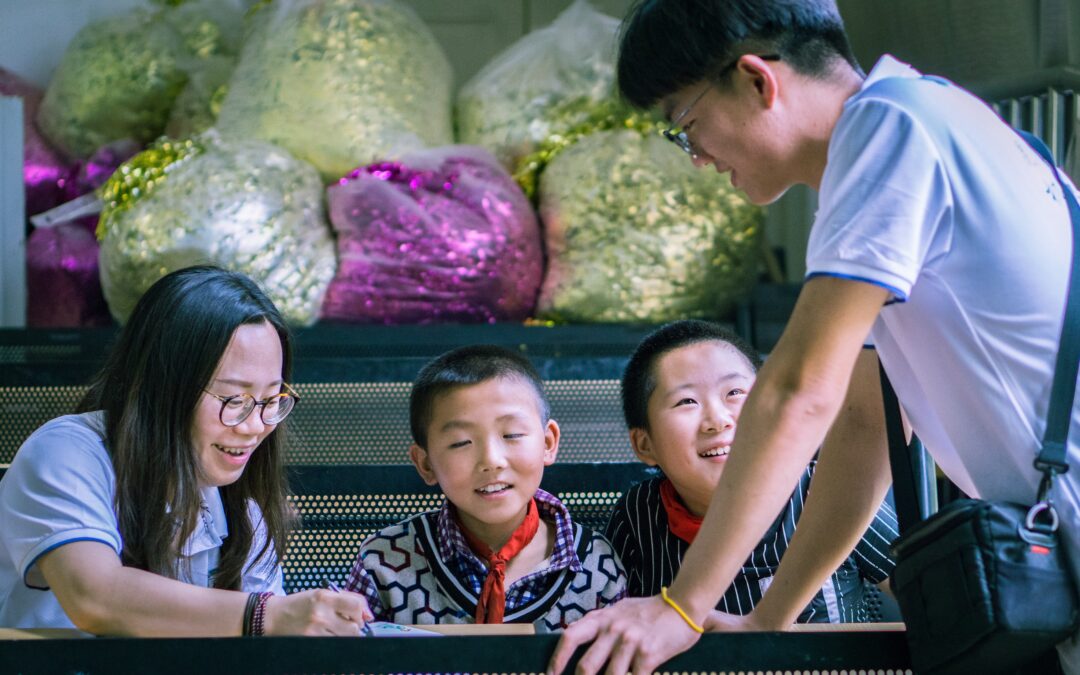
Through no choice of our own, we have been born with certain abilities or talents that have been freely given to us. Some people find it easy to communicate, others havean artistic and creative capacity and we all possess a certain intelligence. In addition, life may have given us unique opportunities to develop these talents. The question is what do we do with all this? We have two options: we can either use these abilities solely for our own personal benefit, enjoying what they offer us, or we can put them at the service of others and share them.
Perhaps the second option will not guarantee immediate financial gain — which today seems to be the world’s main driving force — but it will undoubtedly allow us to help build a different way of life and contribute to creating a world in which competition is not an end in itself but a means to improve and grow together.
This will not be an external reality but a process that begins in our daily relationships and in the choices that determine our behaviour. People who live in this way demonstrate that change is possible. Wherever they are, they bring a new paradigm into view and show that this change is near.
Let’s act humbly and share who we are and what we have. We could accompany and offer affection to those who need warmth and closeness, thus alleviating their suffering. Let’s practise those values that can be a driving force for change and contribute to a society founded on justice, respect, peace and the dignity of all people; a society in which forgiveness and reconciliation are promoted and the good of all is sought.
We are stronger and more credible if we act together, especially if we remain steadfast in our choices. Let our actions not seek recognition, nor be based on calculation or self-interest. Transformation is slow, sometimes imperceptible, but if we persevere, change will come about, grow and take root. The future is beginning to take shape.
THE IDEA OF THE MONTH is currently produced by the Focolare Movement’s “Centre for Dialogue with People of Non religious Beliefs”. It is an initiative that began in 2014 in Uruguay to share with non-believing friends the values of the Word of Life, i.e. the phrase from Scripture that members of the Movement strive to put into practice in their daily lives. Currently, THE IDEA OF THE MONTH is translated into 12 languages and distributed in more than 25 countries, with adaptations of the text according to different cultural sensitivities. dialogue4unity.focolare.org
Photo: 小鱼 余 en Pixabay

1 Apr 2026 | Idea of the Month
The night is a symbol of darkness and of the unknown. It means the absence of that light which cannot be found without a lamp and a companion who travels beside us on our journey through life.
The night envelops our wounded and violated planet that is marked by massacre and by war motivated by the lust for power and money.
Night is what millions of people experience, people who no longer have a voice to cry out against injustice and oppression.
What about us? How can we continue to believe in a renewed and better world which we do not see developing as we had expected? How can we recognise the signs of all that is good in our everyday relationships? These are questions to which we do not always know how to respond. Nonetheless, although it is difficult to discern the answers, they urge us to look for a companion who “walks” alongside us and to recognise the universal need for a spirituality that is inherent in human nature and that we experience if we live out mutual love with those around us.
Sometimes there are brief flashes of light that shine out in the most unexpected ways – even through social media – and they light up the night. One example is the story of Chiara Badano and Sara Cornelio, two friends whose relationship spansacross time.
Sara, born in 1998, ‘met’ Chiara, so to speak, who had died eight years before aged 19, when she was little more than a child. She heard about Chiara during one of the many meetings during which people spoke of her extraordinary life. Sara began to regard her as a friend, a companion in her dreams, a confidante and a strong presence. Sara had a captivating personality: she sang, danced, studied and had many friends. At the same time, however, she lived with the daily reality of a congenital condition that – literally and not just figuratively – ‘took her breath away’. Nevertheless, she was certain that “love conquers all” and this was the subject of an essay she wrote in the sixth form. She was fortunate to receive a lung transplant, and over time, became a gift for other people by bearing witness to this certainty through books, school visits, songs, short films, a blog and a theatrical performance.
Her wonderful family lived an experience of falling in love and of love itself. Her death in 2022, when she was not even 24 years of age, left all those who loved her – even those who had simply come across her on Facebook – feeling devastated and alone.
During her time on this earth, Sara regarded Chiara as a friend who was always close, accompanying, encouraging and supporting her and who ‘revealed’ herself in the most unexpected moments and circumstances. She was a friend who knew how to ‘be there’ in moments of pure joy as well as in the pain and loneliness of a hospital or an intensive care unit.
In those final moments of solitude and weakness, Chiara’s presence became mysteriously silent, almost elusive, yet perhaps all the more authentic for it, and destined to become a friendship ‘forever’.
Chiara and Sara: unique, just as every story is unique.
Photo : © Kanenori – Pixabay

1 Mar 2026 | Idea of the Month
There is a proverb that says, “Only those who fall can get up again”. This is seen very clearly in the tenderness and courage of young children as they begin to develop their skills. How much willpower they show as they take their first uncertain steps, getting up again and again with determination, until they gain confidence and begin to move with increasing assurance… the journey of life!
As we grow up and face various challenges and problems, getting back up each time becomes more difficult. Life’s trials weigh us down and sometimes we are held back and lose confidence when we encounter people who are different from us or do not think in the same way as we do. Willpower and even a sincere desire to be consistent with our values are not always enough. In these difficult moments, being able to count on a helping hand can give us the impetus to start again without fear. It can create a sense of silence in the depths of our consciences and allows us to be “renewed and whole” within.
Chiara Lubich wrote: “Is there anyone who does not go through trials and challenges? They take the form of failure, poverty, depression, doubt and temptation […] The materialistic and individualistic society that surrounds us is frightening, with its wars, violence and injustice…“. Chiara’s own life was a witness to this. It is precisely in those moments of darkness and struggle that it is important to find the strength to ”start again,“ and confidently say, ”you can still hope for everything.”We need to begin with ourselves[1].
This is what Emilia from Terra Santa managed to do. She works as a manager in a government office where there are a number of Jews, Christians, Muslims and Druze. After October 7, 2023, she understood that love was the only possible response to the great pain everyone was feeling and she began to love everyone around her with a great sense of commitment. In particular, she listened to others so that she could welcome them into her heart. She listened with an attitude of love and humility and understood whatever others people were saying, whether they were Arab or Jewish. As a result, a large number of her colleagues have become so open with each other that they can talk freely about the situation. In turn, this has encouraged other workers to express their fears and struggles and the group has remained peaceful and united[2].
There are many stories of wounded communities that do not give up and that find strength each day in the reciprocal sharing of all they have, believing that hatred cannot have the last word.
Even if we will not be the ones to see the fruits of our commitment, every time we get back up, we contribute to forming “new people” because, as Bonhoeffer said from prison shortly before his death, “For those who are responsible, the ultimate question is not how I can heroically get through this affair, but what the life of the coming generation will be like.”
Photo © Pexels-Allan Mas
[1] Gen Rosso song “Start again”
[2] Experience shared at “One Human Family” Conference, Castel Gandolfo, June 2024

1 Feb 2026 | Idea of the Month
Since ancient times, men and women have nurtured the desire to know what the future will bring and have used magical rituals or the interpretation of natural signs in order to do so. Great works produced by different cultures and religions in the past reveal this need. It often arises during periods of great suffering for a people or nation.
But is it really useful to know what will happen? What do we gain by knowing in advance what we will experience or how we will cope? None of the legendary traditions reveal this completely, and more often than not, symbolism hides the very concrete search for and expectation of a better tomorrow that gives meaning to today’s suffering.
We could say that we are not concerned about the future when things are going well, however, when they are going badly, we are sustained and encouraged by the hope that tomorrow will be better. It is then that many of us feel a deep need to await a new, different world, not only for ourselves but for everyone.
Today’s world expresses a “cry” that emerges from all of humanity. Even if we are not directly affected, we only need to watch the news or leaf through the newspapers to become aware of tragedies of all kinds. How do we react? Are we so accustomed to this negativity that we are immune and simply try to survive or, on the contrary, do we think deeply about the future and act accordingly?
The world we imagine and desire certainly does not yet exist but, as George Orwell reminded us, it is possible that it will be. But what does this mean? What can we do? We find an answer in the thoughts of Albert Camus: “True generosity towards the future consists in giving everything to the present.” [1]
The future, therefore, is not just something to await but can be prepared and, in a sense, anticipated even now. It depends on our attitude and our daily actions. We do not know when we will see the fruit of change: it is like a silent seed that grows without us noticing and, over time, becomes a plant capable of nourishing, protecting and generating life around it.
We cannot imagine the consequences but they will certainly be new and creative. The future is unpredictable but it will develop according to relationships that have been transformed, feelings shared and solidarity that has become action.
We need courage to be a driving force for change and renewal in society; we need to allow ourselves to be challenged by people who suffer, who are aloneor need our help or advice. Even though we will encounter difficulties and inner struggles, there will also be moments of joy and real fulfillment.
Recently, an event was held in Florence to raise awareness and involve participants in a network of fraternity. There were opportunities to reflect and share experiences on how to build a future of peace in various areas such as economics, trade unions, industrial reconversion and ecology. This is an initiative that we want to spread rapidly to other cities and countries.
Take courage! We are builders and not spectators and our goal is to create a future of fraternity, harmony and peace.
[1] (L’Hommerévolté, 1951).
Foto © Thophilong-Pixabay
1 Jan 2026 | Idea of the Month
The world today lacks unity. To give just a few examples, we see this in the divisions that sometimes exist within families, among neighbours and between Churches and communities. It seems that polarisation prevails over understanding. This is a consequence of the growth of individualism that drives people to decide and act on their own behalf in a way that benefits their interests and personal prestige. This gives little value to the needs and rights of others.
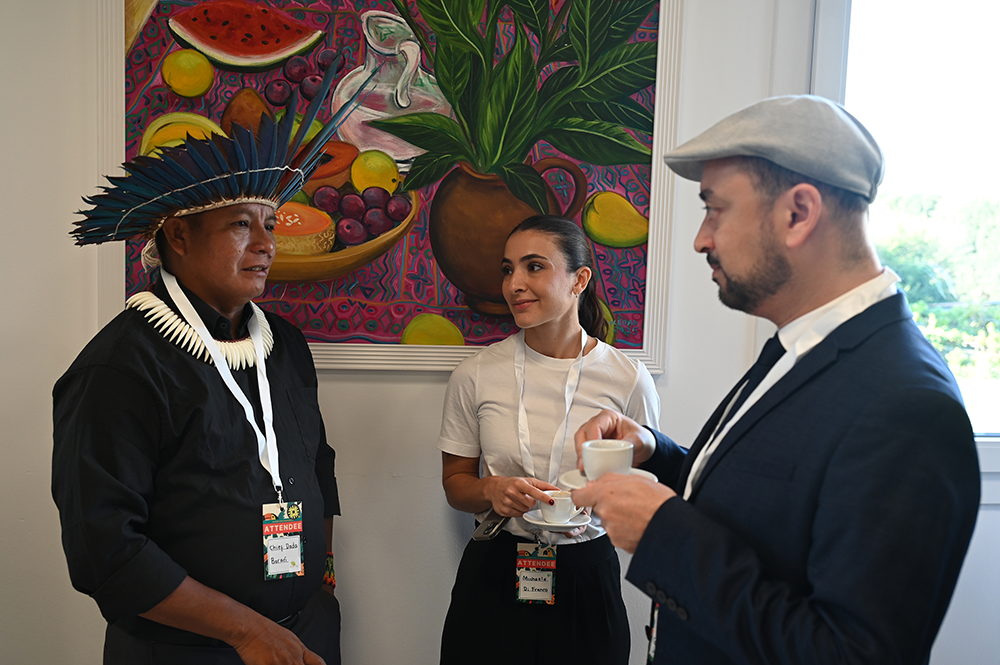
And yet, it is possible to experience unity. It is a journey that always begins by taking small steps and with a “yes” that we say within: yes to welcoming, yes to forgiving, yes to living for others. It is not about grand projects but about small but faithful actions that, over time, transform a life, a community or an entire environment. And when that happens, we realise that fraternity ceases to be an ideal and becomes a visible reality and hope for all.
Martin Buber considers unity to be relationship. He states that it is the space of encounter, that exists between You and I, a sacred place where differences do not disappear but are mutually recognised. For him, unity arises when two realities allow themselves to be touched and shaped by the other and not when one imposes itself. This “between” can be understood as a space that welcomes diversity and, precisely for this reason, becomes a source of communion. Hence, for Buber, “All true life is encounter” (Ich und Du, 1923).
Therefore, in other people – whether friends, family members or just someone we meet along the way – we can discover the great ‘opportunity of relationship’. Other people ‘save us’ and enable us to go beyond our fears when we feel overwhelmed by a difficult situation.
Living for unity means walking together despite our differences, transforming them into treasures rather than obstacles. It is an invitation to move from simple coexistence to encounter, where reciprocity enables what belongs to each person to become new because the relationship means it is shared. Unity, understood in this way, is not the sum of the two nor is it fragility that causes us to lean on others: it is strength that generates the hope that there is still a tomorrow. Diversity is no longer disunity, but mutual richness. It is feeling that what happens to others also resonates in me. ‘Union does not consist in equality, but in harmony,’ Rabindranath Tagore reminds us.
This month, may we experience the joy, light, life, peace and hope that come from unity that is lived
If we are one, we see things differently.
Photo: © JGC-CSC Audiovisivi
THE IDEA OF THE MONTH is currently produced by the Focolare Movement’s “Centre for Dialogue with People of Non religious Beliefs”. It is an initiative that began in 2014 in Uruguay to share with non-believing friends the values of the Word of Life, i.e. the phrase from Scripture that members of the Movement strive to put into practice in their daily lives. Currently, THE IDEA OF THE MONTH is translated into 12 languages and distributed in more than 25 countries, with adaptations of the text according to different cultural sensitivities. dialogue4unity.focolare.org
