General Assembly Diary 3, 26 January 2021
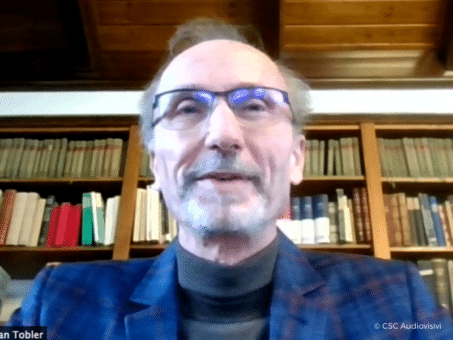
Stefan Tobler
“Who knows if our role is not so much to give ‘light’, but rather to enter into the darkness, into the mud, into the desperation of lack of dignity, […] into the thousands of different kinds of poverty of our times?” This provocative question may best capture the second day of the spiritual retreat of the Focolare General Assembly. After the opening ecumenical prayer which emphasized the need for a profound conversion of hearts,
Stefan Tobler, theologian of the Swiss Reformed Church and Paula Luengo, psychologist from Chile, presented the central theme of ‘incarnation’: what does the fact that God became man, least among the least, actually mean? And what does living and implementing the spirituality of unity mean for the Focolare today?

Silvina Chemen
The academics presented their reflections from two complementary points of view. Stefan Tobler turned to the mysical writings of Chiara Lubich in order to highlight the value of the incarnation. “For Chiara, it is not just a past moment in history, but rather a fact that permanently changed the meaning of all creation, giving a value of eternity, of highest dignity to the things of this earth”. And, Dr Tober concluded, the incarnation will continue if we’re able to “have simple eyes which can discover God under the reality of this world”.

Paula Luengo
The new dignity which the world assumes when seen from this viewpoint, should provoke a change of perspective in us, explained
Paula Luengo. “We’ll never find our identity by navel-gazing. But rather, as Chiara says, by embracing ‘all those who are alone’.” We must – continued Dr Luengo – “take humanity, in all its depths, as our starting-point. So incarnation is a movement seeking out closeness and a going down deep”. Two other contributors reached the same conclusion.
Luigino Bruni, Italian, Professor of Political Economics and the History of Economic Thought, and
Silvina Chemen, Argentinian, Rabbi in Buenos Aires, offered their reflections on “charism, prophecy and incarnation”, posing the question: is it still possible to speak of the prophetic dimension of a charism today? “Where there are brothers and sisters,” argued Silvina Chemen, “there is prophecy. Where there’s fraternity, the voice [of God] appears; when we’re truly together, God manifests himself”.
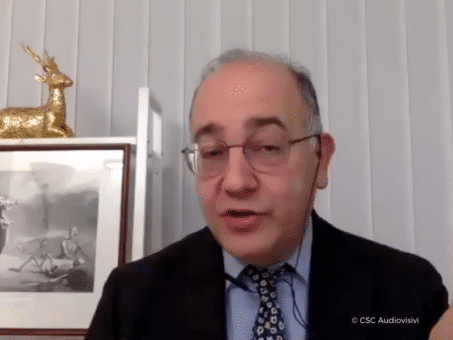
Luigino Bruni
Many questions about the present and future of the Movement came up in the group meetings, such as what it means today to remain faithful to the roots. Luigino Bruni offered, “It’s always particularly difficult for a charismatic community to be able to understand that the first story, the wonderful story which made us day-dream and showed us heaven, is over. But the story will continue because the promise was far greater than the first form our faith adopted in the first part of the journey”.
Focolare Communications Office Text in pdf


0 Comments