
A Summer School offers its contribution through researchers and lecturers from nine American and European countries. Equality is one of the basic principles of democratic societies. Yet, discrimination persists in many countries of the world. We spoke about this with Paula Luengo Kanacri, a pyschologist and lecturer at the Catholic University of Chile, a scholar at the Research Centre for Conflict and Social Cohesion. You have been involved in the social exclusion issue for a number of years. What led you to become so interested? I would say it has been the history of my people and my own personal story. Chile is a country of 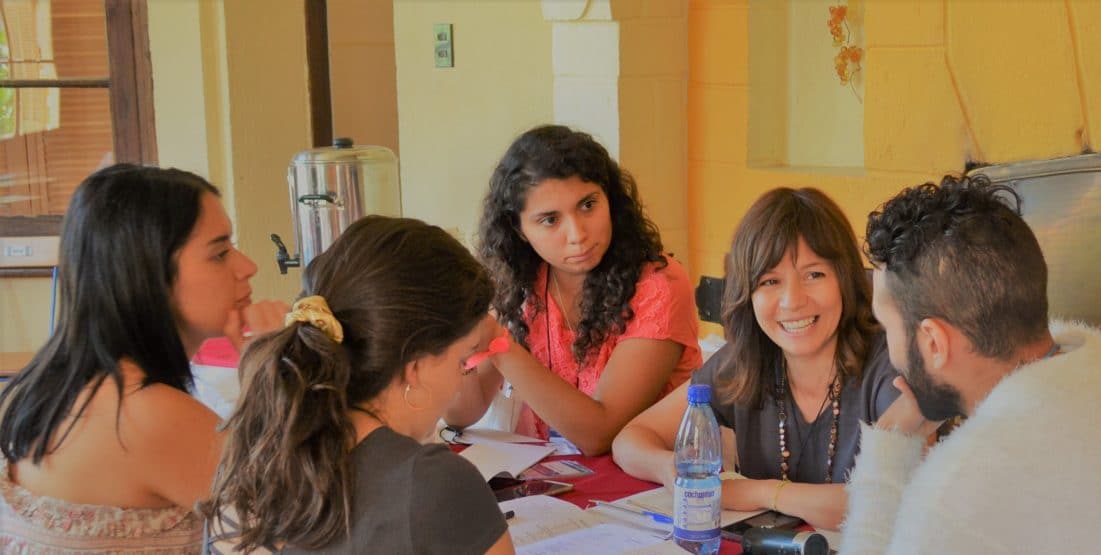 great contrasts: substantial economic growth and considerable inequality. Then, my mother came from a rich family while my father’s family was a poor. I have experienced the pain of inequality. I studied pyschology, and when I met the youth of the Focolare Movement, I started to embrace the idea that a different world is possible. After my graduation, I began to nurture an interest in prosocial behaviour and empathy; both are a support to social inclusion. An experience with the homeless, in Rome, left a strong impact on me. I have touched the pain of many who are marginalized, not only through invisible situations but also through others that are made to be invisible. To understand the mechanisms that favour inclusion or deny it, one needs to look into its different perspectives, disciplines and lines of thought. This is what we tried to propose during the Summer School recently held in Chile. The theme was: “Human development for all: social sciences in dialogue for an inclusive society”. How did the idea of a Summer School come about? Student movements in Chile, active since 2011, managed to obtain a historical reform through which the most disadvantaged students are today granted free university education. But a more creative effort is also required from academics. The idea of the Summer School originated from the fact that I participate in “Psychology & Communion” and “Social One”, international networks of researchers and scholars in the fields of psychology and sociology, inspired by Chiara Lubich. The Research Centre for Conflict and Social Cohesion (COES) and the Catholic University of Chile supported the idea. Who participted? And how was it?
 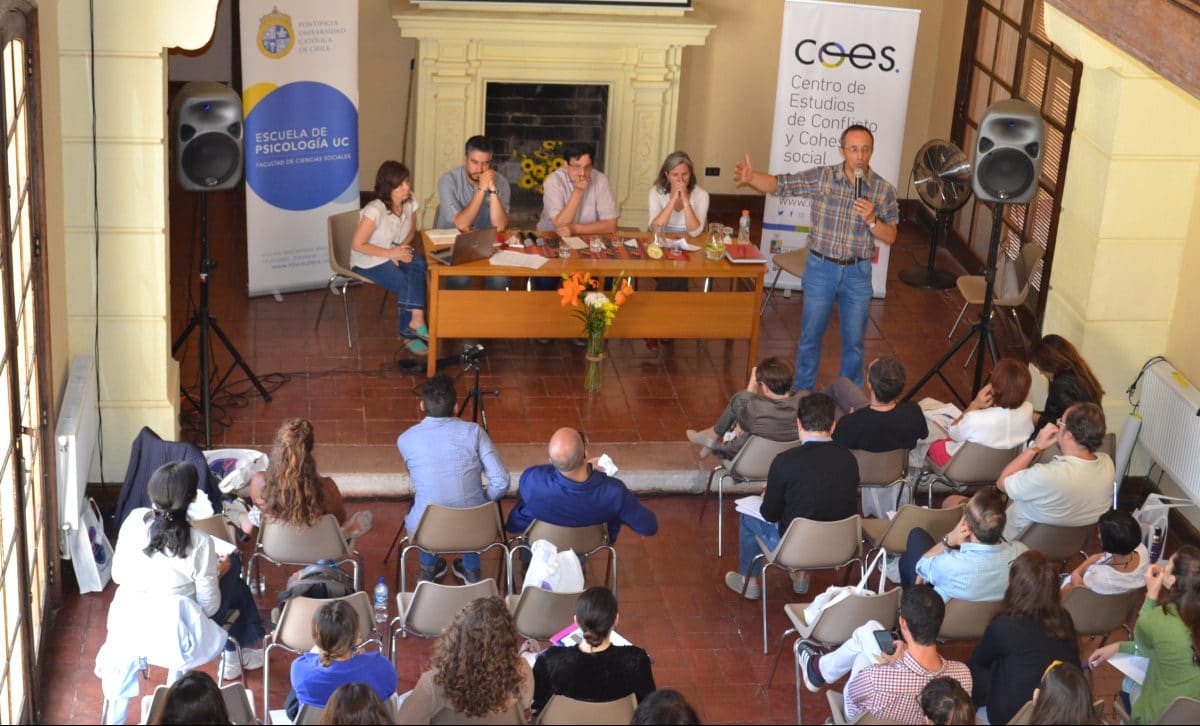 The school brought together 67 young people and 21 professors involved in 8 different social subjects; they came from 9 American and European countries. Four Chilean civil society organizations participated as well. The four research lines we dealt with were: inclusion and fairness, inclusion and migration, inclusion and inequality, inclusion and violation of rights. We offered 8 workshops on survey techniques regarding the study on inclusion from a unitary point of view. Dialogue with civil society proved to be a very important item on our programme. More than half of our young participants presented research projects. We wanted the Summer School itself to be an experience of social inclusion, capable of initiating a dialogue that is scientifically oriented and that goes beyond polarization.The people who participated had different ideas and orientations, even politically. We tried to ensure that the different topics were not discussed polemically or in a polarized way; but we aimed at being together on the common path to social inclusion, thus leaving no space for discrimination and segregation of gender, race, ethnicity and class. An inclusive society needs responses that integrate the individual level with the micro, meso and macro social levels. During our next Summer School we would like to discuss the environment issue from the inclusion point of view.
Claudia Di Lorenzi

0 Comments