
From the Focolare of Montevideo in Uruguay, the daily experience of integral ecology through the transformation of food remains into fertilizer. 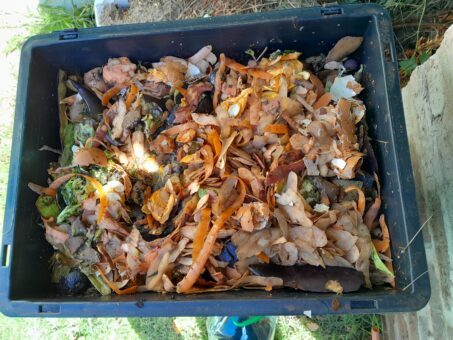 Millions of tons of waste are produced around the world every day. What becomes of this waste? Some is recycled and has new life. Some ends up in landfills or in waste-to-energy plants to produce energy. Yet before throwing away our food waste, have we ever wondered about other options? This is what some members of the Focolare community in Uruguay asked themselves and so they got involved in composting. Maria Florencia is a focolarina from Montevideo in Uruguay where she teaches integral ecology. She said, “I try to live ecology in my daily life. However, I realized that something can always be improved and that something important was missing in how we handled food waste at home: we weren’t making compost. I realized that to undertake composting would require a collective effort and so I tried to involve all the inhabitants of the house”. Soil organisms use plant and animal waste or organic matter derivatives as food. As they break down these wastes, excess nutrients (nitrogen, phosphorus, and sulphur) are released into the soil in forms that can be used by plants. Furthermore, the waste products generated by microorganisms contribute to the formation of
 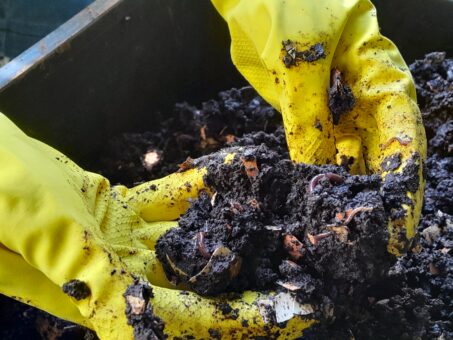 soil organic matter. Composting is therefore a process of decomposition of organic materials that has a high content of useful substances to improve soil characteristics without causing damage to the environment. 30 kgs of compost can be obtained from every 100 kgs of waste and organic materials. Alternatively, vermicompost, an organic product created through the bio-oxidation of organic matter with the assistance of earthworms, is also a sustainable option.
 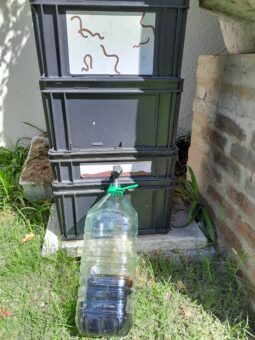 Maria Florencia explained, “Equipped with a composter and some Californian worms, I got down to work. Now we have natural fertilizer for our garden plants and all my housemates are happy about this action for the environment. We can also share the compost with our friends, who are interested in the initiative. And it didn’t end there. Since I am a microbiologist I wasn’t satisfied with the information in the usual manuals. I started to do research and to learn more and then I decided to share my experience by writing an article for the Focolare magazine, Ciudad Nueva, in which I encouraged people to try this for themselves”. Both compost and vermicompost enhance soil fertility without resorting to chemical fertilizers. Soil stability improves, water and gas permeability increases as does water retention capacity through the formation of aggregates. It is therefore a valuable natural fertilizer. In this way, leftover food is transformed from garbage into a precious resource that helps nature and reduces levels of environmental pollution.
Lorenzo Russo

0 Comments