
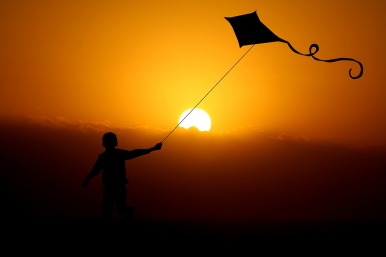
 There is a pram beside the supermarket cashier, and a newborn inside it. In the crowd, nobody heeds the others. All are taken up in waiting for their turn, making sure nobody skips the line and be able to come first and finish quickly. But before the child, many stop to smile, and say some kind words. Children have the exceptional power to break down the aloofness of our society and create a simple link with their presence. Children belong to their parents and their family, but at the same time to all of us. They are, so to say a “common asset.” In a certain way this is true for children in general, that is, for every child, as what the prophet announced regarding one child: “A child is born for us, we have been given a son” (Is 9,5). Children are gifts which we all receive. What do they give us? The answer is – the future? Obviously, if there were no children humanity would have no future. But our answer has a deeper sense. Instinctively we experience the child as a promise, like the dawn of that better future we all are hoping for. We do not only ask a child: What will your future be? But also: What future will you bring us? In fact, what will the future be, and what will happen or not happen depends on those who are children today. The future is already here, in the babies who are born. (pp 39-40) Becoming a human person means becoming a child. Since Adam and Eve there has been no exception to this. The journey that leads to adulthood traverses childhood. And this is precisely the path of God: the Son of God who became man, by becoming a child. We belong to him if we accept his friends, the children, and if we welcome him like children. Only those who become children will enter into the Kingdom. Become simple and pure, sharing sufferings and joys. Allow ourselves to be receivers of a gift and return the gesture. The child: virtue that saves us from resignation and calculations, and from egoism and senselessness. The child asks us to let him live, to have his own vital space. The Child in the manger is he who is inviting us to become men like him and receive a divine life from him. (p. 34) Klaus Hemmerle, from “Dio si è fatto bambino” (“God made himself man”) – Ed. Città Nuova Rome 1994.
Joy!
Joy!

0 Comments