
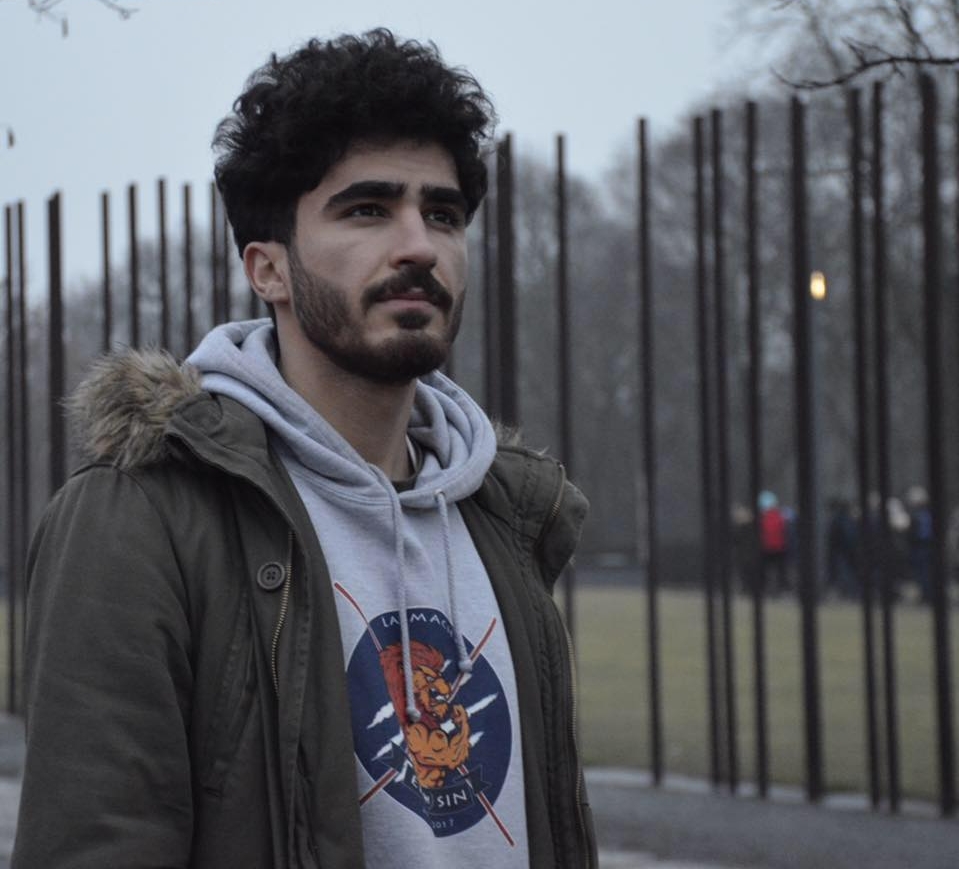
 Up until the age of 18 I lived a normal life between house, school, sport, parish and my dreams. But one day, after the withdrawal of the Kurdish army, the resistance didn’t last long and my city of Qaraqosh fell. The so-called Islamic State (ISIS) took over and everything fell apart. Occupied for two years by the black flags of ISIS my birthplace was named the capital of ISIS for the Nineveh Plains. Qaraqosh had been the most important Christian city in Iraq with more than sixty thousand inhabitants. And even though it was liberated in October 2016, it was now a ghost town. But let’s go back a bit. On August 6, 2014 we had to leave our home without even packing our bags, only with the clothes on our back. We had been put in front of a choice: become Muslim, pay a bribe or have our heads cut off. We were fortunate to stay alive! From then on it was a hard adventure for us. And inside me there were mixed feelings of anger, resignation and exasperation, to the point that I even wondered how God could allow us to live such a hard trial. But it was an important life lesson that led me, not without effort, to then make a great discovery.
 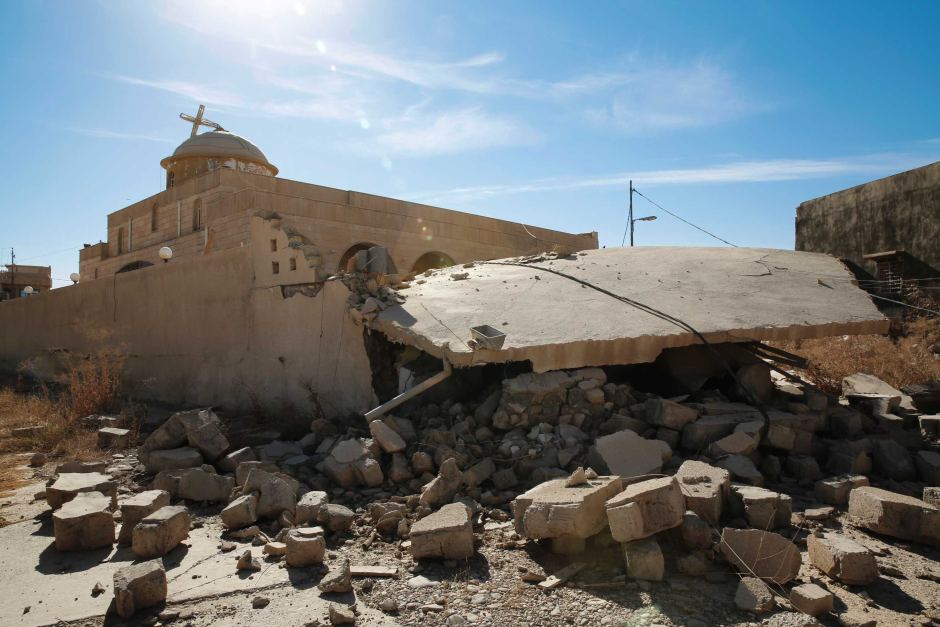 We started out in the direction of Iraqi Kurdistan together with a crowd of refugees who were moving on foot.. I can still see their tears, the soldiers, people sleeping along the road . . . a road to Erbil that usually takes a half hour, now, due to the road blocks and in spite of the fact that we were lucky enough to have a vehicle, took us 12 hours. We went towards Dohuk where we spent about 2 months. It was a painful period that we lived through in the hope of returning home. In those difficult moments, I realized that if I stayed close in my own suffering, nothing would change and I wouldn’t move on. So I decided to live the present moment, deciding to try to bring a smile to the face of the neighbour beside me, to try to bring some change in that way in spite of everything. Near me were people of the Yazidi religion who were more needy than us. Their people had been slaughtered by ISIS, because they didn’t have the means to escape: men killed, women raped and sold. The ones who did manage to escape were in a pitiful state. I lived along with them and tried to forget my own wounds to console them. After the years of exile, my parents had decided to go to France, because that country had extended its hand. It was a hard decision: to stay in our own land with an uncertain future, or accept our exile and begin our life again in a new country that had a different culture. We were well aware of the problems that were awaiting us beginning with the language. We arrived in France on October 26, 2014. At first it wasn’t easy, but we never felt abandoned. Someone took care of us and cleared our path. His unseen hand dried our tears and lightened our pain. Yes, it was Jesus who died for each one of us! How could we respond to His love? Now that this painful adventure has led me to discover that God is Love, that it is He who gives meaning to my life. Now, I want to build peace starting from the little things.
Attentive to the little things
Attentive to the little things


0 Comments