
Forty-five participants from nine European countries met from 30th January-1 February in the ecumenical “little town” of the Focolare in Ottmaring, near Munich, to reflect on how to rediscover a passion for Europe and a form of dialogue capable of uniting. Focolarini and members of the Fraternity of community life that has its origins in the evangelical world, live together in the little town founded by Chiara Lubich in 1968.
Jesús Morán, Co-President of Focolare, began by emphasizing that the purpose of this European Conference was to reflect on Europe in the light of the charism of unity, from which the Ottmaring Focolare Cultura has also emerged. It is a group of Focolare members from several European countries who explore dialogue between cultures. “However, we are not meeting – Moran stressed – to draw up an operational programme: concrete actions already exist, such as the experience of Together for Europe, educational activities for young people and politicians in Brussels and Dialop, the dialogue with left-wing politicians. Nor is there any need to draft a manifesto of intent. Rather, we are here to nurture a passion for Europe, convinced that the charism of unity is a gift for Europe, just as Europe is a gift for the charism”. At the heart of the proposed method was mutual listening: “Offering hospitality to the Spirit and to each other”, allowing dialogue to be born from relationships.
Many reflections addressed the rift between Western and Eastern Europe. Peter Forst quoted a young woman from Eastern Europe who said, “We no longer love each other”. This seemed to sum up the tension that runs through the continent today and raises a pressing question: does Western Europe really listen to the voice of the East? Does it read its authors? Does it understand its wounds?
Anja Lupfer insisted on the method of creative listening: not looking for immediate answers but suspending prejudices in order to encounter others. “We’re not seeking dialogue as an objective”, she underlined, “we are seeking the other”. It was an invitation to a non-competitive understanding, capable of descending “into the depths of the other”, overcoming the illusion of a neutral cultural space. Even within the Focolare, differences emerge that call for shared narratives and a more sincere exchange.
Klemens Leutgöb recalled the enthusiasm of the 1990s after the fall of the Berlin Wall and warned that the fracture has reappeared. To overcome it, divisive issues, ranging from gender issues to nuclear energy, must be faced rather than avoided. Diversity becomes a resource only when we engage in it together. Forst added an episode: during a trip to Eastern Europe in 2023, many people spoke only of the past, accusing the West of having eroded values such as family and faith. He commented, “The present can divide but our pact of unity must be stronger. The evaluation of events may differ, but in her experience known as Paradise ’49, Chiara Lubich speaks of truth that embraces contradictions in unity saying, “When we are united and He is present, we are no longer two but one. What I say is not said by me alone but by me, Jesus and you in me. And when you speak it is not you alone, but you, Jesus and me in you.””
Francisco Canzani asked a recurring question: “If you love me, why don’t you know my pain?” Often there is not enough time or courage to really listen. Dialogue comes from concrete life, not from programmes. He concluded with a Jewish story: two brothers secretly carried wheat to each other at night, taking it from their own barns. They didn’t understand why the level of their stores always remained the same. One night they met, understood and embraced. On that very place, Solomon’s Temple would be built: a perfect image of fraternity.
A concrete example of this spirit is the “European Project” Focolare in Brussels, described by Luca Fiorani, Letizia Bakacsi and Maria Rosa Logozzo: a former pizzeria was transformed into a house of dialogue between parliamentarians, refugees, officials and young people, lived quietly, away from social media and in the simplicity of encounter. The initiative is also made possible by the structured dialogue provided for by the Treaty on the Functioning of the EU.
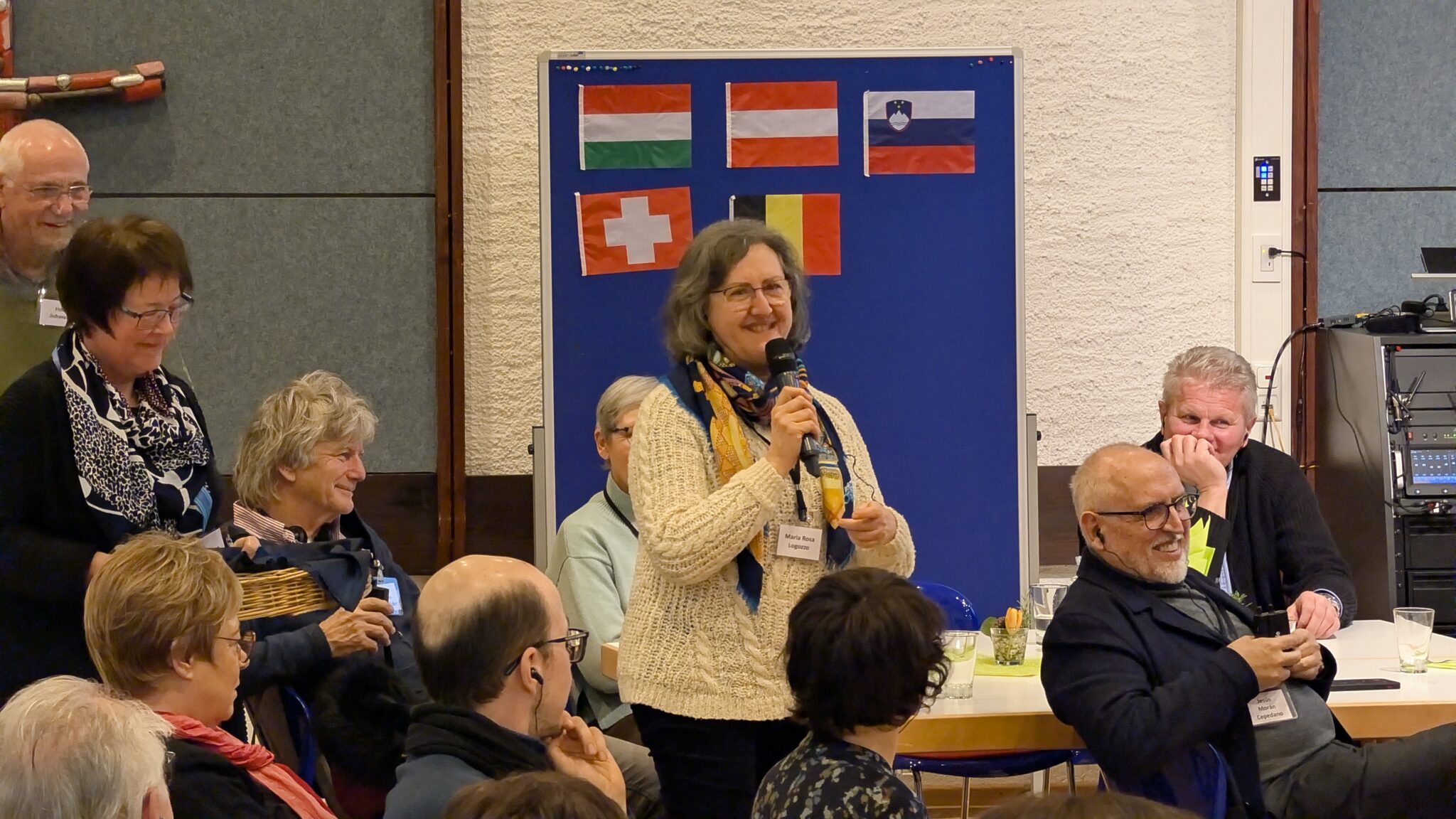
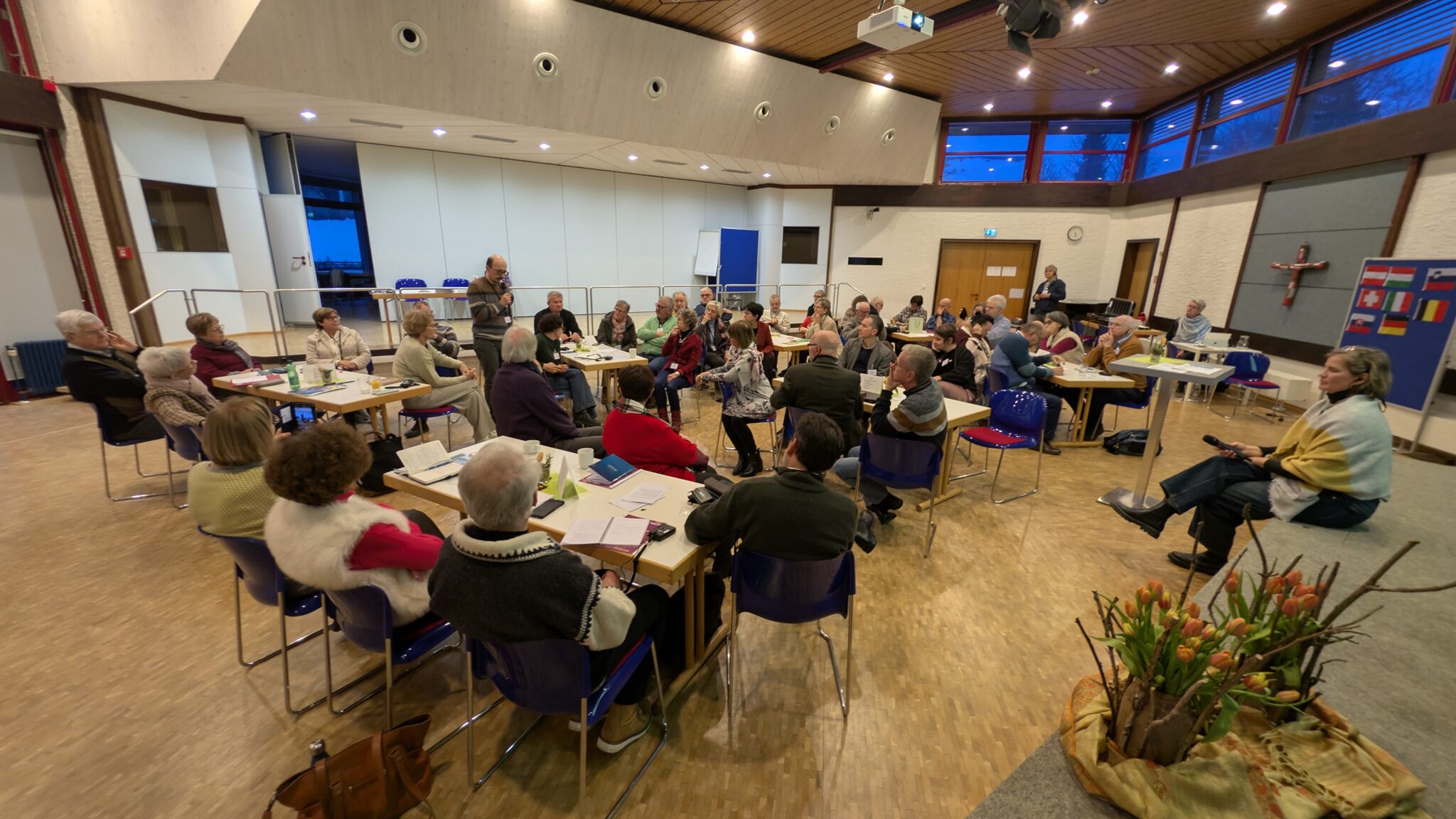
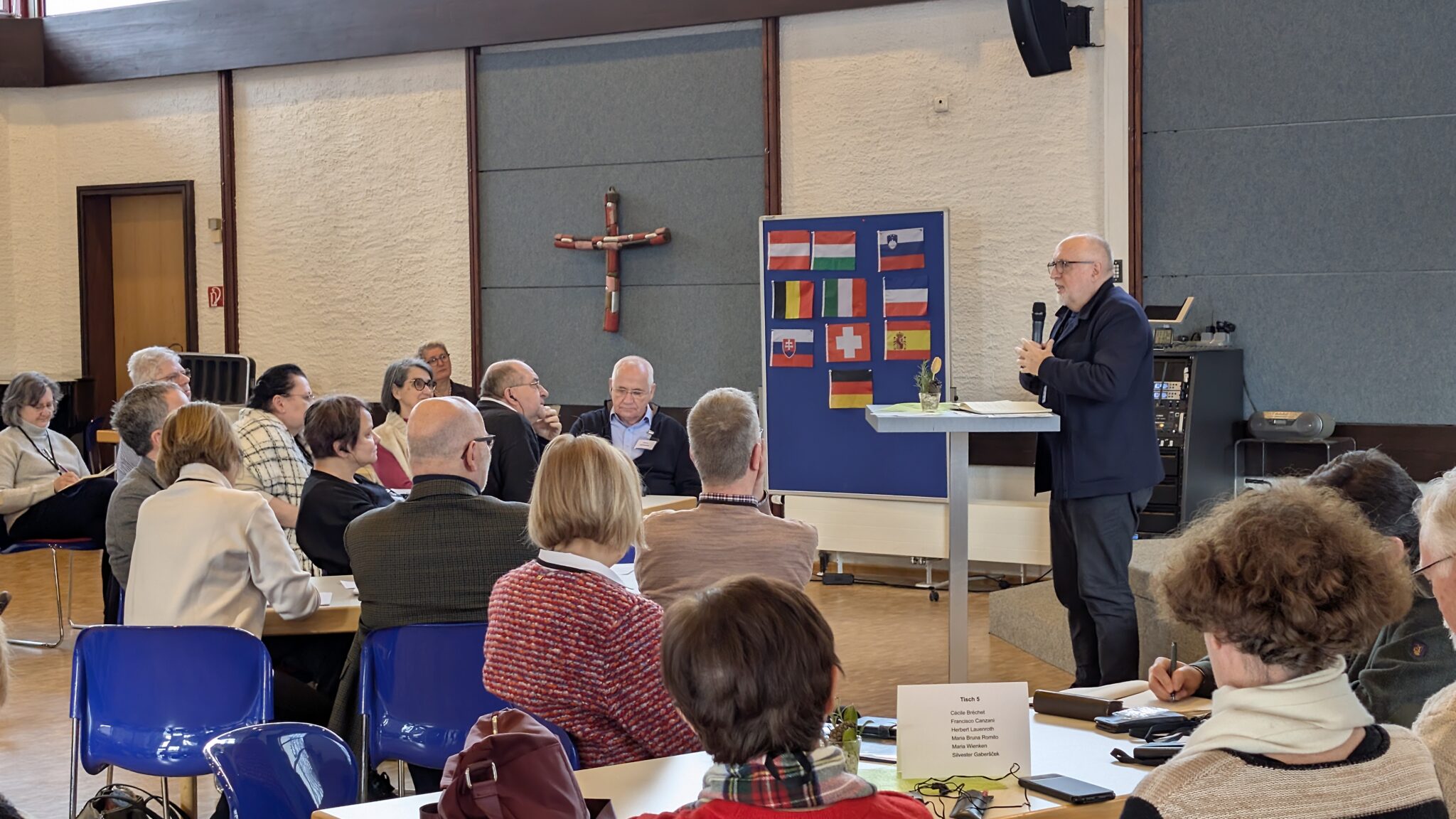
The multipolar dialogue group brought strong testimonies from the wounds of the East. Palko Tóth recalled the young Russian soldiers buried in Budapest: “They are our children too.” Many in Eastern Europe are disillusioned with the West. New dialogue initiatives will emerge to heal these wounds, such as the international meeting in Transylvania on relational identities.
Franz Kronreif and Luisa Sello presented Dialop, a path of dialogue between the European Left and the Catholic world, also inspired by “Paradise ’49”. The project, encouraged by Benedict XVI and Pope Francis, works on major ethical issues with the logic of “differentiated consent and qualified dissent”.
Many testimonies enriched the meeting: a Russian couple divided by opposing narratives about the war in Ukraine; a South Tyrolean couple accustomed to living with different languages and cultures; and a Slovak priest concerned about the loss of religious sense in Western Europe.
In his concluding remarks, Morán pointed to the mystery of Jesus Forsaken as a key to European identity. He also referred to the crucifix of San Damiano, “the God who comes from Europe”. Europe has universalized the Gospel but also carries historical shadows such as colonization, wars and nihilism; it is precisely there that the charism of unity was born. He said, “It is not a matter of superiority but of safeguarding what Europe can still offer the world: above all Jesus Forsaken”.
For this we need a “daily relational mystique”, made up of dialogue, living networks and cultural and political initiatives. Everything that already exists, Together for Europe, multipolar dialogue, the Focolare Cultura, the Brussels “European Project” Focolare and Dialop, is part of a single endeavour to be safeguarded and developed. “We must move forward, keep the network alive, each with our own commitment”.
Aurelio Molè
Photo: © Magdalena Weber
0 Comments