
“Let us give thanks together to the Lord for the great spiritual family that has been born from the charism of Chiara Lubich.” These were the words of Pope Leo XIV to the participants at the General Assembly of the Work of Mary – Focolare Movement, on the 21st of March 2026. As the Pope recalls, Chiara Lubich is widely known for her work as a foundress as well as for her ’spirituality of communion’, thanks in part to her numerous publications. Less well known is the mystical experience that lies at the origin of her Movement and from which she has constantly drawn inspiration. The publication of Paradise ’49 is part of the extensive publishing project of her “Works”. This is being undertaken by the Chiara Lubich Centre and published by Città Nuova, and it is the sixth volume in the series. This book now lifts a veil that had previously been kept reserved, which was the understandable wish of the Author herself. It was over that intense contemplative period that stretched from the 16th of July 1949 to the end of 1951, and it is known precisely as “Paradise ’49”.
Before focusing on the book, let us take a look at the event itself, of which the book is a narrative. On the 16th of July 1949, after attending Mass, Chiara wanted to turn to Jesus and call him by name, but she could not. What she had just experienced had transformed her into Jesus; she could not therefore call herself, and from her lips came the words that Jesus used in his prayer: “Abba, Father”. Later, she wrote: “I seemed to understand that the one who had put upon my lips the word “Father” was the Holy Spirit.” It is not merely a word, it is reality: “in that moment I found myself within the bosom of the Father. … I had, therefore, entered into the Bosom of the Father, which appeared to the eyes of my soul (but it was as if I saw it with my physical eyes) as an abyss that was immense, cosmic. And it was all gold and flames above, below, to the right and to the left.” From the very first moment, the event takes on mystical overtones, comparable to similar experiences lived by other mystics. Yet it also reveals a distinctive feature, stemming above all from its unitive, “collective”, ecclesial dimension.
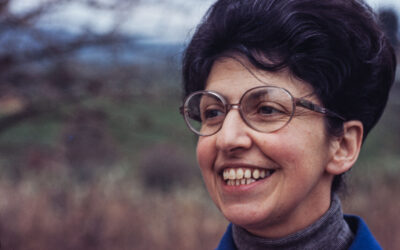
Before attending Mass, Chiara had made a “pact of unity” with Igino Giordani, a well-known writer, Member of Parliament and father of a family. Together they had asked that it be Jesus, who came through the Eucharist in one of them, to “bring about” unity with Jesus in the other, both of them totally open and receptive to his action, as into an “empty chalice”. And that is what happened: upon her and upon him, having become an “emptiness of love”, only Jesus came and remained. The two had become one Christ. It was a repetition of the Apostle Paul’s experience: “It is no longer I who live, but it is Christ who lives in me” (Galatians 2:20): the two souls had become one soul, that of Christ. It is this one soul that entered the bosom of the Father. The mystical experience that took place did not concern just one person but, first two, then an entire group to whom Chiara communicates what she is experiencing, constantly involving new people in the same experience: “I had the impression of seeing in the Bosom of the Father a small company: it was us.” In the bosom of the Father, life is lived as a single Soul (the capital letter is a constant feature of Chiara’s narrative).
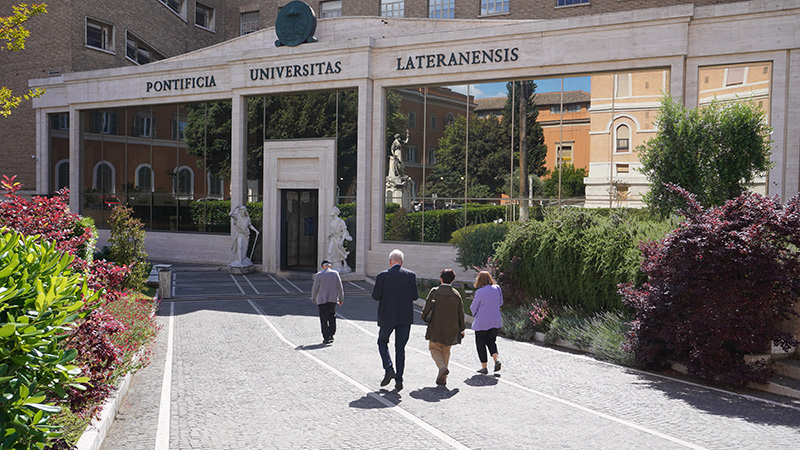
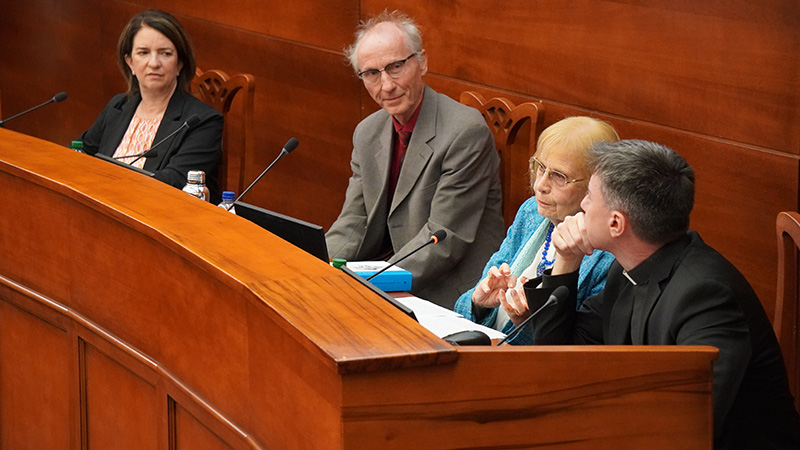
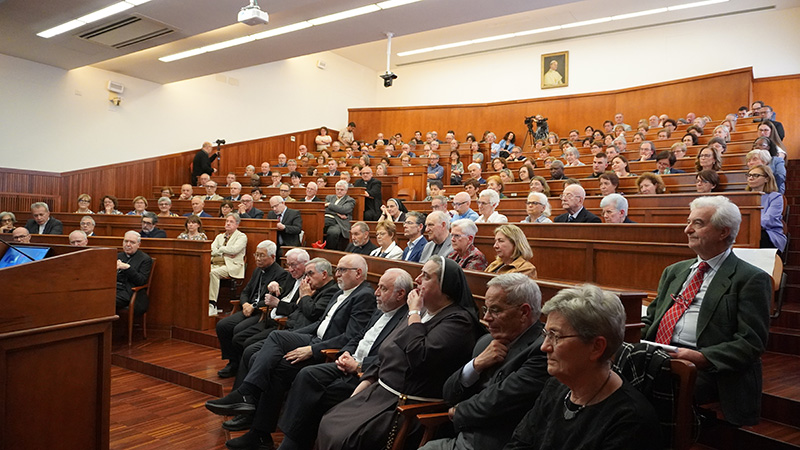
Highlights from the presentation at the Pontifical Lateran University
When, shortly afterwards, the phenomenon of the “mystical marriage” occurs—common to many mystics—it is no longer one person who is “married”, but the entire group that has become a single Soul. From that moment begins what Chiara calls “travelling Paradise”, a sort of honeymoon in which the Spouse shows her the realities of Heaven that now belong to her as well. And here we venture into the contents of what she calls “lights”, “revelations”, “understandings”, the experience and insight of the Revelation, of such intensity that she becomes identified with what she “sees”, almost as if she were coming to know the mysteries of the faith from within. These are insights regarding the Movement that is coming into being, guidelines for a pedagogy of the spirituality of communion, indications that translate into prayer and daily life: “on earth, as it is in Heaven”.
The text is not easy to read, both because of its mystical language—filled with paradoxes, metaphors and contradictions—and, above all, because of the richness of its content. The Author composed this work over a long period of years, practically until the end of her life, selecting and organizing the papers from that period of enlightenment. We are faced with a variety of literary genres: letters, intimate pages in the style of a spiritual diary, notes in preparation for talks, newspaper articles and commentaries on the “Word of Life”, autobiographical and speculative reflections, and even a fable. However, although varied, the experience unfolds as if along a golden thread that follows a divine pedagogy, “a revelation of mysteries as light and sweet as Paradise, as logical and progressive as life”. The publication reproduces the complete text, just as she wished to present it, with her own comments added during the slow process of rereading.
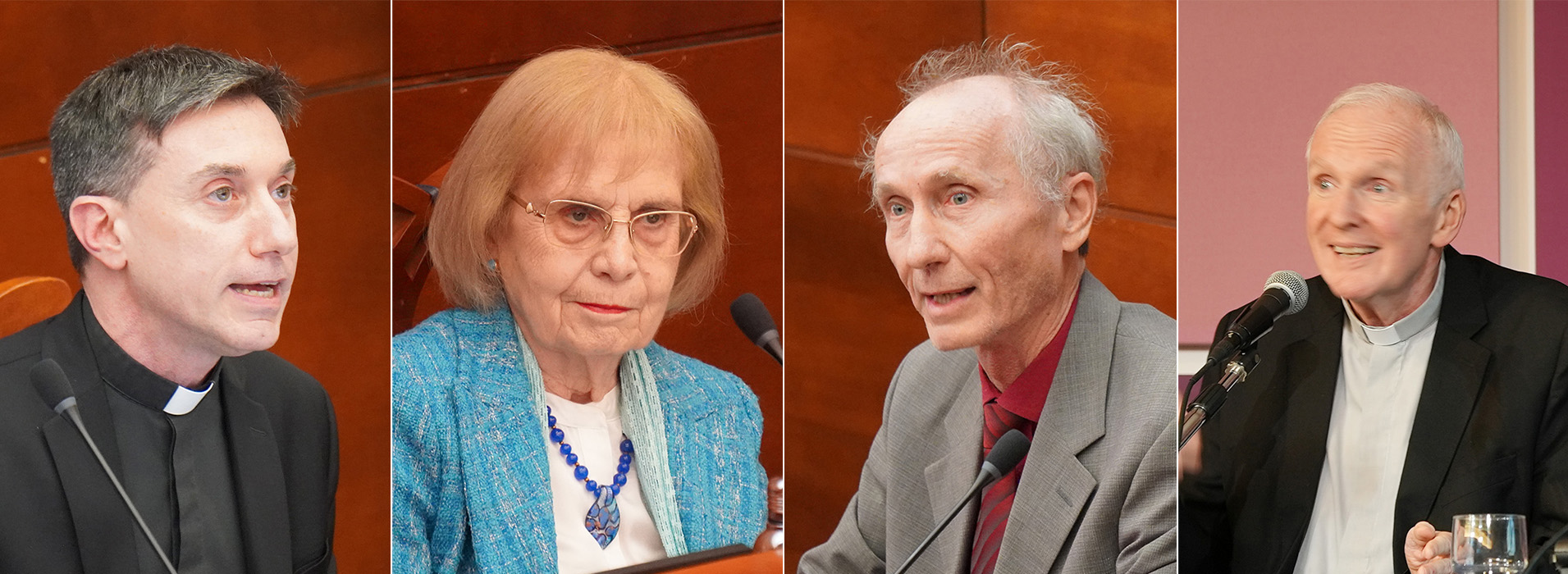
The speakers at the presentation: Alessandro Clemenzia, Dean of the Faculty of Theology of Central Italy; Angela Ales Bello, Professor Emerita of Contemporary Philosophy – Pontifical Lateran University; Stefan Tobler, theologian and Director of the Institute for Ecumenical Research at the “Lucian Blaga” University of Sibiu (Romania); Brendan Leahy, theologian and Bishop of Limerick (Ireland)
There are two introductions, one of a historical nature, by Alba Sgariglia[1], which traces the history and complex composition of the text, and the other of a theological nature, by Piero Coda[2], which highlights the nature of the experience and how it fits into the historical journey of the Church, whilst also revealing its novelty. The book is enriched by a glossary, bibliography, and scriptural and subject indexes.
This is a fundamental text for understanding the charism of Chiara Lubich, which extends beyond her Movement. It is a work destined to form part of the Church’s mystical and doctrinal heritage, capable of speaking to every person, “a legacy to be shared and brought to fruition”, as Piero Coda writes.
How should one read this book? “All these papers I have written,” the Author noted as early as the 25th of July 1949, “are worth nothing if the soul who reads them does not love, is not in God. They have value if it is God who reads them in that soul.” It is a fundamental principle for understanding any work: to place oneself on its same level. To understand Paradise ’49 properly, it is essential to listen sincerely to the experience of its Author and almost to enter with her into that “Paradise” to which the book bears witness. Chiara Lubich was convinced of this. When, on the 22nd of November 2003, she began reading her work again, together with a small circle of scholars whom she had gathered around her, called the “Abba School”, she noted in her text: “This time we are reading it with the aim of converting ourselves, translating it into life. We must ensure that the Abba School becomes Paradise. In fact, only in this way can the contents of these volumes be understood….”
Fabio Ciardi, OMI
Photo: © Carlos Mana – CSC Audiovisivi
[1] Alba Sgariglia is the director of the Chiara Lubich Centre, a researcher at the Focolare Movement’s Centre for Studies, and a member of the Abbà School in the field of theology and Mariology.
[2] Piero Coda is Secretary General of the International Theological Commission and a professor of Trinitarian Ontology at the “Sophia” University Institute. He was a former President of the Italian Theological Association from 2004 to 2011.

I yearn to read and enter into the reality of Paradise 49. Thanks immensely for the work done.