
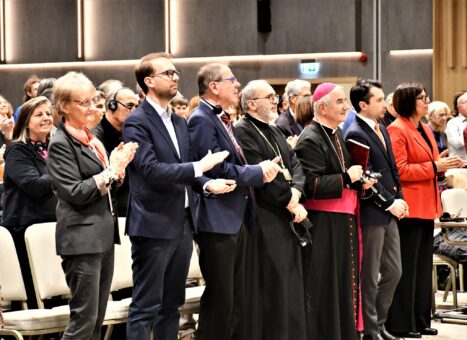
The city of Timisoara, Romania, recently hosted the annual meeting of Together for Europe (IpE) on the theme “Called to Unity.” This meeting brought together 51 movements representing more than 300 Christian realities and communities within IpE’s vast network. Creating living spaces in the cracks In the complex sociopolitical context that Europe is currently experiencing, leaders of Together for Europe (IpE) gathered from November 16-18, 2023 in Timisoara, Romania, to address an important question, “What is the role of christian communities in Europe today?” This question has gained relevance in the face of global issues such as various ongoing conflicts, migration dynamics, and the climate crisis. 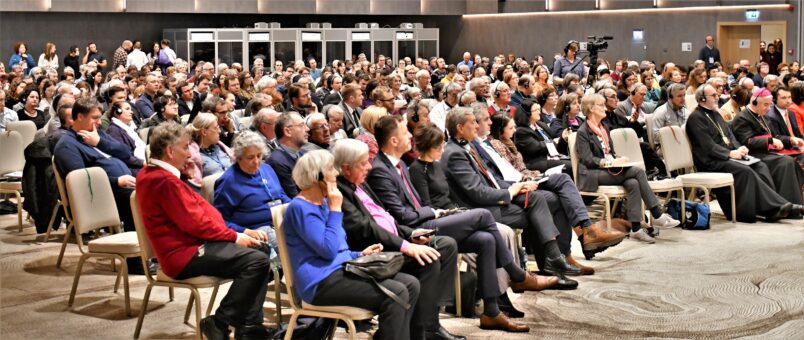 Herbert Lauenroth, historian and member of IpE’s Steering Committee, emphasized the crisis affecting all Churches and highlighted the weight of the moment: “Where is Europe today, Together for Europe? What kind of Europe, what kind of ‘Togetherness’ are we moving toward?” Against a backdrop of growing uncertainty, participants discussed what “Together for Europe” means, trying to discern the direction and future prospects. From the first sessions, it was evident that the choice of Timisoara as the venue for the meeting added an extra layer of significance. The European Capital of Culture 2023 is a testimony to the harmonious coexistence of different christian denominations, where diverse communities meet and thrive in unity. Gerhard Proß, IpE moderator and head of the CVJM (Christlicher Verein junger Menschen) in Esslingen, Germany, offered a perspective from the christian faith: “God creates space in the cracks,” he said, “Jesus himself entered the deepest of cracks in this world.” He went on to explain that the image of Christ, with his arms outstretched between heaven and earth, symbolizes a deep entrance into the cracks between God and humanity, between individuals, groups, denominations and nations. Jesus went down into the deepest: “There he created a space of life.” Words that resonated deeply, provoking reflections on how, in the face of contemporary challenges, Christian communities can create spaces of life in the midst of division, tension and uncertainty. Cultivating unity
 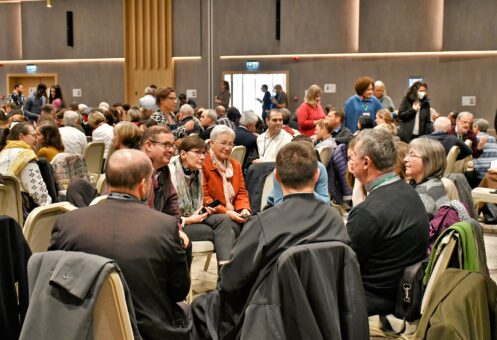 The attendees participated in dialogue sessions, engaged together in intellectual discourse, experiential workshops and prayer times. Six workshops explored topics such as social integration, youth perspectives, ethics and non-violence, promoting a deeper understanding of diversity within the Christian community. One highlight was a visit to the Orthodox Cathedral Museum, followed by Vespers in the city’s Orthodox Cathedral, attended by dignitaries and religious leaders from the different churches present. These
 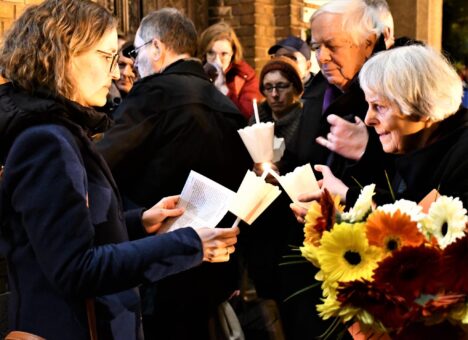 moments of common prayer fostered a harmonious atmosphere in which unity and diversity coexisted. Plenary talks and activities were punctuated by music and prayer, creating a thread throughout the conference. During one of their songs, the Ecumenical Youth Choir invited everyone to embrace different ways of praying, “We know that we all pray in our own way. Let us open ourselves to experience each other’s prayer during these days in Timisoara.” Particularly powerful was the moment of prayer for peace in which conflicts around the world were named, with a focus on Ukraine and the Middle East. All participants pledged their commitment to unity, making a pact of mutual love. A moment that was meant to symbolize the cornerstone on which a fraternal Europe is founded. Linking values to policies
 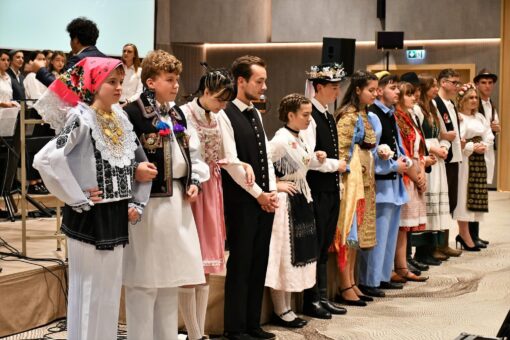 As part of the EU-funded DialogUE project, the annual “Together for Europe” meeting also addressed issues aimed at developing advice and recommendations for EU social policies. Professor Philip McDonagh, a former Irish diplomat and director of Dublin University’s “Center for Religion, Human Values and International Relations,” stressed the importance of Article 17 of the Treaty on the Functioning of the European Union (TFEU). This article promotes open and transparent dialogue on major social issues facing Europe through high-level meetings and seminars for dialogue and work between european institutions and Churches, as well as non-denominational and philosophical organizations. The professor emphasized the contribution of Churches in public debate, drawing on their philosophical foundations, values of compassion, care, solidarity, and respect for pluralism. He hoped that Churches would work to bridge the gap between high-level values and everyday policies, offering a much-needed perspective on issues such as peace, inclusion, and integration. Calling for a multilateral approach, he stressed the need for Europe to be perceived positively by the global community and highlighted the responsibility to consider the perspectives of the Global South. Hope in unity
  Margaret Karram, president of the Focolare Movement, was present along with Co-President Jesús Morán and spoke, offering words of hope: “I would like to have with all of you this conviction: everything is possible!” Her words encouraged an optimistic outlook, the recognition of shared humanity, and the creation of networks of fraternity. Karram encouraged the Together for Europe network to embrace Gospel-born charisms, engage in dialogue and open spaces to pursue tangible responses to contemporary challenges. Bishop Josef-Csaba Pál of Timisoara expressed gratitude for these days: “A small seed of this fraternity, unity, and love has been sown in us, in our Churches, but also in society. The Together for Europe network is one of those wonderful initiatives where God has allowed good things to grow over the years. Let us continue to work together with all people of good will!” Looking ahead, it was announced that the next annual meeting of Together for Europe will be held in Graz-Seckau, Austria, from October 31 to November 2, 2024. Christian denominations present: Greek Orthodox, Romanian, Armenian and Russian Orthodox, Greek, Roman and Old Catholic, Protestant, Lutheran, Reformed, Anglican and Free Churches.
Ana Clara Giovani
0 Comments