Putting ourselves in the shoes of those we perceive as distant and different helps us to understand their story and their struggles, but also the richness they bring with them. At the same time, to welcome means to open our heart to infinite possibilities, including that of being the first to receive abundant gifts and, without realising it, to become a “home” for someone.
At the station
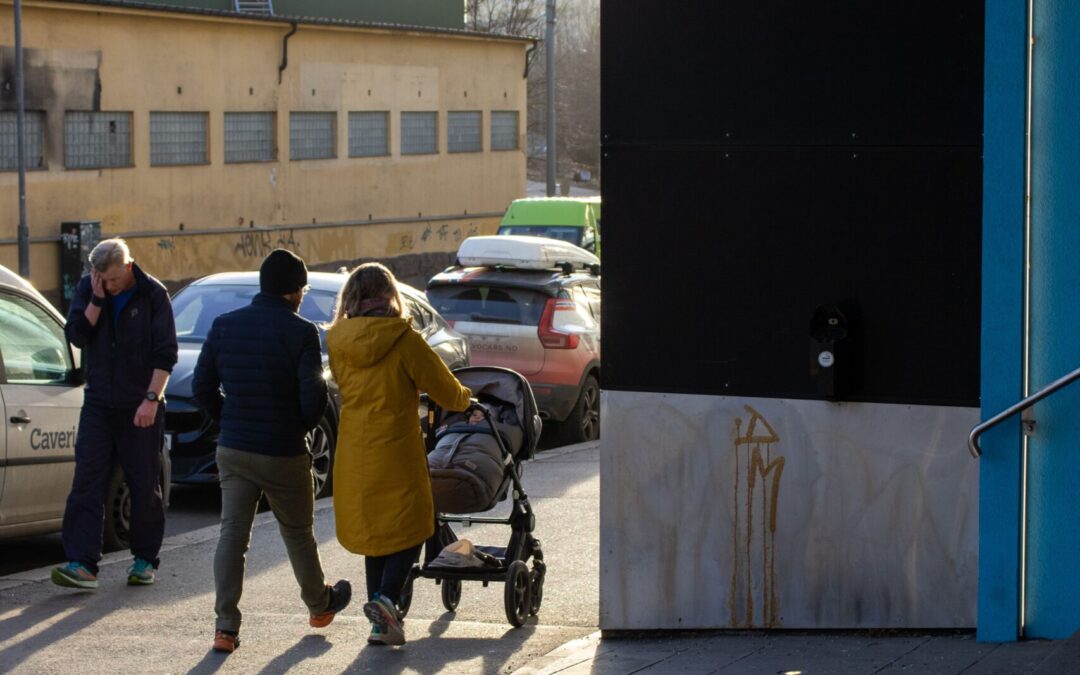
I was sitting in the car in front of the station, waiting for the train to arrive with my daughter, when a man approached me and showed me his documents: he was a Palestinian who had fled the war.
From his halting Italian, I gathered that he was staying at Caritas and had come here to look for work as a bricklayer. However, he first needed to regularise his situation and for this he needed a revenue stamp and four photos. I listened to him and struggled to interact with him, but I didn’t respond to his request, although I said goodbye to him politely.
Meanwhile, the train was delayed. My eyes turned towards the Palestinian who was also waiting at the entrance to the station … for whom? Someone more charitable than me? Something inside urged me to go back to him, this time with the money for the necessary paperwork to be completed at the police station. As the train arrived, he kept thanking me warmly.
Thinking that we must always be ready to meet God, I concluded: so, it was really He who met me in that Palestinian man.
(Barbara – Italy)
Marius, Franz, Elke
I was a paediatrician and Ursula was a nurse in the same paediatric department of the hospital. In the early years of our marriage, we hardly noticed that we were not having children of our own, as we were focused on the little ones entrusted to our care. Until one morning, a three-month-old baby was admitted to our care. He had been born to a teenage mother who was unable to look after him.
After considerable reflection we applied to adopt him. The best time of our lives began. We used to go to work together, with little Marius in our arms and once at the hospital, we would put him in a pushchair where we could keep an eye on him while we worked. Two years later, a similar situation occurred involving another newborn for whom an adoptive family was being sought. So Franz joined Marius: they were very different from each other, as can also be the case with biological children. Two more years passed, and, again under similar circumstances, Elke joined us. First and foremost, they are children of God, but to us they also seem to be the fruit of our love and our work for everyone’s children.
Yesterday I experienced one of those moments that are not easily forgotten with one of my colleagues. She is a young woman who has a disabled son and a violent ex-husband with whom she is currently involved in legal proceedings.
She works very hard and I thought of giving her a financial bonus because, with great dedication, she had completed a task that I had entrusted to her. Although given her situation, she sometimes has to be absent due to the court case involving her ex-husband or to some difficulties with her son she is always willing to work. When I gave her the bonus in cash, she burst into tears. Over the weekend money had been stolen from her at a cash machine so this helped to compensate for that loss and it was a greater sum than she had lost. It gave us an opportunity to talk about Providence, Then I remembered something I had heard at an Economy of Communion meeting, namely that “we must anticipate the needs of others”. This prompted me to give her an advance on her wages which, out of humility, she did not dare ask for. We are only stewards.
CK (Argentina) (da “Family News”)
Solidarity
I am an elderly priest collaborator in a parish in Milan, Italy. I also look after some people who are alone and in difficulty, helping them with donations that I receive.
Recently, one particular situation became more serious. I had already booked a place for a few days of summer holiday and I had set aside €140 for extra expenses. After a moment of prayer, I decided to give half of it to the person in need.
This morning, after Mass, an elderly man came up to me and gave me an envelope containing €150. Once again, I found that I was not alone in managing this solidarity.
PL (wrote to us from Milan, Italy)
Recognising one another
Some time ago I began to pay attention to those people whom few notice and whom no one even greets. One day, as I was running to catch the bus, I lost my wallet and went back to look for it. I found a street cleaner who had found it and was trying to track me down. Samuel refused to accept any reward and since then we have met many times to have a coffee.
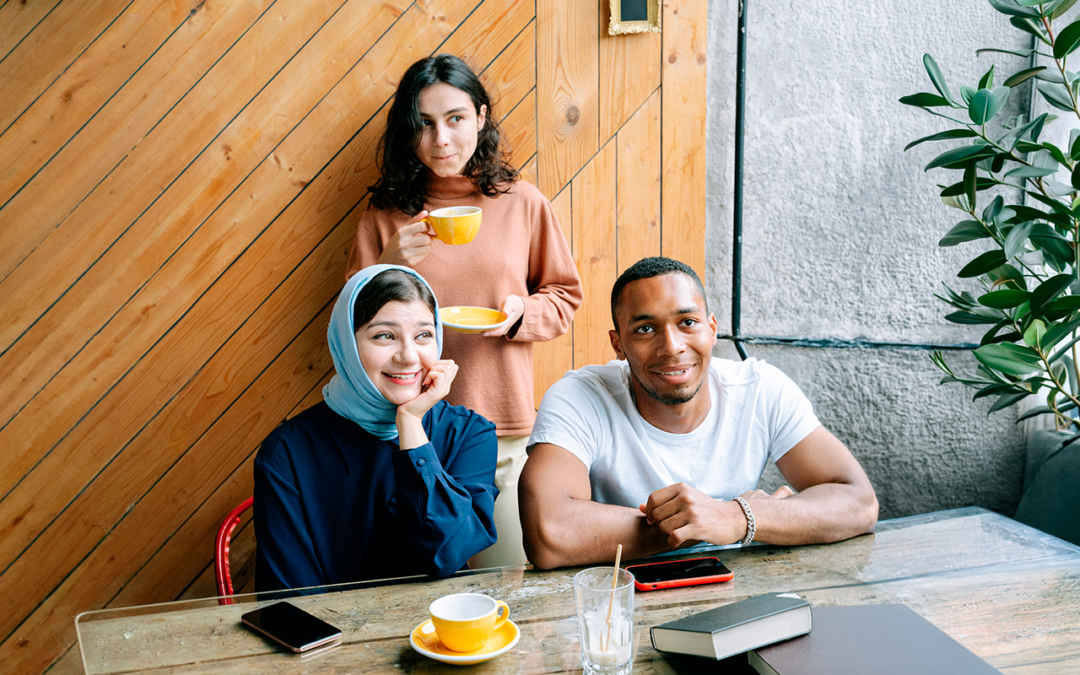
Fatima is Moroccan, Muslim and works as a cleaner in a neighborhood restaurant. Over time she has told me many things about her family and her homeland. We have talked about beliefs, faith and respect and she demonstrates affection every time she sees me, because no one ever stops to talk “to the cleaner”.
Chaouki is a Tunisian cook who has worked in Italy and Germany, speaks many languages and is a very cultured person. He has taken over a restaurant called “Citizen of the World”: a real statement of respect and tolerance. I told him that I shared his way of thinking and that I was happy to share ideas and actions for a better world. One day I went there to have breakfast with some friends and their surprise was similar to mine in seeing people from various backgrounds who shared his outlook. It’s great to feel surrounded by good people who go about their lives without making a fuss.
I was doing some work around the house when I cut my left hand deeply. As I tried to stop the flow of blood before my parents accompanied me to the hospital casualty department, our six year old grandson Emanuel, who was spending that day with us, watched closely as I hurriedly bandaged my hand: “Does it hurt a lot, Granddad?” I reassured him and to help me, he gave me a sweet! Shortly after: “Would you like another sweet, Granddad? It’ll do you good.” After the wound was stitched, bandaged and with a splint on my left thumb (fortunately the tendon was unharmed), when I got back home he came running to me: “Granddad, how are you doing now? Maybe a coffee would help”. “Thank you, Emanuel, after lunch: now let’s go to eat”. My wife had made his favourite sausages. After eating his, he took another one from the serving plate, cut it up and without saying anything put it on my plate. Observing these gestures made with moving simplicity, I recalled that Jesus indicated children as a model for us.
(Giovanni C. – Italy)
A providential holiday
“Beyond Us”, an association that supports people with disabilities, among its many activities organizes a holiday in San Bernardino. The President, whom I have known for years, said to me: “Why don’t you send Benedetta with us?” The idea was appealing, but would the place be suitable for wheelchair users like my daughter? After a visit it seemed that it would In addition, our friend Daniela kindly offered to accompany her and there would also be a nurse there. Benedetta was enthusiastic. I couldn’t believe it. Before leaving, we attended a dinner to meet the other holidaymakers. The atmosphere was cheerful. On 3rd August, Benedetta and Daniela left in our car for getting around locally. I really hoped my friend would not get too tired… I trusted and entrust everything to Jesus. The first news from both of them was reassuring. When they returned I hardly recognized my daughter: she was relaxed and overjoyed especially because she had been able to attend Mass every day, celebrated right there in her and Daniela’s room. God always surpasses us in generosity!
(M.B. – Switzerland)
When you lose your self-sufficiency
The month just past has been a month of “passion,” in the most physical sense of the word. An extraordinary month, in which physical pain was cradled by the tenderness of brothers. My eagerness to recover quickly—that sin of pride which wants always to feel self-sufficient—betrayed me. There were complications after the operation, my knee swelled up, and the doctor was firm: rest and ice. In that bag of ice I found a strange form of prayer. I found myself “small”, dependent on my brother for a glass of water or a lift in the car. But it was precisely in this fragility that I rediscovered the treasure of the priestly community in which I live. I understood that fraternity is not just eating together, but having the trust o say, “I need you”
Dependence on others is not a defeat, but the guarantee of our humanity. Today as a retired priest, I cultivate a few square meters of the world in my garden. And as long as I have a voice (and a crutch to support me), my garden will always be open to those looking for hope.
(Don Peppino G. – Italy)
Curated by Maria Grazia Berretta
taken from the Gospel of the Day, Città Nuova, year XII – no.3 – May-June 2026)
Mongomo is a small town in Equatorial Guinea, on the border with Gabon. Sister Maria writes: “Living with the people here is a great gift for our community. They are so open to the Word of God.” Every month, the people in the nearby villages look forward to their visit. On Sundays, since there is almost never a priest to celebrate Mass, they meet with some of us to hear the Word explained. More than five hundred gather. On the other hand, only about fifty manage to take part in the parish meetings in Mongomo. It must be taken into account that they have no clocks and no notion of the date, so it is very difficult to arrange appointments, so their presence is not constant. Sometimes they have to travel (obviously on foot) ten or twenty kilometres to get there. It is moving to see that they never get tired of hearing about God. I would like you to hear them tell how they put the Gospel into practice: they are simple, concrete experiences… hearing them is enough to convert you. I have often heard some of them repeat that the Word of God is as necessary to them as food. ”
(Sister Mary – Equatorial Guinea)
Reconciliation
I was particularly struck when I heard the Gospel phrase “If you present your offering on the altar and there you remember that your brother has something against you, leave your gift there in front of the altar and go first to be reconciled with your brother…” I wasn’t on good terms with a certain lady. Summoning up my courage, I went to her. Unfortunately, not only did she not listen to me, but she shouted at me to go away. I felt demoralized and I didn’t know what to do. Meanwhile, my son had received a letter from an acquaintance who wanted to apologize to him because of a small misunderstanding between them a few days earlier. I was surprised: firstly, because my son is so young that he can’t read yet, so I had to read the letter to him; secondly, because an adult apologized so sincerely to him. This inspired me to write to that lady asking for forgiveness. A few days later I receive a phone call from her: “Please, you forgive me!” I went back to her, we cleared up all our misunderstandings and full of joy, we reconciled.
My mother-in-law was dissatisfied with the work carried out by the worker her son had organised for her. When we pointed out that she was never happy with anything, she reacted strongly. Later, at dinner, she was still sulking, and when I tried to downplay the incident, she flew off the handle, reproaching me for things I really didn’t feel guilty about at all.
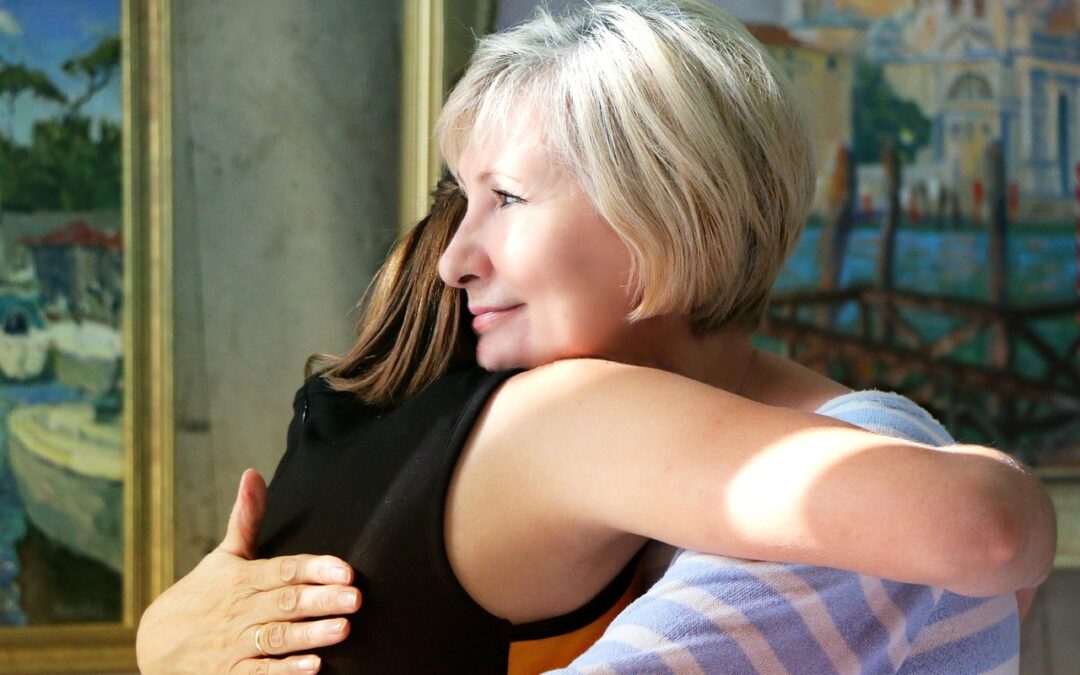
She even got up from the table and went to take refuge in her room. Ah, if only everyone had stayed at home! But inside me, the voice of charity which covers faults and weaknesses like a cloak, prompted me to go to her. I found her in tears. When I asked for forgiveness, she also blamed her son. I felt I had no choice but to leave. I felt I had done enough… but then the same voice as before suggested I try again. After clearing the table, I went back to her to convince her that I was truly sorry, and I hugged her as I would have hugged my own mother. I only left her once the tension had eased and I saw her doze off. I thanked God, and the next day my greeting with a smile removed all trace of embarrassment from my mother-in-law’s face.
Maria Luisa – Italy
In hospital
I was admitted to the hospital in Ribeirão Preto for a nose operation. It wasn’t the first time, because I have a rare disease and need frequent treatment. That’s why I don’t like hospitals, and I was really scared but I did everything out of love for Jesus.
For example, I drank milk with cream which I don’t like at all; on the day of the operation, I put on the hospital clothes without complaining; I didn’t eat lunch so I could have the anaesthetic; I waited with love for four hours because there was a delay with my operation and tried to love the other children who had also been admitted to hospital. After the operation, I waited several more hours for the doctor to call me for a check-up.
I was already hungry, tired and nervous, so I knocked over a chair and grumbled. But I immediately remembered what I had promised Jesus and repented. Shortly afterwards, the door opened. It was the doctor calling me.
Paulinha, 7 years old – Brazil
Reciprocity
One morning, I heard the doorbell ring: the person at the door introduced herself as B., the tenant who was living in the flat below me and has Alzheimer’s. She asked me to let her in because she had accidentally locked herself out of her flat while her husband was away. I opened the door and invited her to stay with me for a while until he returned home.
I could see she was sad and confused (sometimes she is aware of her condition). So as not to make her feel bad, I pointed out that this kind of unexpected thing can happen to anyone, through carelessness. We chatted for a while until she remembered that she was locked out and became anxious again.
Since I didn’t feel like leaving her in that state, even though I’m in a wheelchair, I went with her by lift to the floor below to calm her down.
But first, B. also showed herself to be a neighbour to me by taking the trouble to place a mat in front of my front door so that it wouldn’t close. In that way I was able to keep her company until her husband arrived.