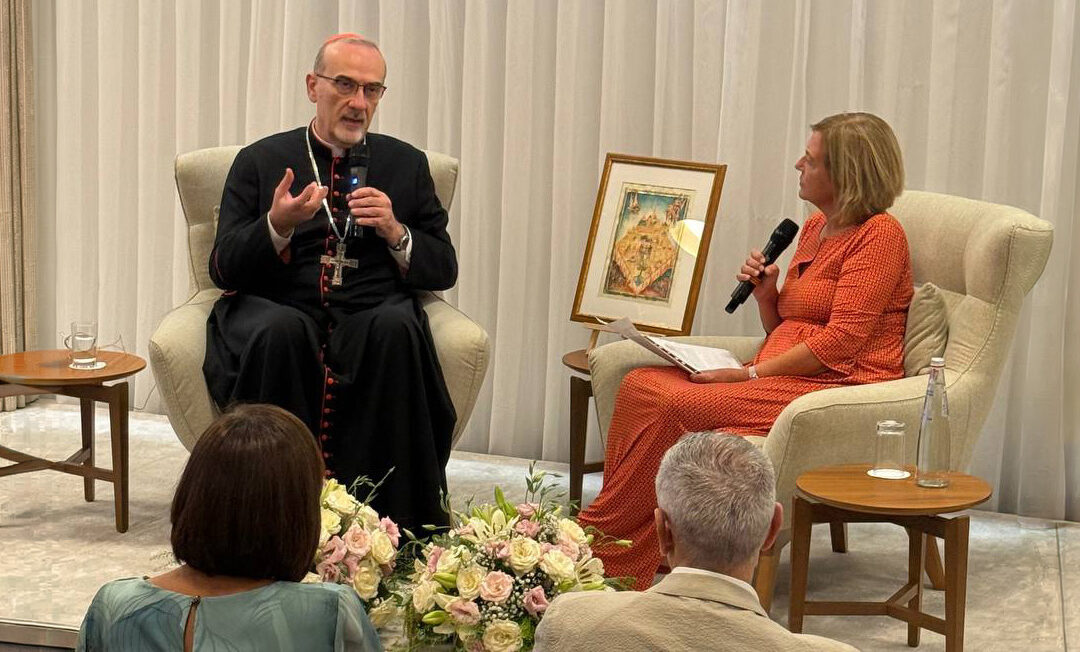
“This initiative truly touches my heart.” Margaret Karram returns to the Holy City, where she lived for 24 years, to take part in the inauguration of the ‘Within Your Gates’ Forum, organised by Patriarch Pierbattista Pizzaballa and the University of Notre Dame. The forum aims to be an open space for religious leaders, academics, and civic actors across different communities, to meet and work together. The objective is ambitious and necessary: to restore Jerusalem’s universal mission as a city of reconciliation and peace for all humanity.
Turn on subtitles and choose your desired language
To watch the full recording of the inauguration of the ‘Within Your Gates’ Forum, organised by Cardinal Pierbattista Pizzaballa, Latin Patriarch of Jerusalem, and developed in collaboration with the University of Notre Dame’s academic centre in Jerusalem, click here
Yesterday I experienced one of those moments that are not easily forgotten with one of my colleagues. She is a young woman who has a disabled son and a violent ex-husband with whom she is currently involved in legal proceedings.
She works very hard and I thought of giving her a financial bonus because, with great dedication, she had completed a task that I had entrusted to her. Although given her situation, she sometimes has to be absent due to the court case involving her ex-husband or to some difficulties with her son she is always willing to work. When I gave her the bonus in cash, she burst into tears. Over the weekend money had been stolen from her at a cash machine so this helped to compensate for that loss and it was a greater sum than she had lost. It gave us an opportunity to talk about Providence, Then I remembered something I had heard at an Economy of Communion meeting, namely that “we must anticipate the needs of others”. This prompted me to give her an advance on her wages which, out of humility, she did not dare ask for. We are only stewards.
CK (Argentina) (da “Family News”)
Solidarity
I am an elderly priest collaborator in a parish in Milan, Italy. I also look after some people who are alone and in difficulty, helping them with donations that I receive.
Recently, one particular situation became more serious. I had already booked a place for a few days of summer holiday and I had set aside €140 for extra expenses. After a moment of prayer, I decided to give half of it to the person in need.
This morning, after Mass, an elderly man came up to me and gave me an envelope containing €150. Once again, I found that I was not alone in managing this solidarity.
PL (wrote to us from Milan, Italy)
Recognising one another
Some time ago I began to pay attention to those people whom few notice and whom no one even greets. One day, as I was running to catch the bus, I lost my wallet and went back to look for it. I found a street cleaner who had found it and was trying to track me down. Samuel refused to accept any reward and since then we have met many times to have a coffee.
Fatima is Moroccan, Muslim and works as a cleaner in a neighborhood restaurant. Over time she has told me many things about her family and her homeland. We have talked about beliefs, faith and respect and she demonstrates affection every time she sees me, because no one ever stops to talk “to the cleaner”.
Chaouki is a Tunisian cook who has worked in Italy and Germany, speaks many languages and is a very cultured person. He has taken over a restaurant called “Citizen of the World”: a real statement of respect and tolerance. I told him that I shared his way of thinking and that I was happy to share ideas and actions for a better world. One day I went there to have breakfast with some friends and their surprise was similar to mine in seeing people from various backgrounds who shared his outlook. It’s great to feel surrounded by good people who go about their lives without making a fuss.
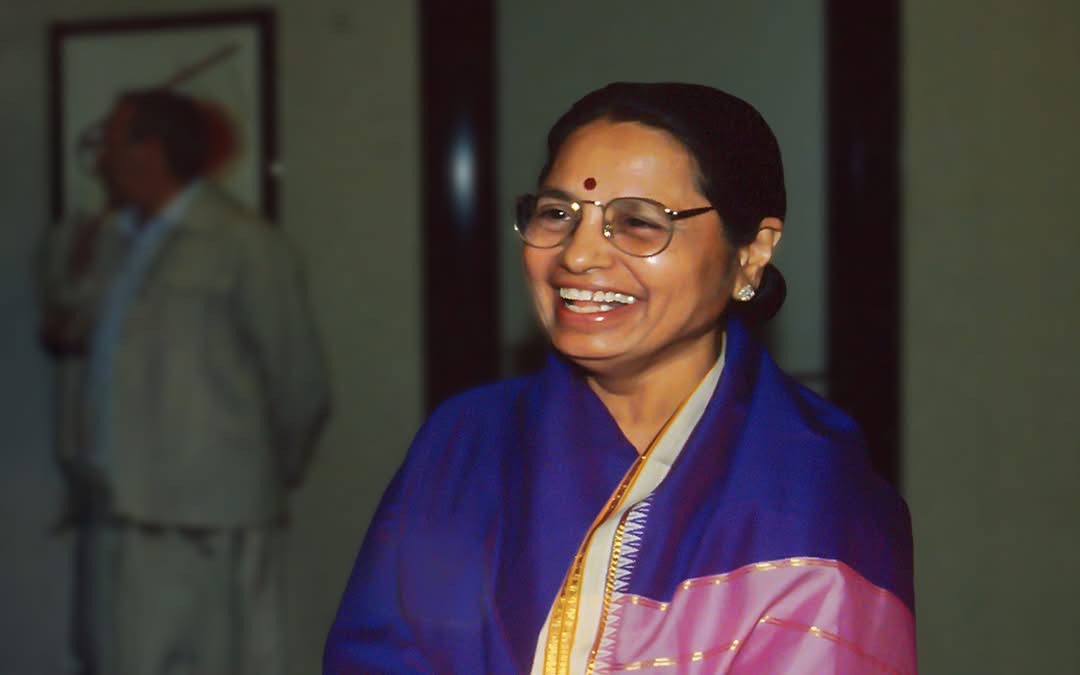
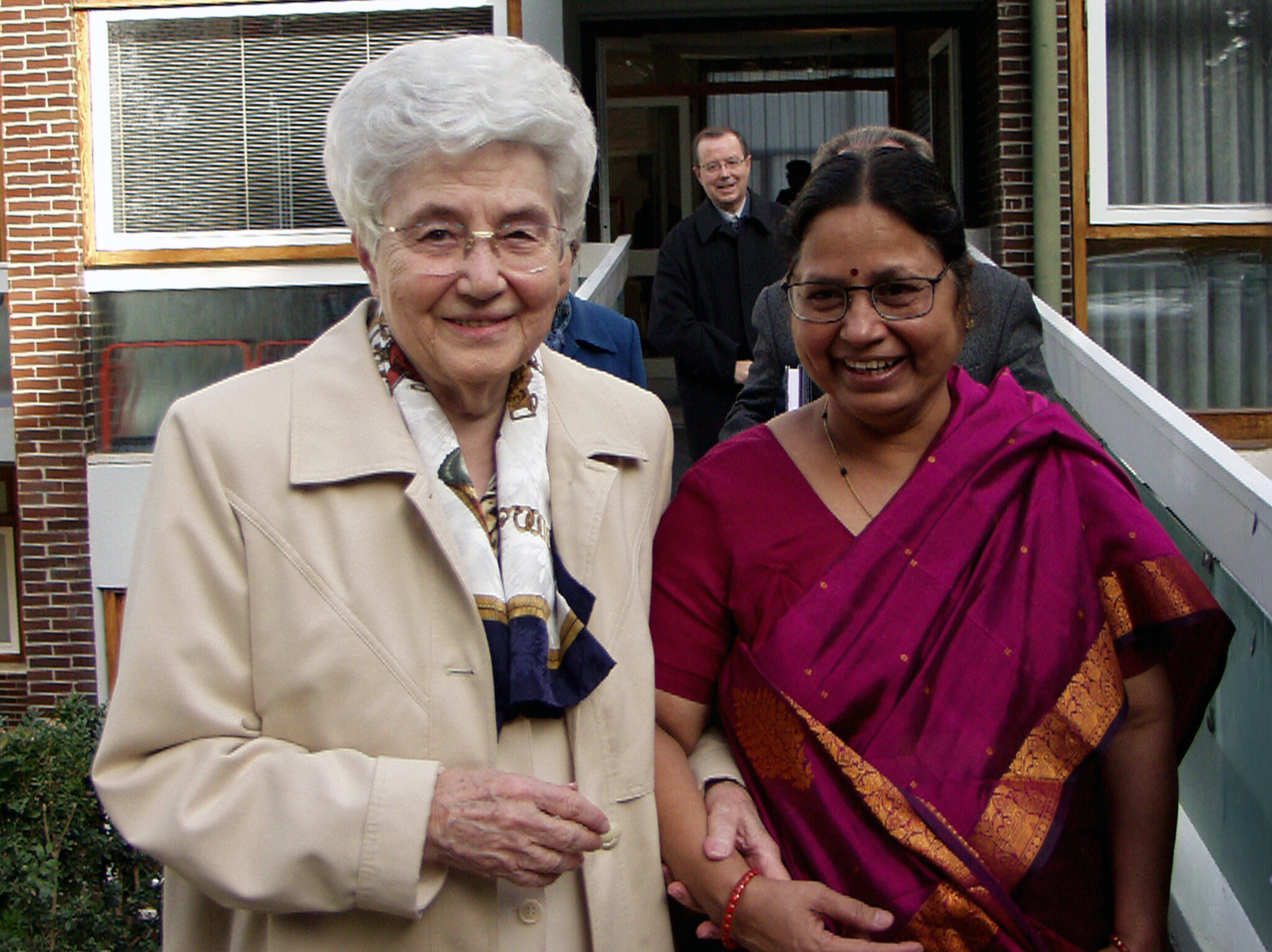
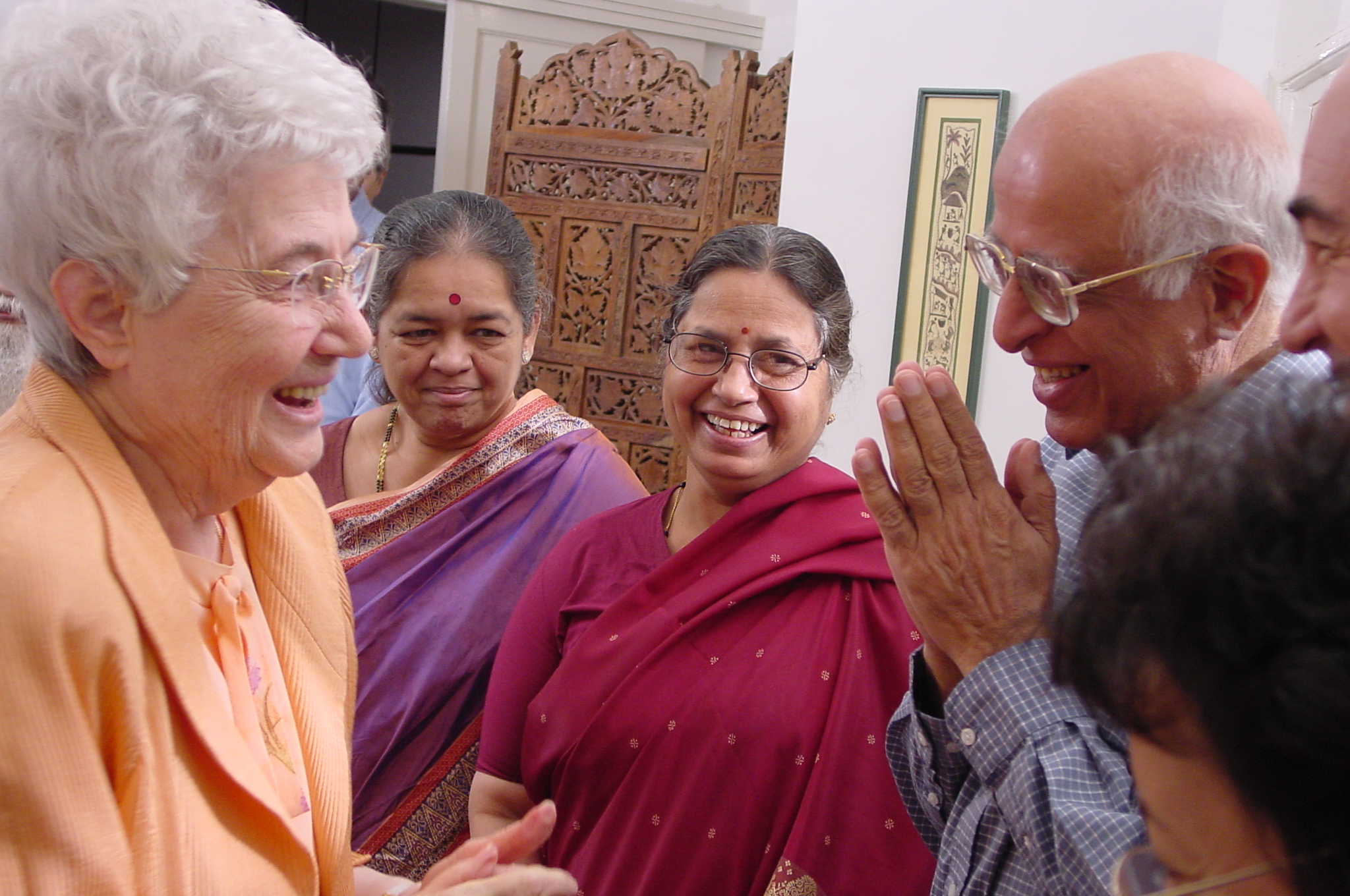
The news came suddenly and unexpectedly, on the morning of 10th August. Kala Acharya had just died on the campus of Somaiya University where she lived and where, at the behest of its founder, Shri Karamshi Jethabhai, she had spent forty years of her life. As Samir Somaiya, grandson of the founder and current President of this prestigious academic institution, defined her, Kala had become an institution in her own right through her presence and personality. In agreement with Dr. Shantilal Somaiya, who in the meantime had succeeded his father in the management of the Trust of the academic institution, she had established the Somaiya Sanskriti Peetham, an institution for the training of formal and informal teachers of moral and religious values. At the same time, she became deeply involved with Dr. Somaiya in interreligious dialogue, collaborating in the mid-1990s, with the St. Pius X Catholic Seminary in Mumbai and with various foreign professors and institutions, including some in Italy. In September 2000, a few months before Chiara Lubich’s first trip to India, Msgr. Felix Machado, Undersecretary of the then Pontifical Council for Interreligious Dialogue (today the Dicastery for Interreligious Dialogue), asked Marina Pracchia and Roberto Catalano, the co-responsibles of the Focolare Movement in India, to get in touch with Professor Kala Acharya. He considered her a sister and hoped she might be able to take part in some moments during Lubich’s visit. The first meeting in Vidhyavihar, on the vast campus of Somaiya University, was immediately very warm. Kala readily accepted the invitation to attend the award ceremony of the Gandhi Peace Defender Award, which Chiara Lubich received from the Shanti Ashram in Coimbatore, in early January 2001. It was in Coimbatore, just before returning to Mumbai, that Lubich met the Indian academic personally. They immediately understood each other. The next day, the founder of Focolare wrote in her diary: “Yesterday, on the feast of the Epiphany, I had a rather special meeting, perhaps with a person who has a design of God, Kala Acharya. […] she is an expert, she has explored Hindu-Christian dialogue, knows the Pontifical Council for Interreligious Dialogue well and has been personally received twice by John Paul II. When she came into the sitting room, she immediately said that she felt blessed…: “It is the love of God that comes to me. I’ll work along whatever line you give me. That’s a promise.” […] She wants me to meet a group of highly qualified people of various religions in Bombay: she said, “Your word must go directly to all religions. The meaning you give to love is extremely important”. There will be professors, students, “we all want to become the vehicles of this word of yours” ”.
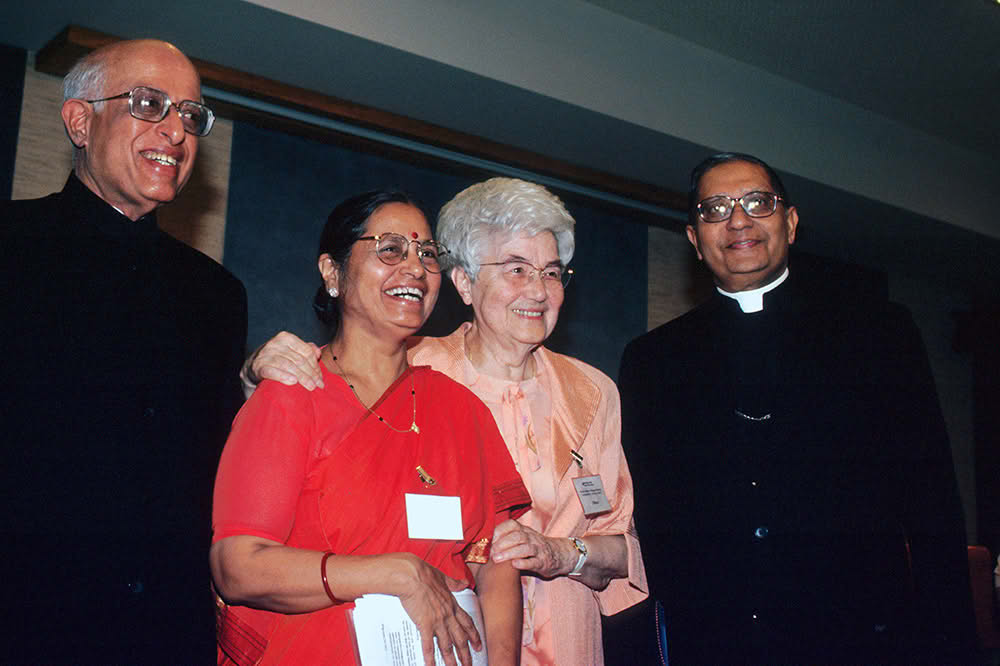
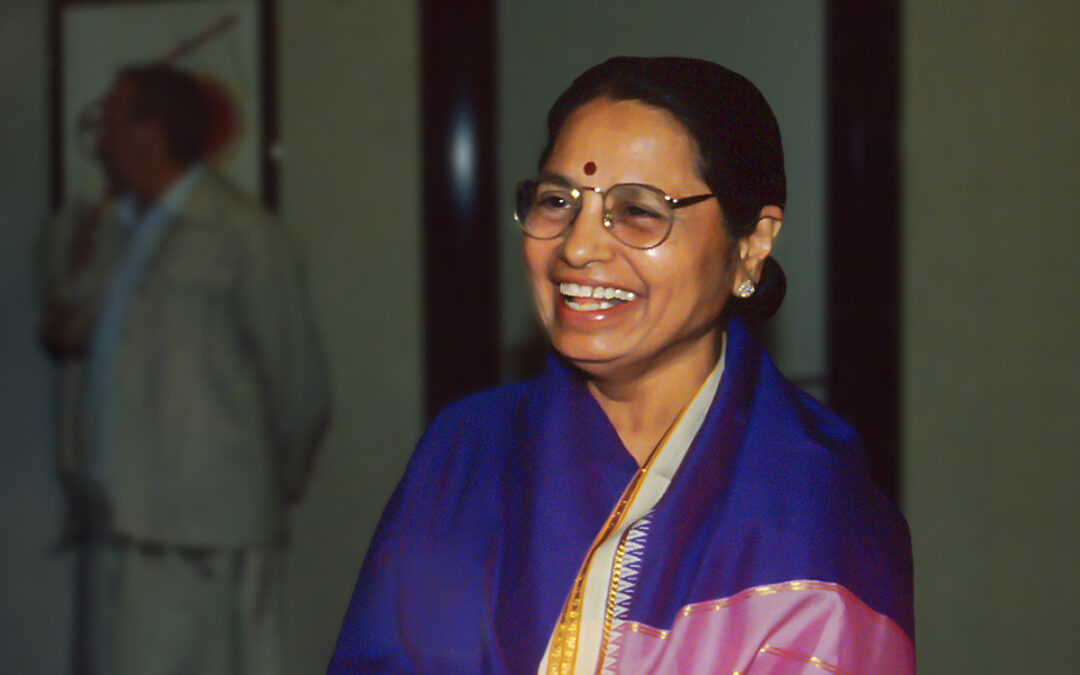
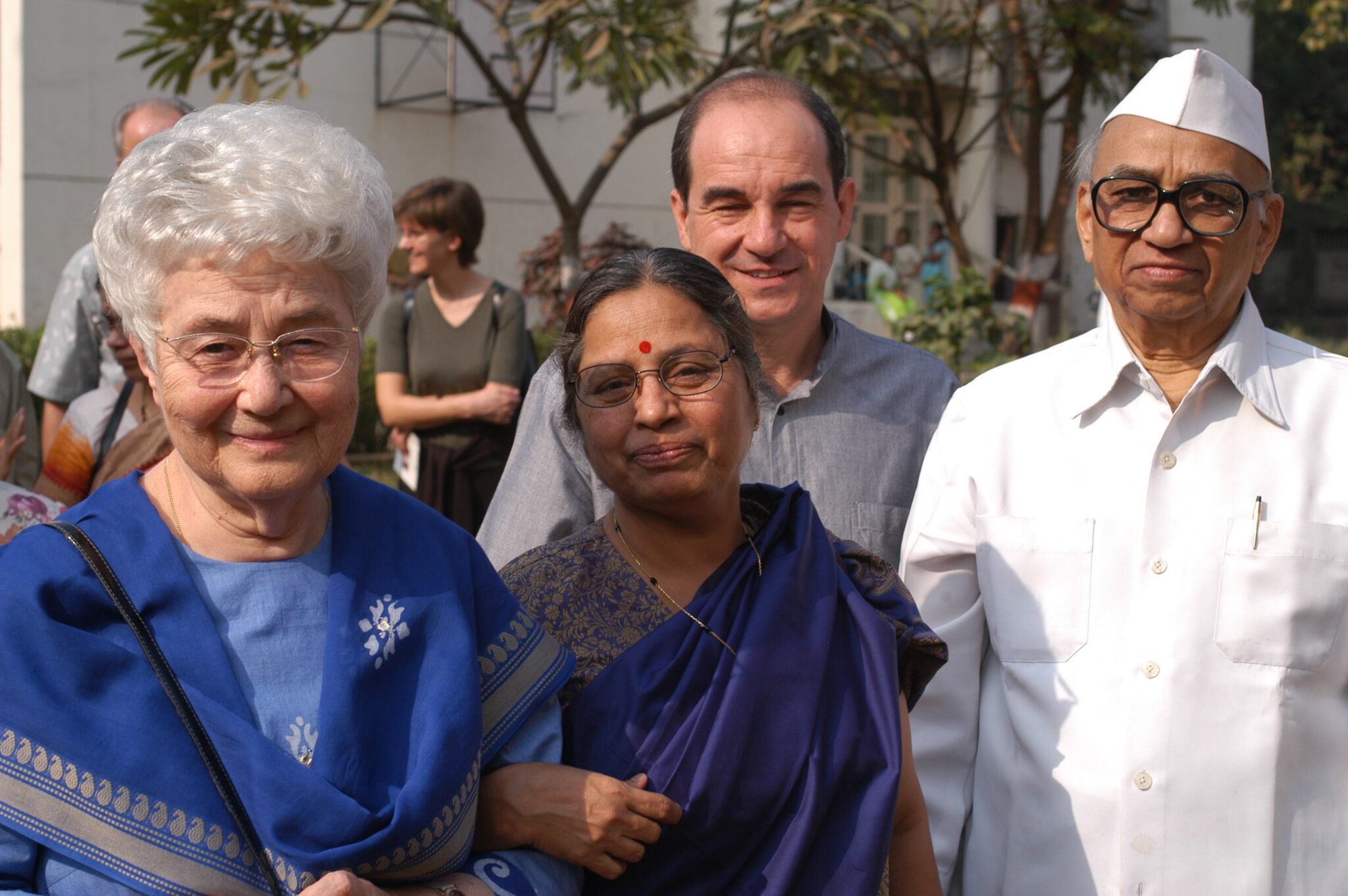
In the photos: From left: Chiara Lubich and Kala Acharya. In the second photo, between Chiara and Kala is Prof. Shubada Joshi, and on the right is Dr Shantilal Somaiya. In the third photo: Dr S. Somaiya, Kala Acharya, Chiara Lubich and Cardinal Ivan Dias of Bombay.
A few days later, in Mumbai, under a shamiana (a decorated tent) in the esplanade in the center of the large university campus, 600 people gathered to hear Lubich speak. She recounted her Christian experience and her yearning and commitment to dialogue. Shortly beforehand, Dr. Shantilal Somaiya had assured Chiara that he wanted to become a soldier at her command, to bring the spirit of unity and dialogue everywhere. It was the beginning of a unique season in the Focolare experience –not only because everything was always organized together with the new Hindu friends and the Vatican Dicastery for Interreligious Dialogue and with the Diocese of Mumbai. The Movement, for the first time in its history, opened itself up to interreligious dialogue at the academic level. This was largely due to Professor Kala Acharya who suggested that Chiara continue the friendship together with a series of symposia to reflect on shared themes. It was during the first of these that Lubich felt the inner urge to share her most intimate spiritual experience. The resonance among the Hindus was surprising and Chiara continued this experience of communion during her second visit to India in 2003, when she spent a morning together with about twenty of these academics to share very deep spiritual realities in an atmosphere of communion difficult to describe.
Chiara and Kala have always considered themselves spiritual ‘sisters’ and Kala continued, as much as she could, with great fidelity, to carry on the interreligious dialogue born from her relationship with Chiara. Along with other Hindus such as Minoti Aram and Suresh Uppadhyaya, she had grasped the prophetic significance of the charism, expressing it in these terms: “In Hinduismwe have three ways to get to God: bhakti yoga leads us to pray, Karma yoga leads us to act and jnana yoga leads us to think and meditate in order to come to know self and God. Chiara Lubich offers us a fourth way, the Prem yoga, the path of love for our brothers and sisters and among ourselves ”.
La notizia è arrivata improvvisa e inattesa, la mattina del 10 agosto. Kala Acharya si era appena spenta all’interno del campus della Somaiya University dove viveva e dove, per volere del suo fondatore, Shri Karamshi Jethabhai, ha speso quarant’anni della sua vita. Come l’ha definita Samir Somaiya, nipote del fondatore e attuale Presidente di questa prestigiosa istituzione accademica, Kala era ormai lei stessa una istituzione con la sua presenza e personalità. D’accordo con il Dr. Shantilal Somaiya, che intanto aveva rilevato dal padre il Trust che gestiva l’istituzione accademica, aveva dato vita al Somaiya Sanskriti Peetham, un istituto per la formazione di insegnanti formali e informali di valori morali e religiosi. Contemporaneamente, si era impegnata insieme al Dr. Somaiya nel dialogo interreligioso, collaborando già a metà degli anni Novanta, con il Seminario Cattolico St. Pius X di Mumbai e con vari professori e istituzioni straniere, fra le quali alcune anche italiane. Nel settembre del 2000, a pochi mesi dal primo viaggio di Chiara Lubich in India, Mons. Felix Machado, Sottosegretario dell’allora Pontificio Consiglio per il Dialogo Interreligioso (oggi Dicastero per il Dialogo Interreligioso), pregò Marina Pracchia e Roberto Catalano, corresponsabili dei Focolari in India, di mettersi in contatto con la professoressa Kala Acharya che considerava una sorella e che sperava potesse partecipare a qualche momento del viaggio della Lubich. Il primo incontro a Vidhyavihar, nel grande campus della Somaiya University, fu subito molto caloroso. Kala accettò immediatamente l’invito a partecipare alla cerimonia di conferimento del Premio Gandhi, Difensore della Pace, che Chiara Lubich ricevette dallo Shanti Ashram a Coimbatore, all’inizio di gennaio 2001. Proprio a Coimbatore, poco prima di ripartire per Mumbai, la Lubich incontrò personalmente l’accademica indiana: si capirono al volo. La fondatrice dei Focolari scrisse sul suo diario, il giorno successivo: «Ieri, giorno dell’Epifania, ho avuto un incontro un po’ speciale, forse con una creatura non senza un disegno di Dio, Kala Acharya. […] Colta, ha approfondito il dialogo indù-cristiano, conosce bene il Pontificio Consiglio per il dialogo interreligioso ed è stata ricevuta due volte personalmente da Giovanni Paolo II. Entrando nel salottino ha subito detto che si sente benedetta…: “E’ l’amore di Dio che viene a me. Lavorerò su qualsiasi linea mi darai. E’ una promessa!”. […] desidera che io incontri un gruppo di persone molto qualificate di varie religioni a Bombay: “la tua parola deve andare direttamente a tutte le religioni – ha detto – è importantissimo il significato che tu dai all’amore”. Ci saranno professori, studenti, “vogliamo tutti diventare i veicoli di questa tua parola”».
Nelle foto: Da sinistra: Chiara Lubich, Kala Acharya e dietro Roberto Catalano. Nella seconda foto, tra Chiara e Kala la Prof.ssa Shubada Joshi e a destra il Dr. Shantilal Somaiya. Nella terza foto: Dr. S. Somaiya, Kala Acharya, Chiara Lubich e il Card. di Bombay Ivan Dias.
Infatti, qualche giorno dopo, a Mumbai sotto una shamiana (un tendone decorato)nella spianata al centro del grande campus universitario, c’erano 600 persone ad attendere la parola della Lubich che raccontò la sua esperienza cristiana e il suo anelito e impegno per il dialogo. Poco prima, il Dr. Shantilal Somaiya aveva assicurato Chiara di voler trasformarsi in un soldato ai suoi ordini, per portare lo spirito dell’unità e del dialogo dovunque. Fu l’inizio di una stagione unica nell’esperienza dei Focolari – e non solo perché tutto fu sempre organizzato con i nuovi amici indù e insieme al Dicastero vaticano per il dialogo interreligioso e con la diocesi di Mumbai. Il Movimento, per la prima volta, nella sua storia si aprì ad un dialogo interreligioso anche a livello accademico. E questo fu il merito proprio della professoressa Kala Acharya che suggerì a Chiara di proseguire l’amicizia insieme con dei simposi per riflettere su temi comuni. Proprio durante il primo di questi simposi la Lubich avvertì la spinta interiore di partecipare la sua esperienza spirituale più intima. La risonanza fra gli indù fu sorprendente e Chiara continuò ancora questa esperienza di comunione durante il suo secondo viaggio in India nel 2003, quando trascorse una mattinata insieme a una ventina di questi accademici per condividere realtà spirituali molto profonde in un clima di comunione difficile da descrivere.
Chiara e Kala si sono sempre considerate ‘sorelle’ spirituali e Kala ha continuato, come ha potuto, ma con grande fedeltà, a portare avanti nel suo ambito il dialogo interreligioso nato dal suo rapporto con Chiara. Aveva colto – insieme ad altri indù come Minoti Aram e Suresh Uppadhyaya – la profezia del carisma che esprimeva in questi termini: «Nell’induismonoi abbiamo tre vie per arrivare a Dio: il bhaktiyoga ci fa pregare, il Karmayoga ci fa agire, lo Jnanayoga ci fa pensare e meditare per arrivare a conoscere Sé e Dio. Chiara Lubich ci propone una quarta via, il Premyoga, la via dell’amore al fratello e fra di noi».
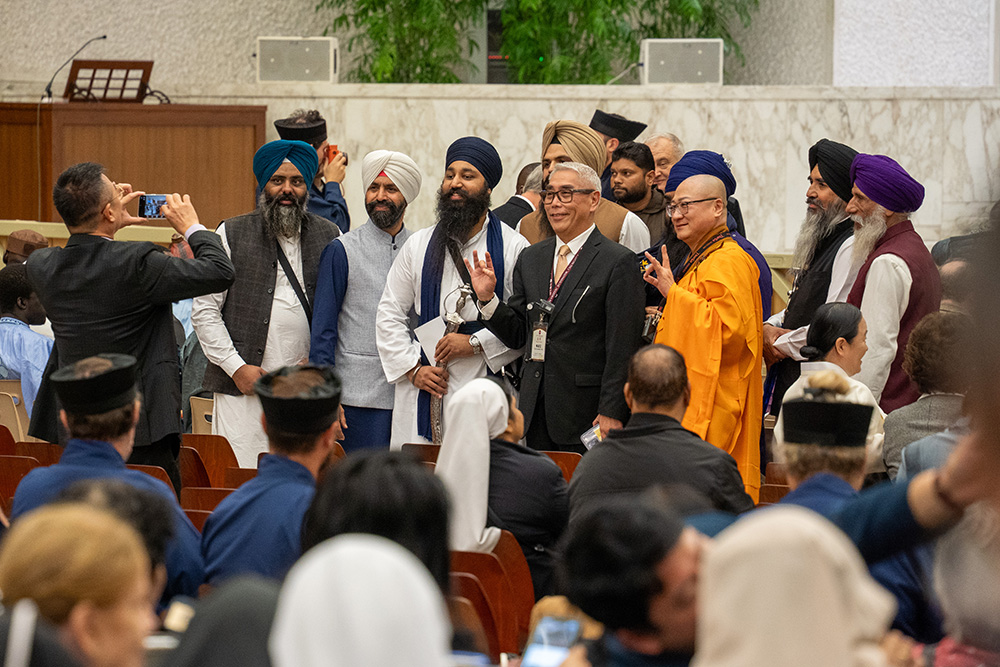
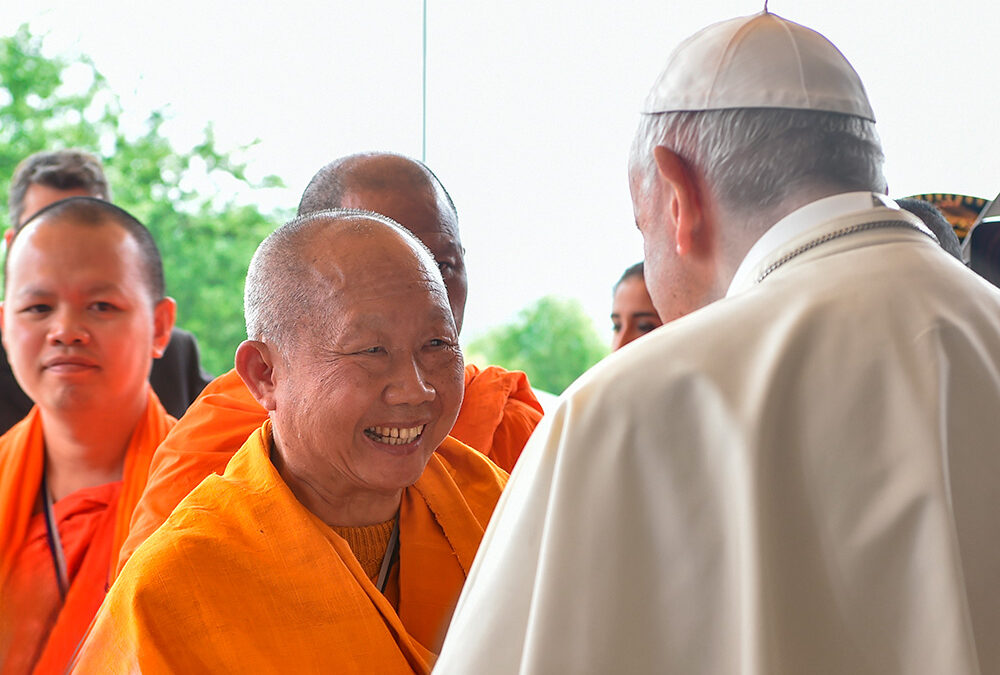
On 28 October 2025, a commemorative event entitled “Walking Together in Hope” was held in the Vatican, in the Paul VI Hall, on the occasion of the 60th anniversary of the Conciliar Declaration Nostra Aetate on the Church’s relationships with all the other religions.
A moment to celebrate six decades of friendship and collaboration between followers of various world religions through testimonies of faith, dialogue and cultural events, and to gather the fruits of this journey. Here are some reflections that were shared immediately after the event.
In the early hours of the 10th of November, the Thai Buddhist monk Phra Maha Thongrattana Thavorn passed away, and the news quickly reached the Focolare communities around the world. His death makes us think of a path of dialogue between religions committed to working for a united world, mutual understanding and peace.
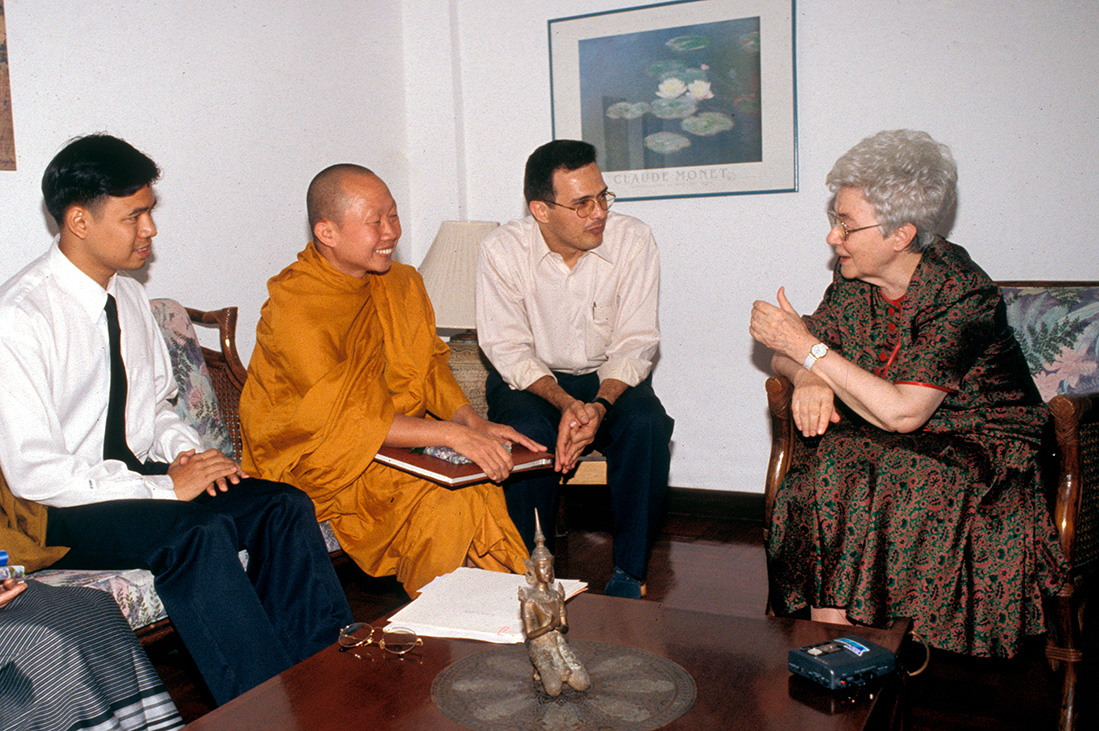
His story intertwines with that of the Focolare Movement in 1995, when, accompanying his disciple Somjit to Italy, he visited Loppiano, the Movement’s international little town, for the first time. It was there that he met Chiara Lubich. The spiritual closeness that the monk felt with the foundress of the Focolare Movement was so strong that he began to refer to her as “Mamma Chiara” from that moment on. In turn, Chiara recognised in him a soul of extraordinary depth, capable of illuminating the path of interreligious dialogue with authenticity and respect, hence the name ‘Luce ardente’ (Burning Light) by which he is known to many. From that moment on, the Thai monk became a faithful friend of the Movement, participating in numerous events in both Asia and Europe. His presence was discreet but intense, and his message always clear: religions must not compete with one another but collaborate for the good of humanity.
“Luce Ardente” con Chiara Lubich a Bangkok , Thailandia (1997)
Margaret Karram, president of the Focolare Movement, wrote to the communities around the world:
“He completely lived up to the name Chiara had given him. Everywhere he went, he was an instrument of light, consolation and hope. Until the very end, he loved and lived to build fraternity. Throughout his life, he spoke about unity in a unique way, with wisdom and passion, through books, magazines, radio programmes, meetings with Buddhist monks and lay people, even in the face of difficulties. One day, a monk asked him, perplexed, “Master, are you following a Christian woman?” And he replied, “I do not follow a woman, but her ideal of universal fraternity. She does not belong only to Christians, she is also ours.”
In his last message, he wrote to me: “Margaret, I am suffering, but I am hanging on, hanging on, hanging on, because my suffering is nothing compared to that of Jesus on the Cross. I am hanging on because I am the son of Mamma Chiara. Remember: we will not see each other again, but one day we will meet again. I will be with Chiara soon.”
Personally, I cherish every word he wrote to me and every piece of advice he gave me. He taught me what it means to “hang on out of love”, and his unity with me was a precious gift that I will never forget.”
Luce Ardente asked to be buried in Loppiano, where he met Chiara and discovered the spirituality of unity. In an interview given in 2021, he strongly emphasised his vision: “I would like everyone, in their own religion, to seek the profound meaning of their own doctrine. Only in this way can we live together in peace and harmony.” It is a call to live in depth, in sincerity and in sharing. An invitation that today sounds like a spiritual testament.