
“We are convinced that the cooperation of the Christian world is essential. The common Easter celebration in 2025 of all Christians, together with events for the anniversary of the first Council of Nicaea, can serve as a meaningful starting point to take up the challenges of humanity together and promote joint activities. We hope to organize a meeting with representatives of the Christian world, with your presence, in the place where the Nicaea council originally took place ”.
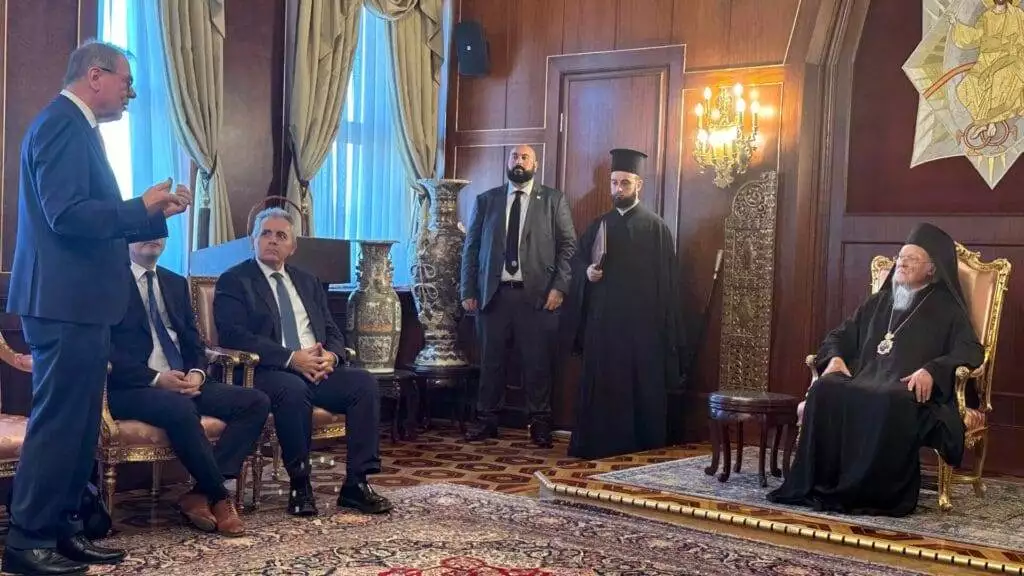
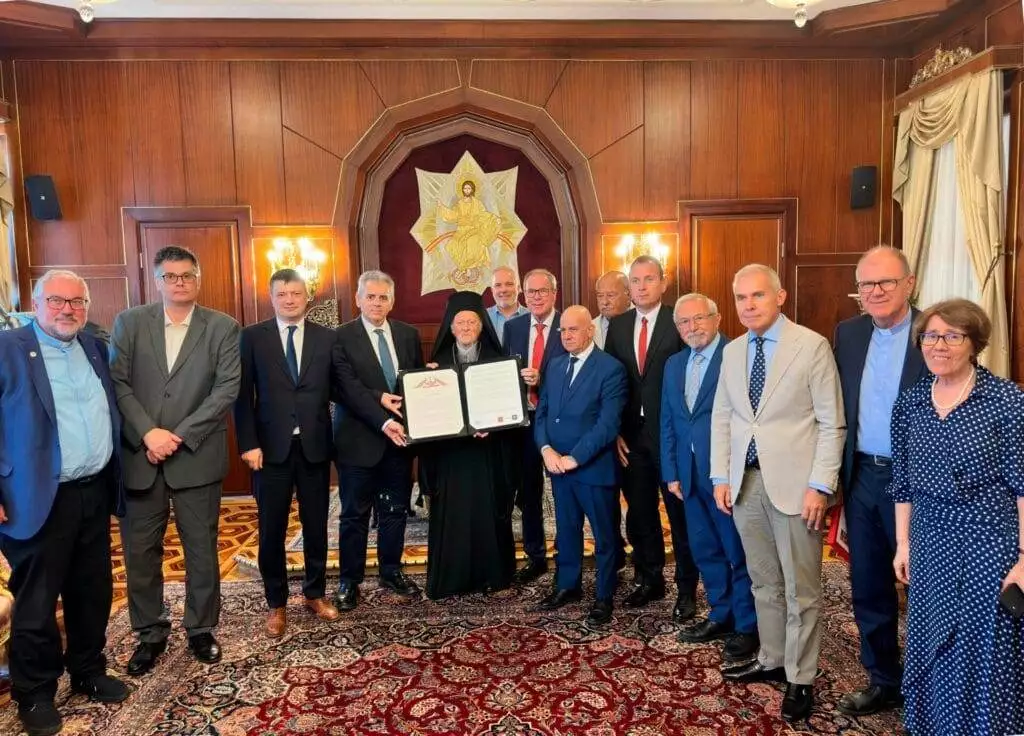
These words accompanied the ecumenical group “Pasqua Together 2025” (PT2025), that gathers groups and communities of various Christian denominations, first to Istanbul (Turkey), in audience with the Ecumenical Patriarch of Constantinople, Bartholomew I, then in the Vatican with Pope Francis, on the 14th and 19th of September respectively.
The group asked the two Christian leaders for next year’s common celebration of the Resurrection not to be an exception but to become the norm for all Christian Churches: a further step towards unity, in preparation for the upcoming Second Millennium of Redemption in 2033, which will be the 2,000th anniversary of Christ’s resurrection.
“Pasqua Together 2025” began precisely in view of the upcoming exceptional coincidence that, in 2025, the Easter date falls on the same day for the Julian and Gregorian calendars. Christians of the Western and Orthodox churches will, therefore, celebrate Easter on the same day. Moreover, the 1,700th anniversary of the Nicaea Ecumenical Council, which declared the Symbol of faith (the Creed) and addressed the theme of the Easter date, will be remembered.
The group is composed of representatives of various Christian churches and Christian political and social movements, like the Interparliamentary Assembly on Orthodoxy (I.A.O.) that was the promoter; the “Together for Europe” project, the “Jesus Christ 2033” movement and the “Centro Uno” of the Focolare Movement. The group has been following a common path for two years which has led them to signing a joint declaration that brought about the commitment to work so that all Christian churches may celebrate Easter together. Besides the Patriarch of Constantinople and Pope Francis, the document had been previously sent to the General Secretary of the World Council of Churches, Rev. Jerry Pillay and the former General Secretary of the World Evangelical Alliance, Bishop Thomas Schirrmacher. Contacts with other Christian leaders will take place soon.
Patriarch Bartholomew I announced that a joint commission made up of four Orthodox and four Roman Catholic members are already working on the programme for the celebration of the 1,700th anniversary of the first Ecumenical Council which will take place precisely in Iznick – the Turkish name of ancient Nicaea. The commission has already gone there to examine the feasibility. The mayor of the city is in favour and ready to collaborate. The invitation was naturally extended to Pope Francis, and this would be their thirteenth meeting.
The Patriarch also highlighted that the Easter date is not a question of dogma or faith, but fruit of an astronomical calculation.
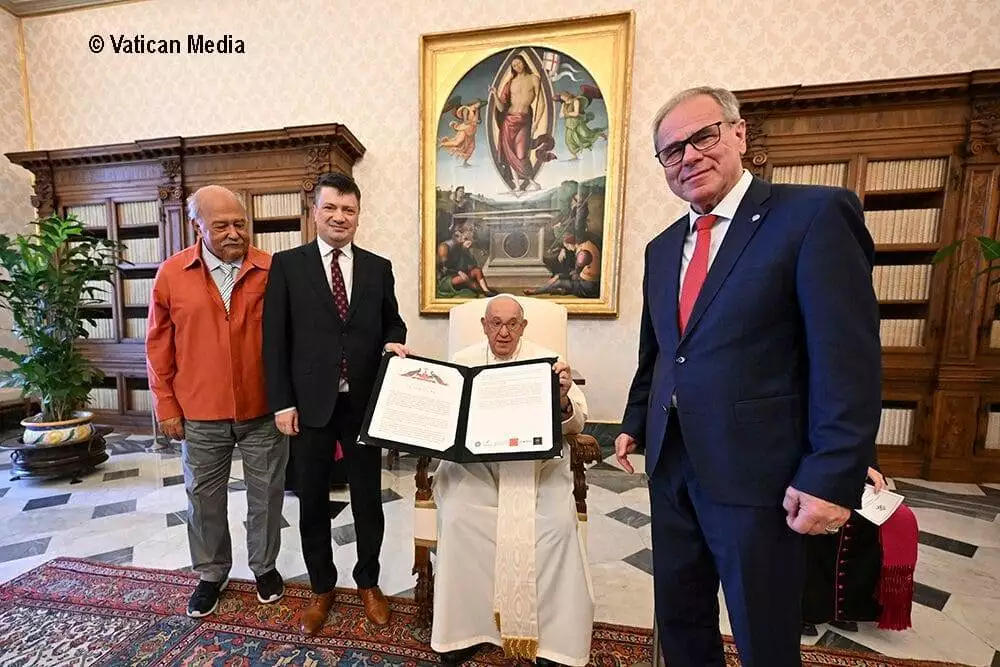
Pope Francis too, in his talk reiterated that “Easter does not take place by our own initiative or by one calendar or another. Easter occurred because God “so loved the world that he gave his only Son, that whoever believes in him should not perish but have eternal life”. Let us not forget the primacy of God, his primerear, his having taken the first step. Let us not close ourselves within our own ideas, plans, calendars, or “our” Easter. Easter belongs to Christ!”
The Pope also invites to share, plan and “walk together” and he launches an invitation: that of beginning “from Jerusalem like the Apostles, who proclaimed the message of the Resurrection to the whole world”. The Pope encourages to “turn, today, to the Prince of Peace in order to pray that he gives us his peace.”
An invitation that echoes what the ecumenical Patriarch Bartholomew I had already expressed by urging the PT2025 group to promote activities defending human rights and a peaceful living together for all peoples, praying in this way: “We implore the Lord to enlighten the hearts of those in authority and to guide them on the path of justice and love, that we may heal these divisions and restore the unity that is at the heart of our faith”.
Stefania Tanesini
Photo: © Vatican Media e Centro Uno
0 Comments