26 Aug 2017 | Non categorizzato
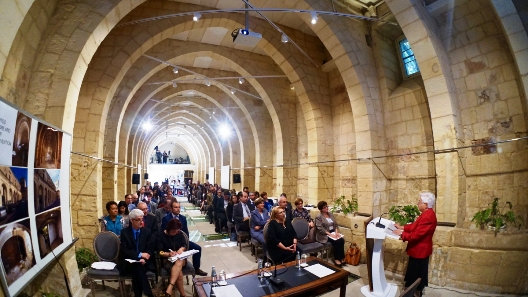
“In today’s globalised and interdependent world, dialogue seems to be the only way that humankind can survive. Either we fight one another to the point of mutual destruction, or we dialogue. In fact, only openness to others and dialogue create life and bring life, because every action is then founded on having recognised one another as brothers and sisters, as children of God. I feel the Holy Spirit is at work everywhere, pushing our Churches in this direction: to dialogue so as to re-establish the unity broken over the centuries, so that Christians can give a shared witness to the world according to Jesus’ prayer: “Father, that they may all be one, so that the world may believe” (Cf Jn 17:21-22)” This was Focolare president, Maria Voce’s, strong encouragement in her presentation. She began from her own personal ecumenical testimony up until her encounter with the spirituality of unity; “In the 1960’s, through the experience of Chiara Lubich, who had come into contact with members of the Brotherhood of the Common Life Germany, dialogue was opened to the Movement. The ecumenical community of Ottmaring was established in Germany, where Catholics and Evangelical Lutherans live together.” During the Second Vatican Council, Chiara entered into contact with several Observers from other Churches. This gave rise to the so-called “Ecumenical Weeks” in which Christians from different Churches gathered yearly to share their experiences of living the Word with particular emphasis on Jesus’s New Commandment: “This is my command: Love one another as I have loved you’” (Jn 13:34). At the historic encounter between the Ecumenical Patriarch Athenagoras I and Chiara Lubich, on June 13, 1967, Maria Voce was head of the local Focolare community in Istanbul. “It was the first of 25 meetings that Chiara would have with that charismatic figure. Athenagoras announced that he was “her disciple” and wanted a focolare to be established in Constantinople.” Other important ecumenical meetings would follow. “Christians from the most varied Churches have wished to share the spirituality of unity and many have embraced specific vocations of the Movement. In fact, Maria Voce recalled, “you don’t dialogue with cultures, but with people. Or rather, we live in dialogue.” She continues: “God is the foundation of dialogue, God who is Love and the Father of all of us and makes us is sons and daughters in the Son, all brothers and sisters in one big family. Right from the start, Chiara took Jesus’s prayer that all be one – which we can translate as ‘making humankind into one family – as her motto in life. She invited millions of people from around the world to live it and make it happen.” So, for the Focolare, “dialogue is a lifestyle, a new culture that the Movement can and wants to offer to all the people of today.” And it has to be “sustained and substantiated by mercy, compassion and love.” Maria Voce cited Chiara Lubich who writes in 1970: “If we don’t have love and charity, we’ll never have the light of God and dialogue. Generic dialogue can become sterile, unfruitful…”[i]. Chiara Lubich continues: “The [person] near me has been created as a gift given to me. On this earth everything is in loving relationship with everything…every thing with every thing. But you need to be Love in order to discover the golden thread among beings” [ii]. Then the Focolare president described the so-called Art of Loving, which is summarized in a few points: love everyone; love always; be the first to love; and make yourself one with your neighbor (see 1 Cor 9:22). (Part 1) [i] C. LUBICH, Discorso ai focolarini,1970. Testo non pubblicato cit. in Vera Araújo, Il quinto dialogo del Movimento dei Focolari. Cosa è, cosa vuole, cosa fa, 7 [ii] C. LUBICH, Scritti Spirituali 1, “L’attrattiva del tempo moderno”, Città Nuova, Rome 1978, 140.
25 Aug 2017 | Non categorizzato
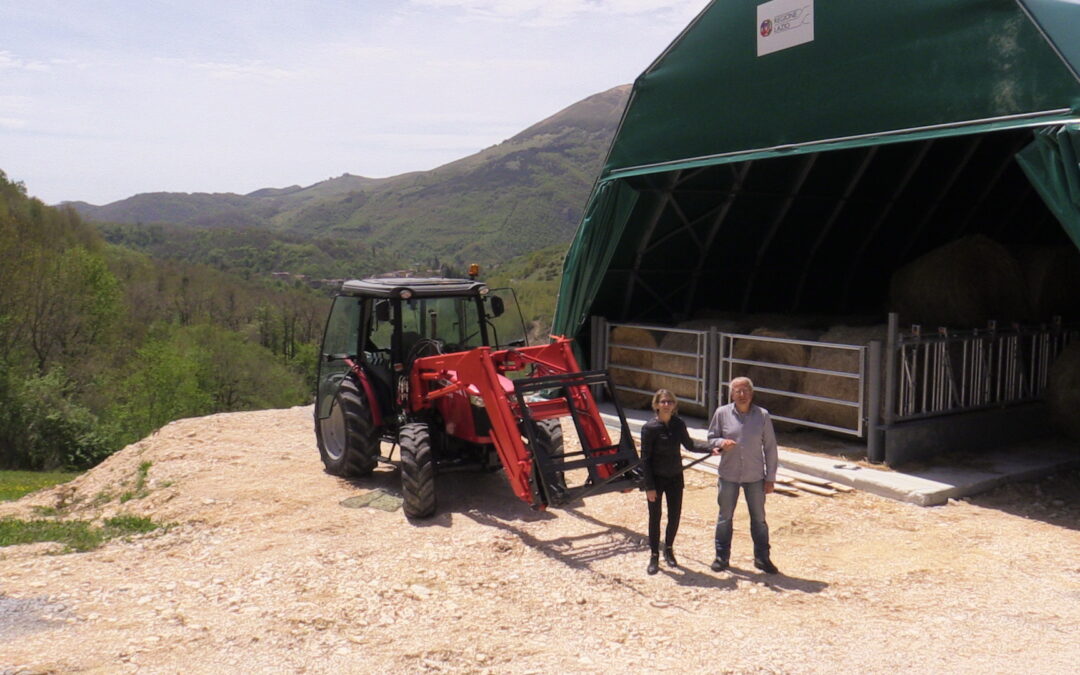
The annual meeting of the Zone Directors of the Movement from all over the world, as well as the people responsible for 4 of the Focolare “little cities”.
25 Aug 2017 | Non categorizzato
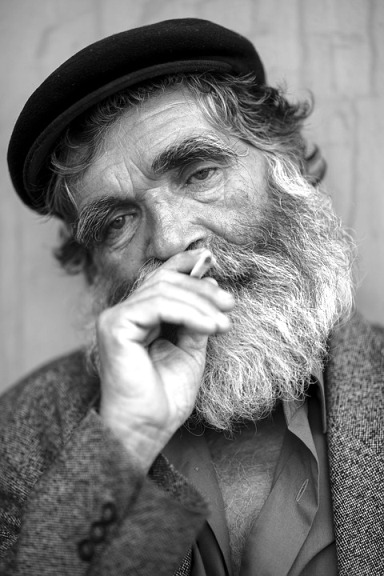
The waiting room at the clinic was packed, and a number of doctors were taking in patients. There were only two free seats, one next to a stylishly dressed lady and the other near a man who smelled really bad – his clothes let on that his hygiene was questionable. Perhaps he was there taking shelter from the intense cold out on the street. My first instinct was to sit next to the lady, since that smell was making me nauseous. All the same, I couldn’t help but think that if Jesus is present in every neighbor, surely he was also in that poor man. There was no excuse: my place was next to him, and he was the person to favor, precisely because he was unkempt, because he was someone “rejected.” So I sat there, overcoming the natural disgust I felt, with people watching in surprise. The man immediately began to talk to me. “What a nice sweater, what nice pants! How nice it would be to have clothes like that!” I must admit, when he started to touch my pants to admire their quality and spoke even more enthusiastically about my clothes, I started to feel uncomfortable. People were watching and expected me to react. At that point I gave him all my attention, treating him with dignity, without judging him, and seeing him as a brother. It wasn’t important whether or not what he was telling me about his life was plausible… I gathered that he needed someone who would listen, value and make him feel important. I tried not to mind that, as we talked, he was spraying saliva all over my clothes. I felt that this effort took me out of my comfortable life, and by doing so I’d be able to be compassionate toward that person. I proposed we meet the next day for a coffee. My new friend was surprised and happy. The many people around us obviously heard all of this. In the end, I heard my name called and went in for my medical visit. When I came out, “my” poor person was no longer there. By now the waiting room was almost empty, and only the stylish lady was left. She came up to me smiling. “I hope I’m not disturbing,” she said, “but I followed your entire conversation with that man. It seemed to me that your patience was unlimited. I would have liked to do the same, but I was not brave enough. I heard every word, and you really seemed interested in that unusual conversation. “When you went into the doctor, he got up and thanked all of us for our patience and told us: ‘He is a true friend. I had never seen him before, but he truly cared. For him, I am truly important!’ “Then he left. Tell me, why did you act that way with him?” I told her that I am a Christian, and that I would like to love and serve every neighbor, especially those who suffer most, like a father would to his son. The lady seemed surprised. She reflected a while and then told me, smiling, “If that is what living as a Christian means, perhaps I can too find myself once again in that faith I lost so long ago.” The day after, I went to have coffee with my new friend. I brought him some clean clothes. When we said goodbye, he hugged me. Through the tears he said, “It has been some time since someone treated me like a human being who needs love and affection.” Excerpted from Urs Kerber, La vida se hace camino (“Life goes ahead”), Buenos Aires: Ciudad Nueva, 2016, pp. 15–16.
24 Aug 2017 | Focolare Worldwide
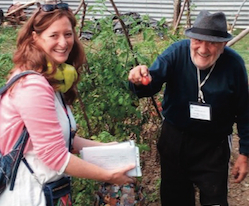 Many people have continued to work after the earthquake in central Italy last year, standing by those who were affected by those who were so awfully affected by that tragedy. It was such a vast catastrophe that it tested not only the physical infrastructure, but also the very social fabric and personal resistance of an entire generation of families. The Focolare Movement has a stable organism that works in collaboration with two associations: United World Project and New Families Association, but also other groups (AIPEC, B&F Foundation, Planetary Embrace, Dialogue in Architecture and local Focolare communities in Italy). They provide expertise in channelling the aid more effectively. “Our first objective was to come up with a way of linking and knowing the different projects so that we could keep awareness high and not forget…” says Cesare Borin from the Focolare’s Emergency Aid project. The financial aid that began to arrive immediately is only one part of many other forms of aid that have solidified the assistance, which involves many people from the Movement in being close to the people who have lost everything in this dramatic event.” The project is comprised of two complimentary efforts:
 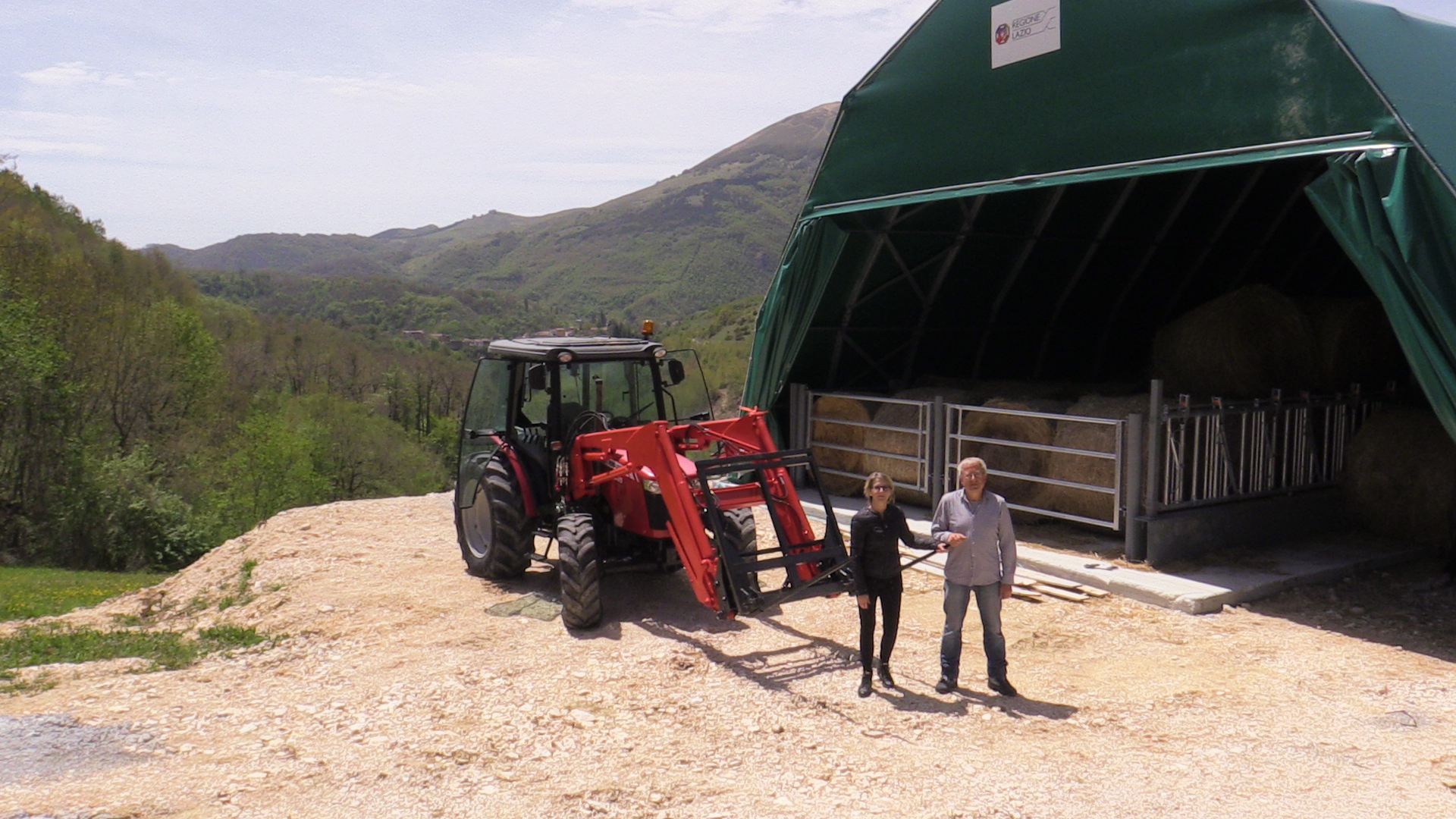 “RImPRESA Businesses” which consists in providing raw materials, machinery and small infrastructure to businesses and, where possible, to strengthen virtuous and ethical business processes and practices that allow for pairing with other businesses on a national level. This effort has focused on 60 small businesses in the four regions that were hit, and they are recently finishing the furnishing of 25 agricultural and handicraft businesses with equipment. The second activity: “RImPRESA GAS” promotes the purchase of products from businesses affected by the earthquake, through the creation of the Gruppi di Acquisto Solidale (GAS) that supports local tourism. Currently, there are 13 agribusinesses with a total of 90 enrolments with a total of 17,000 euros in orders. The response to the people in need was quick, like that for several families from Amatrice that had asked for a sheet metal container. In March they received 10 containers for themselves and many other families of Amatrice and the surrounding areas, at a total cost of 19,000 euros. A summer camp is being set up for the end of August in collaboration with the Italian Caritas, which will be based at Torrita di Amatrice. Activities will continue during the months of July and August with plans for a summer children’s community centre, recreational activities for teenagers from the area, and for the elderly in rehabilitation centres in Borbona. Borin concludes: “The people from these beautiful regions never ask us to rebuild their homes, but they do strongly ask that we don’t leave them all alone! Amongst the lessons learned has been the importance of never marginalising or suffocating the contribution from civil society. Alongside the competent intervention of these state agencies, we need a more vast and programmatic inclusion of social agencies and groups precisely because of their ability to make the work of institutions more efficacious also in restarting the process of production.” Contacts: emergenzaterremoto.italia@focolare.org
23 Aug 2017 | Non categorizzato
Entitled “Neither victims nor brigands. Changing the rules of the game”, the much awaited LoppianoLab event will be held in Loppiano from 30 September to 1 October 2017. The expo, which focuses on the economy, culture, communication, training and innovation, is promoted annually by Città Nuova, Lionello Bonfanti Industrial Park, Sophia University Institute and the international town of Loppiano. Immigration, work, poverty, social integration, fighting corruption, commitment to the common good, family, youth, education and other topics will be discussed during the 8th edition of LoppianoLab.
