7 Aug 2017 | Focolare Worldwide, Senza categoria
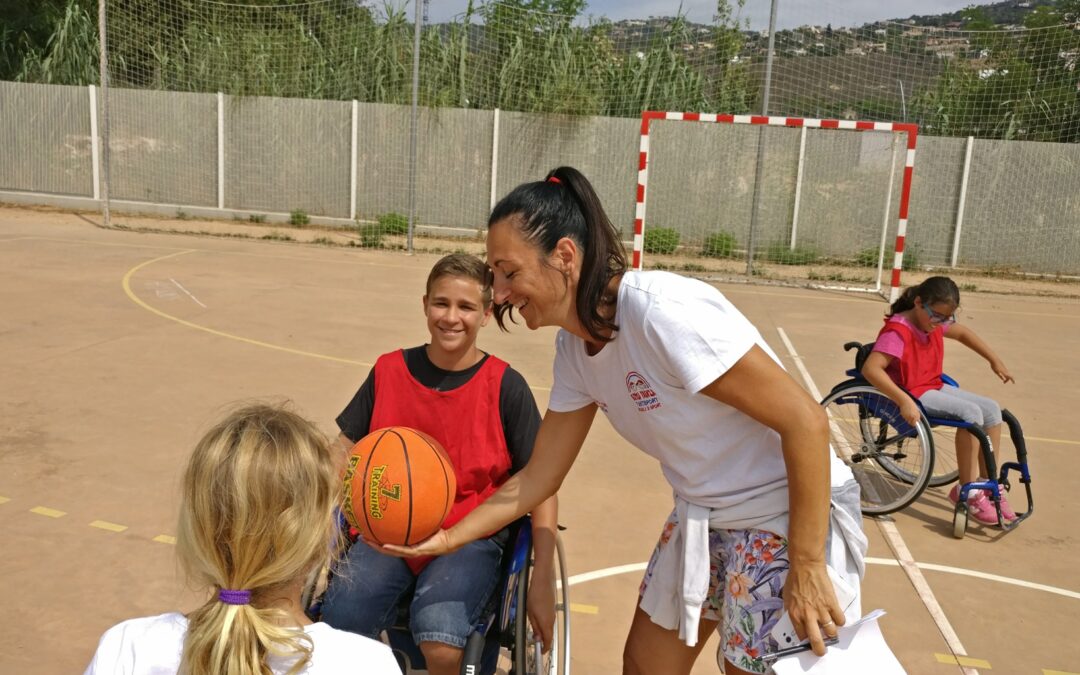
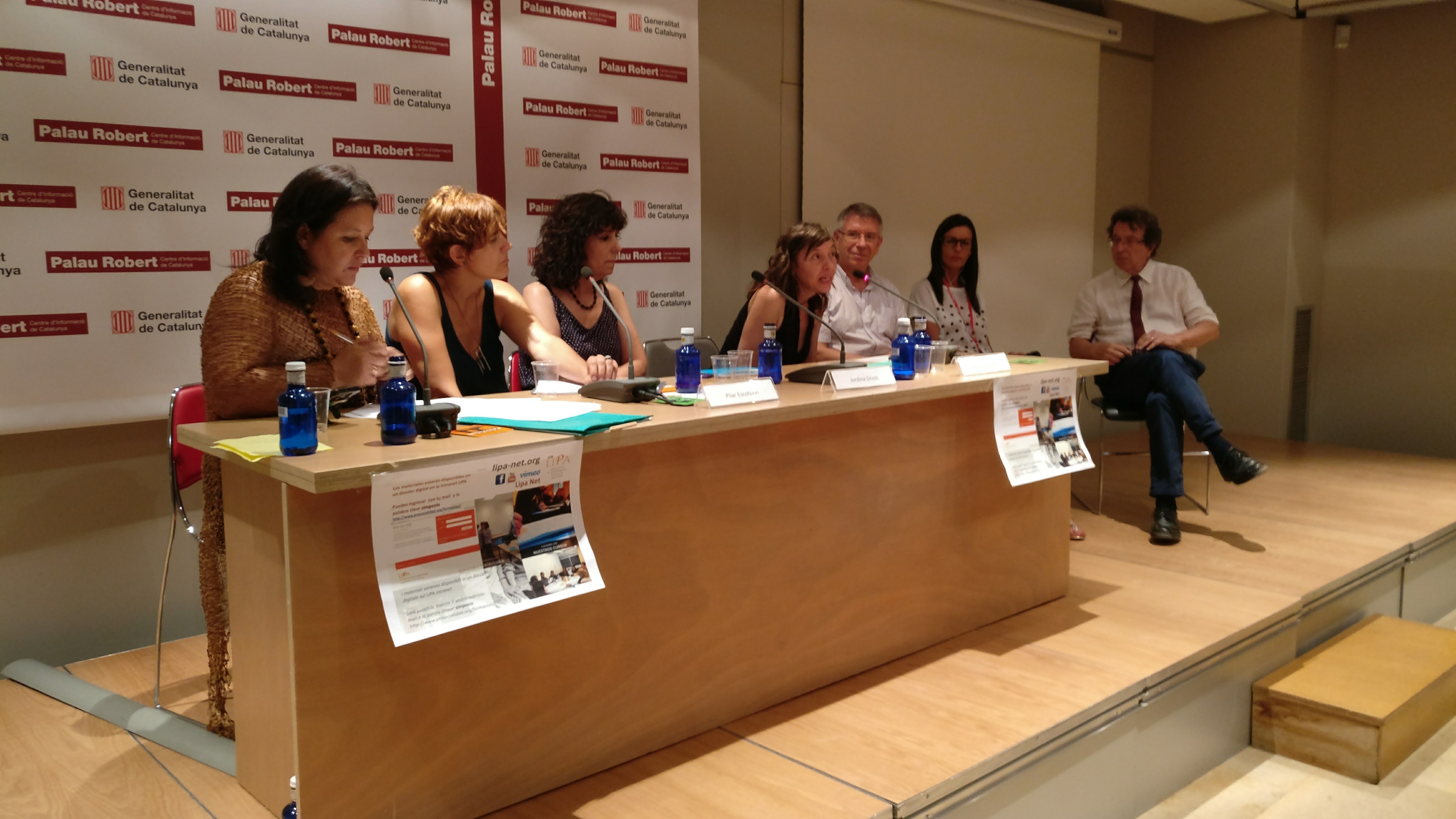 On July 13, 2017, seventy people from various places in Spain, Italy and Croatia attended the “Inclusive Schools, Social Innovation, Childhood and Sport Symposium” which was held at the Palau Robert Gardens of Barcelona. The event was organized by the Laboratorio de Investigación Prosocial Aplicada (LIPA), Universitat Autònoma de Barcelona and by the Sportmeet International Network. Teachers, physiotherapists and sport players took a closer look at projects that promote inclusion, intervention models and disability from the standpoint of inclusion, in the belief that no part of life is not worth living. Life needs to have a place for weakness, to experience, through weakness, one’s own ability to recuperate. In the days that followed, the Mariapolis Centre of Castell d’Aro provided the forum for the Summer School in which topics regarding inclusive sport were examined and discussed. Twenty people attended and were guided through the experience by experts Eugenio Jimènez and Dr Javier Lamoneda. Through games they learned what it’s like to be in the shoes of a person with a disability. By its very nature sport is an everyday opportunity to come face to face with limitations, and offers opportunities for reflection on the obstacles of life, suffering and disadvantage. The reflections that were presented by Paolo Crepaz from Sportmeet led the participants to question the concepts of limitation, barriers, obstacles, suffering and disadvantage from the standpoint of things that can be turned into potential, an opportunity to “constantly tend, by force of habit, towards universal brotherhood” (Chiara Lubich).
 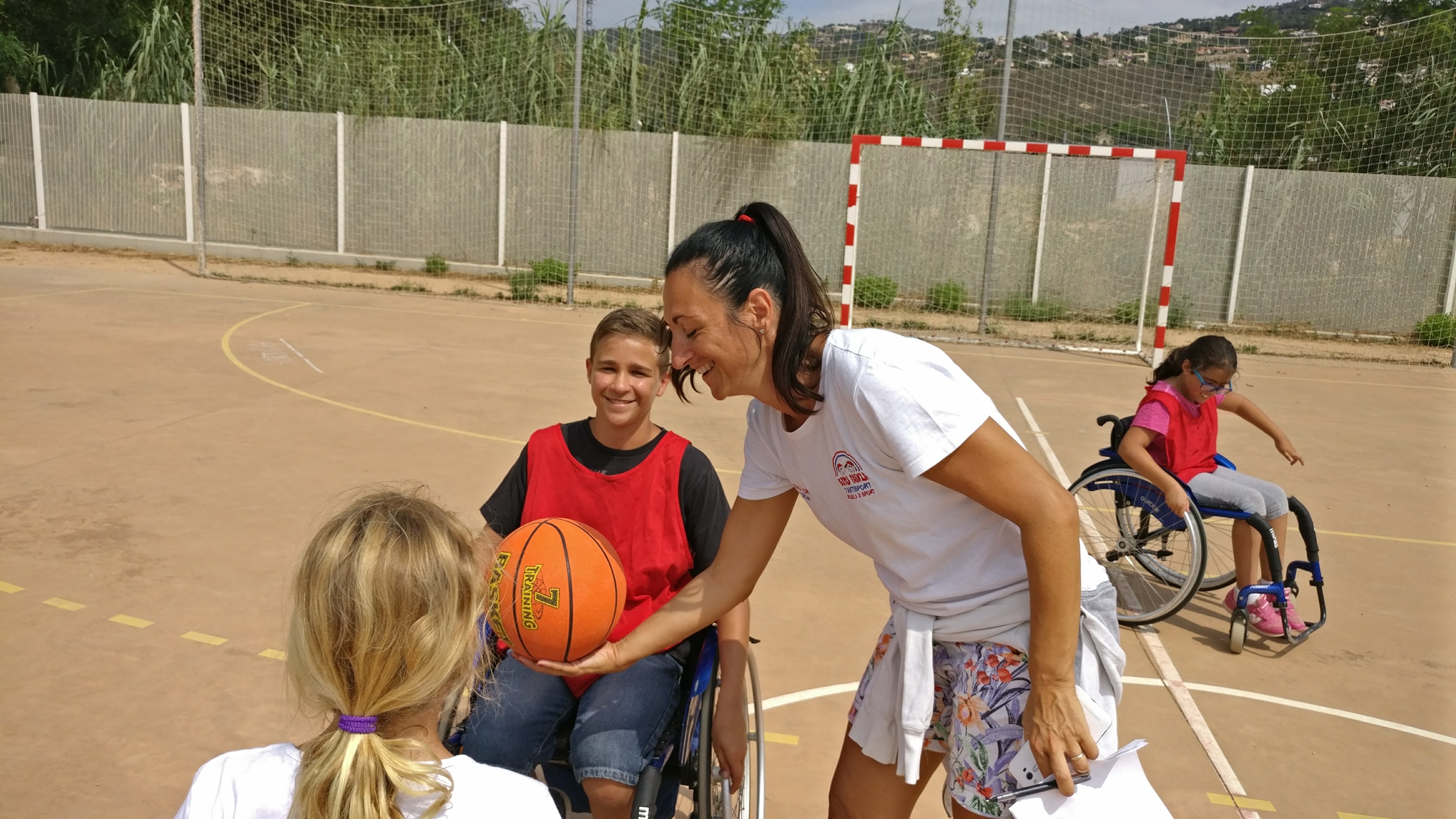 Sport’s ability to get us to face and overcome obstacles, to be inclusive, to struggle against all sorts of barriers and in every social context is quite striking. For example, what a small ball can do in uniting people on an isolated summer field or inside a refugee camp. Players come face to face with one another within an atmosphere of mutual trust and esteem. Javier Lamoneda Prieto, professor of Physical Education, in Jerez de la Frontera, Spain, shared his own experience: “It seems like a team has formed over these days, a team that would like physical activity to become a source of encounter between different actors and sport professionals. It is the first time such a training course has been developed by the public university.” Roberto Niccolis, a sport operative from Verona, Italy: “The limit that I often encounter is that of the distance that separates people from each other; the handicap, I mean. Reducing this distance through sharing, getting to know one another and experiences with one another other make us feel closer.” Roberto Macri, President of the Opera Santa Rita Foundation, Prato, Italy: “Above all, you’ve created an opportunity for reflecting on ourselves and the values that emerge from our work. Not only our professional or volunteer work, but more generally what can give deeper meaning to being men or women.”
5 Aug 2017 | Non categorizzato
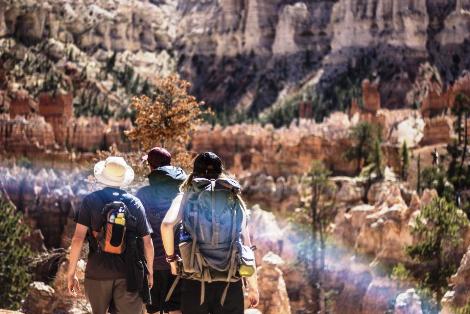
“Contemplating the immensity of the universe, the extraordinary beauty and power of nature, my mind rose spontaneously to the Creator of it all, to a new sort of understanding of the immensity of God. It made a new and strong impression on me; I felt like falling on my knees to adore, praise, and glorify God. I felt a great need of this, as if it were my actual vocation. It was as if my eyes had been opened, to understand as never before who it is that we have chosen as our ideal; or rather, who has chosen us. I saw that he is so great, so great, so great, that it seemed impossible that he thinks of us. This impression of God’s immensity stayed in my heart for several days. Now, saying, “Hallowed be thy name,” or “Glory be to the Father and to the Son and to the Holy Spirit,” is different for me: it has become a need of the heart. (Rocca di Papa, 22.1.87) “… Contemplating perhaps an endless stretch of sea, a high mountain range, an impressive glacier or the night sky dotted with stars. What majesty! The immen¬sity of it! And through the dazzling splendour of nature, we would find our way to its author: God, the King of the universe, the Lord of the galaxies, the Infinite. … He is everywhere: beneath the sparkle of a glittering stream, within the blossoming of a flower, in a bright dawn or a red sunset, on a snow-covered peak. Nature is rarely preserved in our concrete cities, built by human hands in the midst of the noise of the world. Yet, if we want, a glimpse of blue sky between the skyscrap¬er peaks is enough to remind us of God; a ray of sunlight, which does not fail to pierce even through the bars of a prison, is enough; a flower is enough, a meadow, a child’s face. … This will help us go back into the midst of humanity, which is where we belong, strengthened, as Jesus certainly was when having prayed all night to the Father on the mountainside under the starry sky, he went back among people to do good. (Mollens, 22.9.88) From Chiara Lubich – “Cercando le cose di lassù” [Seeking the things that are above]– Città Nuova Editrice, Roma 1992, pagg. 5 – 111,112.

3 Aug 2017 | Focolare Worldwide
A book for the exam “I study architecture. I had a very important exam to take, but I was missing a fundamental book. Since I was from Spain, it cost four times the normal price. It was the last day to sign up for that exam and I was desperate. I left the university and ran to a nearby church, where I asked Jesus for help, praying for him to get me that book ‘by midday.’ Shortly after, back at the department, I heard someone calling me: it was a colleague I had not seen for some time. Hearing of my problem, he insisted coming with me to a another student’s house – someone I hardly knew. She had that book, and was even happy to lend it to me. It was midday. Some days later, seeing that there were typographic errors and important pages missing, I wrote to the publishing house via email. To thank me, a week later the publisher couriered me a free copy. How could I not see the love of God in all this?” (S. G., Argentina) Stepping in my husband’s shoes “After work my husband often lays down on the sofa to watch a movie. This creates tension and anger inside me, since I expect a bit of help after a day of being busy with the children and everything else that happens. One day, urged on by advice I received from some friends to start loving him first without expecting anything, I tried to put myself in his shoes. I thought about his work committments and his need to find tenderness and understanding at home. Setting aside everything I was doing, I sat down next to him to watch a film, and we shared our ideas about it.” (G. G., Siberia) Mutual help “My neighbor’s husband was hospitalized. His 70-year-old brother was left alone at home, and he doesn’t cook at all. Despite the fact that during that time my own husband and mother had the flu, I offered to look after him. For 15 days, as I took care of my sick family, I also cooked for him, and on Sunday I invited him to lunch at our house. He responded in turn by bringing some foodstuffs that he had. He became one of the family.” (C., Italy) Asking forgiveness “Since I have a tough, authoritarian and independent character, I typically judge people. This way of being made it difficult to relate to others, especially my husband. Some time ago I found myself participating in a meeting that was about going deeper into the words of the Gospel. There my certainties were shaken. I decided to start living those words at work, where I direct personnel in a large warehouse with more than 30 employees. I had a strong aversion to one employee in particular. When it was his turn to get paid, I used to throw the envelope with the money on his desk. This time? I tried to see him differently, as if I had put on new glasses. Making an effort, I approached him and in front of everyone asked him to forgive me. It was one of the greatest joys I had ever experienced.” (D., Brazil)
2 Aug 2017 | Non categorizzato
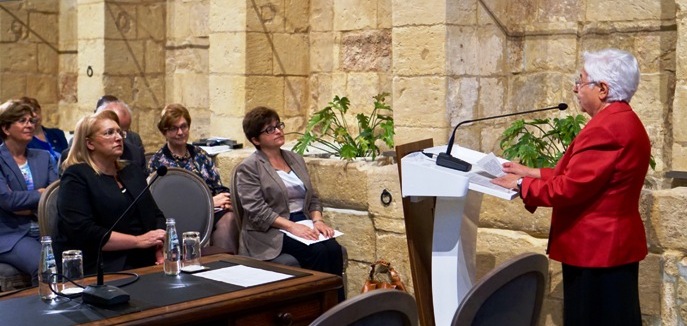
Photo A. Dimech – © CSC Audiovisivi
