1 Aug 2017 | Focolare Worldwide
 The term “system” is perhaps among the most used in our language. Almost without realising, it always seems to crop up, whether we’re talking about elections, football pools, stars, units of measure, politics, irrigation, the kids’ algebra homework, security, transportation, medicines or mountain chains. Simple or complex, nerves or finances, a “system” (from the Greek systema, to combine) is always on our lips. In 1937, and more “systematically” in 1945, an Austrian biologist named Ludwig von Bertalanffy (b. Vienna, 1901–d. Buffalo, New York, 1972) was the first to announce General Systems Theory, a method for reading into and interpreting the world as it exists. “Every organism is a dynamic order of processes that reciprocally act on each other.” Jordi Marjanedas, from Catalonia, class of 1940, has scrupulously dedicated himself this theory in his recent volume entitled, Today’s Challenges in the Light of General Systems Theory, published by Città Nuova. The text stretches from biology to the life of the universe, from ecology to anthropology, from history to ethics, to social sciences and religion, searching every field of knowledge for elements of integration and cohesion, according to a unified vision of humanity and creation. Why is systems theory so important? The development of modern science brought about a proliferation of knowledge that is partial, fragmented and hyper-specialized. To the point that, ironically, to the writer G. K. Chesterton it seemed that “eventually they end up knowing everything about nothing.” In medicine, for example, a human being is not just liver or limbs, but a harmonious and unified togetherness of spirit – soul and body. In philosophy, there have been numerous theories and closed systems that claimed to explain all reality with a single meaning (totalitarianism is one example). Aristotle himself admitted that “the whole is more than the sum of its parts.”
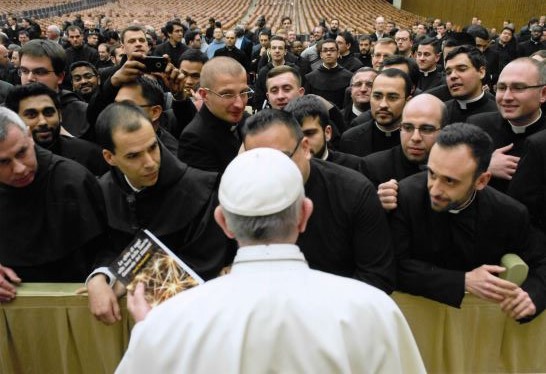
A priest presents the Pope with the book
31 Jul 2017 | Focolare Worldwide
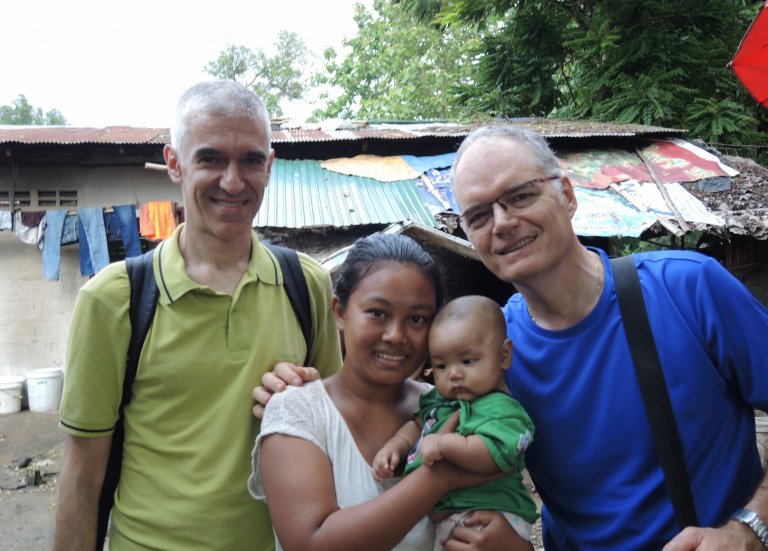 Ever since I began my experience in the focolare in Thailand in 1984 I’ve been in ongoing contact with the poor. In 1985, when we took our first trip to Burma – now Myanmar – I was able to touch the extreme poverty with my own hands; up until then I would never have had the opportunity to see it in person. Then, because the civil war in 1988, refugees began arriving from Thailand, especially in the border regions. Their condition? Illness, lonliness, desperation, exploitation and a great longing for a real life. For us focolarini, they represented a face of Jesus crucified and forsaken who we tried to lift up and love. Over these 32 years our help has surely been insufficient, as one can see from the recent humanitariann distaster that isn’t receiving a lot of reporting. No one is ever prepared for the pain of seeing people die. We’ve taken over a projejct begun by Father Justine, Burmese, who died after a long illness. He provided care for the children of migrants who were being left alone at home all day, and so we gave the last monies we had to be able to provide them hospitality. Now the school is called “Drop By Drop, the Latina Bridge Mae Sot.” It’s a collaborative effort between our children in Mae Sot that are originally Birmian and Karen and her friends from a school in Latina, Italy where several Focolare members work. It’s a bridge of solidarity which connects the two cities that are 10,000 km apart, and it has now involved some hundred poeple from many other places. A multi-national transport company helps us to take the containers of collected goods, paying all the customs and clearance fees (€ 1000) to their destination in Mae Sot on the mountains of Thailand.
 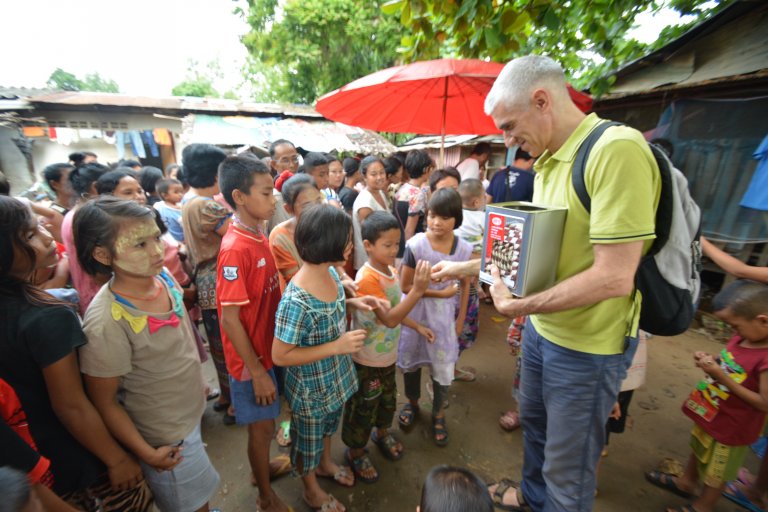 Currently, through Father Joachim from Myanmar, we are helping 200 people who are outside official refugee camps, undocumented and often without food. As Pope Francis puts it, we are experiencing what it means to “touch the flesh of Christ,” one of the many faces of Jesus Forsaken. Besides food, there is great need of love, warmth and affectioin… Chiara Lubich and our spirituality urge us to ‘make ourselves one’ with everyone. One of them said to us: ‘Thank you for everything you get for us,, but especially for making us feel loved. This gives us hope to live.’ There’s an association made up of some friends from Poschiavo in Switzerland, which has been recognized by the government and finances projects that are underway in Thailand, Laos and Vietnam. Six years later it seems like a real miracle!
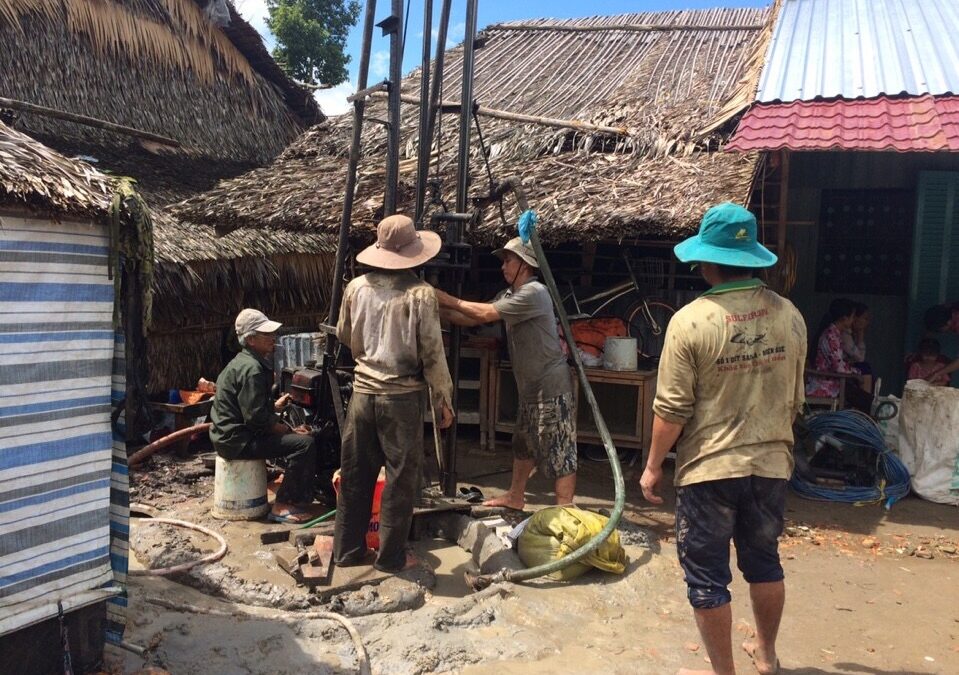
 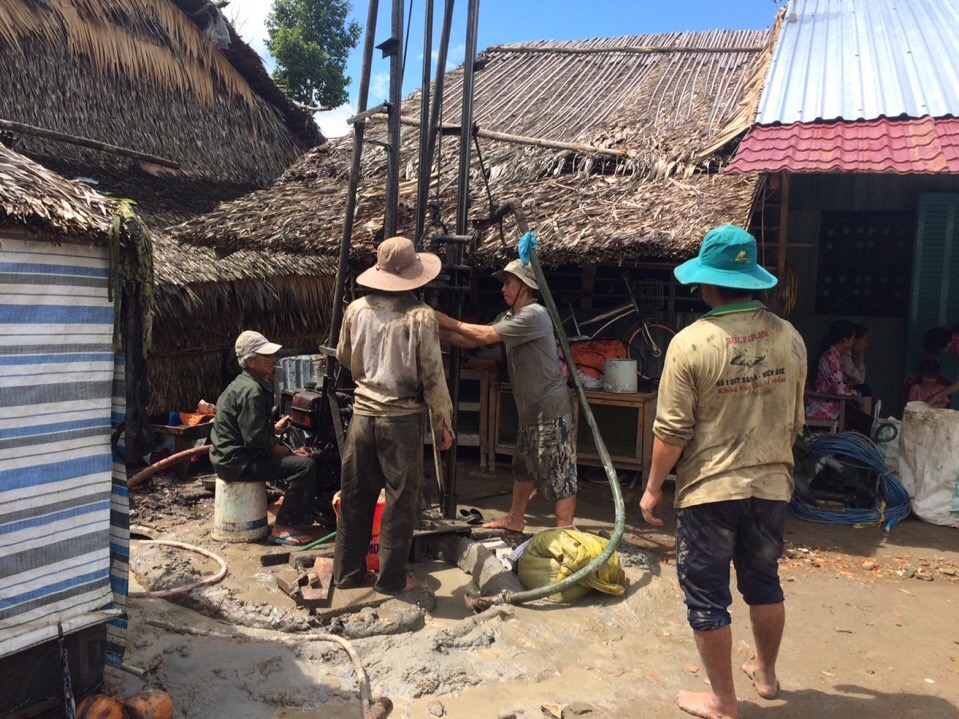 The projects in Vietnam are located in the southern zone, towards the Mekong Delta, in a parish. We build and repair small houses, wells with potable water; and we build bridges that are very useful for communication among the small islands.The so-called monkey bridges, constructed with bamboo stems are substituted with bridges made for humans with iron and cement. Now we’ve begun to work in the mountains too, in central Vietnam, in the zone of Gia Lai, which was known for the battles during the war. The Church is very involved in that zone and the poverty level has really reached levels of high concern in the mountain villages, especially among ethnic populations. In Laos we provide assistance for children through priests who have spent time at the priest school in Taygayta, Philippines. The help is sustained by genuine friendship, much creativity and a willingness to work. Love is like a bridge that joins everyone in a common dream: to live universal brotherhood concretely. Our budget? Free donations from many ordinary and also poor people. We feel that if God wants this project to carry on, he’ll provide for it. Luigi Butori Website: www.gocciadopogoccia.ch Facebook page
29 Jul 2017 | Senza categoria
28 Jul 2017 | Non categorizzato, Word of
This psalm is a hymn of glory that celebrates the kingly nature of the Lord who governs the whole of history. He is eternal and majestic, yet he expresses himself in justice and goodness, more like the closeness of a father than the power of ruler. God is the focus of this hymn, which reveals his tenderness, superabundant like a mother’s. He is merciful, compassionate, slow to anger, great in love, good to all … The goodness of God was shown to the people of Israel, but it extends over all that his hands have made, over each person and all of creation. At the end of the psalm, the author invites all living beings to make this hymn their own, thus adding a harmonious chorus of voices to his own proclamation: “The Lord is good to all, and his compassion is over all that he has made.” God himself entrusted creation to the hands of men and women, as if it were like an open book in which his goodness is written. We are called to cooperate with the Creator’s work, adding pages that speak of justice and peace, acting according to his plan of love. Unfortunately, however, what we actually see around us are the many wounds inflicted upon people, often the defenseless, and upon the natural environment. This happens because of many people’s indifference, and the selfishness and greed of those who exploit the great wealth of the environment purely for their own ends and at the expense of the common good. In recent years, the Christian community has developed a new awareness and sensitivity in its respect for creation. In this context, we can recall the many appeals of church leaders encouraging us to rediscover nature as the mirror of divine goodness and the heritage of all humankind. In his message for the Day of Prayer for the Protection of the Environment, on September 1 last year, Ecumenical Patriarch Bartholomew of Constantinople said: “We need to have constant vigilance, information and education in order to understand clearly the relationship between today’s ecological crisis and our human passions … which result in and lead to the current crisis that we face. “Therefore, the only way out of this impasse is our return to the original beauty … of frugality and asceticism, which can guide us toward a more careful management of the natural environment. “In fact, the voracious need to satisfy our material needs assuredly causes spiritual poverty, which in turn culminates in the destruction of the environment.” And in his encyclical Laudato Si’, Pope Francis wrote: “Care for nature is part of a lifestyle which includes the capacity for living together and communion. Jesus reminded us that we have God as our common Father and that this makes us brothers and sisters. “Fraternal love can only be gratuitous … This same gratuitousness inspires us to love and accept the wind, the sun and the clouds, even though we cannot control them … We must regain the conviction that we need one another, that we have a shared responsibility for others and the world, and that being good and decent are worth it” (228–9). Let’s take advantage of time we have off work, or all our our chances during the day, to lift our gaze to the depths of the sky, the majesty of the mountaintops and the vastness of the oceans, or even just to see a tiny blade of grass sprouting by the roadside. This will help us to recognize the Creator’s greatness, the one who is “lover of life,” and to find hope again in his infinite goodness, which surrounds all things and accompanies them. Let’s choose a modest style of life for ourselves and for our families, a lifestyle that respects the demands of the environment and is in keeping with the needs of others. Let’s share the goods of the earth and of our work with the poorest of our brothers and sisters. And let’s give witness to the fullness of life and joy by becoming bearers of tenderness, kindness and reconciliation to the world around us. Letizia Magri Each month the Focolare offers a Scripture passage as a guide and inspiration for daily living. Focolare’s founder, Chiara Lubich (1920–2008), wrote these commentaries for many years. Now an international commission continues this tradition, faithful to her spirituality of unity. Letizia Magri, an expert in marriage and family from the John Paul II Institute in Rome, is head of this commission and part of the Focolare’s center for the family. This Word of Life is translated into 96 different languages and reaches several million people worldwide through the media. This monthly leaflet is also a supplement to Living City, the Focolare magazine (livingcitymagazine.com). For information and to subscribe to this leaflet or to the magazine, write to: Living City, 202 Comforter Blvd, Hyde Park, NY 12538; tel: 845-229-0496; e-mail: livingcity@livingcitymagazine.com. Visit focolare.org (international) or focolare.us (U.S.). © 2017 by Living City of the Focolare Movement, Inc. Read more Coda, Piero (2015) “God and Creation: Trinity and Creation out of Nothing,” Claritas: Journal of Dialogue and Culture: Vol. 4 : No. 1 , Article 3. http://docs.lib.purdue.edu/claritas/vol4/iss1/3 Masters, Thomas and Amy Uelman, “Perspectives on money and material goods,” Focolare. New City Press: Hyde Park, New York, 2011, pp. 146-148. Rondinara, Sergio (2014) “The “Book of Nature”: Connecting Science and Wisdom,” Claritas: Journal of Dialogue and Culture: Vol. 3 : No. 1 , Article 5. http://docs.lib.purdue.edu/claritas/vol3/iss1/5

28 Jul 2017 | Focolare Worldwide
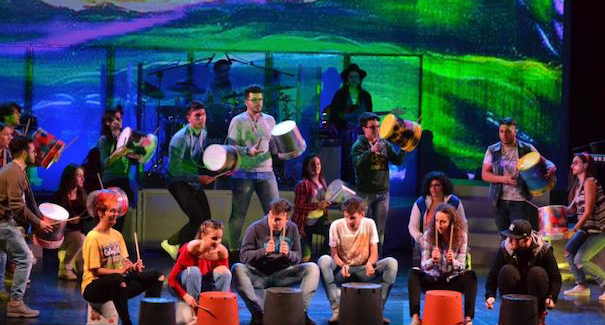 When the international group Gen Verde passed through the city and school where Tiziana teaches, there were positive effects in her relationships with students. In particular, when she heard at the end of the course that one of them had declared themselves an atheist, she decided to write to him. The student’s response was unexpected. “Dear Luca, at this point we are at the end of your school journey. I wanted to write you a note because I didn’t get the chance to chat. So I’m doing so for no particular reason, only because I like having exchanges like this. I would have also liked to ask you about your atheism, as (Italian comic) Checco Zalone would say, but didn’t get the time. I’m convinced that there are no real atheists, only different sorts of believers. The longing for the infinite that consumes our souls is too strong. In my life, I made a fundamental discovery that changed me radically: that God loves me, and each of us, like crazy. Perhaps I would have also been an atheist if I had not gotten to know this God. Love touches all of us, and we madly thirst for it. If you, like me, believe in love, both of us are believers in a way. If your atheism brings you to not believe in a cruel, judging, cold, indifferent prime mover, grand architect, supreme being etc., etc. – then I too am an atheist with you! I can only believe in a God who was flesh and bones, who out of love was born, became man, died and rose. “Bye Luca, I just wanted to say thank you for these past years that we spent together!” “Dear Prof, it gives me the greatest pleasure to know that even beyond the school environment you still wanted to stay in touch (not that I didn’t already know, but this confirmed it). I too would have liked to discuss with you a number of wider topics, from politics to religion. I have always admired your availability and open mindedness, your ability to dialogue, listen, understand and take in others’ opinions, even if they were completely different from your own. I have always considered your perspective very important. Among other things, you taught me that changing my point of view is fundamental to understanding others, and above all ourselves. This year, together with some schoolmates of mine, I attended PULSE, the May 1 celebration at the little city of Loppiano. During our stay, we were hosted by the Sophia University Institute, where young people from all over the world continue their studies after having graduated. It was there that, for me, I experienced firsthand what equality and fraternity mean. This was thanks to the way we were generously welcomed by the institute’s students and teachers, who treated us as if we had known each other for a lifetime. What struck me most happened during the evening of the second day, when we ate together with our hosts. They had prepared the meal with passion, just for us, using everything they had in the kitchen. In that moment, despite being more than 1,000km from my city, I felt at home. I found myself at table talking about this and that with two from Lebanon and others from Germany, Cuba, Argentina, Colombia, and Bologna, sharing a plate of meat, spinach, potatoes and onions. After that we stayed up late talking about our experiences, plans, playing guitar, singing songs and sourcing a bit of wine from the German black forest. In that moment PULSE, at least for me, had achieved its goal. Thanks Prof, till next time!”
