27 Jul 2017 | Non categorizzato
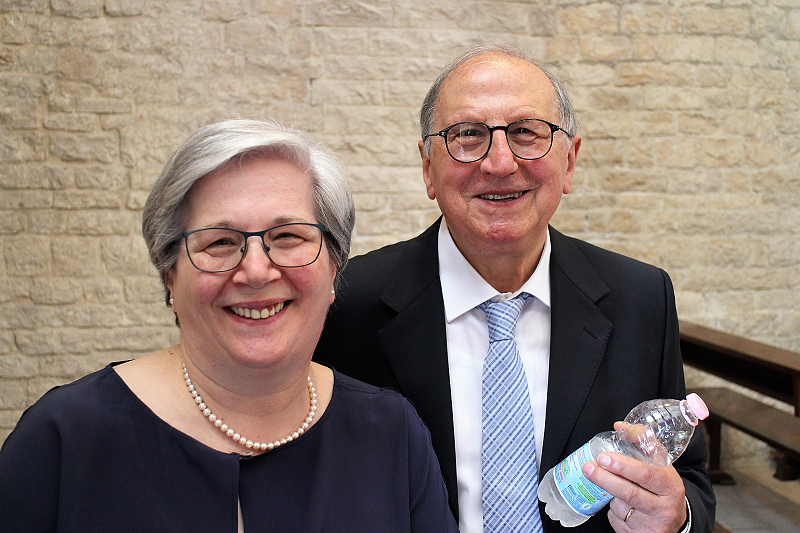
It began in April 2013. My wife Lucia and I were taking a walk when we noticed a five-cent coin on the ground. We were a bit embarrassed to pick it up. Then, walking along another stretch of the street, a man was tactfully asking those passing by for help. He held a five-cent piece in his hand, as if to say that he would be happy with even that. We’re not sure how best to say this, but let’s just say we felt ourselves blush. Some days later, thinking about what had happened, we felt an inspiring spark emerge – to start a project in our small circle. We decided to call it “Operation 1-2-5 in Freedom.” The idea is to freely consider the one-, two- or five-cent coins we get during our daily shopping as change, then invest it as a gesture of fraternity to alleviate situations of poverty locally and in poor countries abroad. The operation had come from an undeniable need to love. We received proof of this when we timidly brought the first 150 one-cent coins, 36 two-cent coins and 64 five-cent coins to the owner of a supermarket. Curious, he asked where they came from, and we explained it to him, asking whether he too would like to do something as well to meet the needs of the poor. From that day on, Antonio began to give something on top of whatever coins we brought him. Encouraged by his gesture, and beyond our families and at our condominium, we started to speak about it to even more friends of ours. The project went on to involve a number of families in Andria and then went beyond our borders: Lecce, Bari, Brindisi, Santa Maria a Vico, Naples, Rome, Spinazzola, Trani, Corato, Barletta Bolzano, Varese and Trent! This tangible good of collecting coins also brought something beautiful with it. Handing over the coins inspired many to wrap them: coins were collected in a tiny bag of white tulle, elegant envelopes and with flowers. We’ve even heard that this started happening in schools and between colleagues at work. Close to four years after the start of the operation, the collected coins now total $5,225 euros, all of which have been donated. Humanly speaking, a few cents might seem insignificant. But we feel that there’s something sacred about them, because they stimulate us to love others. They also recall a number of Gospel passages: the widow’s offering, the five loaves and two fishes, the few crumbs that the Canaanite woman begged Jesus for. It seems to us that little by little these ones, twos and fives, beyond any final figure, might contribute to increasing communion between people, placing talents and abilities in communion. Speaking of communion, it deeply touched us how, at the beginning of the project we uncovered, in an old notebook from 1991, something from our focolarino friend and sociologist Professor Tommaso Sorgi. Speaking about the Economy of Communion, he put it in these words: “The concept of communion is something deeper than the concept of solidarity. Communion brings it to life, illuminates it, puts it in motion and makes it possible. If this communion of souls is not a part of it, communion in the economy will never happen.” To sum up, we feel a special joy. Today Operation 1-2-5 in Freedom – which the Centro Igino Giordani in Andria has adopted – is more than ever motivated by love. That love that is like a tiny ray of light passing through a prism that refracts in the colors of the rainbow. In the same way, Operation 1-2-5 does this with the colors of fraternity and communion. Gennaro and Lucia Piccolo Centro Igino Giordani
26 Jul 2017 | Non categorizzato
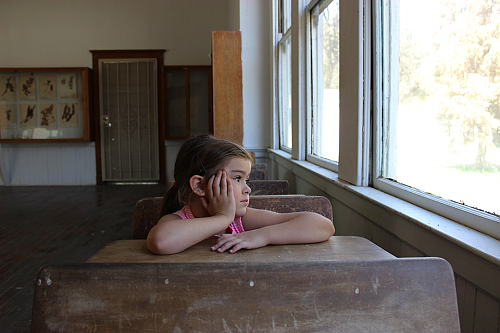
At preschool Sonia is 5 years old. One day she says to her mother, “I don’t want to go to school anymore; no one there is my friend.” After a day or two her attitude changes and she goes to preschool voluntarily. “What changed?” her mother asks. “I saw that there was a girl who was always quiet and by herself. No one wanted to play with her, so I went to her and told her I loved her. She smiled and then started playing with me. You know, Mum, love really warms the heart.” (Sonia – Slovakia) My poorest friend “As I left Rome, I left Nicu, the poorest of my friends, who is forced to beg as he waits to get a liver transplant. We stay in touch by phone. Often I’d wonder how I could continue helping him, seeing that I could only come up with a small monthly “income” of 20 Euros. Remembering the story of Zacchaeus, who gave half of his goods to the poor, I started each day to set aside 10 Euros for Nico. After I had collected 70, I sent the money to him via a friend. I heard that he was quite happy – more about the fact that I had remembered him than the amount he received. (Angiolino – Italy) A generosity competition The economy has not been doing well for some time. In a meeting at our condominium, after two hours of complaints, I proposed that we start a “communion of goods” in our building. One lady who lived alone offered her apartment to collect the food and clothing. We contribute whatever we feel is superfluous or even give away some things we need. A true competition of generosity began and an atmosphere of optimism came into our homes. (L.D. C. – Argentina) Work and home My wife and I met a family of immigrants. The husband lost his job, then found another, but it was not a secure position. They needed to be helped with food and money. Three months ago, I had the opportunity to find him better work. After a while this family called me back; their sister’s house had been flooded after torrential rain. I went over to give some immediate aid and see what they needed. The owners of the house had made them pay two months’ rent in advance and a month deposit. On my own I could not help them, but with the Focolare community we were able to collect the money they needed in just three days. (Juan Ignacio – Spain)
25 Jul 2017 | Focolare Worldwide, Senza categoria

24 Jul 2017 | Non categorizzato
 Giving all children and teenagers the education they need, to restore their dignity and allow them to build their own futures. This is the commitment of the many activities carried out by Scholas Occurentes (schools of dialogue) and the Focolare non-profit New Families Association (AFN) with programmes that focus on children and teenagers from around the world, with a teaching method based on values. The roots of Scholas, an international organisation that last June began operations in Italy with an official inauguration ceremony at their new base in Palazzo San Calisto in Rome, go back twenty years. George Mario Bergoglio was archbishop of Buenos Aires, and he perceived the importance of the so-called escuelas de vecinos. In 2013 Pope Francis transformed those schools of the quarter into a Pontifical Foundation so that they could promote their educational model on a global level. Currently the network has more than 400 million schools that are connected with each other from the five continents, from every religious and secular background and also public and private institutions in 900 countries. The pope attended the ceremony which was conducted by Lorena Bianchetti from Rai1. Our reporters were on hand as the Pope spoke off the cuff in Spanish with the young people from around the world who were linked up via internet. “In this society, ‘teaching’ often becomes ‘selecting,’” he stressed. “Instead, we need to ‘join hands, embrace, never attack or say that any human being is a ‘no’. Everyone is a ‘yes’ and has significant role.” Sometimes in education “we select badly, we create closed groups.” “We’re incapable of thinking with the other, incapable of working with the other,” the pope said. Instead, education is the capacity to speak “the language of the mind, heart and hands.” Therefore, “unity is needed within each one of us” said Francis: “If I believe what I feel, what I think, what I love – then I’m beginning.” “We’re living in a world where globalisation dominates, and globalization is good,” the pope explained, “but the danger is that of understanding, perceiving globalisation as a billiard ball – all of them are the same – a sphere in which everything is equidistant from the centre, but a sphere in which the personal characteristics of a boy or girl are obliterated.” Instead, “authentic globalization is more like a polyhedron where we seek unity, but each of us maintains his and her own peculiarity their own richness.” The president of Scholas, José María Del Corral, explained how fundamental that step was for the international growth of the foundation.” Moreover the closeness of the Holy Father is a stimulus to “intensify efforts on the educational front where young people are involved.” Also in Italy, he added, “Scholas appeals to all the sane forces of society to unite their efforts and to offer constructive collaboration.” This is the challenge for Scholas and for the Focolare AFNonlus who are project partners of some hundred activities in fifty countries around the world, as well as educational programmes for disadvantaged youth. “It’s a demanding project,” said president of the AFNonlus, Andrea Turatti. “The global classroom being created by the web will help to develop educational strategies, human and social development projects in a spirit of solidarity and in view of universal brotherhood.” Giovanna Pieroni Source: AFNonlus online
22 Jul 2017 | Focolare Worldwide, Senza categoria
Augustine provides us with one of the most valuable intuitions on prayer: “God’s ear hears the heart’s voice” (Comment on Psalm 148). Letting God’s ear rest on our heart, opening our heart to God’s ear: this is what it takes, this is the art of praying, an art, by the way, that’s for everyone. Actually, it’s not ours, but of the Spirit that God gives to us, the Spirit who prays in us, for we don’t know how or for what we should pray (cf Rm 8:26). […] Prayer is elevating the heart to God. But are we capable of that? Isn’t the range of our understanding too limited for our heart to be able to elevate itself to God? Isn’t the impulse of our heart too weak? Don’t burdens attach themselves to our heart and weigh on it, paralyze it and bring it down? What gives us the courage to claim: Our heart is turned to the Lord? His ear. He has lowered it to us. The Father listens to the Son. And the Son came down among us, into our flesh, into our heart. Within the heart of the Son, the Father listens to every beat of our heart, in the heart of the Son he finds our heart. In Him in whom we were made, loved, supported, gathered – the Father hears us. To elevate our heart means to leave it where it is and discover that where it is, with us, is the heart of God in the heart of his Son. Abandon yourself in Him and he will hold you. In Him, God’s ear is upon your heart; in Him your heart is at God’s ear. […] The opposite is just as true: God keeps his heart against your ear. He revealed, conveyed, gave, not something of Himself, but His Self. If you believe in him, if you adhere to Him, if you stick to Him, then you don’t hear a novelty, a directive, a command: you hear his heart. Stay near to Him until you discover this heart of yours. He’s in need of your patient listening in order to open your heart; actually, only patience comprehends love and learns love. He will reveal Himself to anyone who loves Him, and He makes His dwelling with that person (cf Jn 14:21-23). […] God has your heart at his ear, so that through your ear his heart penetrating your heart, might become your heart. The ear of God on your heart – the heart of God at your ear – like the alternating found in prayer. Only the pray-er knows God. Only the pray-er knows the human person. From Klaus Hemmerle, Con l’anima in ascolto, Guida alla preghiera,(Rome: Città Nuova Ed.,1989), 9-11.
