
Europe – “A Family of Peoples”
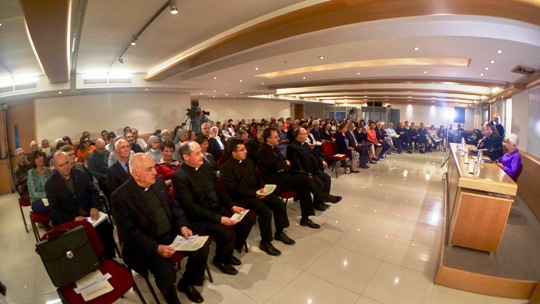
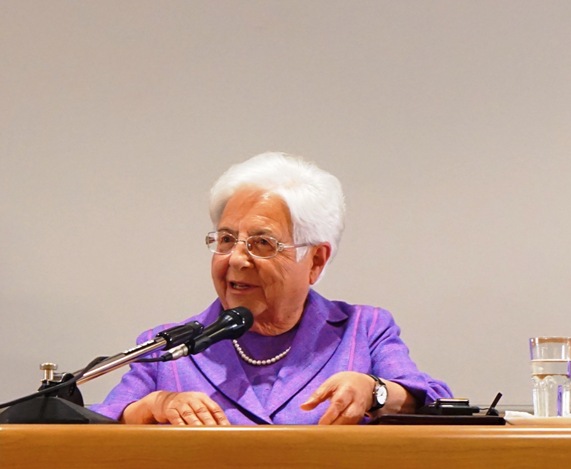 This past March 25th was the 60th anniversary of the Treaties of Rome, which gave rise in concrete terms to the “community of peoples” which Robert Schuman had already so clearly envisaged. In fact, on the 7th May 1950, he had suggested to Konrad Adenauer a “solidarity in coal and steel production”, which would make any form of war impossible between France, Germany and other countries that would have joined. It was an extraordinary step to reconcile peoples shattered by the most terrible conflict ever experienced. Europe had been devastated and over 35 million people had died. There was not only physical destruction but social, political and moral destruction too. There was absence of law, public order and public services. At the time, it would already have been an achievement to secure borders and maintain the peace agreements. How, then, could they imagine such a deep healing of wounds as to bring together many opposing peoples into one European people? Who inspired Schuman, Adenauer, De Gasperi and others? We would like to believe that God gave the ideas and the strength for Europe. God had shown his love for people to the point of dying a terrible and shameful death for them. He had identified himself with all the pain of humanity, including those resulting from violence and wars. Today too, God urges peoples to be reconciled and become a single universal family. The founders of Europe had their own experience. They did not allow themselves to be crushed by the absurdity of evil, by inhuman dictatorships, by conflict and the Shoah. Chiara Lubich, founder of the Focolare Movement, spoke of the culture that arises from profound reconciliation: “…every person can give his or her particular contribution in each field, whether it is in science, the arts, politics, communications or other areas. Each will be more effective if he or she works together with others united in the name of Christ. It is the incarnation that continues, the complete incarnation that encompasses all the members of the Mystical Body of Christ. This gives rise to and extends what we could call the “culture of Resurrection” in the world: the culture of the Risen Lord, of the new Person and in Him, of a new humanity.[1] If this was to some extent the adventure of Europe’s founders, we can – and I would say we must – aspire to continue their work. All of us are called to this. The unity of European peoples is a path to be followed simultaneously in the fields of education, culture and spirituality; and also in politics, economics, social structures and communications. Here, therefore, are some further steps that could be taken: First, we Christians are asked not only to be reconciled but also to pursue a path of shared witness, one that has recently seen historic meetings at Lund, Sweden; in Lesbos, Greece; in Cuba. All of us have the task to enable steps towards full and visible communion, knowing how decisive this will be for the unity of Europe and to better serve humanity. We also want to extend our vision to the whole of Europe – from the Atlantic to the Urals – and this means mutual recognition of values and contexts that allow collaboration between North and South, East and West. Wars, totalitarian regimes and injustices have left wounds that need healing. If we truly want to build European unity, we must be able to recognise that what we are today is the outcome of a shared history and a European destiny that we must fully own. If, then, as a result, relationships can be renewed between the European Union and European countries that are not part of the Union, this would already be an important step ahead for peace, especially in the Middle East. In Europe, there is a great need for citizens to be fully engaged in the life of their cities and of the whole continent. This means, in other words, giving new life to democracy, which began in Europe but today needs a new dimension, one that is more incisive, more engaging, more suited to our times. Furthermore, in a European context that is both multicultural and multifaith there is great need for a new capacity for dialogue. Dialogue can be founded on the “Golden Rule” which says, “Treat others as you would have them treat you”[2] (Cf Lk 6:31), a rule shared by the world’s major religions and accepted by those who do not have religious beliefs. Additionally, it will be necessary to review and apply the motto chosen for the European Union “unity and diversity” also at the level of institutions. It would be a gift for peoples in other continents who are seeking ways to unite. The founding fathers never envisaged Europe as closed in on itself, but instead they saw it open to the unity of the entire human family. It is particularly meaningful to be able to reaffirm this here in Malta, the southernmost European state, set by its very vocation, food and language, in the Mediterranean. From being a watery graveyard this sea must become once more “Mare nostrum” for a united Europe, Africa and Middle East. Many ongoing international crises give us a clear picture of the long road ahead in order truly to reach this goal. Chiara Lubich also said, “What is needed, then, is patient study, what is needed is wisdom. Above all, we mustn’t forget that ‘Someone’ is following our history, Someone who desires – if we collaborate in good will – to fulfil His plan of love for our continent and for the entire world.”[3] We can conclude that it is certainly worthwhile spending our whole lives for such a high goal. My wish is that this Forum may contribute to establishing: “Europe – a family of peoples” which, according to Pope Francis, is “A Europe capable of giving birth to a new humanism based on three capacities: the capacity to integrate, the capacity for dialogue and the capacity to generate.”[4] Maria Voce President of the Focolare Movement Malta – St John’s Cathedral, 7 May 2017 ____________________________________________ [1] Chiara Lubich, 23rd September 2006, “Jesus Forsaken and the Collective and Cultural Night”, to the Ecumenical Meeting of Bishops. [2] Lk 6:31 Do to others as you would have them to do you”. [3] Chiara Lubich to the European Movement in Spain, Madrid, 3rd December 2002. [4] Address of Pope Francis, Conferral of the Charlemagne Prize, 6th May 2016.
A long journey in the Middle East
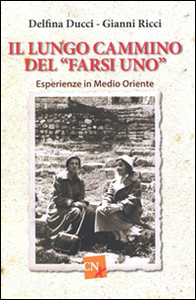
People travel for various reasons: curiosity, thirst for knowledge, spirit of adventure, or in search of oneself. This was not so for Gianni Ricci who has indeed travelled far and wide and who is the co-author with Delfina Ducci, of an unedited book published by New City, The long journey tto “making yourself one.” He “lived on the road” so to say, with aim of bringing solace to humanity’s infinite forms of suffering. Born in Ripalta Cremasca, in northern Italy, in a simple but dignified family, he was raised with authentic Christian values. At the age of 20 he met Chiara Lubich’s spirituality of unity which revolutionised his idea of Christian life, so much so that he made the Focolare way of life his very own. In 1964 he left for Loppiano (Florence, Italy), the newly born town of the Movement, to which he faithfully dedicated twenty years of his life. After Loppiano, he accepted God’s will which led him first to Turkey, where he helped the newborn community to grow, then to the Lebanon, the Holy Land, Algiers, Jordan, Iraq, Egypt, Syria, Tunisia and Morocco. “How many sudden changes I underwent! I am now in Turkey. There is nothing that can stop me from reaching sanctity. There is so much to do here,” he said. Gianni Ricci, the soulful globe trotter, took note of all he encountered, sometimes foregoing the difficulties, especially in relating with such diverse peoples. Though he saw the tragedy of the wars that caused deep wounds in the population, smothering hopes in a possible future stability and peace, he did not seek solutions or possible solutions in history books. He simply lived alongside the people he met, with a free and open heart towards an “infinite” humanity, that speaks the same language of the heart and of suffering. «At the end of January 1986, with Aletta (focolarina of the early times) he travelled from Istanbul to Ankara and from there to Beirut, in Lebanon. The airport was half-destroyed by bombs! Lebanon was devastated by civil war (…). The check points were severe, the authorities suspected everyone and everything. Each check point was guarded by different factions. After eight days, Gianni left again for Istanbul. Along the 120 km that separated Beirut from the confines with Syria, they had to pass through 13 check points. At the first one they risked their lives. He stopped in front of a guardhouse where a soldier armed to his teeth asked to see his documents. He showed them and was able to leave. After a few steps a boy warned him to go back, making him note that the guard was pointing his gun on him and had not given the order to proceed. He didn’t press the trigger, thanks to Allah,” he said. It is not a political narration, but solely a “humane” one. The humanity he speaks about has no colour, language, passports, confines, laws or customs. In every place he was assigned to, Gianni undertook to nurture the relationships with the local Churches, Islam, the Hebrew world, with the aim of sustaining all the people he met, to defeat the fear and uncertainty of the future, the tensions provoked by war. A chain of memories in a perspective of unity – this is the “logic” that still drives Gianni, a stupefied observer of God’s works. The citations were taken from “The Long Journey to “making yourself one.” Experiences in the Middle East, Città Nuova, 2016.
Miles of hope
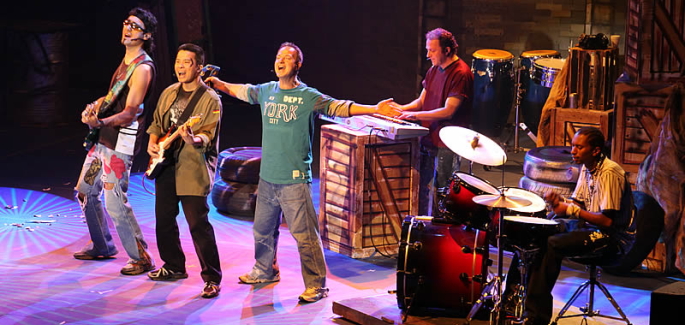
Every life bears hope within. Even in the dark tunnel of addiction a light can still shine. In 1983 in the city of Guaratinguetá, in the State of Sao Paolo (Brazil), Nelson Giovanelli, encouraged by Fr. Han Stepel, a German Franciscan friar, approached a group of drug addicts. The young Nelson won their trust and one of them, Antonio Eleuterio, asked him for help to be able to get out of the drug ring. Those were the first steps of the big Fazenda da Esperança family. In 1989, Iraci Leite and Lucilene Rosendo, two girls of the same parish, following Nelson’s example, left everything to dedicate themselves totally to this new mission. In 2007 Pope Benedict XVI visited the Pedrinhas community in Brazil, at the Aparecida shrine. Since then the Fazenda da Esperança’s mission has spread worldwide. The operators of the current 118 Fazendas diffused in 17 nations are volunteers, often with a background of drug and alcohol addiction, and who, after rehabilitation, felt God’s calling to become in turn, harbingers of hope for those who have plunged into the same dark pit. In the first days of May 2017, 60 volunteers of various Fazendas of the world went to Assisi, the city of St. Francis and St. Claire, and to Loppiano (Italy), to start a new “hope mission” through the roads of Europe. For two weeks, they were accompanied also by the international band, Gen Rosso. Germany, end of May. Some members of the band recount: “every morning, a caravan of cars and minibuses set out for a new destination, within an area of 400 kilometres: schools, communities, groups, and jailhouses. The boys and girls of the Fazenda share their past experiences, triggering and answering the question they are posed. Above all they light up hope: if they were able to make it, why can’t I do the same? These are stories of drugs, desperation, solitude, fear, crime, and jails. When the darkness becomes absolute, a light shines out: God loves me, just as I am, in the conditions I have reduced myself to. What do they hold on to, in order to be reborn? It is to the “Word of life,” and mutual love, the daily nutriment to get up on one’s feet and start again. An explosive message which flies to the sound of words, and also to the rhythm of music and dance steps, increasingly involving all. At first, all this generates simple curiosity and moments of doubt. Then the uncertainty melts away and smiles appear on the faces of many of the youths, up to when a heartfelt exchange of ideas occurs. Also today, the message of hope has pierced the hearts of many.” The tour Every Life Has Hope has travelled kilometres across various cities and regions, testifying to the presence of God in society today, and the chance for all, nobody excluded, to start again. In the jail of Bielefeld, the “caravan” encountered a hundred prisoners, and in Arnsberg, in north Germany, the members of the Shalom movement On Pentecost day in Koln, there was a stopover in a parish community, and in the afternoon, a meeting with the Caritas was held. Invited by the Auxiliary Bishop, the band sang the mass in the Cathedral, offering the song “I was there,” composed specifically for that occasion. In Gut Hange there were celebrations for the first five years of the opening of a women’s Fazenda. Furthermore, there were visits to homes for wayward tramps and terminally ill people, and meetings with students and drug addicts hosted in a public structure, with a congregation of nuns who dedicate their lives to accommodating girls with serious problems. The tour also made a stopover in Belgium at the community in Peer, a town that will soon open a new Fazenda. After two intense and joyful weeks, the Fazenda group will proceed to Berlin and Poland, while Gen Rosso will return to Loppiano to prepare for their next tour with the musical “Campus” in Apulia (southern Italy), where there will be the inauguration of a new Fazenda. Once again, together, they will light up new hope.
Living the Gospel: Going against the current
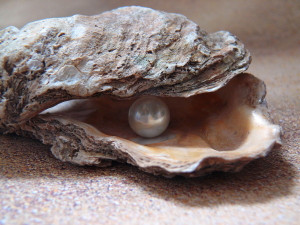
 How many times must we forgive? “Three years ago my elder brother came to the house and offended my wife while I was away at work, When I returned home I got very angry, but together, we decided not to react. We then discovered that his daughter, who at that time, was living with us, returned to her house saying that she had to prepare lunch by herself. Besides, to our great surprise, my brother started to recount to the other people in our community that we had insulted him and that he would have forgiven us only if we asked his pardon. At this point this was just too much for us and for a year we no longer spoke to each other. One day I remembered that Jesus had taught us to forgive seventy times seven, in whatever situation we would encounter and even pray for our enemies. So, on the last day of the year, I organised a meeting of reconciliation, in the presence of all the enlarged family. . I was the first to speak, I told the members of the family that we were not there to give long speeches, or to judge one another, but simply to ask my elder brother’s forgiveness and that we were sorry for having offended him. Then I got up and knelt in front of him, in a gesture of humility and goodness of heart, two Christian virtues. The members of the family, including my brother, were so surprised and taken aback by this gesture, and none of them dared to speak. After a few minutes he told me that he had forgiven me. We returned home happy and serene for having re-established peace among our families. (Christopher and Perpetua Idu – Africa) Pearl of great price I was living through a really hard marriage. My husband developed an alcohol addiction due to having served in the Army. Shortly after coming back to England and eating fairly normally again, he developed a duodenal ulcer, which gave him appalling abdominal pain and appeared to be incurable. It was then that he discovered alcohol as an effective pain killer. I lived through this horrific time with him. I only speak of all this because I need to describe how I found myself physically and mentally at the end of my tether. I spoke with various doctors and professionals but they were unable to help either him or me. I hadn’t yet discovered Alcoholics Anonymous. A year or so later we met the Focolare Movement. At the event I ended up writing to someone in the Focolare community that I really respected and trusted. I told him about the impossibility of our lives. His response was: “Thank you for sharing with me your ‘pearl of great price’..”’ I was aghast. How could all the huge difficulties that I had described to him be called my ‘pearl of great price’? It took me years to begin to understand how to turn suffering into love, to ‘let go’ of everything I thought was necessary in order to be accepted socially; to make things tidy and whitewashed. To be honest, to be able to say my ‘yes’ rather than ‘no’. I began to understand the innumerable things that make up one’s ego! Now in my old age I am beginning to discover or rather I have a ‘murmur’ of what it is to experience what ‘melt down’ means. It’s an absolute surrender, allowing God to wrap me in his arms and to let him do all the work. Before he died, my husband had a direct experience of Jesus’ love and never drank again. Also I was released from depression. All this has taken years, most of my life really. But it certainly was and is my ‘pearl of great price’ – truly. Source: New City (London)