27 May 2017 | Non categorizzato
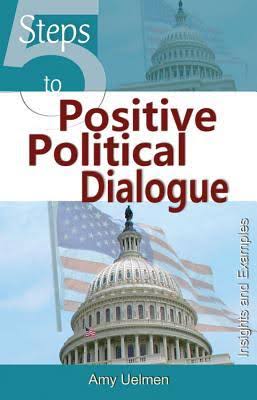
Over the course of the past year, ideological tension that had been simmering for decades broke out into the open. In the months leading up to the November election, people from every position on the political spectrum expressed deep concerns about the direction the country was heading. Throughout the States, strong and contrasting emotions generated a general sense of unease and division. Such feelings affected relationships in local Focolare communities as well. Many felt that the presidential election campaign forced them to make impossibly difficult choices. Conversations became heated and difficult. Anticipating this possibility, throughout 2015 the Focolare Movement had sponsored workshops based on the New City Press book, Five Steps to Positive Political Dialogue. During these workshops, participants learned and practiced the necessary skills for positive dialogue across political differences. The “five steps” include:
- Believe that a Positive Vision is Possible
- Practice Communication Skills Based on Love
- Understand Where There Is Room for Compromise—and Not
- Recognize Suffering as a Springboard for Love
- Build Relationships with Positive Action.
John Chesser (Iowa): “People paired off and they chose to discuss a topic on which they strongly disagreed. The twist was first one person shared their view and then the other person had to repeat their view back before sharing his or her own view. The results were really interesting. The exercise allowed people to gain an appreciation not just for the other person’s point of view but to reflect and reconsider their own view. Of course we didn’t solve the world’s problems in the workshops but we did find new hope and new tools that helped us to see that maybe it’s possible for us to solve these problems with dialogue.” As the November 2016 election drew near, the tension between those who held opposing opinions seemed to increase by the day, and conflict became more and more pronounced in personal life, in workplaces, and in social media communications. Marilyn Boesch (Maryland): “I was very agitated. And I remember examining my conscience, affirming my desire to work for unity, to be a person that builds bridges, not a person resigned to these divisions.” Marijo Dulay (New York): “After a few mistakes I learned to be more sensitive in the comments that I posted on Facebook so as not to hurt the people who differed from my perspective.” Simona Lucchi (Georgia): “I realized that all my preaching and all my yelling wasn’t doing any good because either way it wasn’t changing what people believed in. So I took the stance of sitting back in order to listen. When I stopped talking to actually listen, I found that I had more in common than I thought with the people I disagreed with.” 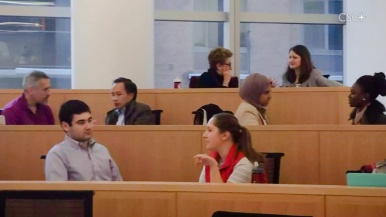 Amid the confusion, the positive proposals for dialogue presented in academic environments were well received. For example, at Fordham Law School, in the heart of Manhattan, New York, Ana Renata Dias, the Director of the Institute on Religion, Law & Lawyer’s Work, offered a workshop that aimed to promote open and constructive cultural dialogue by honing the participants’ listening skills. “Several of the participants said they had come to the workshop because they wanted to understand if dialogue is really possible among such polarization.” After a listening to a presentation with practical suggestions for approaching these difficult conversations, participants rolled up their sleeves and got to work, discovering together that even those who were most impassioned could find ways to exchange contrasting views without the conversation degenerating into a fight. Even those who said they were less than convinced by the workshop felt more hopeful. Two months later, following the inauguration of the new president, cultural tensions became more and more pronounced. Students at Georgetown Law School in Washington, DC were searching for ways to navigate these tumultuous waters. Amy Uelmen, author of the book, Five Steps to Positive Political Dialogue: Insights and Examples, proposed to her class a way forward.
 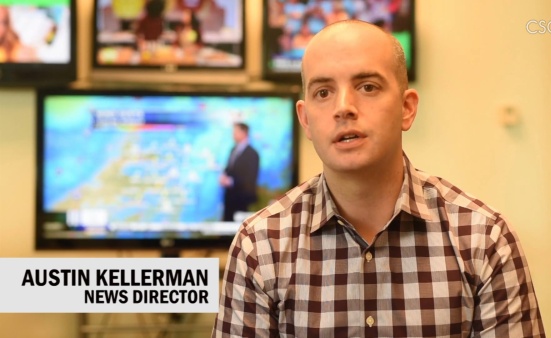 “We realized that often in any conversation there will be caricatures, mischaracterizations, misunderstandings, and information that is simply wrong. We agreed all together to be open to correction and to working out our difficulties when different perspectives collide.” In Arkansas, a traditionally conservative state, some were enthusiastic about the election of the new president while others were angry. Austin Kellerman leads a newsroom in Little Rock, the state’s capital. Together, he and his colleagues decided to launch an appeal for unity. “Our team of journalists felt like we had the chance to be a voice for our city, so in one of the more heated moments one of our more experienced reporters put together a commentary calling for unity and an open mind: he said, ‘There is no them, no us. There is We. We the people.’” “Obviously, this alone will not fix things or change anybody’s view,” Kellerman continues, “but hopefully it gives people permission to think beyond their singular view. We are going to try to keep the dialogue going and staying faithful to representing all sides and voices.” Source: New City Press (New York)
26 May 2017 | Non categorizzato
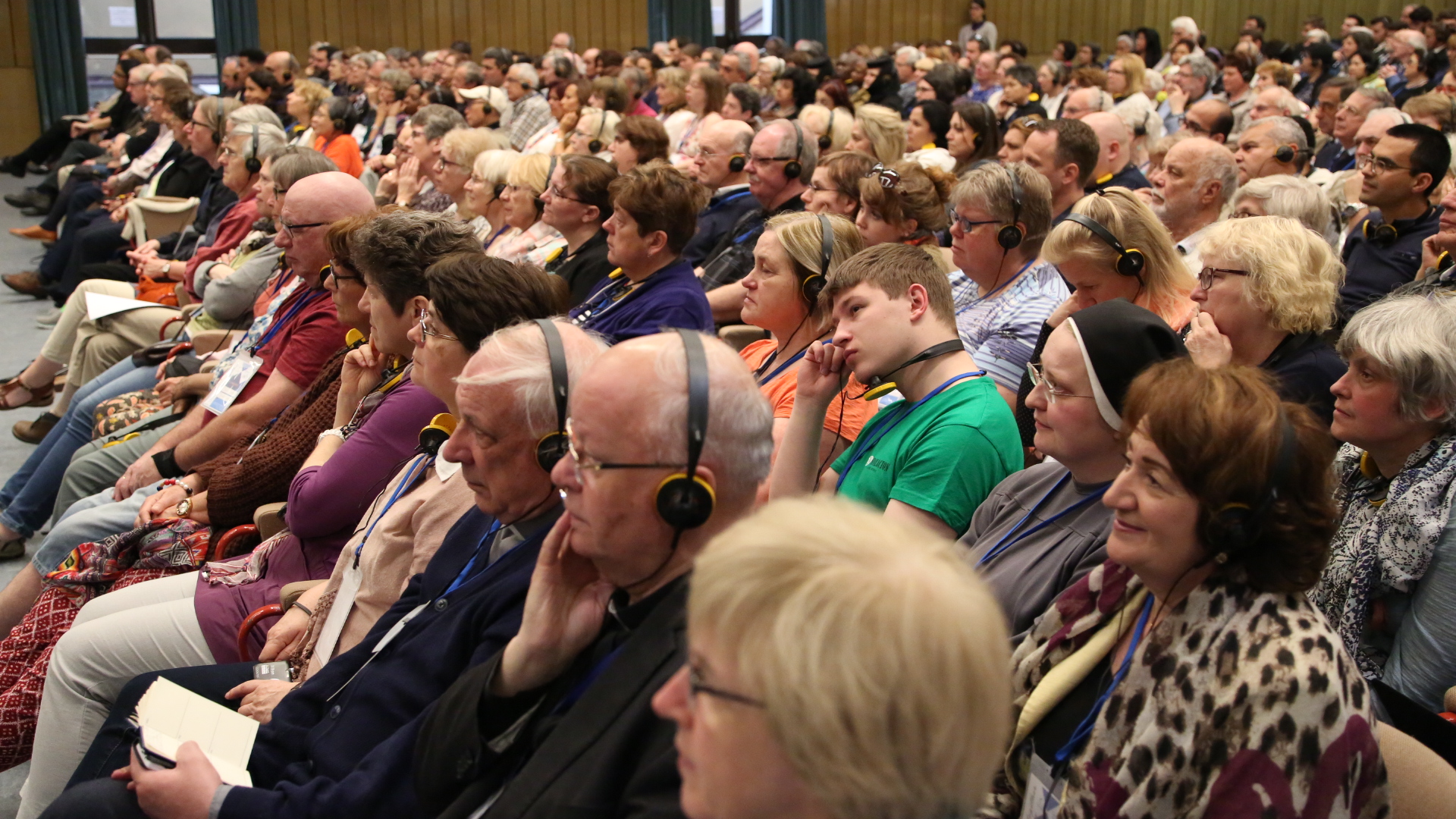
© CSC Audiovisivi – Caris Mendes
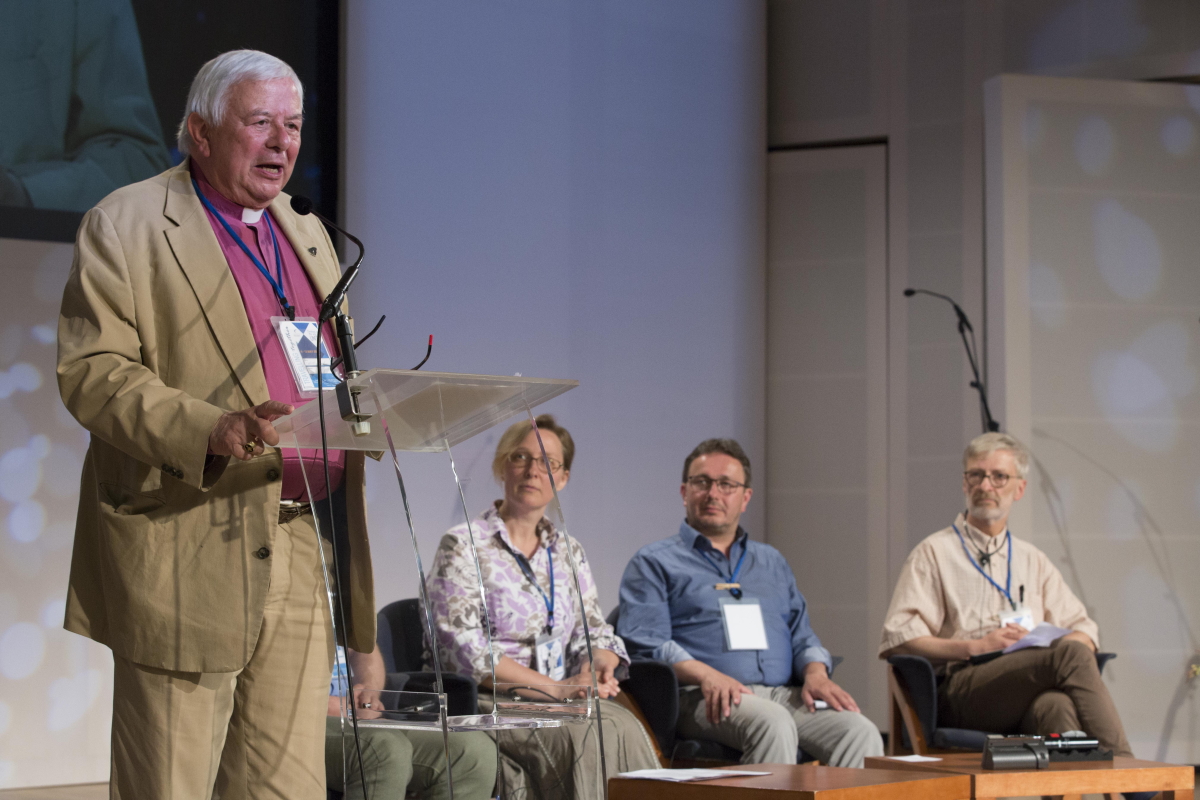
Emeritus Bishop Christian Krause,
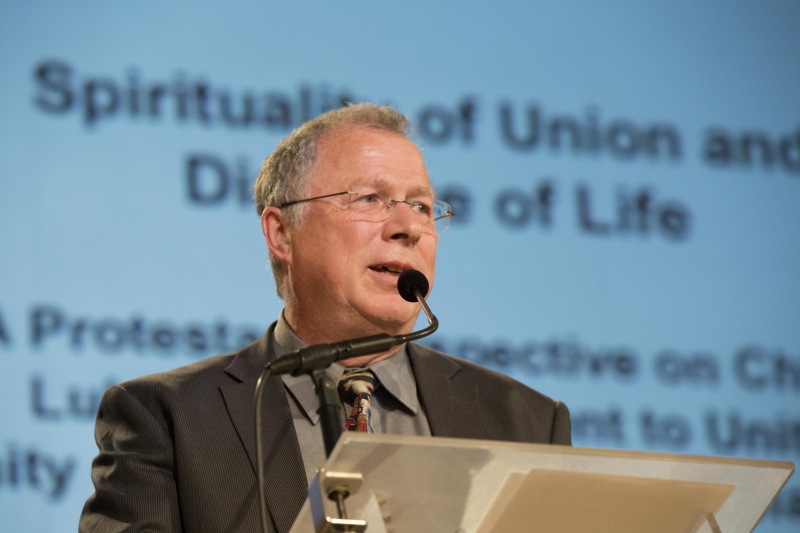
Rev Dr Martin Robra (WCC)
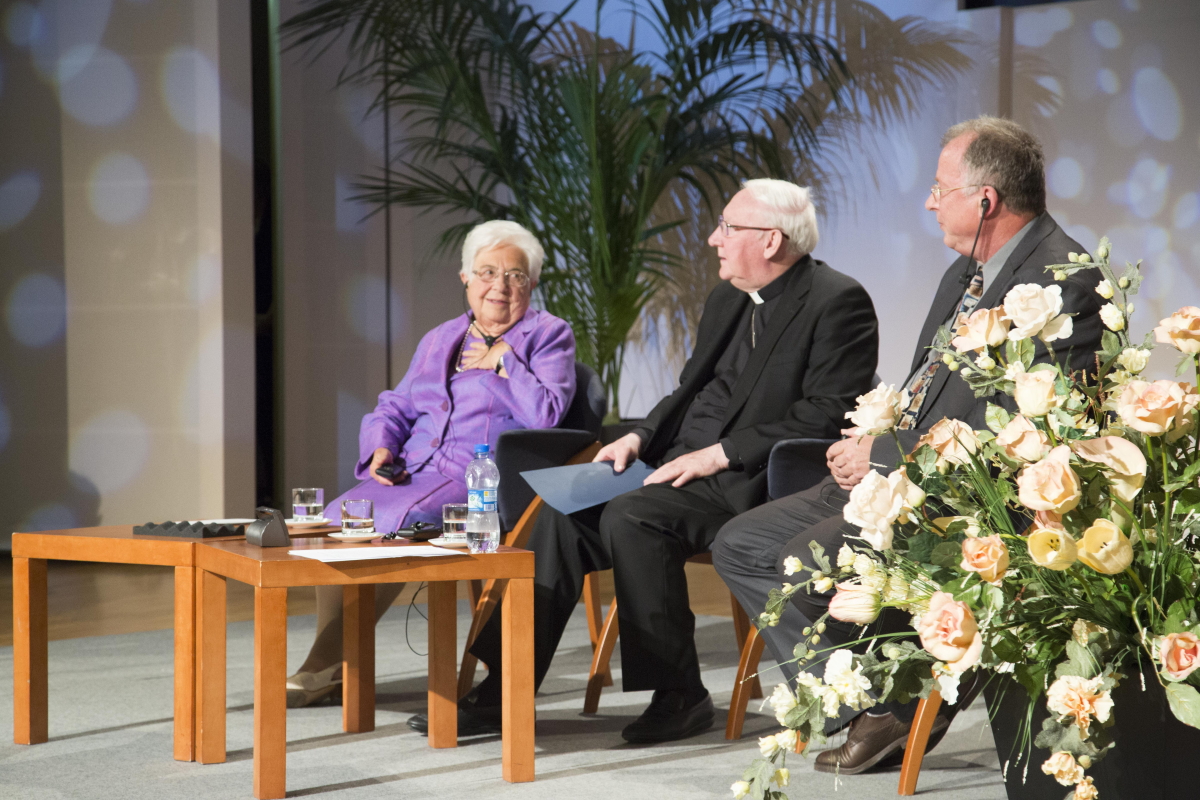
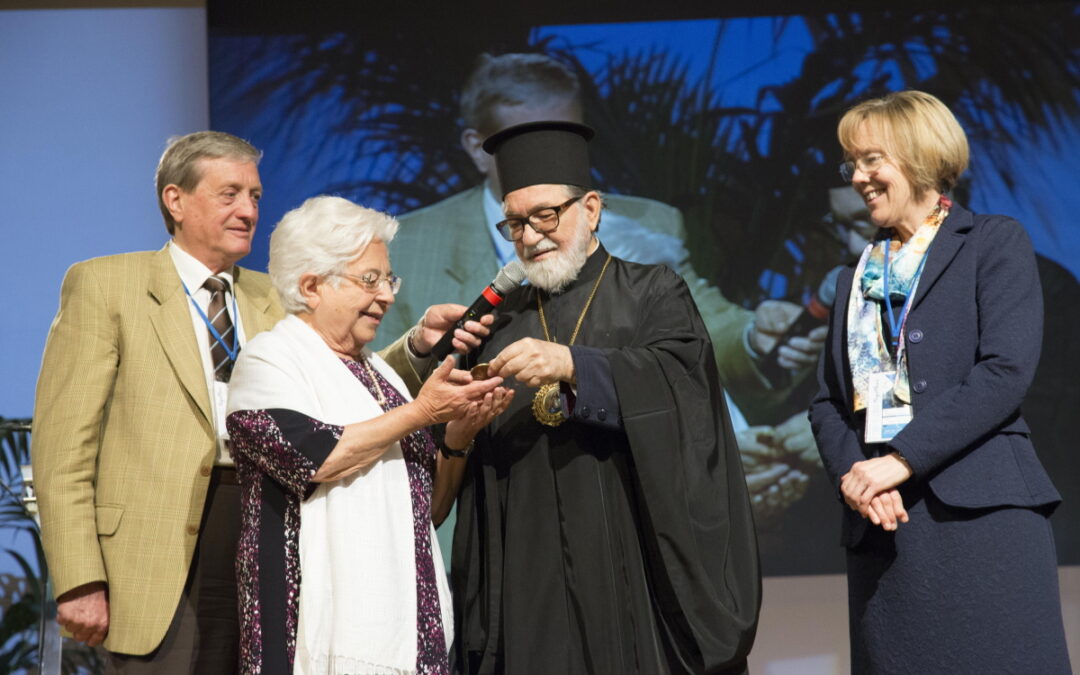
Maria Voce with Bishop Brian Farrel
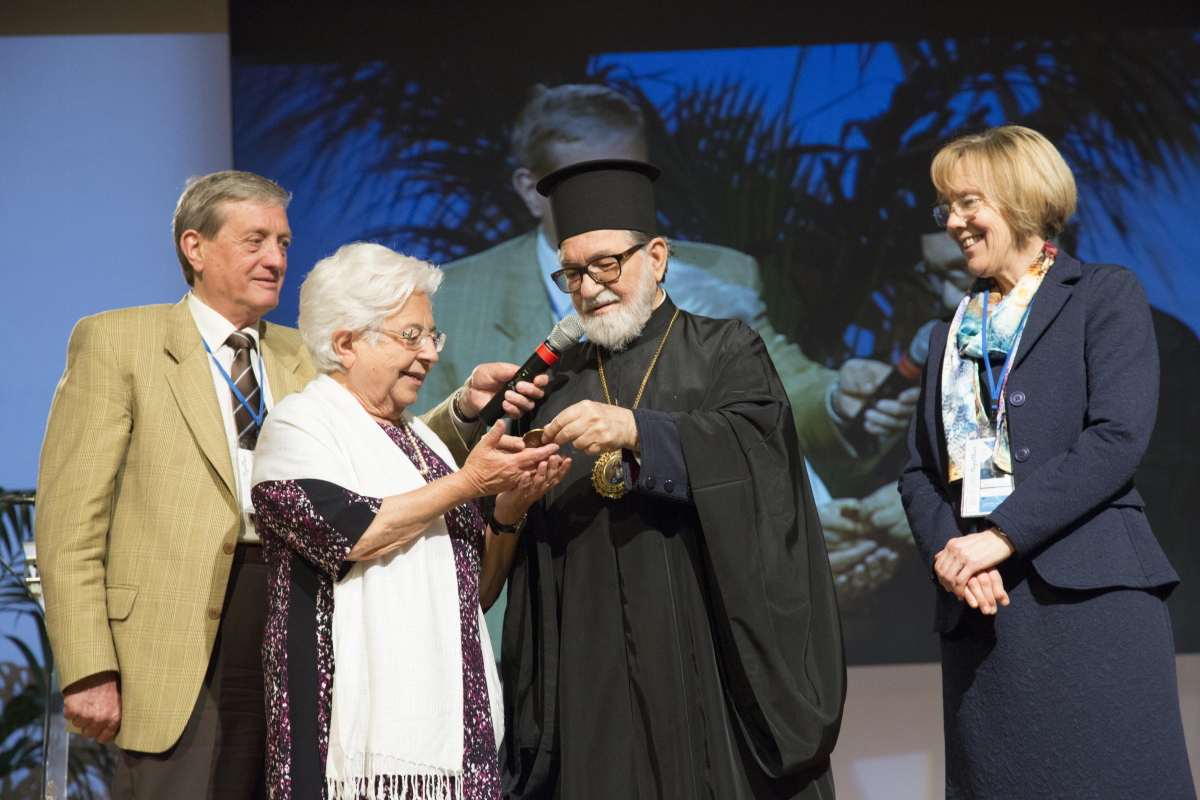
The Metropolitan Gennadios Zervos presented an “Historic Medal” to the president of the Focolare
26 May 2017 | Non categorizzato
For Muslims, May 26 signals the start of the Sacred Month of Ramadan. It is the ninth month of the Islamic year and the most important. It is a sacred time during which the revelation of the Koran to the Prophet Muhammad is commemorated and through fasting (the fourth pillar of the Muslim faith), a special purification is sought. Ramadan is a month of total fasting from dawn to dusk.
25 May 2017 | Non categorizzato
The meeting, promoted by the Focolare Movement, will focus on Synodality. The meeting is open to priests, deacons, men and women religious, ministers of various churches and lay people, both young people and adults, who are interested in parish life. For more details and registration contact your nearest Focolare Centre or write to email address: netwalking2017 @ focolare.org Invitation (Italian)
25 May 2017 | Focolare Worldwide, Senza categoria
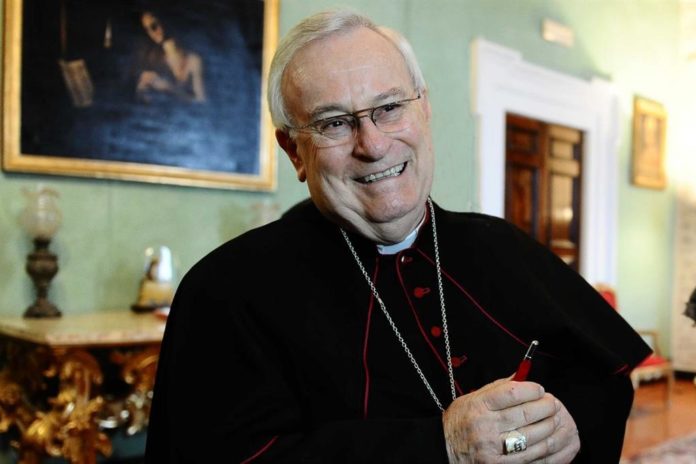
Maria Voce says that it was “with great pleasure” that she learnt of Cardinal Gualtiero Bassetti’s appointment as new President of the Italian Episcopal Conference (CEI) on May 24, 2017. In a letter congratulating him, the President of the Focolare Movement expresses her “most sincere wishes for this prestigious assignment, a clear sign of trust on behalf of the Holy Father.” “His sense of collegiality and love, which are his trademarks,” continues the President, “will be a great gift for the entire ecclesial and civil community of Italy, especially for those who most resemble Jesus Crucified and Abandoned “. The Focolare Movement in Italy also congratulated the new President of the Bishops’ Conference, saying his appointment is “a source of great joy”. In a press release, it emphasizes his “particular style in always being close to the people, to workers, migrants, families, in their situations of crisis and in their search for truth.” The Movement wishes that he may “experience in this new task an ever-renewed courage to face the countless challenges, comforted by the collegiality which is a witness to the fraternal aspect of the Church.” Born in 1942 in Marradi near Florence, Gualtiero Bassetti was ordained a priest in 1966. In 1994 he was appointed Bishop of Massa Marittima, then Bishop of Arezzo (1998) and in 2009 Archbishop of Perugia. In 2014, Pope Francis welcomed him into the College of Cardinals.
