25 May 2017 | Focolare Worldwide
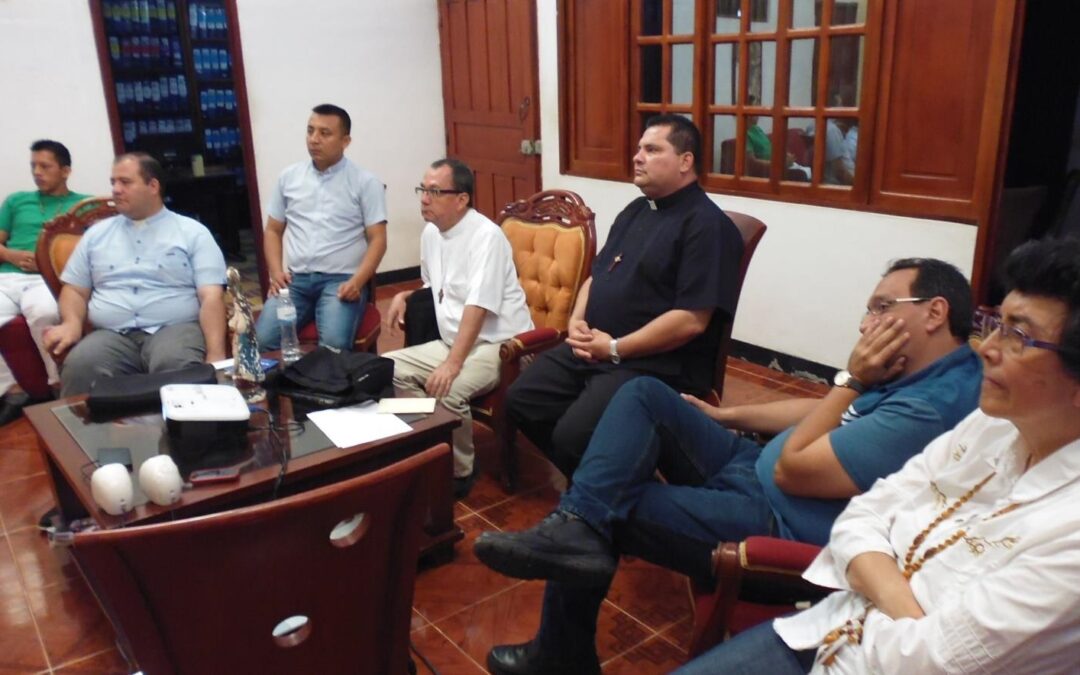
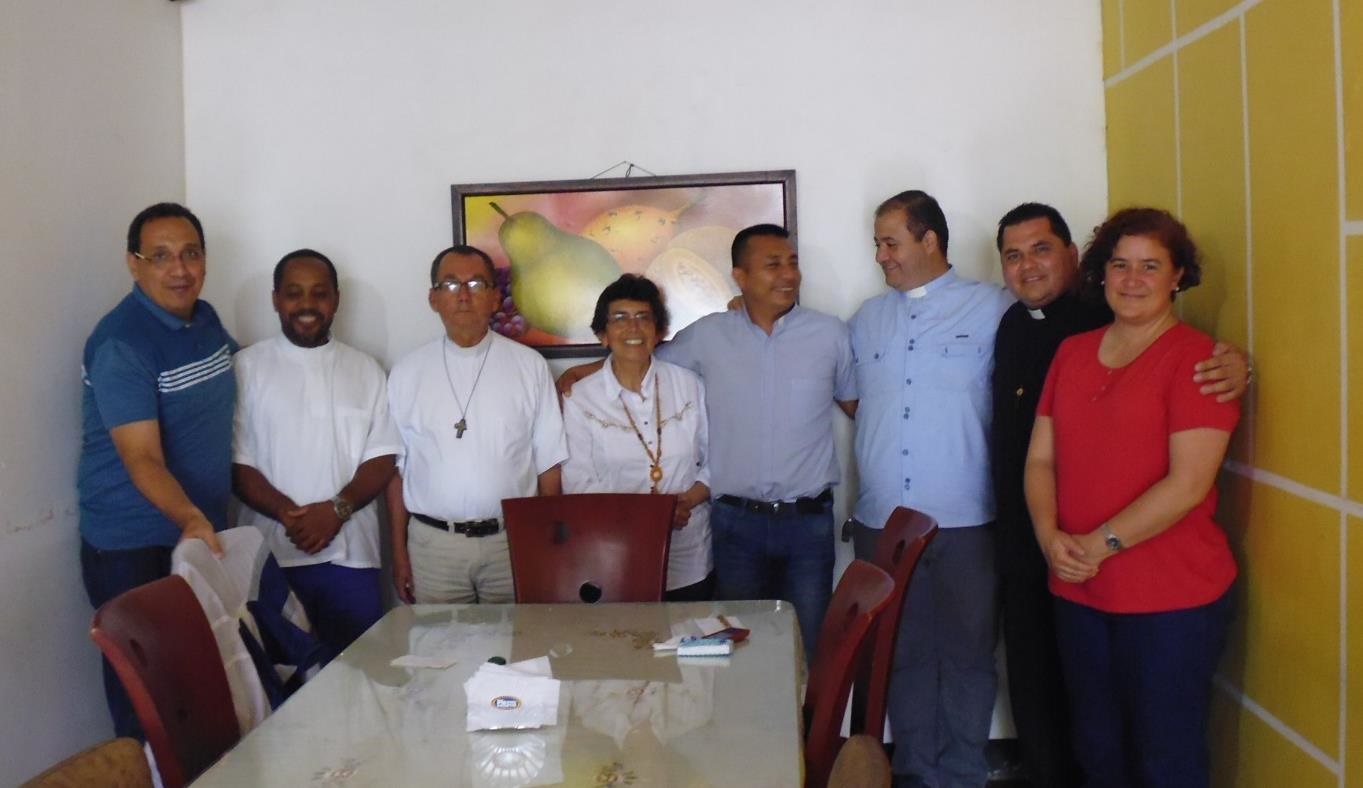 Elizabeth and Allejandra from the women’s focolare in Bogota write: “We went to Mocoa with Fr Juan Carlos Almario, a priest and a focolarino, to take monies to them that had been collected by the Focolare community of Colombia. We were there in the name of the entire Focolare family, to take them their love, prayers and concrete assistance, not only from the community in Colombia but also from many parts of the world that had become involved in this tragedy.” “Several priests from the Movement – pastors from Mocoa – welcomed us with much joy. Then we met the people. Every one of them had a painful story to tell us that was linked to the catastrophe, and we wept with them.” They recalled that April 1st night, the mudslides and the “love race” that broke out among them in reaching the victims. The priests and their bishop, Luis Maldonado, along with other parish priests, got organized to stand by the wounded in the hospitals, to welcome families in search of loved ones and to bury their dead… Then, with the help of other parishioners they set up a canteen to provide meals for people who were without water and electricity, and to share with the public workers that were involved in the relief effort. They arranged the assistance materials as they arrived, so that they could be distributed to those in need, along with surgical masks to protect from the overpowering odours. “The recount of their efforts had a strong Marian quality, silent but concrete, that reached the people through them and met many of the needs that resulted from the tragedy.”
 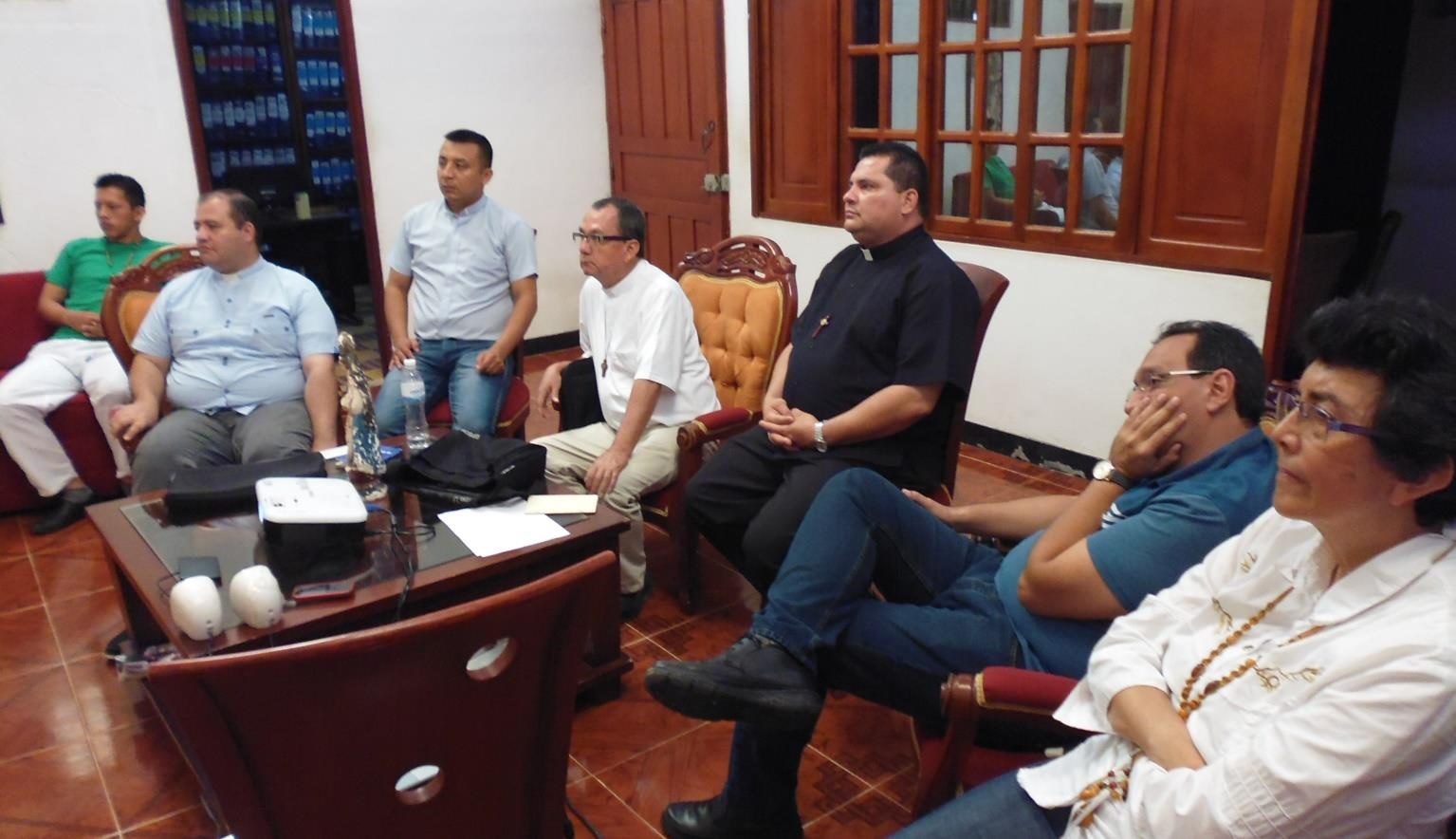 “We wanted to keep in our hearts the topic that the entire Movement is focusing on this year, and it seemed so in tune with the situation we found ourselves in: Jesus Forsaken.” In the spontaneous communion that was born, each one of us sought to see the suffering that was being experienced, seeing in it a face of the infinite suffering Jesus experienced on the Cross, which gives meaning to so much suffering.” One of the priests said, during lunch, that those hours spent with each other were like an “oases” that managed to detach him from the nightmare. “Then, together with Fr Oscar, we travelled around the places that were hit by the mudslides, some quarters completely wiped out. Others had been turned into cemeteries with houses demolished by huge boulders, with uprooted trees everywhere. The love, prayers and assistance reached all the way to Mocoa as it goes through this living hell, and it helped to uplift the victims of this tragedy somewhat. The trip also included a visit to the city of Neiva in southern Colombia: “We wanted to visit our local Focolare community and, with them, to prepare for the upcoming Mariapolis that will be held in July at an archaeological park where there are intact remains of some of the most ancient indigenous cultures.” Amidst the pain and suffering of natural distaster, the Focolare in Colombia is focused on the future. See also:News from Colombia
24 May 2017 | Non categorizzato
On Saturday, May 20, the elementary school of Largo Baccelli located in Pesaro (Italy) was dedicated to Chiara Lubich, founder of the Focolare Movement. The Mayor, the Councillor for Development and the Councillor for Dialogue spoke at the ceremony. The latter stated that “streets, public squares and kindergartens have been named after Chiara Lubich, but this is the first time in Italy that an elementary school has been dedicated to her, who had been a primary school teacher. ” Children and their families participated in the event, as well as Giuseppe Milan, Professor of Pedagogy and Intercultural Studies at the University of Padua, who spoke about “Chiara Lubich and the educational relationship”.
24 May 2017 | Focolare Worldwide
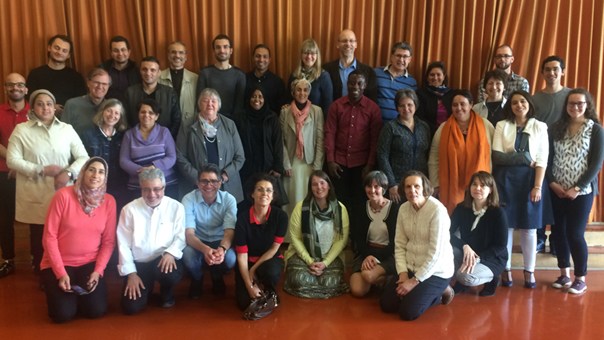
«What lies in our heart? Towards what is it oriented? How can we learn to know it better? Aren’t the paths of the heart like roller coasters?» These are some of the issues which stimulated the dialogue between Christians and Muslims participating in a meeting and were visible signs of the desire of both groups to share. The meeting was held at the Muslim cultural center at the end of April and ended in the evangelic parish. It started with the theological reflections of the evangelical pastor, Martin Hoegger, and the Imam, Djalel Meskaldji. Both considered how the Bible and the Koran amplify the meaning of the word “heart,” not only as the seat of sentiments, but rather as the center of our being, and that space where we find dialogue with our own selves, with the others and with God. «The most common disease is not the flu, but schlerosis, that is, the hardening of the heart», M. Hoegger ironically said. And Djalel Meskaldji added: «According to the Koran, the heart can be even harder than stones. It is covered with rust.» They underlined in fact, that the heart is the most precious thing we have, but experience tells us that often it can harden. This leads to the consideration that the “custody of the heart” is a frequent theme in the Bible and in the Fathers of the Church, theologians of the first centuries. And so, to keep a strong hold on one’s heart is a real “spiritual battle.” This would be, according to Meskaldji, the real meaning of the word “Jihad,” according to Muslim tradition. Pastor Hoegger recalled that the biblical prophets «announced that God will one day chisel his law of love in our hearts and put in us a new heart, a heart of flesh.» Furthermore: «Christians turn to Jesus in whom this promise was fulfilled.» On his part, the Imam stressed that: «the Koran repeatedly affirms that the heart needs to be purified by the limpid water of the word of God. It wakens my heart, nurtures it, breaks its toughness and cleans it of the rust that is mostly the outcome of pride.» From Algiers, in live streaming Sheherazad and Farouk, Muslims, recounted how the discovery of God who is love, through the spirituality of the Focolare Movement, has revolutionised their lives as a couple: «We have learned how to love the other for himself, and let God act in the heart of each one so as to be a living witness of the unity of God. But above all, we experience God’s grace which encloses our heart with his mercy.» Then, Anne Catherine Reymond and Fabien, Christians of the Sant’Egidio Community, shared their pathway, narrating how the presence of God has transformed their hearts through prayer and fraternal life, and also through their contact with the poor. «Faith in God is a compass in the challenges which a couple has to face, especially in the education of their children. They push us to place ourselves on a second plane so as to put God in the first place.» What came to light in the group dialogues was what Christians and Muslims have in common. A Muslim woman from Lyon concluded: «In an era in which many try to divide our communities, it is very important to gather together in an atmosphere of mutual esteem!» In this joyful day the participants unanimously expressed the desire to continue the dialogue, also through new encounters.
23 May 2017 | Non categorizzato
https://vimeo.com/214575260
21 May 2017 | Non categorizzato
May 21 is an important date for those who work for international, intercultural and interreligious dialogue and cooperation. On this day the whole world celebrates the World Day of Cultural Diversity for Dialogue and Development, established by the United Nations in 2002 following the adoption by UNESCO of the Universal Declaration on Cultural Diversity in 2001. The Day is an invitation to all – civil society, organizations, individuals, associations – to promote collaboration and encounter between peoples and cultures, with a view to enhancement, support and mutual respect
